Tower of Babel vs. Rebuilding Jerusalem
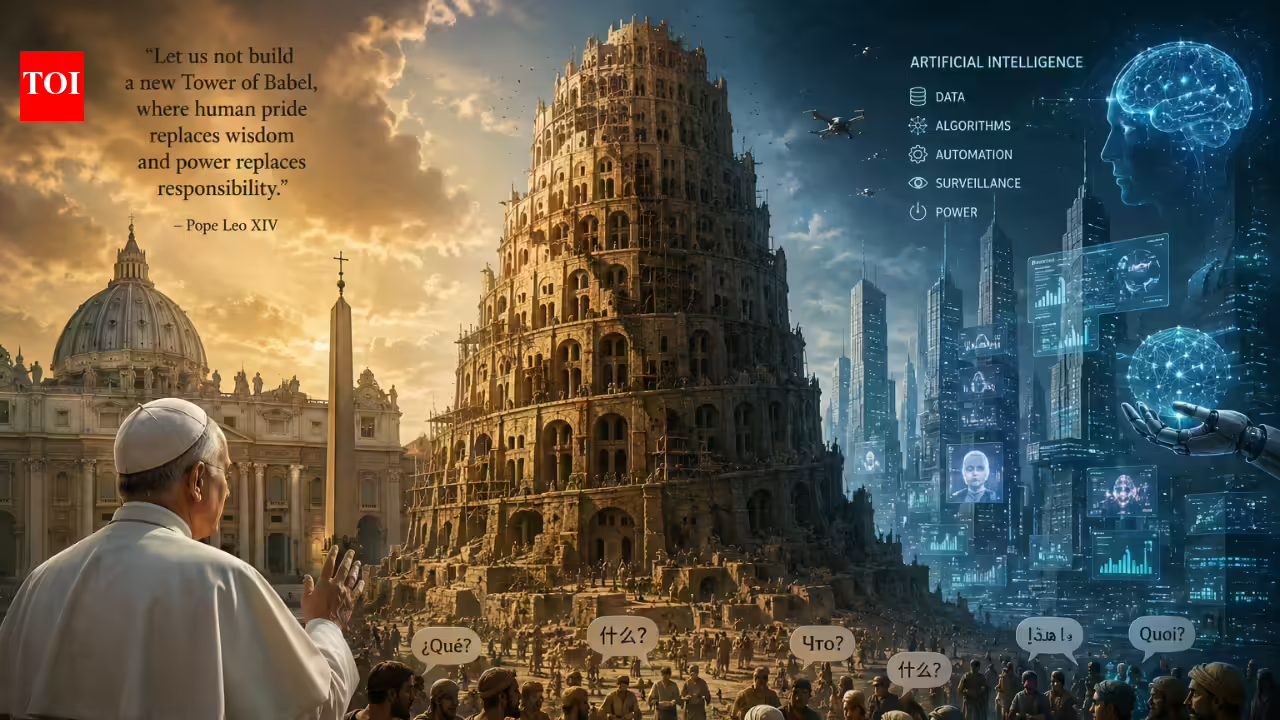
Given its length, the encyclical says a lot of things. The Pope uses the Tower of Babel as a metaphor for technological hubris and contrasts that with the story of Nehemiah, who rebuilt the walls of Jerusalem after the Babylonian exile. Nehemiah did not rebuild the walls only according to his own vision, but instead fasted, prayed, and meditated in silence before then convening all of the families of the city, assigning them each a section of the wall to repair, and adjudicating any conflicts between them. The Pope uses this as a metaphor for a more inclusive, collaborative building of technology.Some of the key provisions the encyclical include: calling for increased government regulation of the private companies driving AI development; calling for accountability for the companies building AI models and for the companies deploying that technology; and calling for transparency around algorithmic tools, particularly those used in government decision-making, and says that these tools should be verifiable, something that many modern LLM-based AI systems are not.
Seeing work as fundamental to human dignity, the encyclical asks for measures to protect jobs and retrain workers displaced by AI. It calls for measures to protect children from harmful AI-generated content and supports governments that are imposing age limits on the use of digital technology. It sees education as playing a critical role in teaching the next generation how to think critically and use digital tools in ways that enhance their human agency, not detract from it. It says that communities around the world should have a right to shape the ethical and moral guidelines that govern what AI models do, so that this power is not just left in the hands of a tiny handful of companies and a few countries. As the Pope writes:“A more moral AI is not enough if that morality is determined by a few. What is needed is a more active political involvement that is capable of slowing things down when everything is accelerating, and of protecting the opportunities for communities still to be able to participate and ask questions.”