Inside Open Society
October 10, 2025
By Laura Carvalho
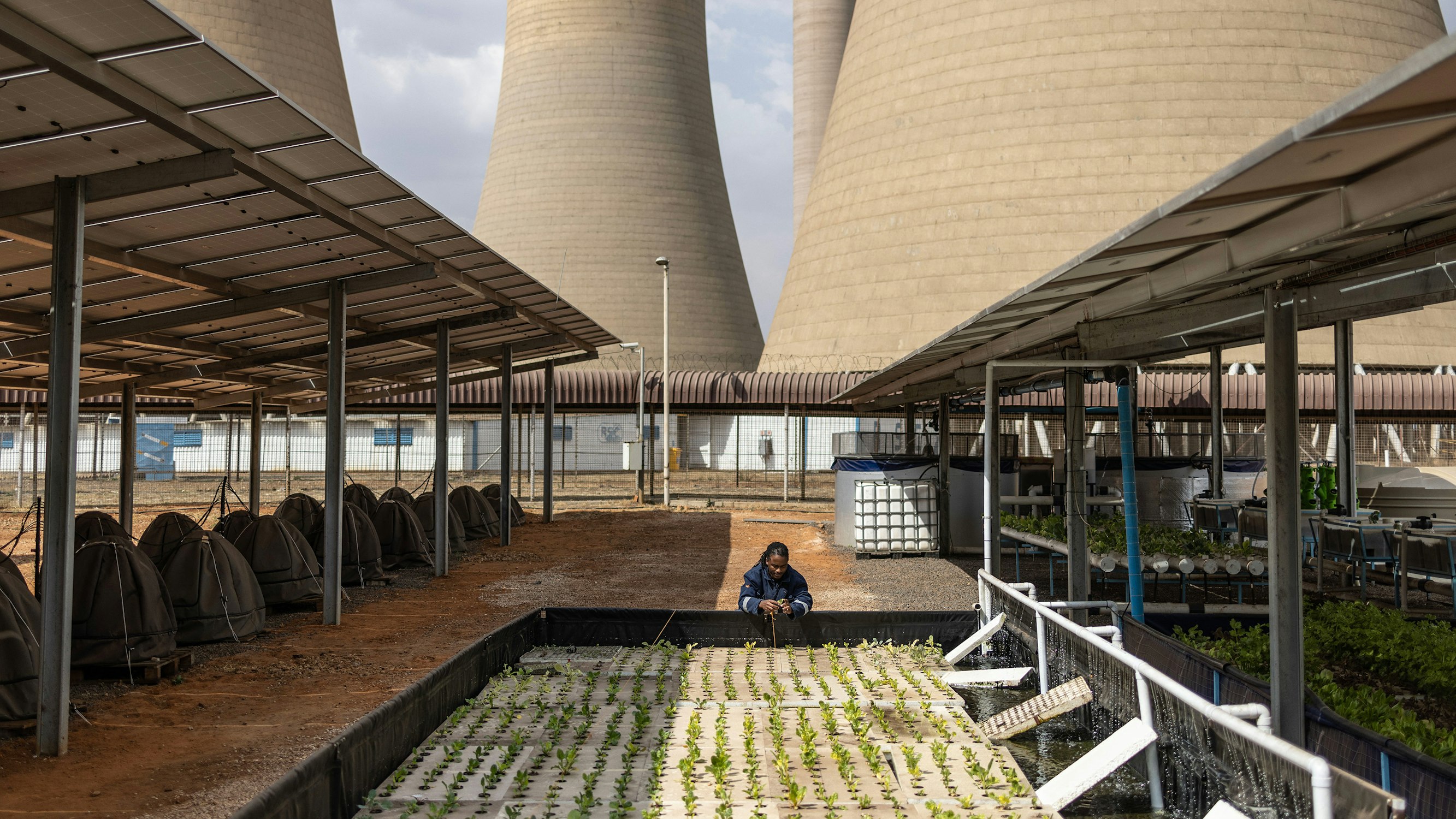
A worker tends to plants at a green energy training facility at a decommissioned coal plant in Komati, South Africa, on September 9, 2024. © Paul Botes/AFP/Getty
Climate disasters are becoming ever more frequent, costly, and deadly for the world, but reactionary political movements are hindering progress to act. The year 2024 was the hottest on record, with storms, heatwaves, and floods claiming lives, devastating habitats, and shattering livelihoods. Meanwhile, economic precarity fuels unrest and authoritarianism that divides societies and risks geopolitical security. This tumultuous era lends itself toward catastrophizing but, far from an economic burden, the green transition can be a vital catalyst for countries to become more equal and prosperous.Industrial policy—government-led tools like subsidies or tariffs that shape the economy by supporting specific firms and sectors—was for decades shunned by a neoliberal model that favored free markets. But just as the COVID-19 pandemic saw massive state intervention in key economic sectors to combat a public health emergency, now the world’s leading economies plough billions into their own industries to confront the climate crisis. The era of green industrial policy is upon us. But countries in the Global South are being held back from pursuing similar sustainable economic development goals, and the fruits of the just transition are not equally shared.