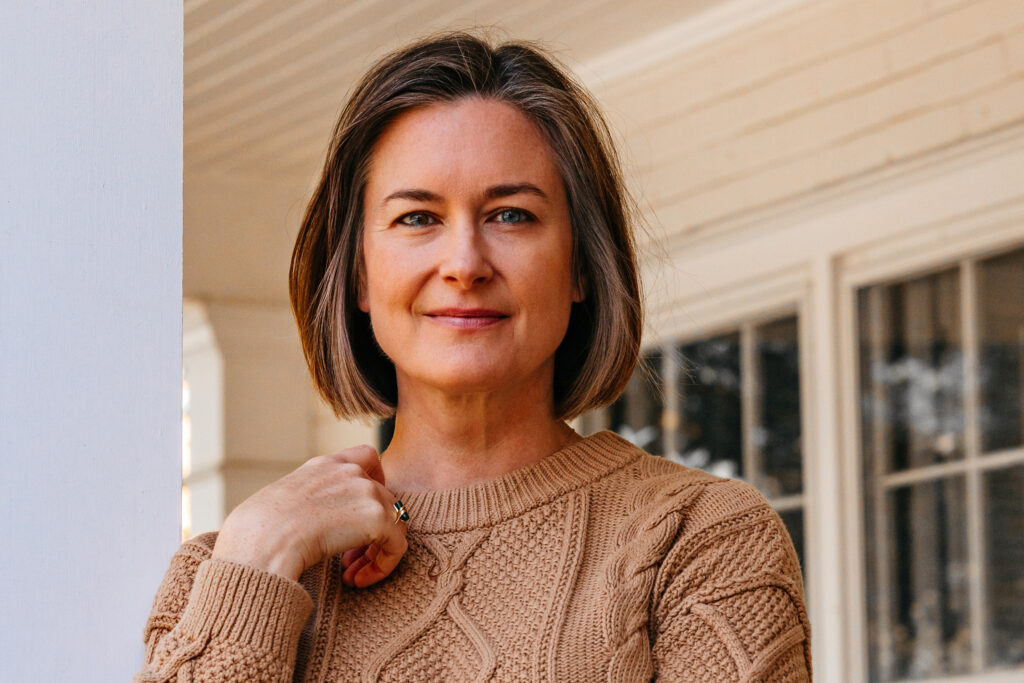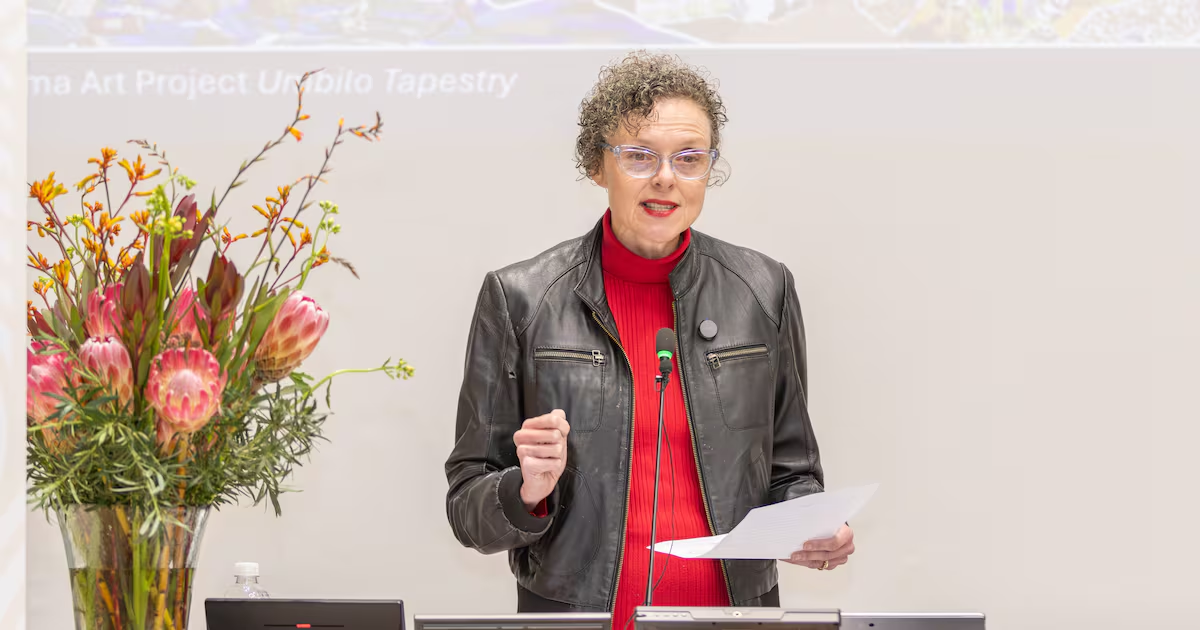
In a time shaped by climate collapse, war, technological upheaval and deepening social fracture, how do we hold on to hope?That was the question environmental law scholar Tracy-Lynn Field posed during a strikingly personal and unusually interdisciplinary public lecture at Stellenbosch University on May 14.Her lecture moved far beyond the technical language of climate policy. Instead, she drew together environmental law, political economy, psychology, ethics, spirituality and art to navigate what she described as “an age of anxiety”.The lecture formed part of an annual public lecture series hosted by the chair in urban law and sustainability governance at the university’s faculty of law under the leadership of Anél du Plessis.Field is director of the Mandela Institute at Wits University, where she also holds the Claude Leon chair in earth justice and stewardship. At the start of the year, she was appointed to South Africa’s Presidential Climate Commission.From the outset, she warned the audience they were “in for something a little different”.“This lecture is going to involve a bit of an art gallery tour,” she said. “I selected works that convey what I want to communicate.”But the lecture was also deeply personal.“I have been deeply affected by the current dislocations we see in our world,” she said. “And what I share tonight are resources that have genuinely helped settle my own soul.”She laid out the lecture’s “topography”.First would come the “mountaintop” — the hope embodied in the just transition. Then the “valley of desolation”: climate breakdown, geopolitical conflict, technological disruption and social polarisation. Finally, the ascent up the other side — how we might still hold on to justice, solidarity and human dignity amid such upheaval.Field began with the “hope” of the just transition, using as her first thematic image the Umbilo tapestry — a large community artwork stitched by women from the Eastern Cape. The name of the work, she explained, refers to a sprawling pumpkin vine — a symbol of the need to unite and spread the word about the climate crisis.“So what hope can we offer the creators of the tapestry?” Field asked.South Africa, she argued, possesses an unusually progressive legal framework for a more socially grounded transition.The Presidential Climate Commission’s framework and the Climate Change Act explicitly link climate resilience to social inclusion, poverty eradication and decent work.“We have that in our law,” she said. “That is extraordinary.”But she contrasted this with what some scholars describe as the “politics of the armed lifeboat” — climate responses built around exclusion, policing and securitisation rather than justice.That approach, Field warned, takes us down into the “dark valley” below.“Climate change is real. It is not a hoax,” she said, in an apparent reference to US President Donald Trump, who has repeatedly dismissed climate change as such.Citing recent global climate data, she noted that warming in 2023-25 had already exceeded 1.5°C above pre-industrial levels for the first time in recorded history.Field then turned to geopolitical conflict.Using Cape Town artist Aquilah Sheik Ismail’s Bisan’s Orange — inspired by a Palestinian journalist’s mouldy breakfast orange during the siege of Gaza — she reflected on intensifying global violence, from Ukraine and Gaza to Sudan and Mali.More disturbing still, she suggested, was the “gamification and entertainification” of war. She pointed to prediction markets such as Kalshi and Polymarket, where users can effectively gamble on geopolitical outcomes and military operations.“It is as though we are creating spectacles of catastrophe for consumption. And I think that is profoundly impoverishing for the human race.”Drawing on former Greek finance minister Yanis Varoufakis’ concept of “cloud capital”, she argued that power increasingly rests not simply in ownership of industrial production but in ownership of digital infrastructure and algorithmic platforms.“Amazon, YouTube, Spotify, Checkers Sixty60 — they begin to understand our most intimate wants,” she pointed out.“And your car is spying on you,” she noted, referencing recent reporting on how modern vehicles collect data ranging from location and driving habits to the driver’s eye movements, facial expressions and weight.Field also warned that AI may fundamentally reshape universities and professional life.Referring to predictions that AI could eliminate up to half of entry-level legal work within a few years, she asked: “What happens to legal education when half of junior legal jobs disappear?”More broadly, she questioned what happens when critical thinking “is outsourced to machines”.The final driver highlighted by Field was social polarisation. Digital echo chambers, she argued, intensify ideological division while resting on a material foundation of extreme inequality.“The climate crisis is inseparable from the concentration of wealth,” she said, noting that the wealthiest 10% of people globally account for roughly 70% of emissions.Extreme inequality fuels migration, nationalism, racism and xenophobia.“And with that,” she told the audience, “we arrive at the bottom of the valley.”Luckily, she did not stop there.To rise again from rock bottom, Field turned to what she described as three “moorings” capable of keeping us “anchored to the promise of the just transition”.The first is her academic and professional discipline.“Law has a critical guardrail function,” she said. “That is why we clamour for rules governing climate change, war, AI and the protection of vulnerable groups.”Field’s second mooring is morality.“Climate change is fundamentally a moral issue,” she argued.But moral conviction can also harden into “moralised polarisation” where opposing groups view one another not simply as mistaken, but as morally corrupt.Part of preserving the just transition therefore requires acknowledging the perspectives of those we disagree with.Finally, Field turned to ethics.She showed a slide of Joseph Ndlovu’s tapestry Humanity from the Constitutional Court art collection.Unlike the familiar image of Lady Justice — blindfolded, scales in one hand and sword in the other — in Ndlovu’s tapestry, justice emerges through shared humanity rather than distance and abstraction.Finally, Field found sustenance in the “love ethic” of feminist thinker Bell Hooks. “Fear sustains separation,” she said. “Love moves against fear.”She closed with a reflection by novelist Vasily Grossman, who witnessed the horrors of World War 2, including the Holocaust: “Human history is not the battle of good struggling to overcome evil,” she read.“It is a battle fought by a great evil struggling to crush a small kernel of human kindness. But if what is human in human beings has not been destroyed even now, then evil will never conquer.”
How to hold on to a just transition in an ‘age of fear’
Tracy-Lynn Field proposes preservation of justice, solidarity and human dignity
1,033 words~5 min read