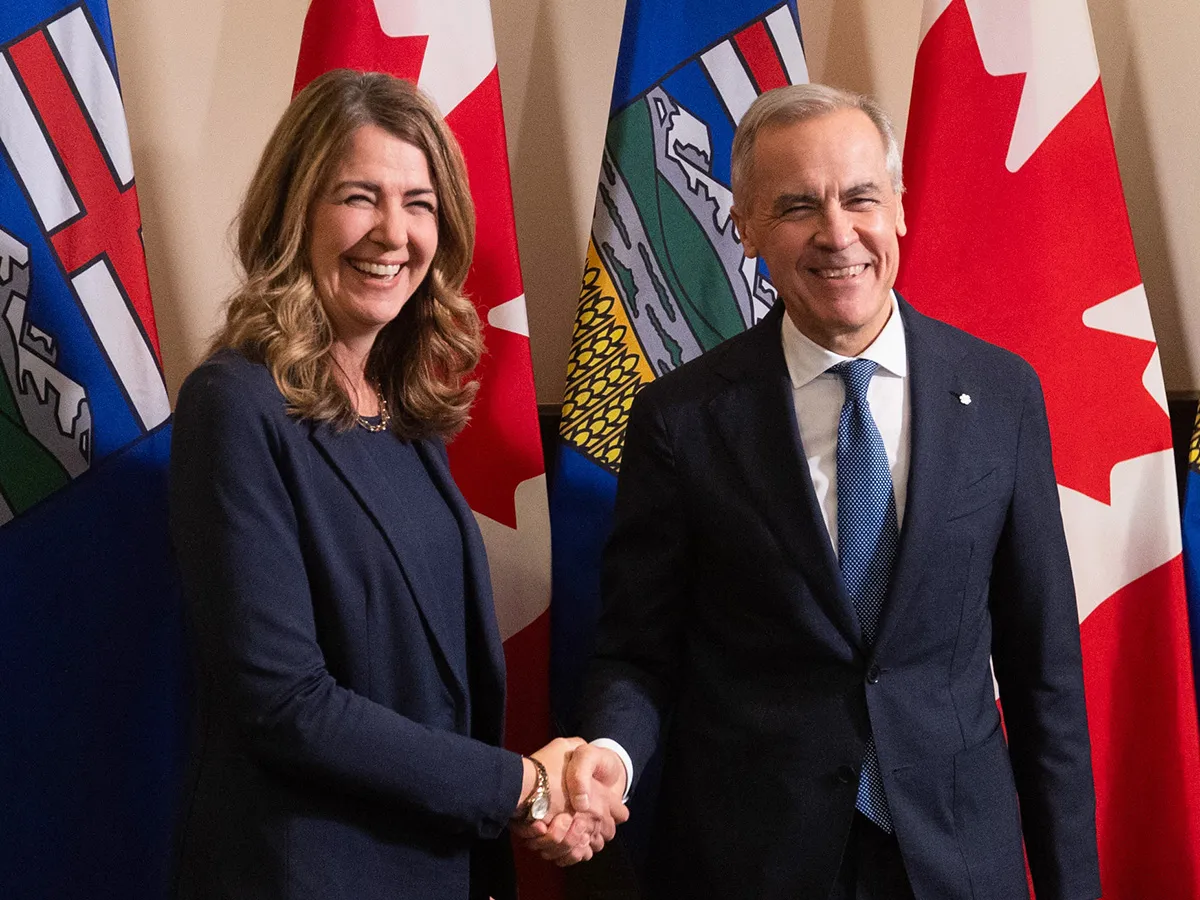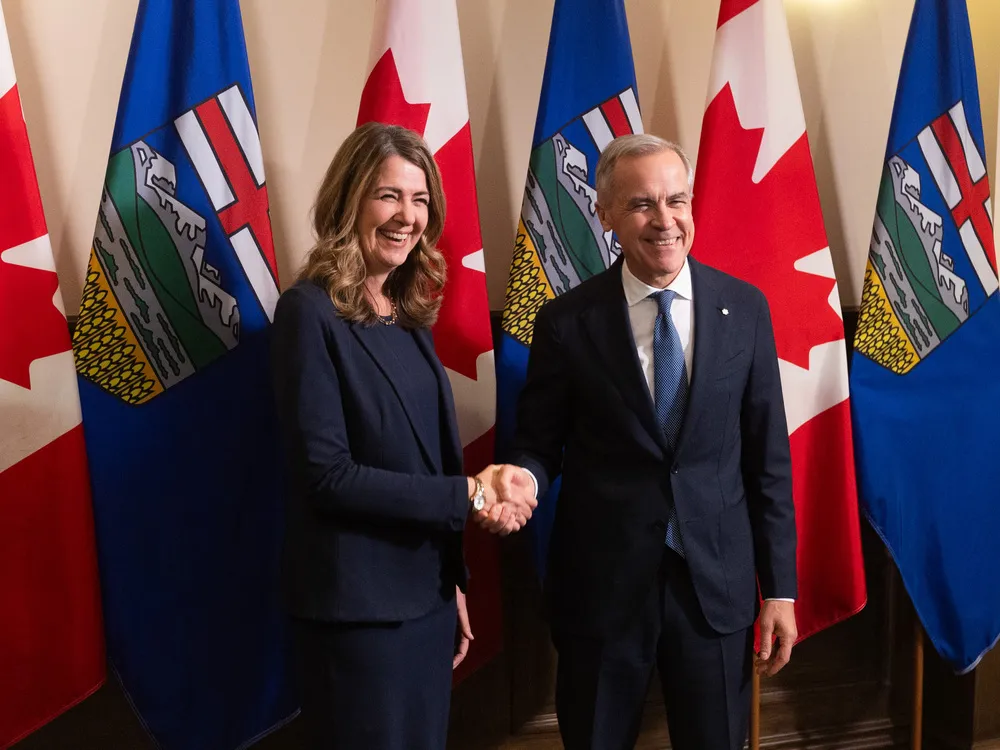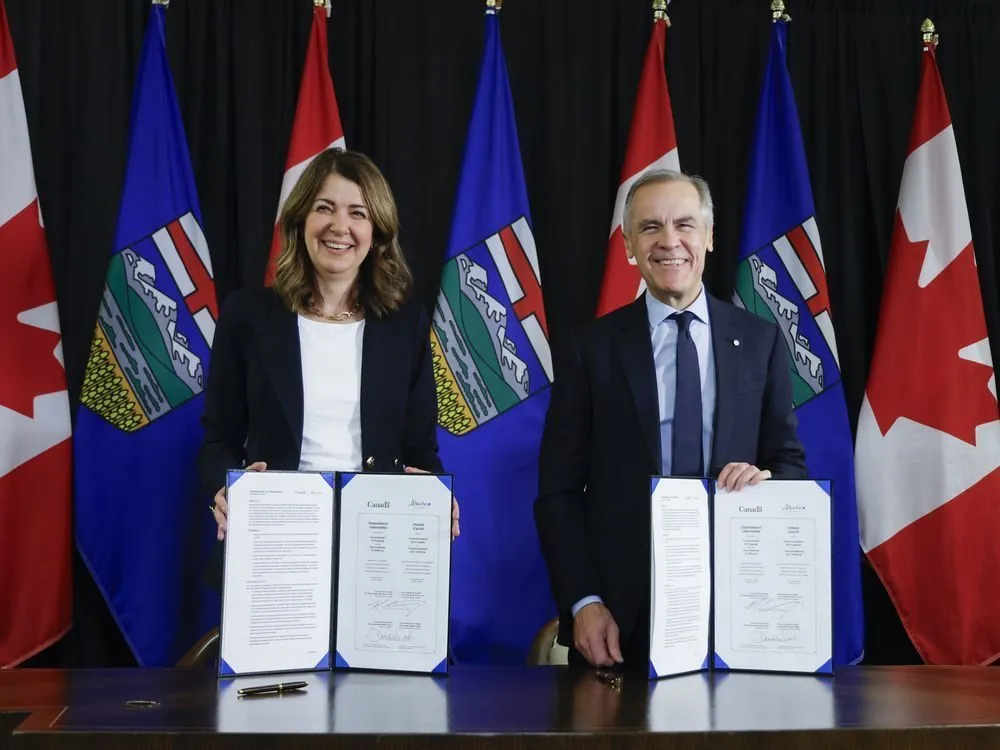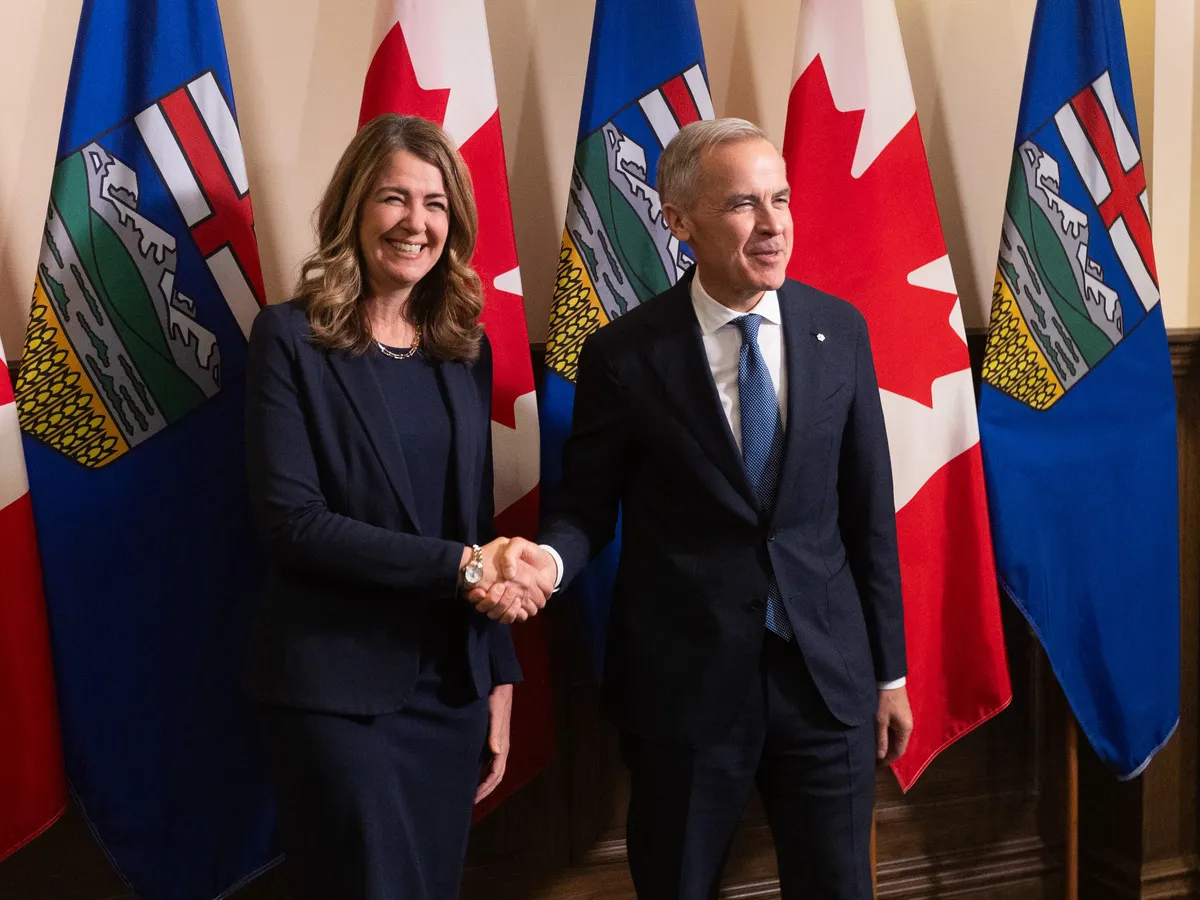
Skip to Content News Archives Economy Energy Oil & Gas Renewables Electric Vehicles Mining Commodities Agriculture Real Estate Mortgages Mortgage Rates Finance Banking Insurance Fintech Cryptocurrency Work Wealth Smart Money Wealth Management Investor Personal Finance Family Finance Retirement Taxes High Net Worth FP Comment Executive Women Puzzmo Newsletters Financial Times Business Essentials More Innovation Information Technology FP500 Podcasts Small Business Lives Told Tails Told Shopping Financial Post Store Obituaries Place a Notice Advertising Advertising With Us Advertising Solutions Postmedia Ad Manager Sponsorship Requests Classifieds Place a Classifieds ad Working Profile Settings My Subscriptions Saved Articles My Offers Newsletters Customer Service FAQ News Economy Energy Mining Real Estate Finance Work Wealth Investor FP Comment Executive Women Puzzmo Newsletters Financial Times Business Essentials HomeFP CommentOpinion: The new Alberta-Ottawa agreement to do nothing in particularIn the followup to their fall MOU, Ottawa and Alberta forge another agreement to agree to things in the future, but without details on howLast updated 2 hours ago You can save this article by registering for free here. Or sign-in if you have an account.Prime Minister Mark Carney and Alberta Premier Danielle Smith shake hands in Calgary on May 15, 2026 before signing an agreement on oil pipeline approvals and carbon pricing. Photo by Brent Calver/PostmediaThe firm handshake and big smiles of Danielle Smith and Mark Carney and the celebratory media coverage attending their signing ceremony earlier this month all gave the impression the two leaders had finally signed a binding agreement that will result in the construction of a bitumen pipeline from Alberta to Canada’s West Coast. How wrong the journalists were! They either didn’t read what had been signed or didn’t understand it.Subscribe now to read the latest news in your city and across Canada.Exclusive articles from Barbara Shecter, Joe O'Connor, Gabriel Friedman, and others.Daily content from Financial Times, the world's leading global business publication.Unlimited online access to read articles from Financial Post, National Post and 15 news sites across Canada with one account.National Post ePaper, an electronic replica of the print edition to view on any device, share and comment on.Daily puzzles, including the New York Times Crossword.Subscribe now to read the latest news in your city and across Canada.Exclusive articles from Barbara Shecter, Joe O'Connor, Gabriel Friedman and others.Daily content from Financial Times, the world's leading global business publication.Unlimited online access to read articles from Financial Post, National Post and 15 news sites across Canada with one account.National Post ePaper, an electronic replica of the print edition to view on any device, share and comment on.Daily puzzles, including the New York Times Crossword.Create an account or sign in to continue with your reading experience.Access articles from across Canada with one account.Share your thoughts and join the conversation in the comments.Enjoy additional articles per month.Get email updates from your favourite authors.Create an account or sign in to continue with your reading experience.Access articles from across Canada with one accountShare your thoughts and join the conversation in the commentsEnjoy additional articles per monthGet email updates from your favourite authorsSign In or Create an AccountorThis is becoming a habit. Last November, the same two actors happily celebrated their first Memorandum of Understanding (MOU) about the same potential pipeline. It was mere theatre. The MOU was not a legally binding agreement to build a pipeline or anything else. In the same way, this new “agreement” sets out aspirations, priorities and reaffirmations, but without much implementation of any of them.Get the latest headlines, breaking news and columns.By signing up you consent to receive the above newsletter from Postmedia Network Inc.A welcome email is on its way. If you don't see it, please check your junk folder.The next issue of Top Stories will soon be in your inbox.We encountered an issue signing you up. Please try againThe apparent purpose of what might be called “MOU Part II” is to persuade the media there has been real progress towards a real pipeline — when there has not.Every criticism of MOU Part II that I have seen focuses on the competitive disadvantage imposed by the industrial carbon tax, given that Canada’s competitors don’t face this cost. That’s a valid criticism, but only one of many that could be made. In particular, there’s no change to the West Coast tanker ban or to the requirement for Indigenous agreement and British Columbia’s approval. This new agreement supposedly “clears a path” to a pipeline. But you don’t clear a path by creating more obstacles. And that’s what two largely unnoticed appendices to this new MOU do.The first is the “Cooperation Agreement on Environmental and Impact Assessment,” so labelled because Alberta uses an environmental assessment process while Ottawa has the notorious Impact Assessment Act (IAA) — the one its critics call the “No More Pipelines Act.” The IAA is to be built into Alberta’s current environmental assessment, so that it is no longer the Alberta process but the federal process. If Alberta and Ottawa can’t agree on any issues that arise over impact assessment, the federal process prevails. This gives Ottawa a veto over and effective control of any Alberta assessment of a proposed pipeline.IAA Section 22.1.n (no less) requires every assessment to take into consideration “the intersection of sex and gender with other identity factors.” This is one of the most controversial sections of the entire act. Why it is relevant to a proposed pipeline is not self-evident. Nevertheless, an impact assessment will now have to have consider whatever evidence may be presented on this issue by as many parties as wish to do so — as well as on the 19 other mandatory hearing subjects.This federal process is the real investment killer. We saw that in the Trans Mountain Extension Project, when the investors walked away after a decade of uncertainty, even before the final court decisions were released. Ottawa had to buy the pipeline and complete it at a total cost of approximately $34.2 billion.The appendix to the new agreement purports to limit the process to two years following receipt of the initial project description. That’s a worthy but also likely impossible goal. Ottawa cannot control the number of Indigenous and environmentalist parties who decide to participate, nor how long it takes them to present their evidence. If it tried to establish such limits, that would guarantee litigation, which would have a good chance of success. If in the end the court quashed the original hearing, it would have to be done again and would take as long as it took.The second appendix is titled “Agreement in principle: Canada-Alberta methane equivalency agreement.” But that’s misleading: the document merely says that the parties commit to developing an equivalency agreement to deliver methane emissions reductions of 75 per cent compared to 2014 by 2035. This is another agreement to agree in future, with the objective — but no guarantee — of doing so by the end of 2026. If this further agreement can’t be reached, there will be no pipeline. If it is reached, that almost certainly will be because Alberta has agreed to the 75 per cent reduction. How the province is to achieve that level of emissions reduction isn’t specified — presumably because it is unknown.I wrote here last year that there will be a new pipeline from Alberta to the West Coast when pigs can fly. This new “agreement,” with its two appendices, has just made the pigs fatter, heavier and even less airworthy. Good luck, Alberta!Andrew Roman is a retired litigation lawyer. Join the Conversation This website uses cookies to personalize your content (including ads), and allows us to analyze our traffic. Read more about cookies here. By continuing to use our site, you agree to our Terms of Use and Privacy Policy.
Opinion: The new Alberta-Ottawa agreement to do nothing in particular
In the followup to their MOU, Ottawa and Alberta forge another agreement to agree to things in the future, but without details. Read more.
1,282 words~6 min read