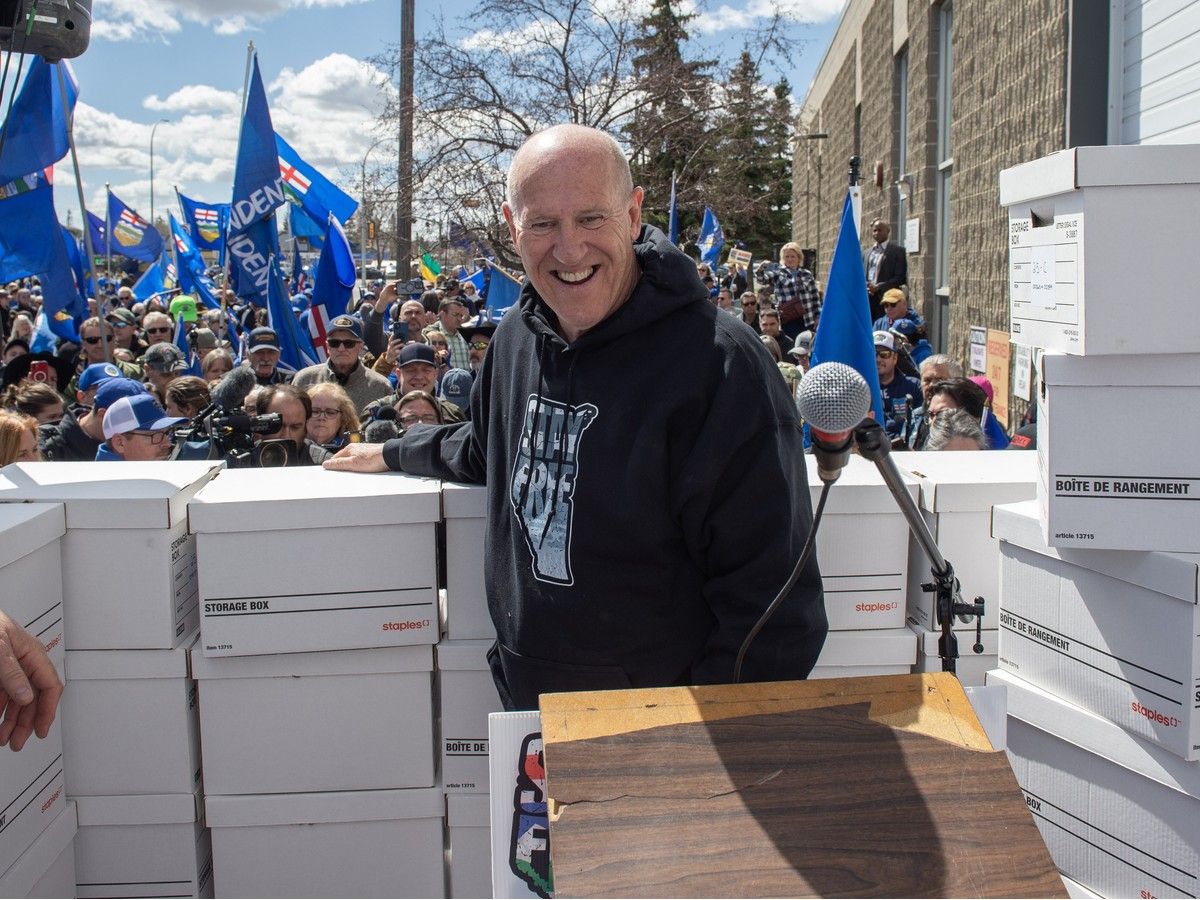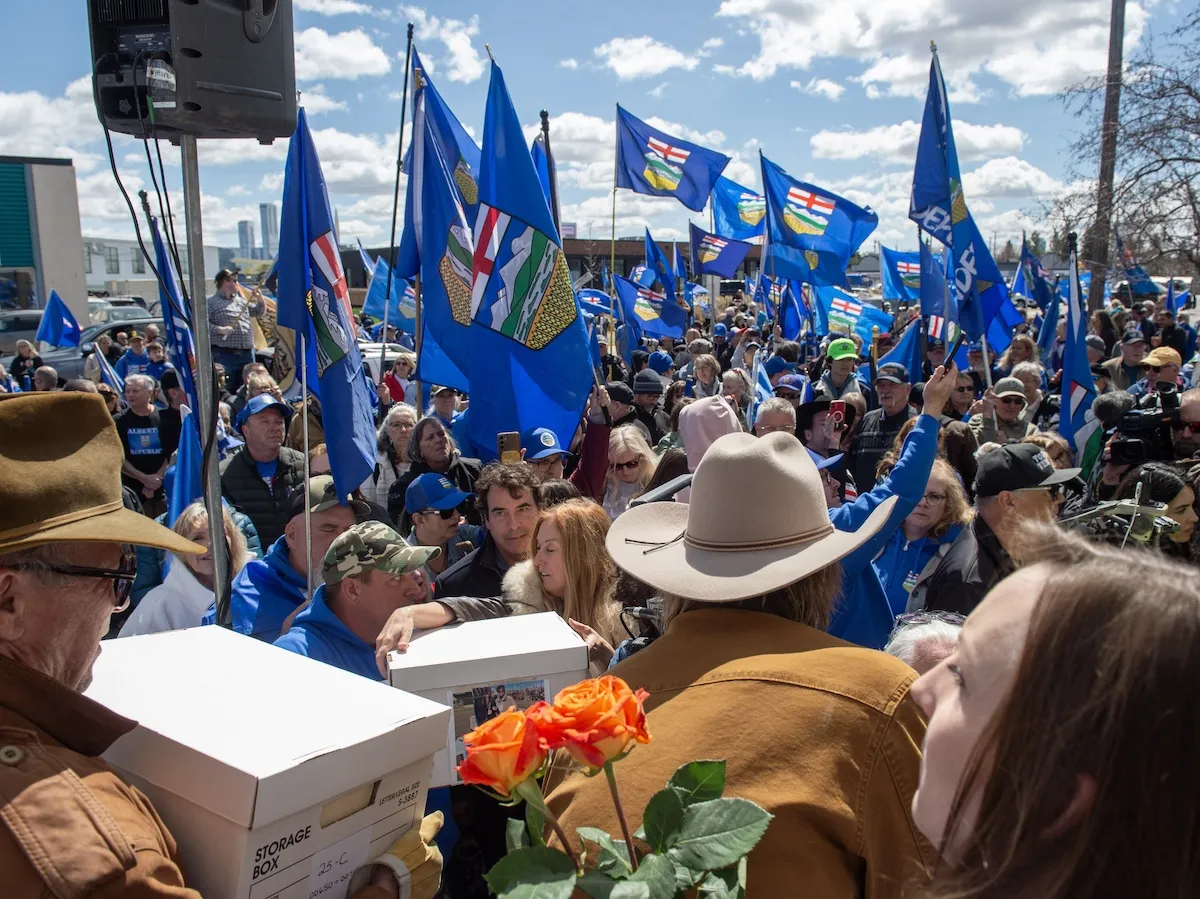
Skip to Content Subscribe Our Offers My Account Manage My Subscriptions FAQ Newsletters Canada Canadian True Crime Canadian Politics Health World Israel & Middle East Financial Post NP Comment Longreads Puzzmo Diversions Comics NP News Quiz New York Times Crossword Horoscopes Life Eating & Drinking Style Sponsored Play for Ontario Travel Travel Canada Travel USA Travel International Cruises Travel Essentials Culture Books Celebrity Movies Music Theatre Television Business Essentials Advice Lives Told Tails Told Shopping Buy Canadian Home Living Outdoor Living Tech Style & Beauty Kitchen & Dining Personal Care Entertainment & Hobbies Gift Guide Travel Guide Deals Savings National Post Store More Sports Hockey Baseball Basketball Football Soccer Golf Tennis Driving Vehicle Research Reviews News Gear Guide Obituaries Place an Obituary Place an In Memoriam Classifieds Place an Ad Celebrations Working Business Ads Archives Healthing Epaper Manage Print Subscription Profile Settings My Subscriptions Saved Articles My Offers Newsletters Customer Service FAQ Newsletters Canada World Financial Post NP Comment Longreads Puzzmo Diversions Life Shopping Epaper Manage Print Subscription HomeNP CommentColby Cosh: How Alberta separatism might solve itselfLast updated 16 hours ago You can save this article by registering for free here. Or sign-in if you have an account.Stay Free Alberta, delivered the signature documentation to Elections Alberta headquarters in Edmonton on Monday afternoon, surrounded by a sea of supporters with Alberta flags, on May 4. Photo by Shaughn Butts /PostmediaOn Wednesday morning the Canadian Press wire ran a story in which reporter Fakiha Baig talked to a few political scientists about the unusual nature of the Alberta separatist movement. Which is fair enough. I started reading the story half expecting a historian or two to turn up eventually, but those people are often off somewhere catching extinct respiratory diseases in dusty archives. Political scientists, by contrast, make it real easy for reporters to get hold of them. Oh, hey, look, there’s Duane Bratt again.Enjoy the latest local, national and international news.Exclusive articles by Conrad Black, Barbara Kay and others. Plus, special edition NP Platformed and First Reading newsletters and virtual events.Unlimited online access to National Post.National Post ePaper, an electronic replica of the print edition to view on any device, share and comment on.Daily puzzles including the New York Times Crossword.Support local journalism.Enjoy the latest local, national and international news.Exclusive articles by Conrad Black, Barbara Kay and others. Plus, special edition NP Platformed and First Reading newsletters and virtual events.Unlimited online access to National Post.National Post ePaper, an electronic replica of the print edition to view on any device, share and comment on.Daily puzzles including the New York Times Crossword.Support local journalism.Create an account or sign in to continue with your reading experience.Access articles from across Canada with one account.Share your thoughts and join the conversation in the comments.Enjoy additional articles per month.Get email updates from your favourite authors.Create an account or sign in to continue with your reading experience.Access articles from across Canada with one accountShare your thoughts and join the conversation in the commentsEnjoy additional articles per monthGet email updates from your favourite authorsSign In or Create an AccountorBaig’s story commences with the observation that most separatist gangs start out in places that have a prior history of independent nationhood or at least some objective cultural differences from the central authority in the state. “There are no significant secessionist movements that hinge only on fiscal and economic grievances,” pronounces UOttawa’s Andre Lecours. This put me on alert, hoping someone or other would mention one arguable counterexample, one that is for my money the most significant historical parallel for Alberta separatism.This newsletter from NP Comment tackles the topics you care about. (Subscriber-exclusive edition on Fridays)By signing up you consent to receive the above newsletter from Postmedia Network Inc.We encountered an issue signing you up. Please try againInstead, the parade of political scientists continues, helpfully informing us that, for example, the United States once had a civil war. (Over cultural differences, if you like.) And Scotland’s 2014 independence referendum comes up, which is interesting. Baig’s article emphasizes that Alberta premier Danielle Smith has been negotiating with separatists and trying to create an open opportunity for them to pass or fail a democratic test, although she is not an avowed separatist herself. This, too, is deemed unusual — but, of course, Scotland’s IndyRef was allowed to take place with the permission of the U.K.’s prime minister of the day, David Cameron, a pro-Union Conservative of Scottish descent.No one talks much, in the Alberta context, about the Cameron gambit. Cameron’s goal was to open the door for the Scottish Nationalist Party, score a victory for the Union, settle the secession issue for a generation, and let the SNP wither when they were deprived of their fundamental reason for existing. It may still be too soon to judge the success of this strategy. Cameron did get his win; the Union is still intact.But the SNP was able to adapt by cycling through leaders, and is still firmly in power in devolved Scotland. The party wasn’t discredited by the loss, and the trans-national centralized parties of Britain are in blazing, nightmarish crisis. There is a real possibility, from the 2026 point of view, that the SNP could outlast the U.K. Conservative Party itself.That’s an instructive situation (or a warning) for Canada and for Smith’s United Conservatives. But what I was waiting for someone to mention in the CP article — the thing that the Alberta separatists really remind me of — is the “Padanian independence” movement that surfaced in Italy in the 1990s. This movement was a sort of wild fantasy creation of one man, a politician from Lombardy named Umberto Bossi (1941-2026). “Padania” is an old word for the basin of the Po River, Padus in Latin; Bossi used it to develop a dollar-store national myth for the rich, productive north of Italy, writing a full-fledged Declaration of Independence, and he found a rich vein of regional anger that enabled him to build a political party, the Lega Nord.If you read Bossi’s accusatory 1996 Declaration, you won’t fail to recognize a mood very much like the one that motivates the Alberta separatists: the fiscal and economic grievances of the Italian north rhyme quite harmoniously with those of Alberta. Bossi’s Declaration, after paraphrasing the American one of 1776, asserts that the Padanians are an ostensibly diverse people shaped into a nation by a shared geography and way of life. But, alas, they are subject to the “colonial oppression, economic exploitation, and moral violence” of Rome and the South, which squanders northern wealth on “fraud, welfare handouts, political clients, and criminals.”He condemns the centre’s influence on the education system; he attacks the unfair laws produced by the Italian legislature; he blasts the alien reasoning of the Italian judiciary. Is any of this sounding familiar? Do you need me to turn it at right-angles so it faces east-west?As a romantic ideal, Padania never really got very far. As a sourcebook for the political program of Lega Nord, it prospered for a time. LN was already Italy’s fourth-largest political party when the Declaration was written, and in that year’s elections they hit 10 per cent of the vote nationwide and nearly 30 per cent in parts of its northern regional base. This gave it plenty of power in Italian coalition-based politics, but the Lega found, as a practical matter, that it had an even higher ceiling when it downplayed secessionist rituals and rhetoric and concentrated on devolution and Euroskepticism.Eventually the life was sucked out of it by Georgia Meloni’s Fratelli party, although it still exists as part of the Meloni governing coalition, with the “Nord” part of its name informally suppressed. The basic story is that EU-led 21st-century firehose immigration de-emphasized the differences between Italian regions, pushing those “fiscal and economic grievances” into the background and uniting Sicilians and Lombards against North Africans and Eastern Europeans. So the good news for Canadian federalists is that Alberta separatism might spontaneously solve itself, as it were; the bad news is that you might not like the solution when it appears.National Post Get the latest from Carson Jerema straight to your inbox Join the Conversation This website uses cookies to personalize your content (including ads), and allows us to analyze our traffic. Read more about cookies here. By continuing to use our site, you agree to our Terms of Use and Privacy Policy.
Colby Cosh: How Alberta separatism might solve itself
Hint: you're probably not going to like the answer
1,393 words~6 min read