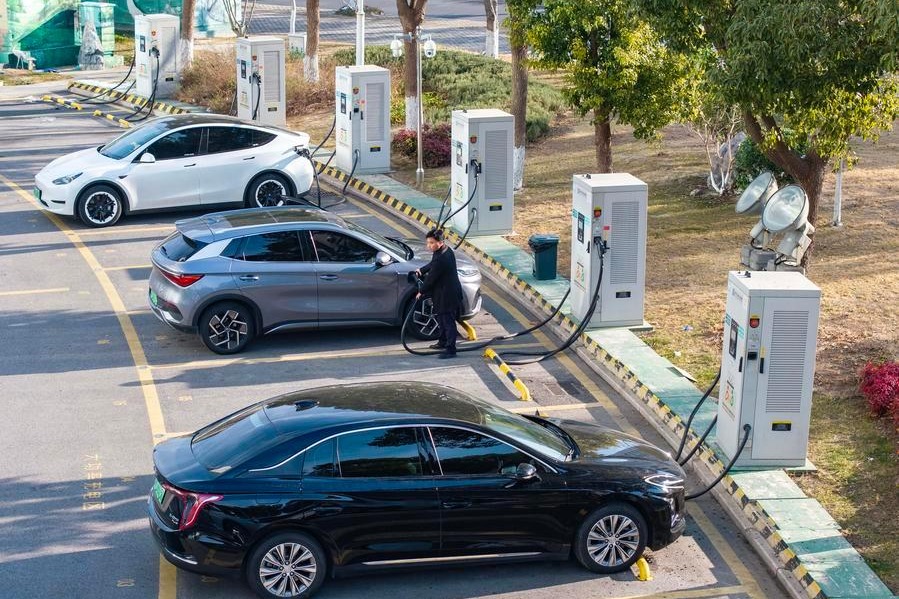
A drone photo taken on Jan 22, 2026 shows a driver charging an electric vehicle in Taizhou, East China's Jiangsu province. [Photo/Xinhua]
China's 2026 Government Work Report introduces a directive that may sound technical but signals a deeper structural development: The country will "press ahead with trials to promote the integrated development of advanced manufacturing and modern services".
In a world shaped by reconfigured supply chains and rapid technological change, this is not just an industrial policy. It reflects the recognition of the broader transformation in how economies generate and capture value.
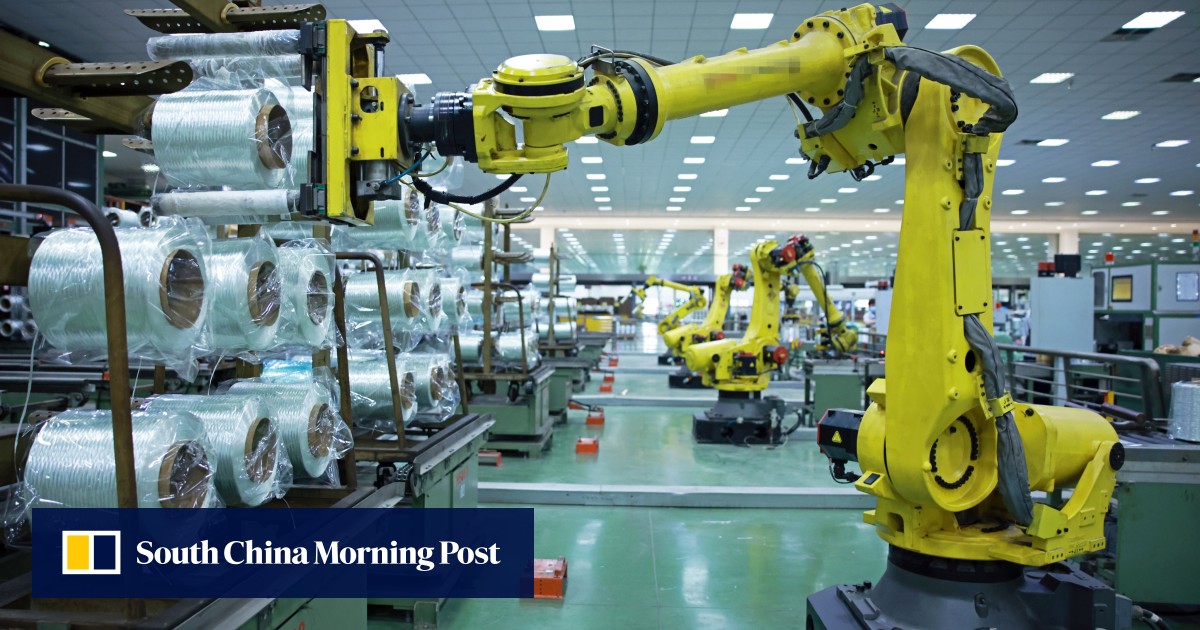
The line between producing goods and delivering services no longer holds. China is combining both into a coordinated, data-driven system. This shift moves the country beyond scale-based competition toward ecosystem-based competitiveness, whereby production, services and digital intelligence operate together.
For decades, structural change has been framed by some as a trade-off, in which services would expand as manufacturing declined. China's recent trajectory challenges that assumption. In 2025, China's GDP surpassed 140 trillion yuan ($20.6 trillion) for the first time, with growth at 5 percent, and its core digital economy industries contributed more than 10.5 percent of GDP.