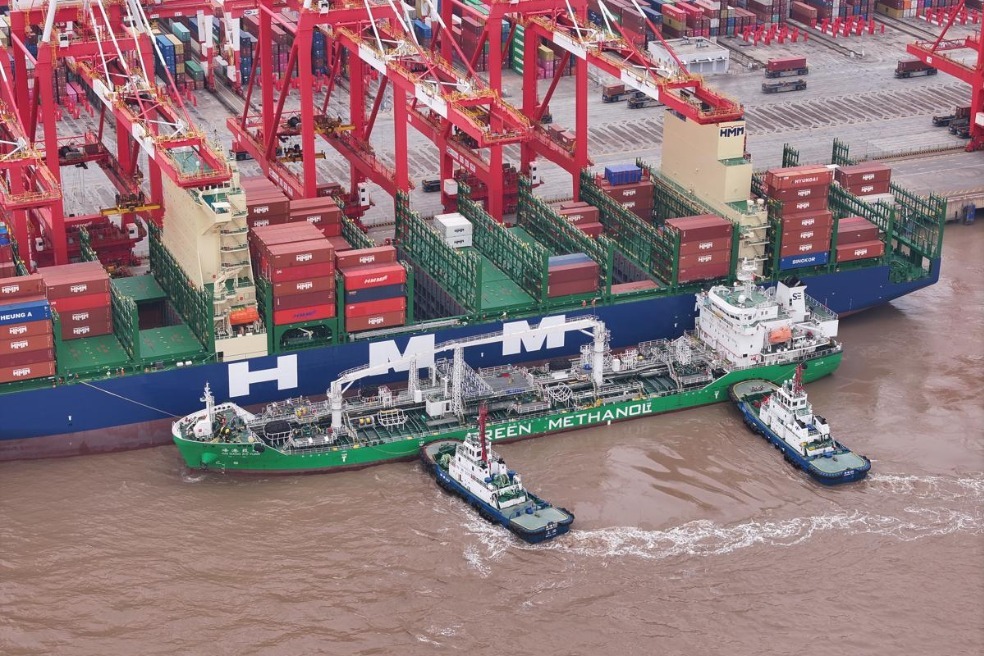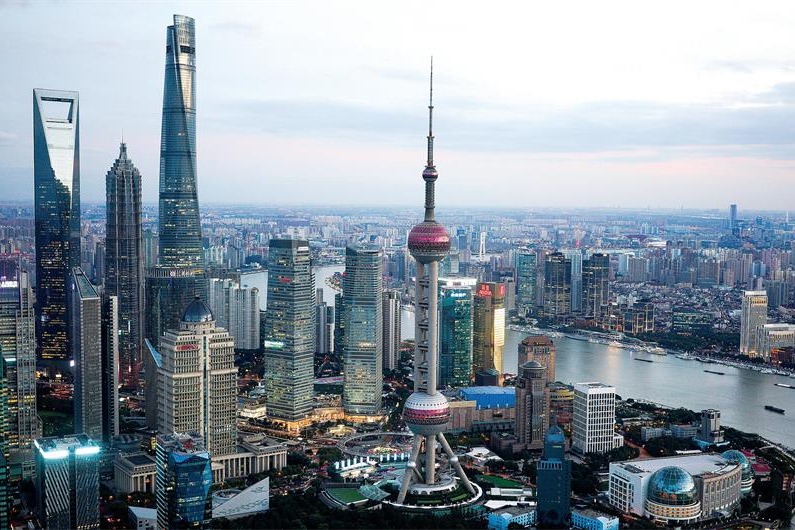
The service industry, which is already an important growth engine for Shanghai, should become more digitalized, standardized, integrated and international to further improve the city's economic resilience and its capacity to allocate service resources worldwide.
These goals are included in the city's 15th Five-Year Plan (2026-30) for the service industry, which was released on Monday. The plan specified that the average annual growth rate of value added in the service industry will be at least 5.5 percent by 2030, with labor productivity exceeding 450,000 yuan ($66,503) per capita.
One key highlight of the plan is its forward-looking roadmap for emerging service sectors, covering intelligent technologies, life sciences and healthcare, and the experience economy, according to Liu Jian, director of Shanghai Municipal Development & Reform Commission.
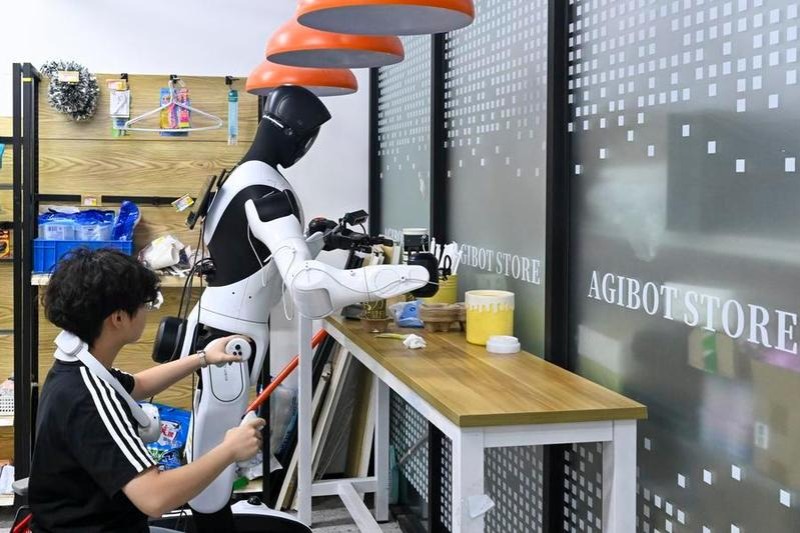
Specifically, Shanghai aims to deepen the development of artificial intelligence software technology and services, intelligent driving, targeted drugs, brain-computer interfaces, as well as new experience economy services such as immersive cultural tourism and IP consumption, he said.
Industrial services are also a key focus in the next five years, as the city aims to expand application scenarios, strengthen service industrial chains and build larger industrial clusters, according to Ge Dongbo, deputy director of the Shanghai Municipal Commission of Economy and Informatization.