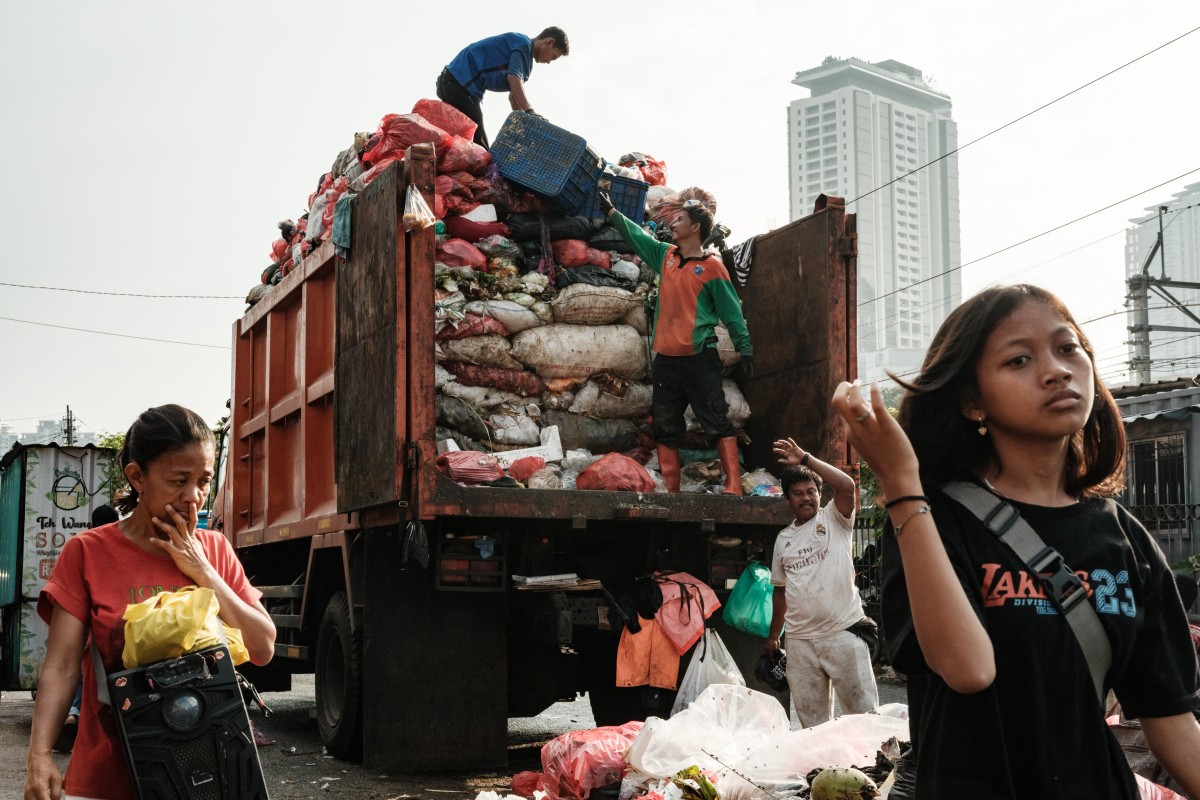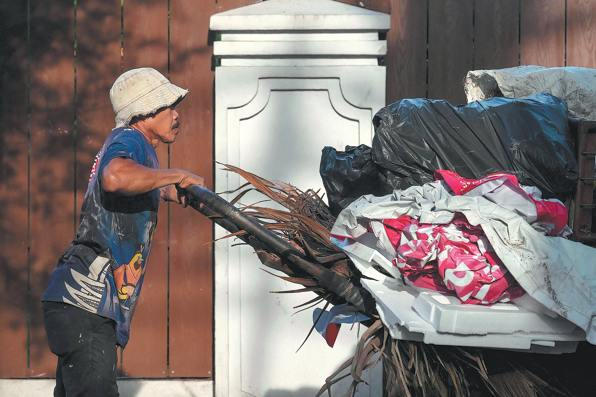
A door-to-door waste collector pushes his cart in front of a house in Jakarta Indonesia, on May 4. BAY ISMOYO/AFP
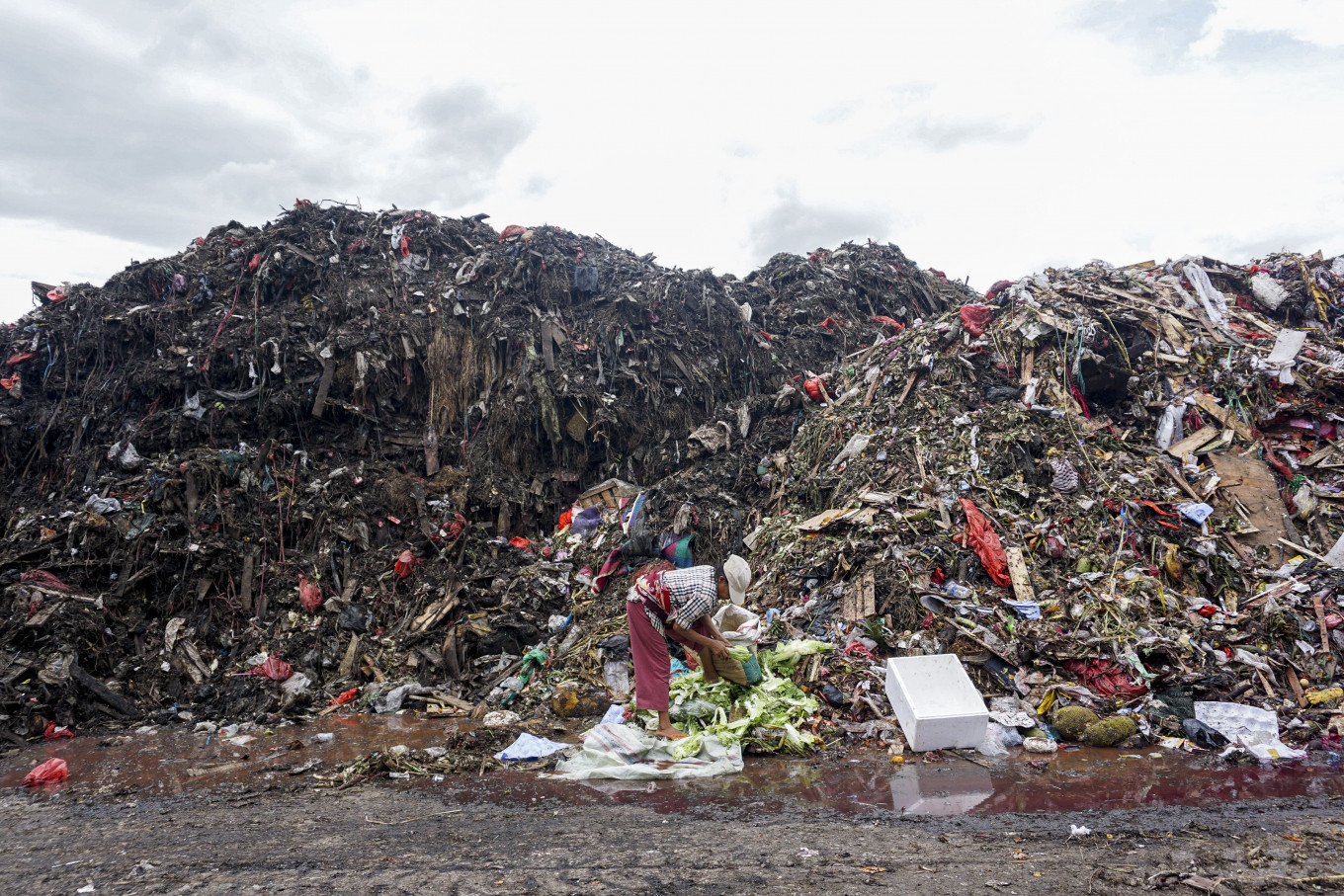
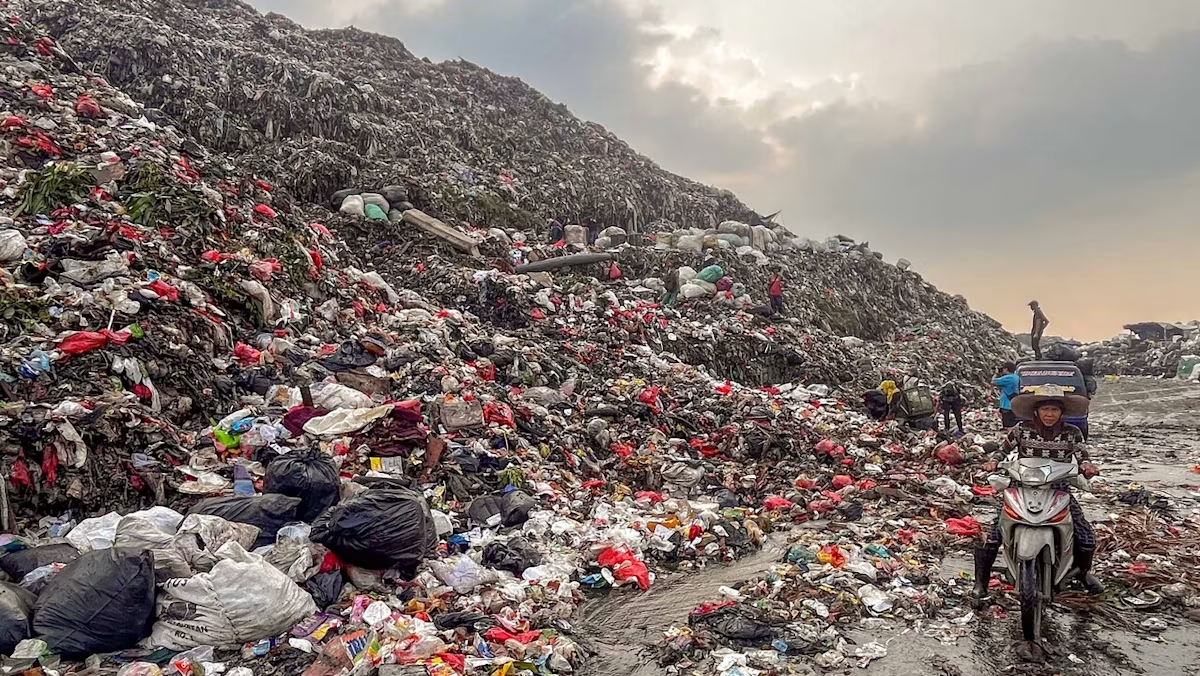
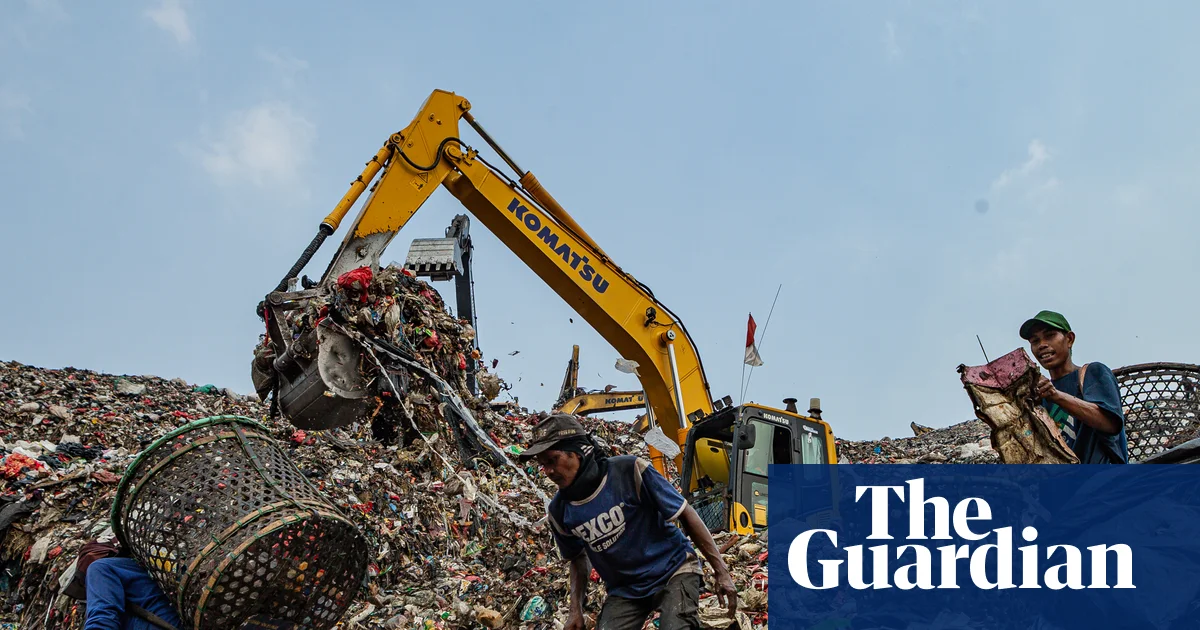
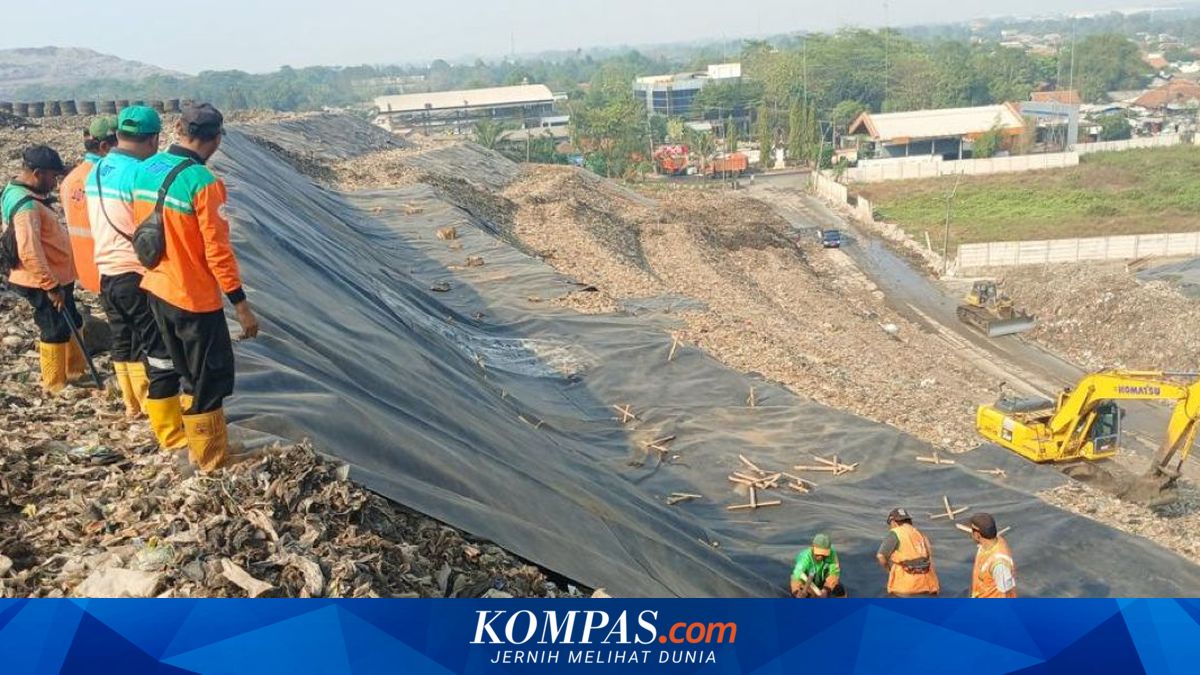
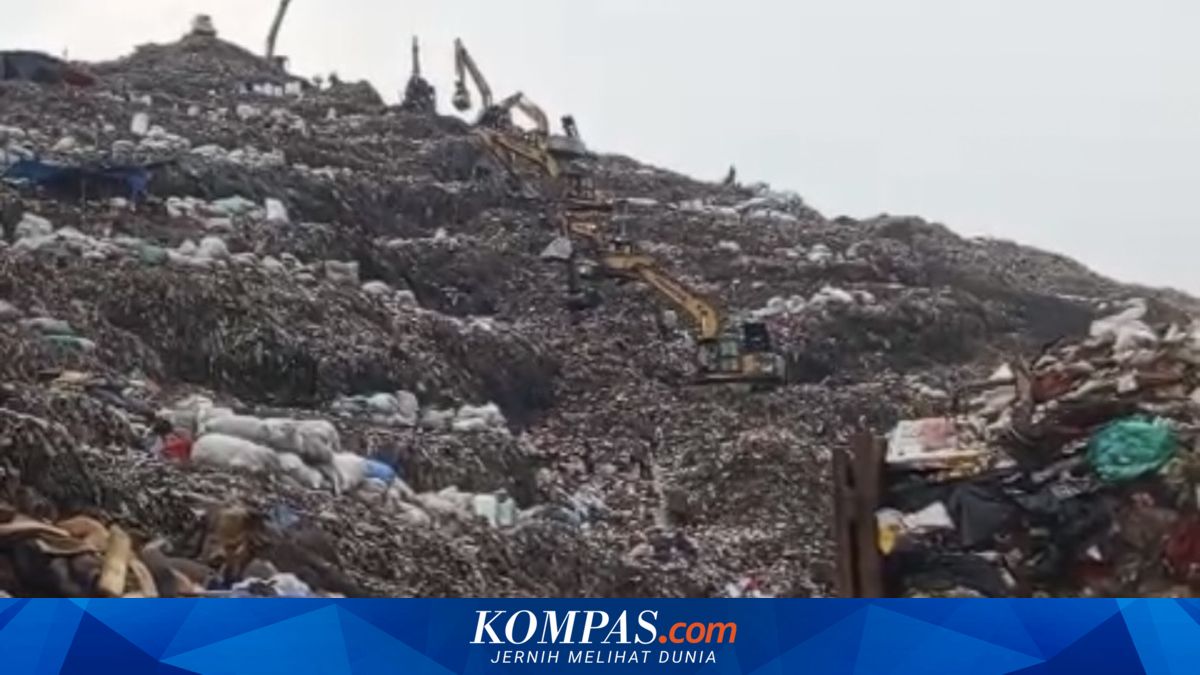
Jakarta now requires households to sort their trash for composting and recycling, and to reduce the amount of waste sent to landfills, in an effort to ease pressure on the overloaded Bantar Gebang landfill in Bekasi, West Java, as it heads toward a tipping point driven by more than 9,000 metric tons of garbage per day.
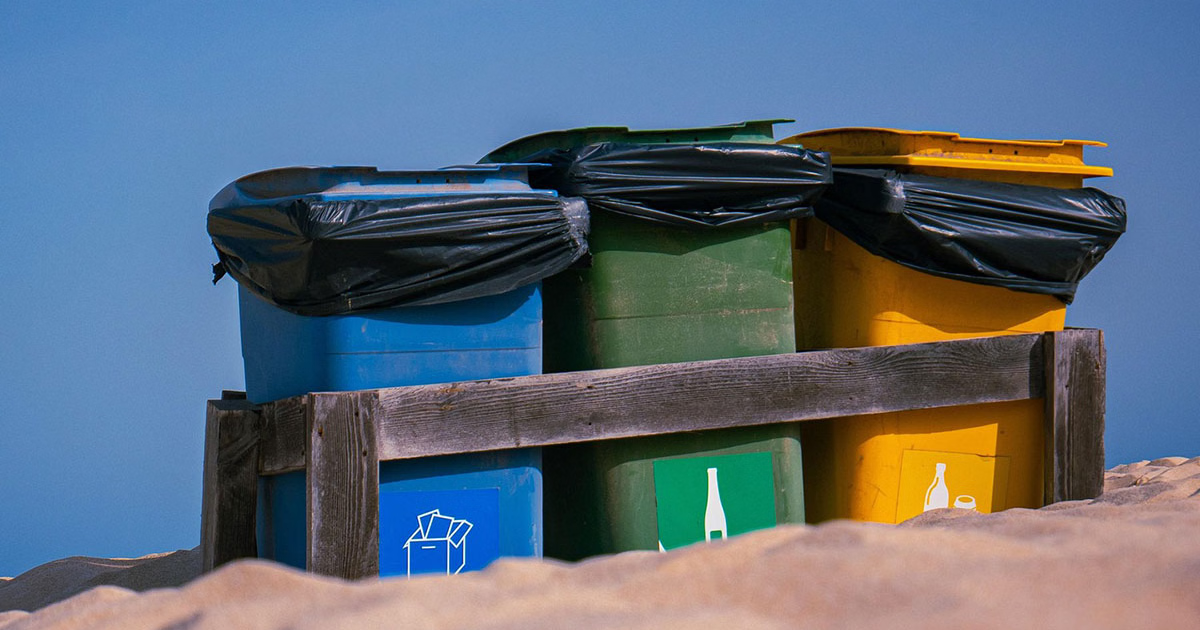
Through Instruction No. 5 of 2026 on the Source-Based Waste Sorting and Processing Movement, which went into force on April 30, Jakarta Governor Pramono Anung has ordered residents to sort their waste at home into four categories.
These are: organic waste for composting, such as food scraps; inorganic waste for recycling, such as plastics and cardboard; B3 waste, referring to hazardous and toxic materials; and general or residual waste, referring to materials that cannot be recycled or composted, such as disposable diapers, Styrofoam and tissues.
Official data show that food waste accounts for almost 50 percent of the city's garbage composition at almost 50 percent. Plastics contribute around 23 percent, followed by paper and cardboard at 17 percent and glass, metals, textiles and other materials comprising the rest.