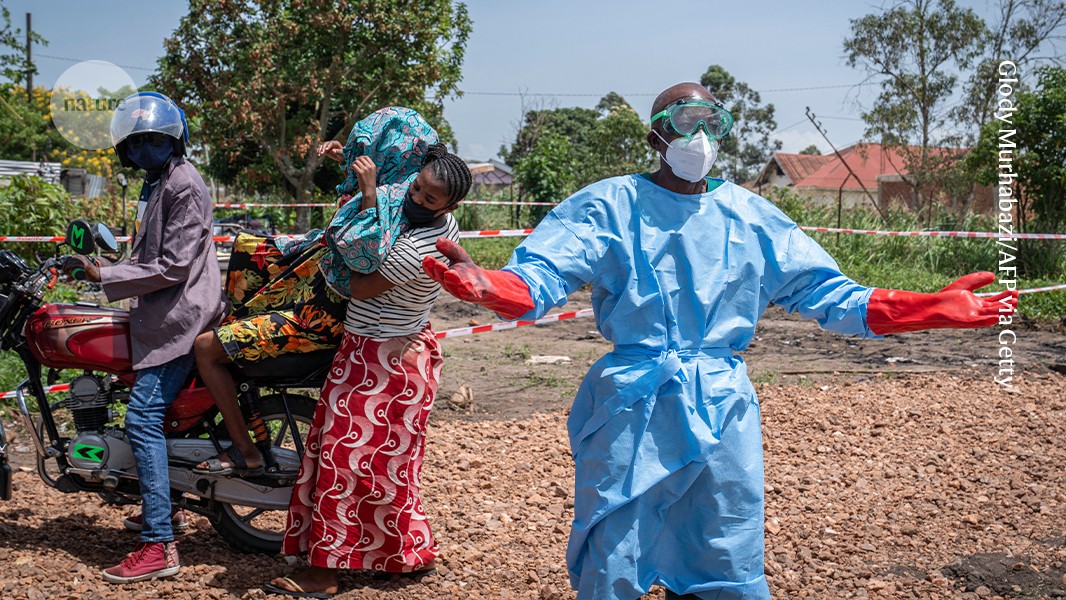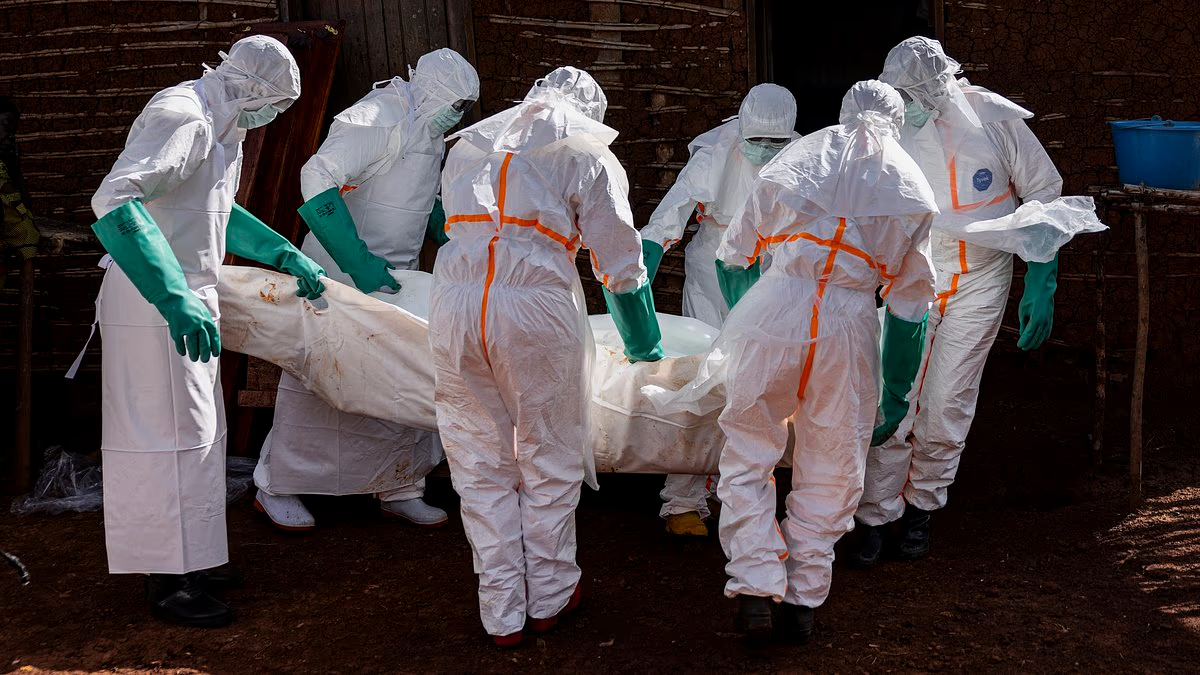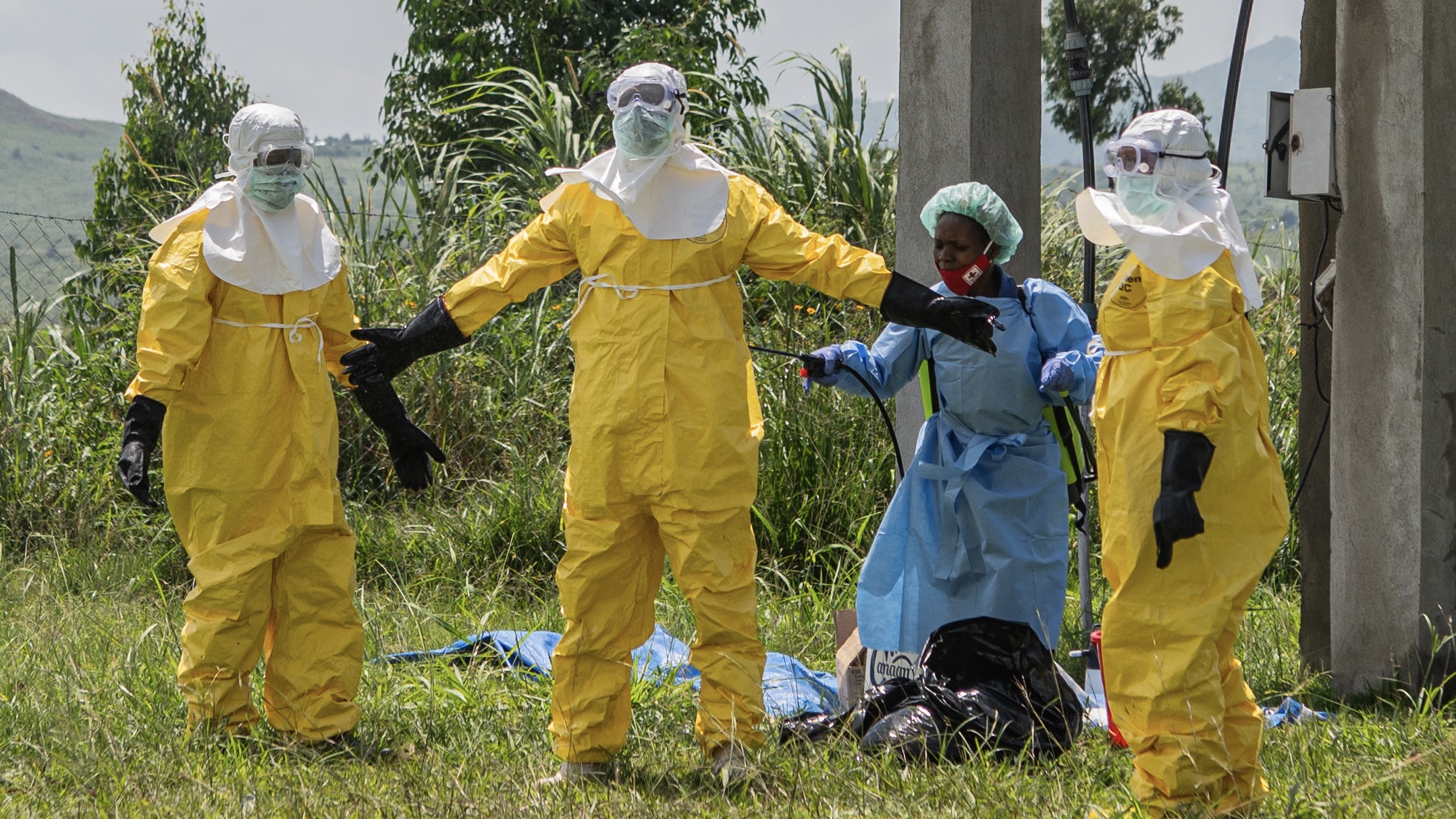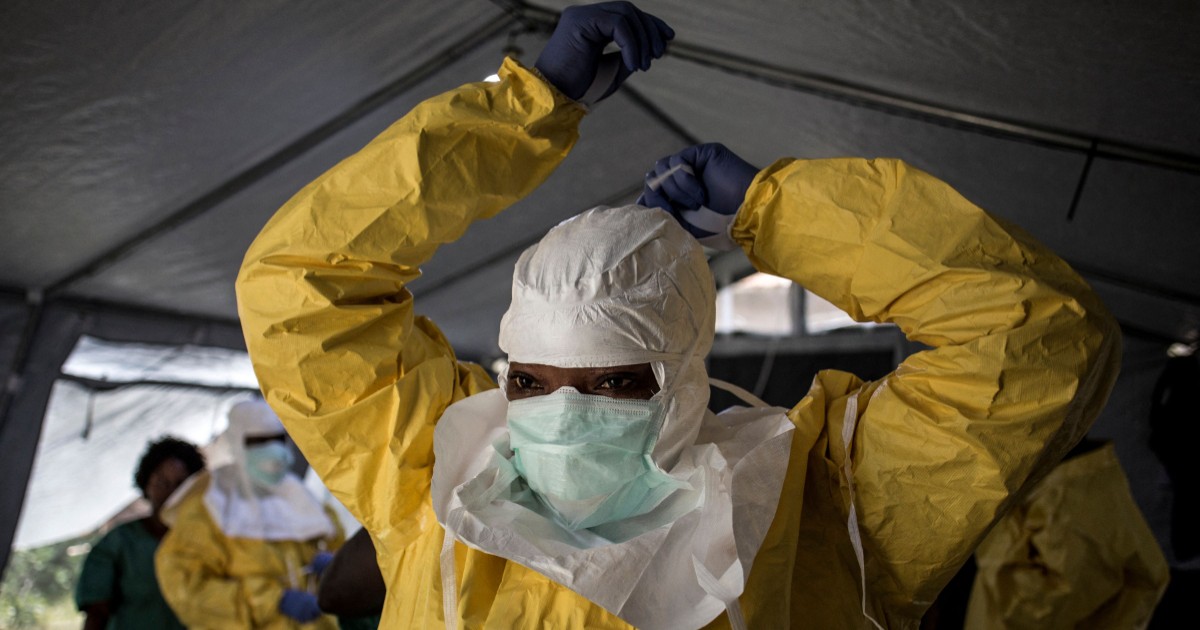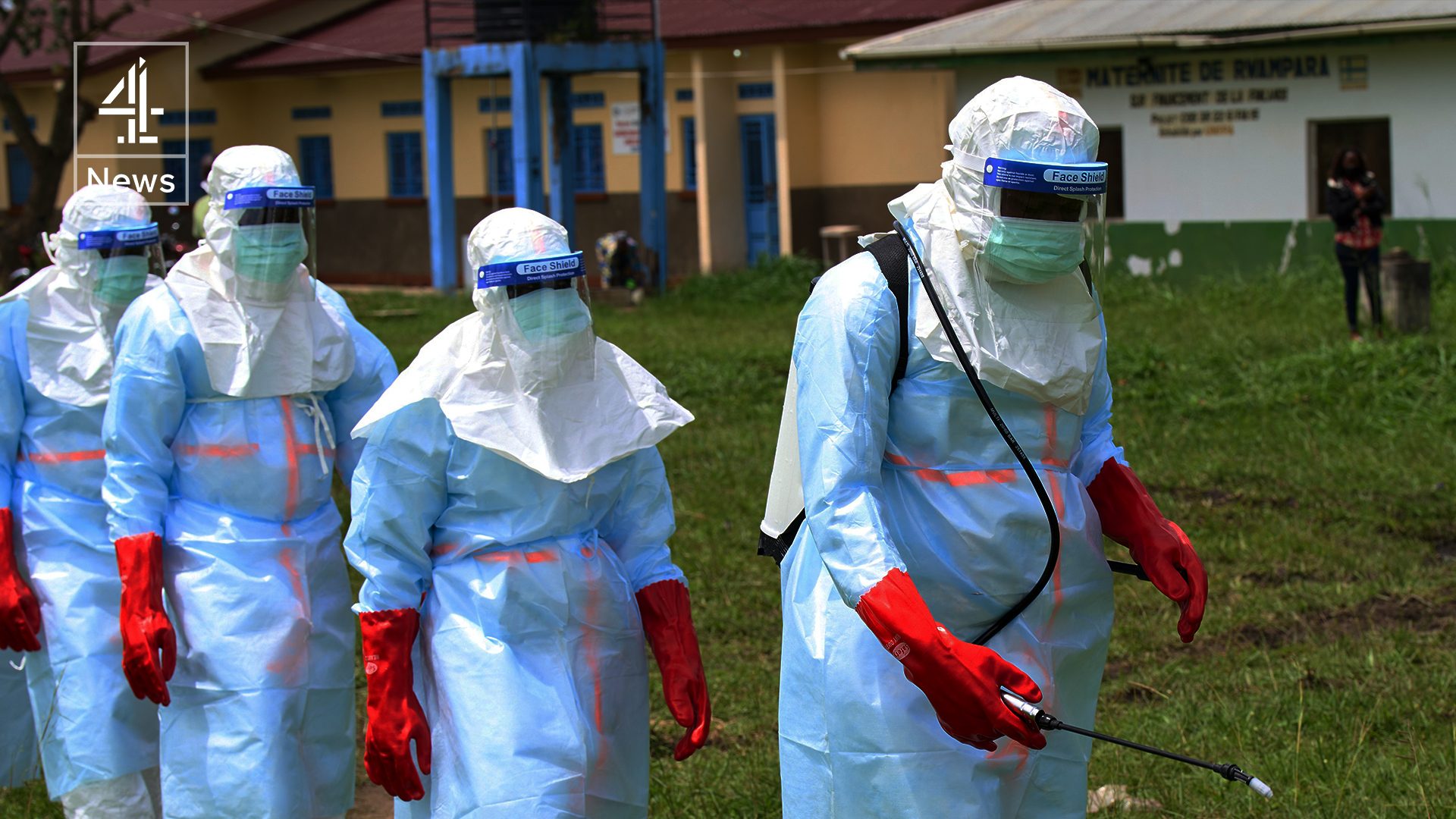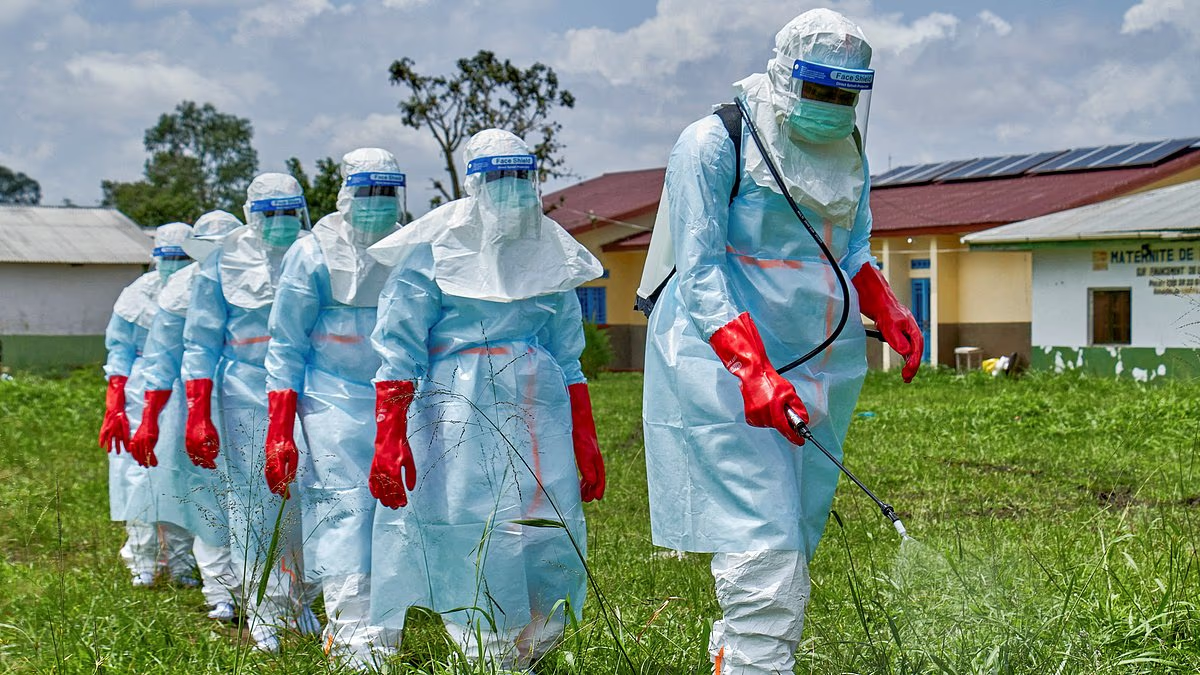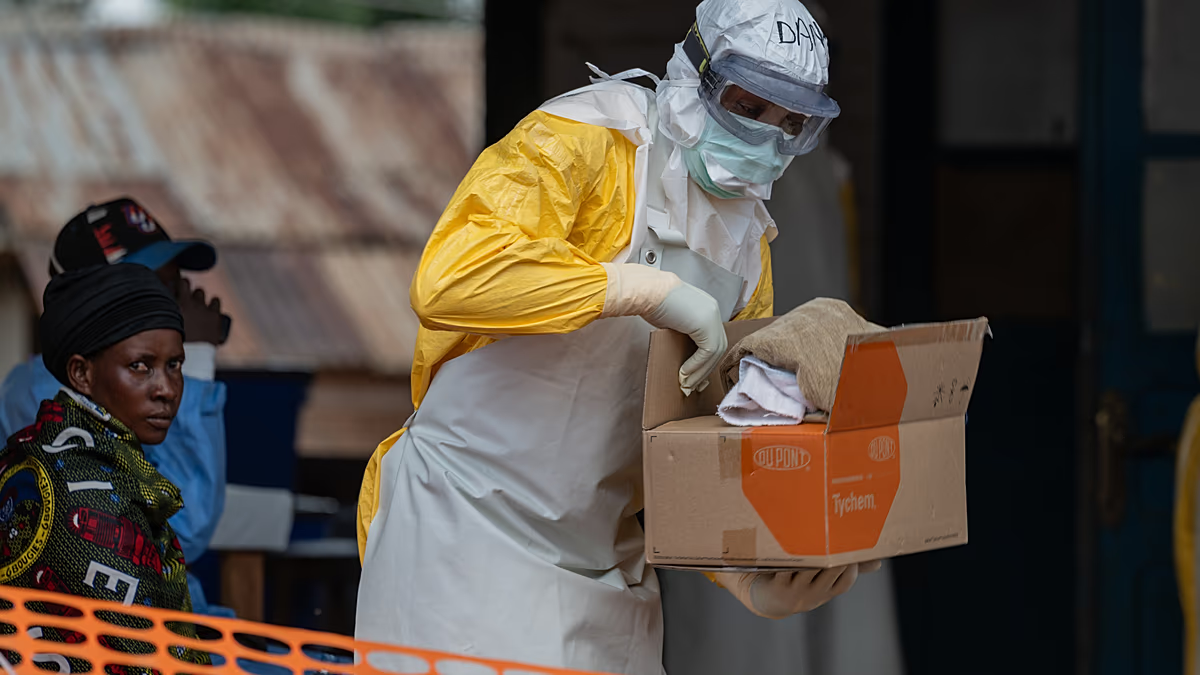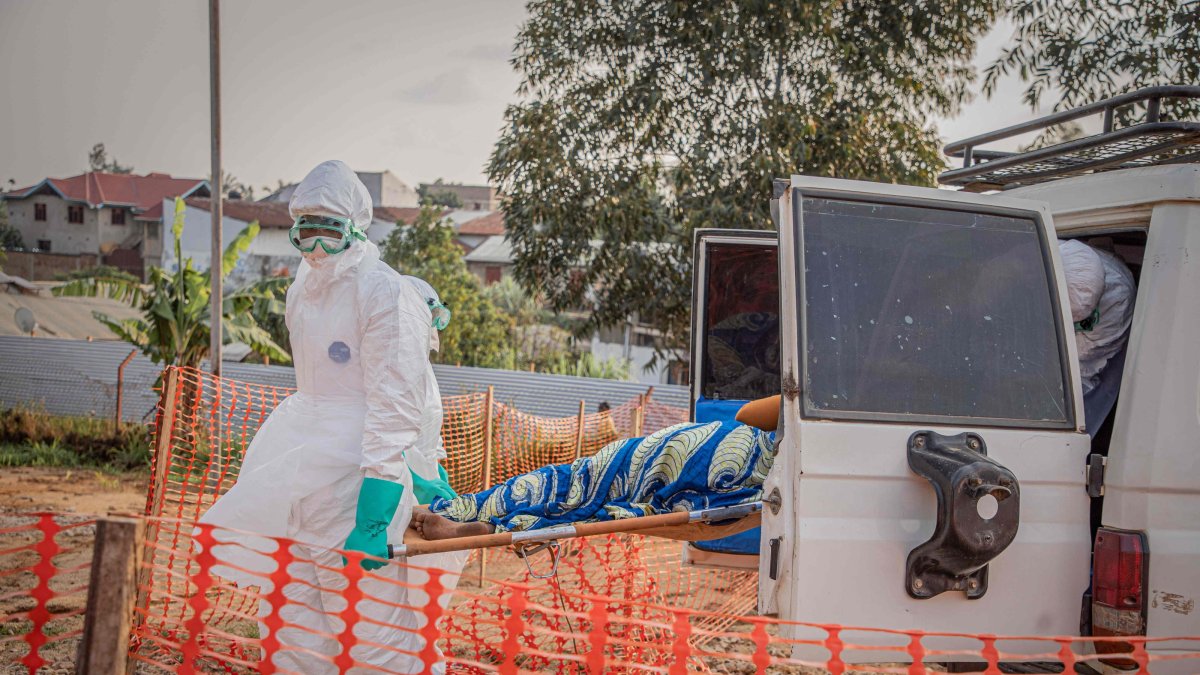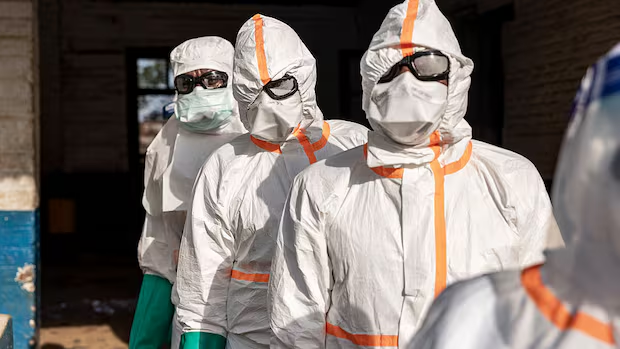
HealthCanadians with experience tackling Ebola are warning of major challenges in containing the spread of the virus in central Africa, as a fast-moving outbreak of the relatively rare Bundibugyo strain has hit more than 1,000 known infections.Canadian experts involved in prior outbreaks warn of challenges to contain virus spreadLauren Pelley · CBC News · Posted: May 26, 2026 4:00 AM EDT | Last Updated: 37 minutes agoListen to this articleEstimated 5 minutesThe audio version of this article is generated by AI-based technology. Mispronunciations can occur. We are working with our partners to continually review and improve the results.Workers line up to disinfect their protective equipment at a hospital in the Democratic Republic of Congo, where the Ebola outbreak has topped 1,000 suspected cases and hundreds of deaths — and scientists are warning containment will not be quick or easy. (Michel Lunanga/Getty Images)As news broke of an Ebola outbreak in the Democratic Republic of Congo over a week ago, Jason Kindrachuk felt optimistic, knowing the competence of the local responders and health-care workers he's previously worked with on the ground.But in recent days, the Canadian microbiologist says his optimism about containing the outbreak has faded. There are now more than 1,000 suspected cases and hundreds of deaths, mainly across northeastern Congo, along with seven in neighbouring Uganda. Scientists suspect the true tally is far higher, as the outbreak was likely growing for weeks or more before global health officials became aware. It’s also linked to the relatively rare Bundibugyo form of the Ebola virus that doesn’t have any approved treatment or vaccine."It’s really a race against time," Kindrachuk, a University of Manitoba associate professor, told CBC News. "The faster we can identify suspected cases … the faster that we can try to get things contained."LISTEN | Congolese health-care workers face an uphill battle:As It Happens6:02Congolese health-care workers face public distrust and armed attacks The people working full-time to respond to the ebola crisis in the Democratic Republic of Congo are facing hostility. Three times in the past week, health-care facilities have been attacked by armed men. Ahmed Mahat, manager with International Medical Corps, spoke to As It Happens host Nil Kӧksal about his work building isolation wards for ebola patients, while trying to build trust and within the wider community. Outbreak will 'get worse before it gets better'On Monday, the World Health Organization’s director-general echoed that sentiment. During a virtual briefing with African officials, Dr. Tedros Adhanom Ghebreyesus said the delay in detecting the outbreak means teams are "now playing catch-up with a very fast-moving epidemic" that he expects will "get worse before it gets better."This Ebola outbreak is particularly worrying. That doesn't mean it's a threat to CanadiansThe challenges facing health-care workers are immense. Alongside the lack of a vaccine to prevent new infections, there is also intensifying violence in Congo’s embattled Ituri and North Kivu provinces and significant distrust of outside authorities. Tensions flared up during multiple recent incidents, including fires set at health-care facilities and dozens of Ebola patients fleeing treatment sites. "We are urgently scaling up operations," Ghebreyesus said, "but at the moment, the epidemic is outpacing us."WATCH | Congo suspends gatherings amid Ebola outbreak:D.R.C. suspends large gatherings as WHO raises Ebola public health risk to 'very high'May 23|Duration 9:38The World Health Organization (WHO) has raised the public health risk from the current Ebola outbreak in the Democratic Republic of Congo (D.R.C.) from 'high' to 'very high.' Bronwyn Nichol of the International Federation of Red Cross and Red Crescent Societies says the organization has launched a regional emergency appeal to strengthen community-level responses to the outbreak.First responders at risk given lack of vaccineKindrachuk and other Canadian experts with personal experience tackling Ebola say the path forward will be rocky.This is a much more complex situation than other recent Ebola outbreaks, said Kindrachuk, who worked in Liberia during West Africa’s massive 2014 epidemic of the Zaire form of the virus, which led to tens of thousands of infections over a period of more than two years. There was no vaccine at that time, either. But as a result, the current Ebola shot is tailored to the Zaire virus.As rare Ebola virus spreads in Congo, residents say 'nobody knows whether they are safe'Efforts to test experimental vaccines for the current outbreak are now being scaled up, including a shot developed out of Oxford University that is loaded with genetic code from the Bundibugyo Ebola virus, according to media reports. But it won’t happen overnight. Amid deadly Ebola outbreak in Congo and Uganda, Canada not banning travellersCanadian vaccine researcher Darryl Falzarano, who has previously worked on antiviral strategies for Ebola, said there’s frustration among scientists that there aren’t working, approved vaccines for non-Zaire forms of the virus given the science is already there. "It's not a technological reason," Falzarano said. "It’s a societal, financial reason."Canadian microbiologist Jason Kindrachuk, fourth from the left, working in Liberia in September 2014 during an unprecedented epidemic of Ebola in West Africa. (Supplied by Jason Kindrachuk)Logistics make situation 'difficult'At a basic level, the logistics of tracking infections and moving workers and supplies through Congo are fraught given the country’s massive size and ongoing conflict. "That's led to a lot of people that have been internally displaced," said Kindrachuk. "As we have people that are moving out of these zones where there are infections or circulation of disease, it becomes harder to track, right? All these pieces are conflating together to make things much more difficult."VideoEbola outbreak in Congo and Uganda a global health emergency: WHOSpeaking from his own experience, Kindrachuk said remote regions of Congo can be tough to reach, since there are vast swathes of land without paved roads. He recalled one trip that involved treating malaria, where a short journey from the Congolese capital Kinshasa actually required a perilous, days-long journey.A Liberian man walks past an Ebola awareness painting in downtown Monrovia, Liberia, in 2015, during a massive epidemic of the virus. (Ahmed Jallanzo/EPA)Ongoing interruptions in care, contact tracingIn Congo’s Ituri province, the epicentre of the current Ebola outbreak, nearly five million people live amid ongoing conflict, according to the WHO. Health and humanitarian workers are among those fleeing violence in the region, the organization said, which is "severely impeding efforts" to identify infections early enough to provide supportive care.Dr. Rob Fowler, a Toronto-based critical care physician at Sunnybrook Hospital who has helped with prior outbreaks in Congo, Guinea, Liberia and Sierra Leone, stressed that instability also leads to daily interruptions in contact tracing — the efforts to track down people who could be potentially infected by the virus, which is highly contagious through bodily fluids.Africa's climate is also challenging to work in, given the need for constant personal protective equipment, he said. Fowler has helped push for PPE that's made to be reusable and equipped with fans to cool workers down — otherwise, he said, it's impossible for teams to care for patients for long periods of time.VideoEbola outbreak spreading fast in Congo, WHO warnsThere was huge risk to teams working on the ground in the pre-vaccine era of 2014 and major reliance on personal protective equipment, Kindrachuk recalled. "We’re back into that … we need to ensure we can get folks tested diagnostically if there’s any issue and get them out to care if they do show any symptoms."Underpinning those challenges? The public health infrastructure is limited to begin with, Fowler said, relying upon resources from international partners to shore up diagnostic testing and safe care."And over the last couple of years, there’s been a lot less international support and aid."ABOUT THE AUTHORLauren Pelley is a senior health and medical reporter for CBC News. She's a two-time RNAO Media Award winner for in-depth health reporting in 2020 and 2022, a silver medallist for best editorial newsletter at the 2024 Digital Publishing Awards, and a 2024 Covering Climate Now award winner in the health category. Contact her at: lauren.pelley@cbc.ca.@LaurenPelleyWith files from Amina Zafar
'Race against time' to contain Ebola outbreak in central Africa as infections top 1,000 | CBC News
Canadians with experience tackling Ebola are warning of major challenges in containing the spread of the virus in central Africa, as a fast-moving outbreak of the relatively rare Bundibugyo strain has hit more than 1,000 known infections.
1,321 words~6 min read