Said the Dead Author: Doireann Ní GhríofaISBN-13: 978 0 5713 9616 0Publisher: Faber & FaberGuideline Price: £18.99Already the author of several books of poetry in Irish and English, Doireann Ní Ghríofa came to wider public attention with her 2021 prose debut A Ghost in the Throat. I avoid genre categorisation because the book did: it blended autofiction, essay, memoir and poetry.A Ghost in the Throat was structured as a quest by a woman – very like Ní Ghríofa – for the truth about the 18th-century Irish noblewoman Eibhlín Dubh Ní Chonaill, author of the poem Caoineadh Airt Uí Laoghaire (The Lament for Art O’Leary, roughly anglicised). But it came most to life in the narrator’s account of her own experiences – the section on the birth of her fourth child is a masterclass in life writing – and in Ní Ghríofa’s own translation of the poem, which was full of blood and thunder.How do you follow that? Five years on, we have Said the Dead. Like Ghost, it’s evasive in its form, but below the framing of a first-person prologue (“A knock in the night ... I took her in”), it’s mostly from the viewpoint of a woman referred to as “the Reader”, and with whom Ní Ghríofa in the author’s note says she shares some “similarities”. A primped and plumped history-memoir, then? Maybe.But the Reader is not the main character, not quite: that honour goes to Dr Lucia FitzGerald (nee Strangman), “the very first woman doctor to enter into the asylum service of Ireland”. Lucia – she is referred to by first name throughout the book – was a doctor at Cork District Lunatic Asylum at the turn of the 20th century, when the institution held 1,347 patients. (The concern of the senior staff with overcrowding “was strongly shared by the Inspector of Lunacy”.)The Reader becomes aware of the asylum building because today – or more accurately a few years ago, during Covid, the “now” of the book – it is up for sale, being converted into what estate agents would call residential units. She is drawn to the place, and to explore the casebooks of its patients, which are presented to the Reader by archivists wearing gloves, like magicians. And “once someone said something in those blue pages, they said it forever”.So Said the Dead is at heart an account of the records of the female patients in the asylum, as recorded by Lucia and others in the casebooks. There’s a dark poetry to the extracts that Ní Ghríofa shares of the words reported: “Says that fairies work on her nerves, and she hears the voices of fairies talking to her at night.” “Says the world makes her happy, that there is joy going about.” “Says she drank all the beer in Guinness’s brewery.”The book then proceeds with two stories in parallel. First there is the Reader’s experience of going through the archives, even as builders are at work in the asylum itself, busy remaking it. The other is the parallel story of Lucia and her accounts of the female patients.Reasons for admission are often female-coded. “Possible cause of insanity” for one patient is “excessive childbearing”; for another, “shock and menopause at the same time”. The intrinsic sexism of the medical structures is of interest to the Reader, though she has little to compare the women patients’ treatments to: when she looks at male case books, she quickly flees, disturbed by the notes there of violence against women and children. (By contrast, when a female patient threatens to stab a doctor in the heart, and makes to attack him with a chair, the Reader sees her as a “vulnerable woman”, and the doctor as the aggressor, “[using] his pen against her” by recording her as “dangerous” in the notes.)There are extraordinary stories here from the patients, both in the asylum and at nearby Mile House, established by Lucia and her husband, John FitzGerald, as probably Ireland’s first outpatient psychiatric clinic, which helped people avoid being held in the asylum. Some patients, such as Muriel, have enough in their stories – shooting, stillbirth, imprisonment, death – to fuel a novel.And yet, despite the urgency and power of the stories, and the overarching structure of Lucia’s time, what Said the Dead lacks in comparison to A Ghost in the Throat is engagement with the author’s own life. We get only tantalising hints in bursts of poetry or parenthetical phrases – her “distress had twice sent her clambering the river railings seeking her ending”, we’re told, but no more – and the choice of the patients’ stories seems arbitrary without an anchor to the author’s own.There is one rationale for why the stories are chosen, and why they stop where they do. The Reader is hampered by the archivists and their strict adherence to the 100-year rule, which means that no entries after the early 1920s may be accessed. But as readers we can be happy about that. If the Reader – and Ní Ghríofia – hadn’t been stopped from going any further, we wouldn’t have this interesting book to read. She would be there still.John Self is a Belfast-based critic
Said the Dead by Doireann Ní Ghríofa: Interesting stories from the lunatic asylum
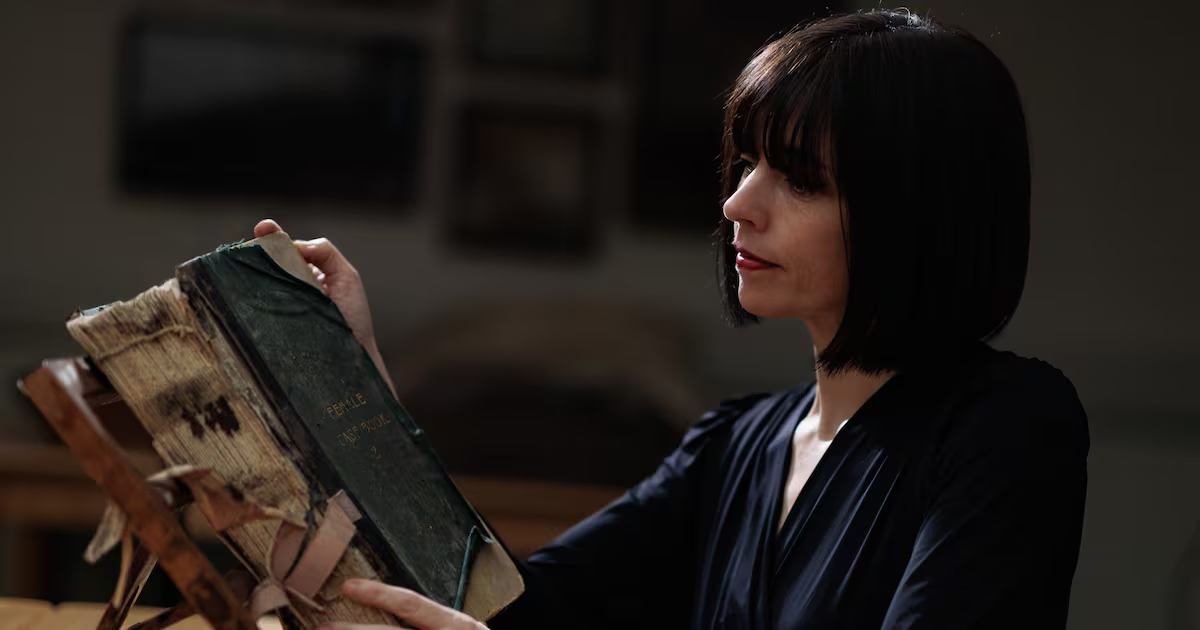
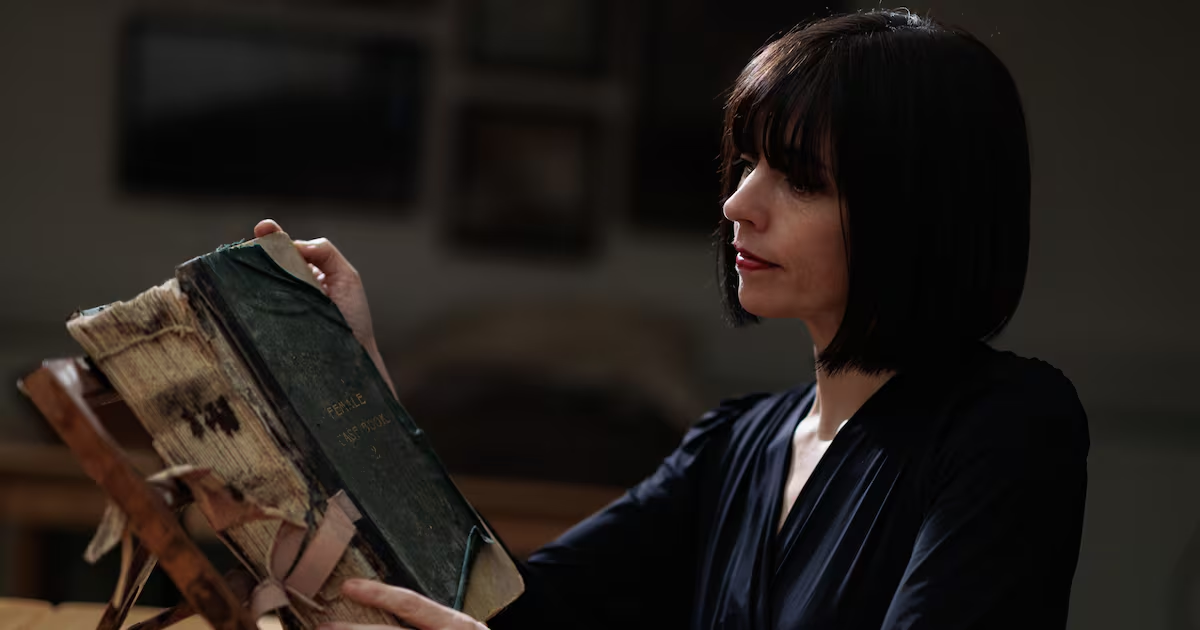
This book is at heart an account of the records of the female patients in Cork District Lunatic Asylum at the turn of the 20th century
TL;DRAI
Said the Dead reconstructs Cork Lunatic Asylum's 1,347 patient casebooks through Dr Lucia FitzGerald, Ireland's first female asylum doctor, c. 1900. Without Ní Ghríofa's autobiographical anchor — central to her acclaimed debut — the patient stories, though vivid, feel structurally unmoored.
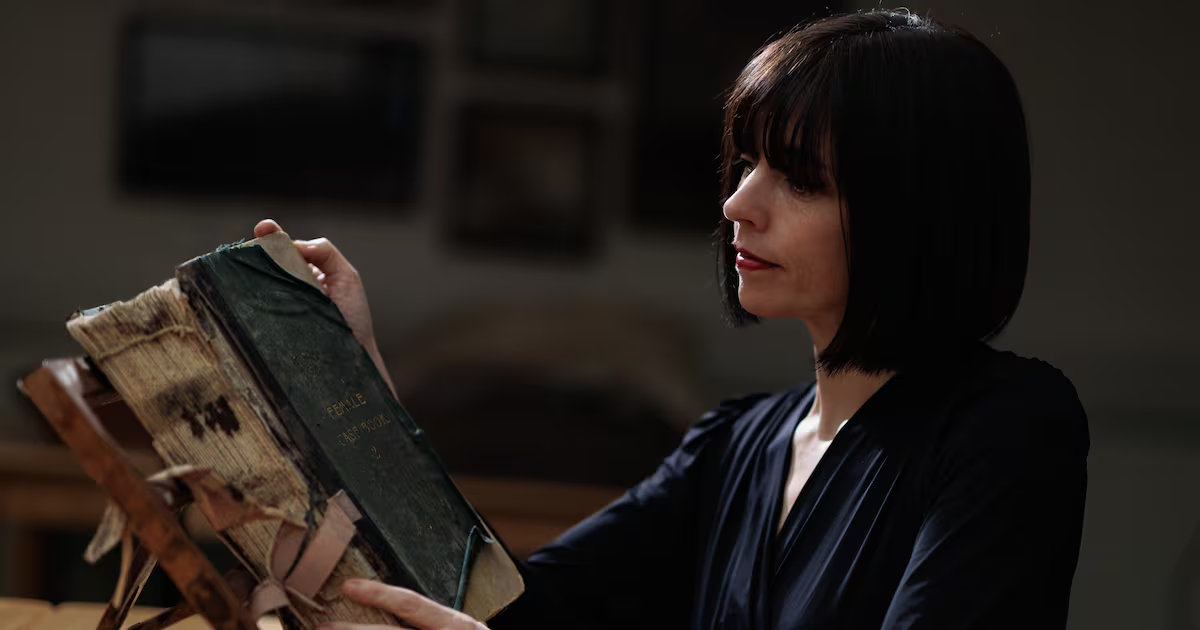
860 words~4 min read