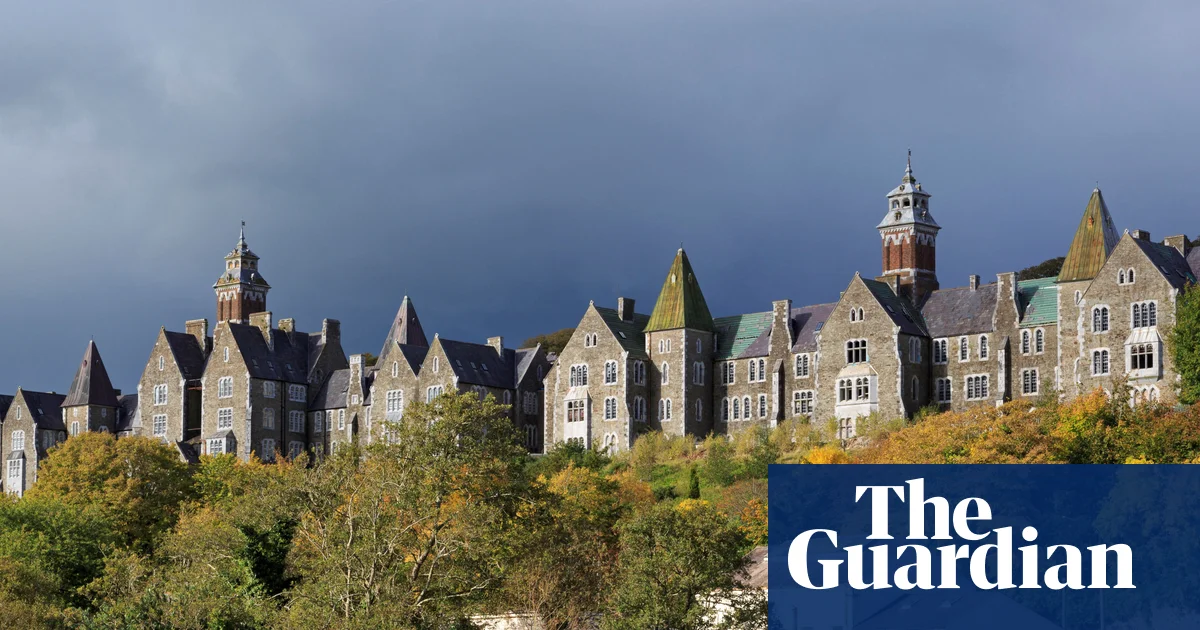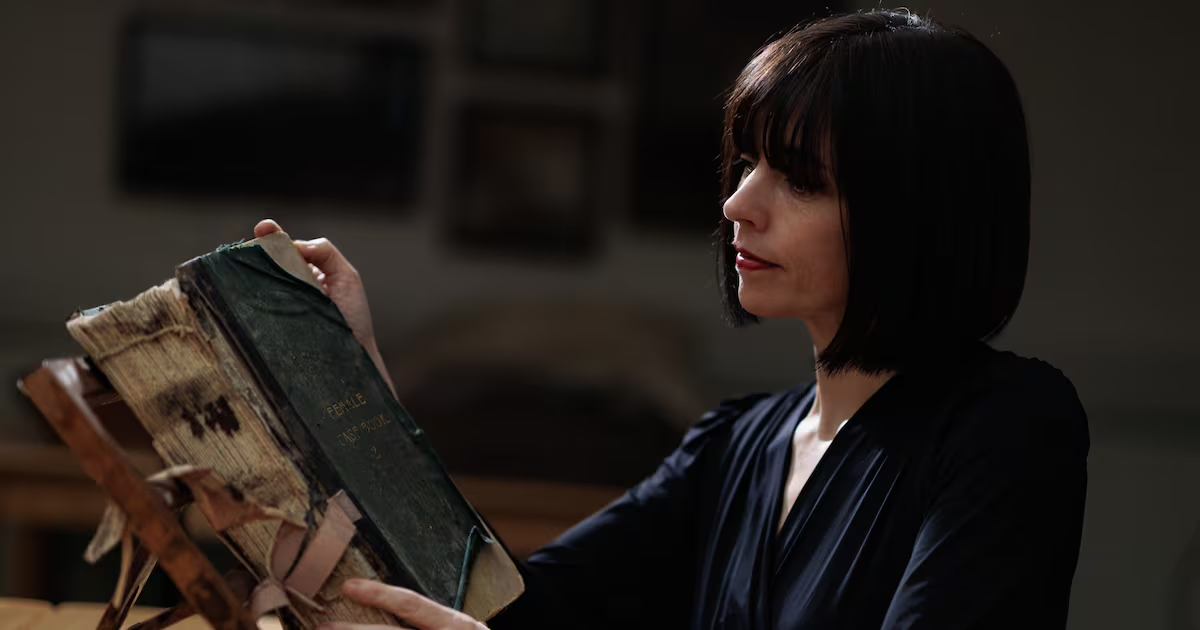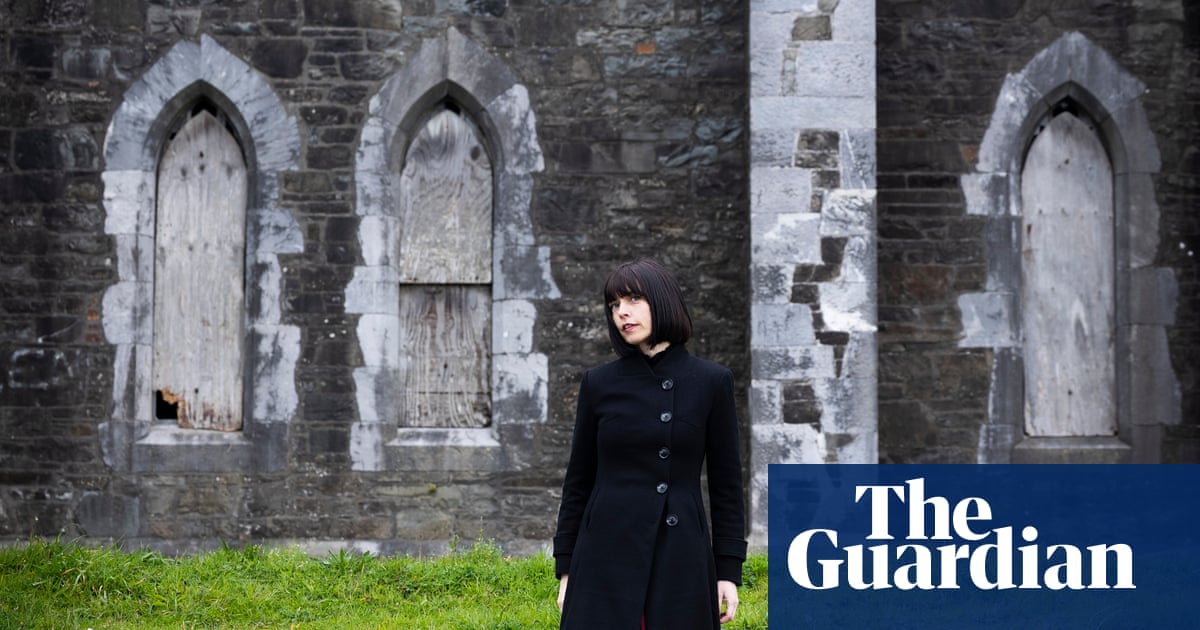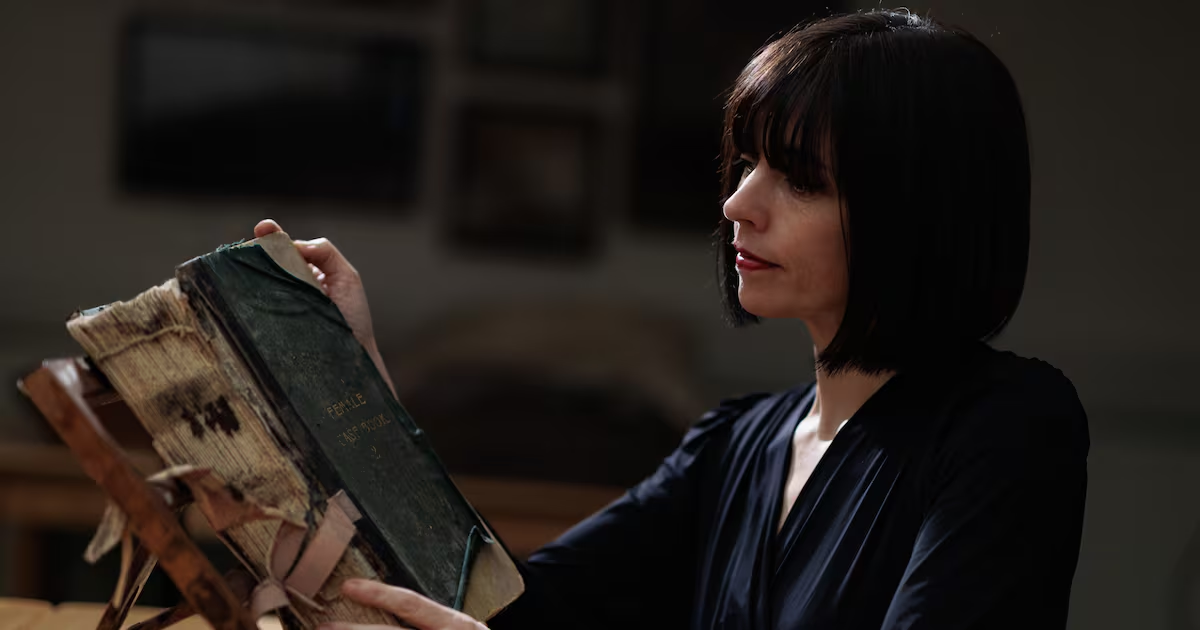
On a sunny afternoon in Cork, on the north bank of the Lee, the vast grey-stone Gothic Revival building of Atkins Hall is an impressive sight. Once known as Our Lady’s Psychiatric Hospital, and home to women with delusional disorders, the building now lies partly abandoned and partly redeveloped as luxury apartments. A crowd gathers behind the building, waiting for Doireann Ní Ghríofa to lead us inside.The writer, who lives nearby, emerges from a doorway to welcome us, elegant and formal, dressed in a full-length dark silk skirt and high-collared jacket. With her pale skin and black bobbed hair, she is uncannily suited to the setting: delicate, faintly Victorian, even a touch vampiric.She explains that the site we’re about to enter, for an event that’s part of Cork Midsummer Festival, used to be a ballroom for the patients; in the late 19th century, music was believed to be useful in treating mental illness. Said the Dead, Ní Ghríofa’s latest book, grew from her time studying the hospital’s archives as artist-in-residence.As she speaks a plane passes overhead. Ní Ghríofa pauses and waits for the rumble to fade. It reminds her of something, and she veers off script: during her research she encountered a patient who hallucinated hearing aircraft flying above her. The idea is alluring: that Victorian delusions might be whisperings from the future.“This building is very porous,” Ní Ghríofa says. “Feel free to close your eyes and let your attention drift.”We follow her into a churchy, derelict hall. Moss spreads across parts of the floor, and building materials lie forgotten under dust sheets. Light streams through the tall, narrow windows.[ Doireann Ní Ghríofa: ‘In the past someone like me would have been brought to an asylum’Opens in new window ]Above us, on a balcony that once served as a bandstand, the Cork-born composer and musician Linda Buckley sits in a long black velvet dress and begins to play. Her ambient music fits the space perfectly: drony, melancholic and ethereal.Ní Ghríofa then reads from Said the Dead, the autofictional story of a researcher drawn into the lives of women once confined within these institutions.She tries to imagine their lives from inside, to inhabit their delusions, a difficult task given that the evidence available is at times shockingly dismissive, even cruel. “A stupid woman, miserable in appearance,” one doctor notes.Cork Midsummer Festival: Doireann Ní Ghríofa at the former Our Lady’s Psychiatric Hospital. Photograph: Bríd O’Donovan Ní Ghríofa’s writing is delicate, intelligent and atmospheric. It’s a ghost story, and she reads it softly. One particularly charged scene describes the appearance of a patient’s dead mother, her laced shoe suspended mid-step on a staircase, the toe hovering above the stair. “Who chooses the site of the apparition,” the narrator wonders, “the ghost or the witness?”At the end, Buckley rises to sing. Her voice echoes through the ballroom, trancey and haunted.Book readings tend to be stuffy ordeals, but this stylish, site-specific event shows that they don’t need to be.
‘A stupid woman, miserable in appearance’: Doireann Ní Ghríofa leads us into a hospital’s haunting past
At Cork Midsummer Festival 2026, the Said the Dead writer brings visitors into the former Our Lady’s Psychiatric Hospital
494 words~2 min read