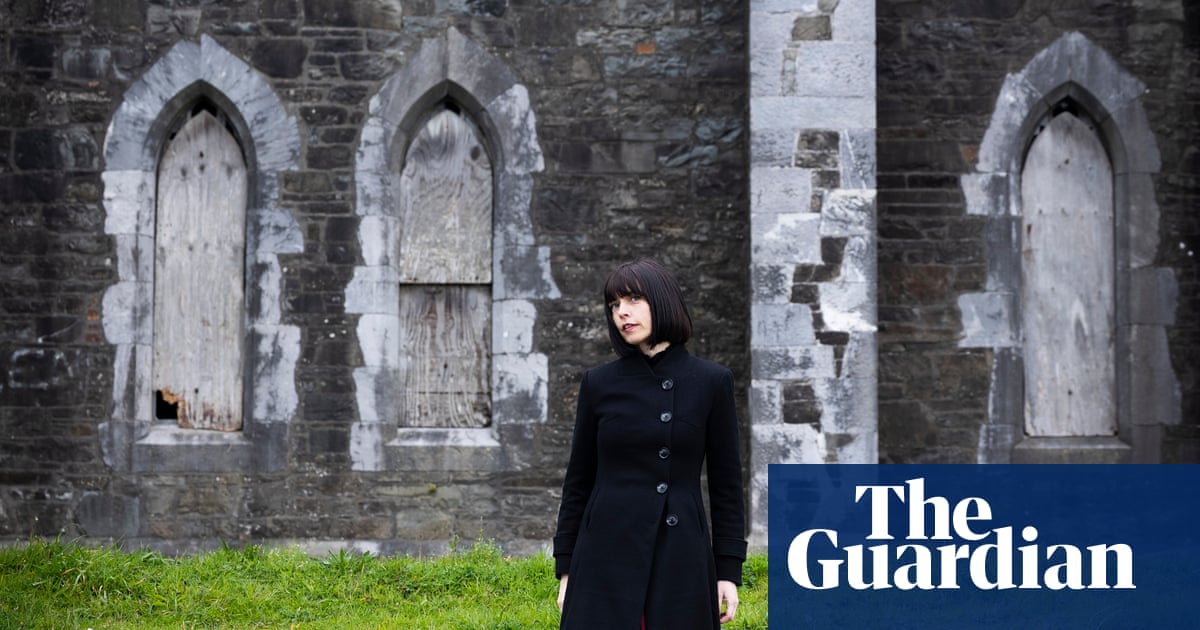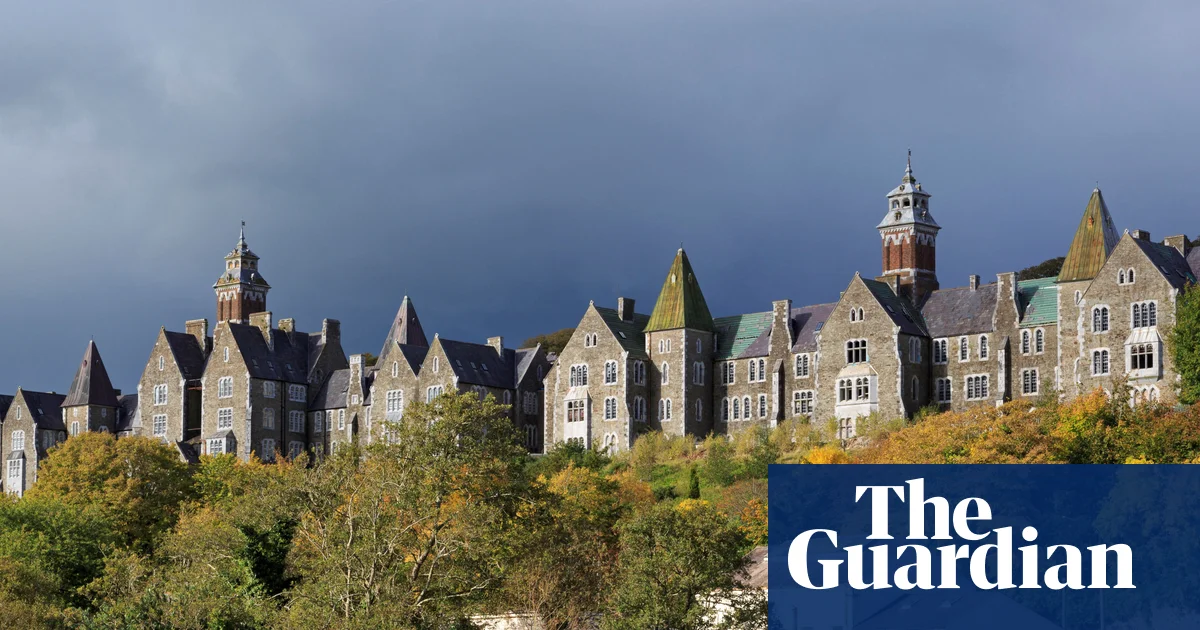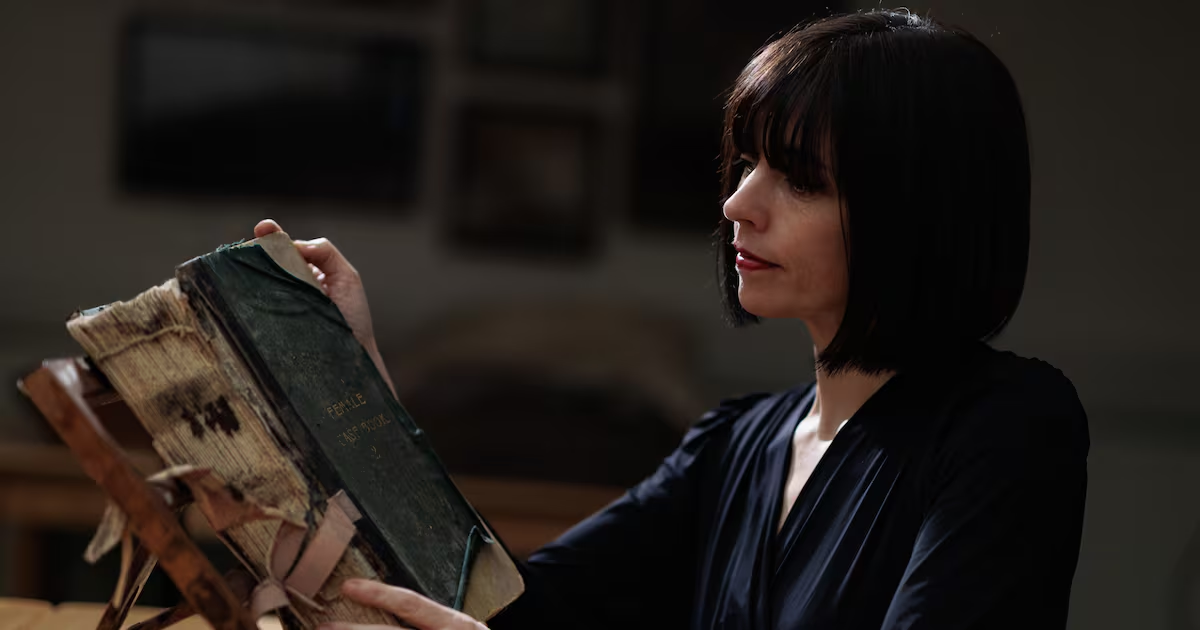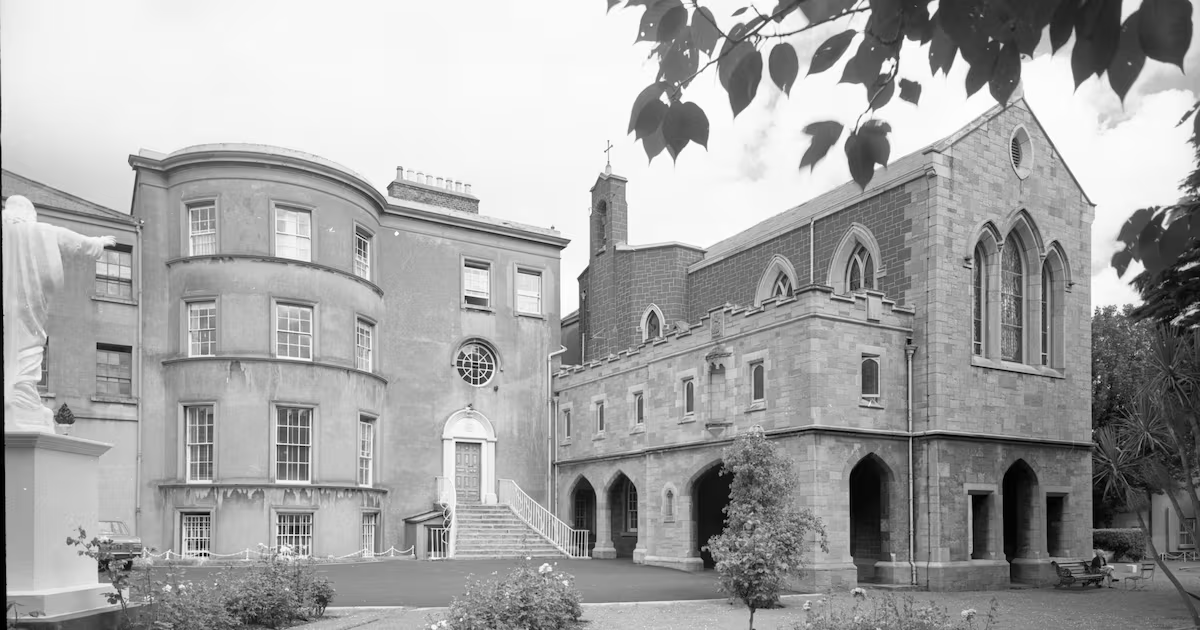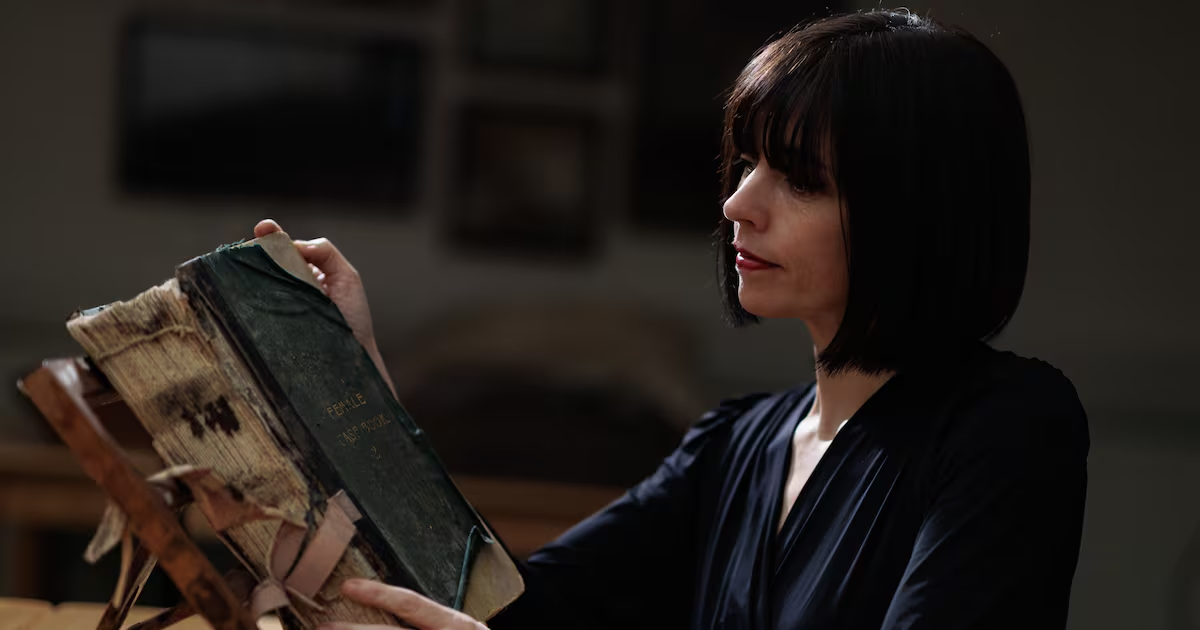
As someone who has long suffered from depression and as a writer fascinated by the past, it makes sense that Doireann Ní Ghríofa was drawn to explore the history of the derelict hospital near her home which was once Cork District Lunatic Asylum. “I still struggle to say those words,” she says. “It sounds so harsh to our ears.” Ní Ghríofa made her name as an Irish-language poet before winning the Rooney Prize in 2016 for Clasp, her first collection in English. Its standout poem, The Horse under the Hearth, recounted Eibhlín Dubh Ní Chonaill’s revenge on the man who killed her husband Airt Uí Laoghaire. Four years later, her magnificent obsession with the creator of Caoineadh Airt Uí Laoghaire blossomed into A Ghost in the Throat, a highly original blend of literary biography and autofiction, her own life story as a mother, which won Irish Book of the Year and the James Tait Black Prize for biography. Said the Dead, her new book, might again defy definition but it does not disappoint. Deeply researched but also richly imagined, it rescues from historical oblivion one of Ireland’s first woman psychiatrists, Dr Lucia Strangman, and many of her patients, including Muriel MacSwiney, whose husband Terence, the Sinn Féin Lord Mayor of Cork, died on hunger strike in 1920. “Lucia’s casebooks about the patients that she is trying to help are found in the 21st century by a character who is very much like me, who is called the Reader, who feels these people coming to life in her own mind,” Ní Ghríofa says. “The book is in love with the act of reading. It has enriched my life. I’ve never lost that childlike awe and astonishment, its ability to pluck me out of my own life and to fling me somewhere else. “These buildings looming over so many of our towns and cities are so visible, so shocking, they look like strange, sad Gothic places of confinement because oftentimes that is what they were – extremely dark and horrific, especially in more recent times.” But Lucia’s casebooks gave her a new perspective. “As biographers, we have a lot to learn from our subjects, why we are drawn to them,” Ní Ghríofa said of her study of Ní Chonaill. What did she learn from Lucia and Muriel, and why was she drawn to them? “I suppose all my life I’ve had experiences of depression,” she says. “As a young woman, I decided to end my life but I was very fortunate, I was pulled back both times by passersby and so every time I passed that hospital I had a very strong sense of why am I still here and how am I supposed to keep living now?Doireann Ní Ghríofa: 'This book was growing as I was grieving the loss of my sister.' Photograph: Brid O'Donovan “In the past someone like me would have been brought straight to one of those institutions. There was also one right across the road from my primary school in Clare. I had a sense of that’s where my people would have been, a long lineage of people who something similar might have happened to. I would have maybe assumed that you would be there for life. Some stayed, some died of tuberculosis, but what astounded me was the number of people who left again, returning to their own lives, and never came back.” Why was she suicidal? “Anyone who decides that they need to end their life, it is incredibly complex and nuanced, extremely deep and very sad. I struggle to even put that pain into words myself.” How did she heal? “Whereas in the times I was studying you would be brought under the care of someone else, that wasn’t something that happened for me. I shambled through and was lucky to fall in with a group of incredibly close friends. I met my husband soon afterwards. Other people helped me through, rather than structures.” “What might it reveal of her pain,” the book asks, “that she chooses to immerse herself entirely in the lives of others?” Why did she want to escape her own life to write this book? “I don’t know why I’m like this, why I disappear myself into the act of writing.”‘I’m not great about boundaries. Because the books feel like a quest, I’m almost living that quest’— Doireann Ní GhríofaIs it an escape from the self or just a fascination with something else? “I think it’s both. Looking towards the past allows me to escape from myself in some way. The kind of writing I do requires hundreds of hours in the archive and my research file is well over a thousand pages long.” Often with historical fiction, writers do the research, make copious notes and put them in a drawer for months or never look at them again, creating their fiction from the essence that remains, vivid enough for them to remember. Ní Ghríofa’s approach is very different. The research becomes the spine of the book, a deliberate stylistic choice. We see the Reader in the archives getting told off for putting on a coat because it’s cold, warned not to note down names. This device is not to compensate for a dearth of material. “It was the opposite, there was this colossal volume of information in the archive. Sometimes we talk about this as being almost a hidden history, but it’s so public. The minutes of board meetings were published in the Examiner. The kind of books that I’m drawn to write, I want to do the thing that you learn in primary school maths – show your work, show us how you got here. In historical fiction, I agree with you; Hilary Mantel, she’s not a character. “This book and Ghost are both the story of a quest in their purest form. I’m inviting the reader to join me in the archives, the struggle to research a vast history.” [ Book of Lives by Margaret Atwood: a literary titan on the art of writing – and art of livingOpens in new window ]A Ghost in the Throat was told in the first person, whereas Said the Dead is narrated by the Reader, Ní Ghríofa’s alter ego. “It’s funny, you’d think disposing of the first-person singular would have a distancing effect but in fact I feel as if I’m inviting the reader to look through my eyes, to read as the Reader is reading. That is closer than the first person, the reader is no longer beside me but the reader is inside the book, it’s more like we.” How would she define her works? “I describe them as books – poems, which are short books, or adventures, which are long books, and this one is an adventure. “As I develop artistically, I’m hovering like a bird of prey, riding the wind in very high circles over the landscape that draws me in. I’m able to circle that in a certain way through poetry when I am also parenting my four children that I gave birth to in six years. The concentrated moment of poetry allows you to really enter the heartbeat of almost a split second. “As my children got older, I felt a widening of my scope that allowed me to look towards prose. The artistic part of me enjoys having fun with trying something new and being really bad at it, the early part of trying something new is almost like play, you don’t feel like anyone’s watching you because you’re just trying it out. And that’s really liberating and it’s also fun because you’re surprising yourself on the page. And it’s so different from the distillation that’s required in poetry, it’s almost the opposite.“I write really weird books that are hard to describe. This one began so strongly in fact. And then there were moments where I wanted to bring it to life on the page as it felt it was coming to life in my mind – for example, a two-line report where a child was accidentally shot and died. That might lead to scenes that span several pages where I have tried to imagine the horror for that poor family. I feel a really powerful fidelity to the past and to do my best to bring it to life so that my readers can enter into that past as well.” ‘I feel there is a real living history that is almost tangible to us, in the air of a place’— Doireann Ní Ghríofa In Said the Dead, “a vivid flash of ... a laugh she’d never hear again” is a “knife of grief” for Ní Ghríofa’s alter ego. Later: “The death of a sibling shakes all the leaves from the trees, revealing thorns beneath.” Ní Ghríofa’s sister Éibhleann died of cancer in 2021, aged just 36. “I started the research for this book at the end of 2020 and my sister died a few months later, so this book was growing as I was grieving the loss of my sister, so I can feel her shadow moving through the book,” Ní Ghríofa says. “I’m very conscious that the grief I felt for my beloved sister is also experienced by other people so I don’t want to linger on it too much because it is not just my pain.” What of the toll of immersing herself in others’ often tragic lives? The Reader weeps, “such is the intensity of fatigue wrought by another plunge into a stranger’s life”. “I’m not great about boundaries. Because the books feel like a quest, I’m almost living that quest. I live the books, I think about them all the time, not just when I sit down at my desk. It wakes me up in the night, I find myself drawn to do things I wouldn’t normally do, like trespassing [in the derelict hospital], a level of literal physical danger,” Ní Ghríofa says. “What I hoped for after Ghost was to pull off an artistic leap. I am ambitious for my work, I care about it so much. Rather than working from published sources, I had to learn how to do the research myself, navigate archives. In this book you are following someone trying to figure something out, who will not baulk at spending hundreds of hours in an archive reading casebooks, at shoving herself sideways through a metal fence to get into very dangerous grounds, at using tools like hypnosis to try and enter the past. I followed steps left for me by Lucia and her husband John, how they treated their patients, to go into a deep moment of consciousness.” She believes in psychogeography. “I feel there is a real living history that is almost tangible to us, in the air of a place, if we can give ourselves the necessary silence to feel it. You feel the hum of something.” A Ghost in the Throat was mostly written in her car on the top floor of a Ballincollig car park. “Most of this was also written in my car. When the archive closed, I would park outside the hospital and write in the car there. It’s the spirit of the place, the atmospherics as the words are coming on to the page. I feel we open ourselves creatively when we go into a liminal space and allow other consciousnesses to filter in. I feel the shadows of those people and that institution quite literally coming across my car and over my body into my fingers and into the book.Doireann Ní Ghríofa made her name as an Irish-language poet before winning the Rooney Prize in 2016 for Clasp, her first collection in English “From the moment I began as a writer I felt myself very close to the kingdom of the dead. The first time I began to write was the night my grandfather was dying. The poem came to me like lightning through the dark, it was in Irish and about a funeral procession on an island I’d never been to, people carrying the dead along the sand. People are drawn towards poetry in times of great emotional distress. That moment changed my life.“My grandfather gave me such a gift in his leaving, even at a moment of great sorrow. I was a primary school teacher on maternity leave with my first child. I was not a writer, I wasn’t planning on this life at all. It’s a good lesson in how quickly things can change.” History is the throbbing pulse of her work, Ní Ghríofa has written. “I feel that’s what I’m for, to attend to the dead, to the past, the lives of those gone before us, to listen very closely and to make myself a good servant to them.” She believes there is a hunger for strange books, citing The Tower by Thea Lenarduzzi. “The dogged devotion I try to communicate through my books is like Tim Robinson and his walking of the land in a meticulous, painstaking way, psychogeography again. Intense attention to language and landscape. I really admire Mark O’Connell’s work, every new book really surprises me in a different way.” For the second half of our conversation she holds a hot water bottle for poor circulation. Before, she held what I thought was a shell. “You might not realise,” she says, “but I was very, very nervous. That was my security blanket, part of the bark of an old sycamore, a very special tree from where I’m from in Clare, Kilmaley, that has brought me a lot of strength. I held that in my hand for courage. I am not just carrying myself and my own story but the lives of other real women. I feel the importance of articulating things in a way that does them justice.” Ghost was a triumph not just for Ní Ghríofa but also its publisher. “Tramp Press are extraordinary. Speaking as a reader as well as a writer, they have changed everything about Irish publishing, they keep bringing out these amazing books. I loved working with them on Ghost and am incredibly grateful.” Said the Dead, however, is published by Faber. “As an Irish writer knowing the history of Irish literature to be published by Faber felt like a crossroads I would never imagine myself at.” That Faber would also publish her poetry was another key factor. She is working on a collection with editor Lavinia Greenlaw. “I have that sense inside me building again of an artistic leap.” Every story is a ghost story, she has said. “There are living presences in all our stories. The impact of Lucia’s life is so extraordinary, some element of her being is ongoing in me, I think and talk about her every day. I was very fortunate to come to know members of her family. That is her legacy but there is also a legacy in the descendants of each of her patients and now my readers will think of her and the other women. Those snatches of speech are alive in me like lines of poetry, like when you find a fossil in a stone.” Lucia’s most famous patient was Muriel MacSwiney. “She’s so precious and radical to me. Anyone who has studied hunger strikers will come back to Terence MacSwiney. I was very interested in that republican history as a teenager. They always mention the fact that Muriel didn’t go to his funeral. If nothing else this book really gave me an insight into her life. She had great passion and heart. Some people found that very difficult to handle, would rather that she be the polite widow who doesn’t speak. She was portrayed as an extremist by people who wanted to compromise, ostracised by people who didn’t want to be reminded of their principles.” The Strangman FitzGerald and MacSwiney Families at Mile House, Cork city. Reproduced by kind permission of UCD Archives. Papers of Mary MacSwiney A striking photo shows the MacSwineys with Lucia and her husband in the latter couple’s home. That the four were friends, even though Lucia had volunteered her services to the British army during the first World War, epitomises Ireland’s complex history. Ní Ghríofa is outspoken about the brutality of British colonialism in Ireland; the suppression of the Irish language; the violence of the Black and Tans; Anglo-Irish wealth and privilege built on the back of Irish labour; and Partition. “The North was lost, an abandonment she could never understand. “There are moments when the women in the asylum would speak a truth so simple and powerfully that it felt like poetry. ‘Ireland is mine.’ That’s how I feel. You don’t get to draw a line on which part of Ireland I’m talking about. I can well imagine how people feel abandoned. When I read the history of the time and the way decisions were made, I feel rage. I don’t understand the Border, I feel angry about all of it, I’m also conscious I’m not someone who suffered, I had a very safe life down here. “This book is hyperlocal. If I come out of my house and turn left, I end up at Lucia’s front door. I drive past the site of the Ballycannon massacre all the time. That history is very alive to me yet it’s a century ago. People talk about it in the past tense but it doesn’t feel like that to me because we are all still living with the repercussions.” Like A Ghost in the Throat, Said the Dead is a feminist text. Male medical views are questioned. “I think it is really important to record women’s lives. I don’t have a conscious agenda but as a woman what rises very quickly to the surface is how difficult society can be for women to navigate in this period.” Ní Ghríofa’s work is grounded in research but instead of academic distance she uninhibitedly inhabits the facts and her findings. “I want to get close enough to see the breath on the glass, then wonder is that cast by the reader or one of the women they are reading about. I could have written a PhD about this and it would have been very different. I tried to go inside the history, now we’re inside and this is what it smells like.” Said the Dead is published by Faber & Faber For support: Samaritans on freephone 116 123 or text HELLO to 50808.Pieta freephone: 1800 247 247 or text HELP to 51444. Or visit yourmentalhealth.ie
Doireann Ní Ghríofa: ‘In the past someone like me would have been brought to an asylum’
Author Doireann Ní Ghríofa on her new novel about a derelict mental hospital and how she writes ‘really weird books that are hard to describe’
3,083 words~14 min read