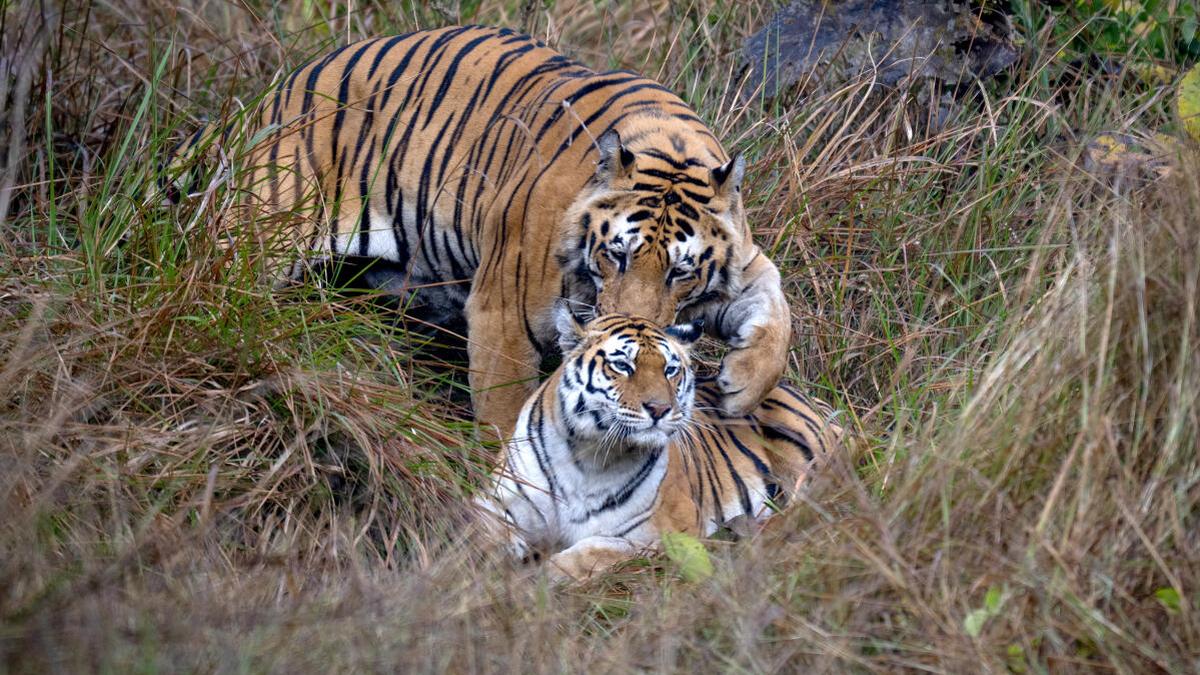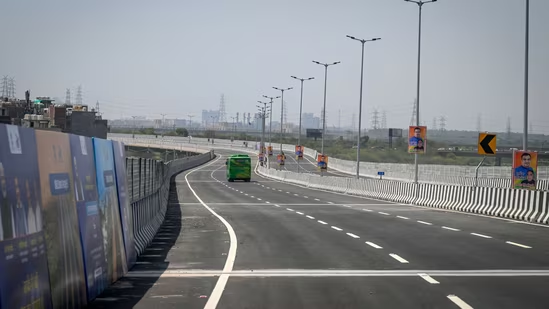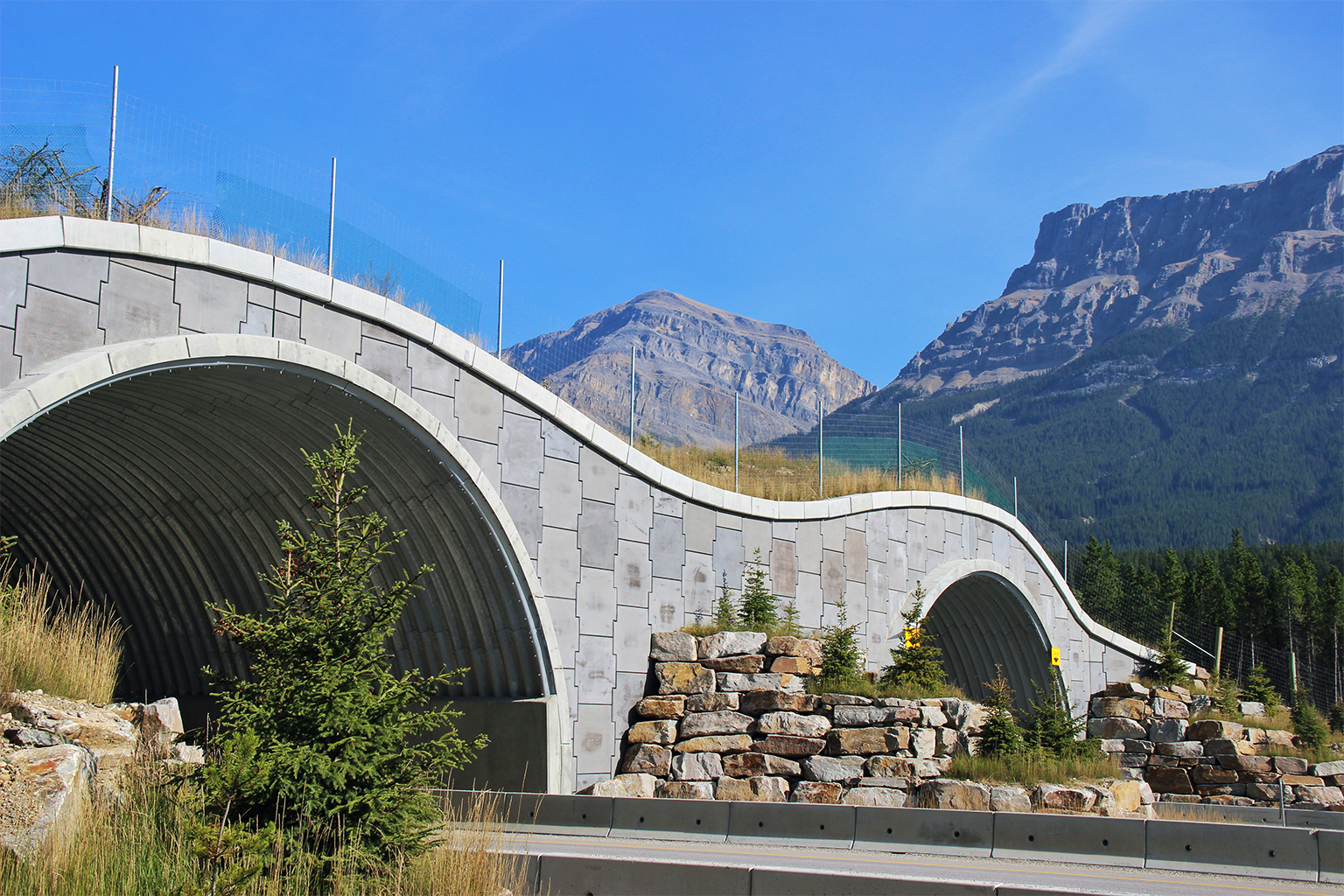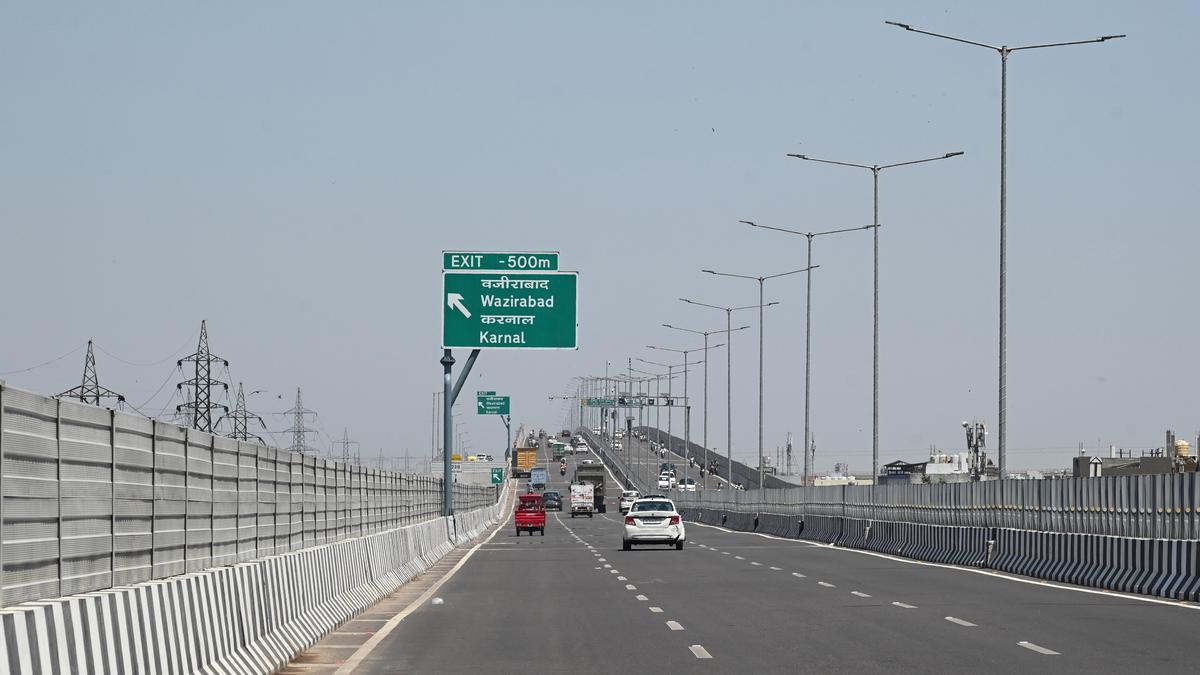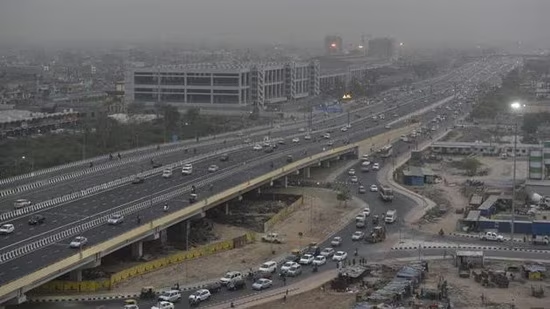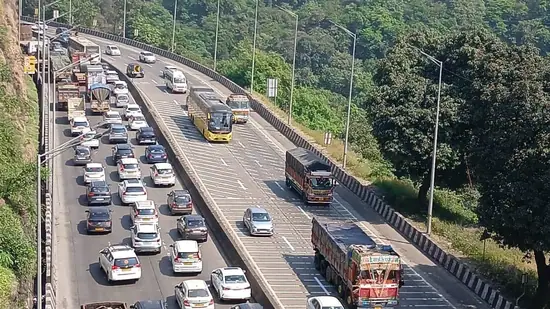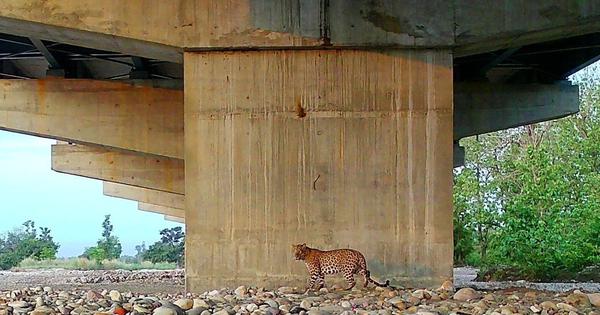
The Wildlife Institute of India has documented early evidence of wildlife using underpasses built along the Delhi-Dehradun Economic Corridor, a 200-km expressway that has been operational since 2025 and officially inaugurated last month, in April.The team studied a 20-km stretch, which is a crucial biodiversity area in the Terai landscape where elephants, tigers, great hornbills and king cobras are found. About half of this stretch, 10.97 km, includes elevated and underpass structures for animals to pass, built with the goal of reducing animal mortality, human-animal conflict and population isolation.The study area forms part of the wider Rajaji-Shivalik landscape, where highways, settlements and other linear infrastructure intersect with elephant movement routes between Rajaji Tiger Reserve, adjoining forest divisions and the Doon valley.For the study, the corridor was divided into three zones, including a riverbed, a hilly section and a sal forest stretch and data was collected using camera traps and acoustic recorders. About 150 camera traps were used on the structures in the first zone from May 16 to June 24, 2025, covering 40 days. In addition, 29 AudioMoth acoustic recorders were installed across the three zones to record traffic noise and assess how it may be influencing animals and what that meant for underpass use.Early evidence of useCamera traps recorded 111,234 images of humans, domestic animals and wildlife. Of these, 40,444 images showed 18 different wild species using the underpasses. Golden jackals were recorded most frequently, followed by nilgai, sambar, Indian hare and spotted deer. The study also recorded 60 instances of elephants using the underpasses.In terms of how quickly the animals adapted to the structures, nilgai were among the earliest and most frequent users, while elephants, golden jackals, hares, sambar and spotted deer were documented within the first five days of monitoring. Leopards, rusty-spotted cats and the grey mongoose appeared later in the sampling period of May-June 2025.The study results, released in February 2026, show that wildlife use was not evenly distributed across the structures. Elephants and ungulates clustered at specific points within the underpass and did not spread uniformly across the corridor.A herd of spotted deer uses an underpass along the Delhi-Dehradun Economic Corridor. The study found that several ungulates, including spotted deer and sambar, used quieter sections of the underpasses more frequently. Image from WII-NHAI study.Noise and disturbance The study found that noise may be influencing how different species use these structures. Using acoustic recordings, the researchers found that anthropogenic sound, mainly traffic noise, exceeded the biological sound or the sound of the animals, throughout the monitored stretch.When the authors compared species detections with sound conditions, they found that sambar, spotted deer and Asian elephants used the quieter underpass sections. By contrast, golden jackals, nilgai and wild boar were more often detected in noisier sections.The study also examined the timing of animal activity beneath the underpasses and how it overlapped with people, cattle and vehicles. Leopards avoided overlaps with human, cattle and vehicular activity and so did elephants. They were mostly recorded at dusk, dawn and night, when human disturbance was lower. Golden jackals were active at the same time as humans.The authors say further noise-abatement measures, including sound barriers in major crossing sections, could improve the structures for sensitive species.The 2026 WII report provides post-construction evidence that wildlife, including elephants, is using highway crossing structures on the Delhi-Dehradun corridor.“Early evidence of wildlife use is encouraging, but it should be seen as a starting point rather than proof of long-term success, because what matters is consistent use over time, across seasons, by multiple species, and particularly by groups such as elephant herds,” said Upasana Ganguli of the Wildlife Trust of India.Similar patternsThe Delhi-Dehradun corridor passes through the broader Rajaji-Shivalik landscape, where Rajaji Tiger Reserve, adjoining forest divisions and elephant movement routes intersect with highways, settlements and other infrastructure.The new report is not the first WII-linked assessment to document wildlife using highway crossings in the wider Rajaji-Shivalik landscape. A 2022 technical report by the Wildlife Institute of India and Uttarakhand Forest Department evaluated newly commissioned underpasses at Motichur in the Chilla-Motichur corridor and Teen Pani in the Kansrao-Barkot corridor. These underpasses are located in the Rajaji landscape along the NH-72 corridor, but are separate from the Ganeshpur-Asarori stretch monitored in the latest Delhi-Dehradun study.Motichur and Teen Pani are important crossing locations in the Rajaji landscape, where roads and other infrastructure intersect with wildlife movement between forest patches. The underpasses were built to move vehicular traffic onto flyovers while leaving space below for animals to cross.Elephants move under an elevated section of the Delhi-Dehradun Economic Corridor. A WII-NHAI study recorded elephants and other wild species using underpasses built along the highway. Image from WII-NHAI study.Over 94 days, the 2022 report recorded 1,468 images of eight individual mammals, including elephant, leopard, sambar, nilgai, chital and wild pig. At the same time, there were 32,194 records of humans, 2,429 livestock images and 113 feral dog images in the same period. The report stated that continued human presence was limiting wildlife using the corridors.The 2022 report also found that wildlife did not use all sections of the underpasses evenly. Areas with trails showed higher wildlife use. The report also found lower wildlife captures in sections near the Motichur range office complex, indicating that human activity and infrastructure around parts of the underpass may affect how animals use these crossings.It recommended restricting human activity below the flyovers, diverting all traffic to the flyover, allowing natural vegetation to regenerate, and carrying out long-term monitoring and periodic review.For elephants, the 2022 report found that while both solitary males and female herds with calves were recorded at Motichur, only solitary males were recorded at Teen Pani. It also noted that the elephant capture rate was higher at Teen Pani even though total elephant captures were higher at Motichur.Fragmentation concernsThese findings sit alongside court records on infrastructure-related fragmentation in the Shivalik elephant landscape. A January 2021 Uttarakhand High Court order in a public interest litigation recorded submissions that the Shivalik Elephant Reserve houses and preserves wild elephants that migrate across large areas and therefore require extensive habitat for survival.The court stayed the state notification de-notifying the Shivalik Elephant Reserve, observing that irreversible loss could be caused to both the environment and elephant population.Abhijay Negi, the lawyer representing the petitioner in that case, said the current findings by WII should be read cautiously. “It is too early to tell if these measures have solved the crossing issues, but nature does have resilience,” he said.On the underpasses themselves, Negi said they correspond with known movement routes, but not all elephant crossings are captured by such structures.Negi also criticised the broader planning approach. “There is a massive gap between planning and actual corridor use,” he said. “Studies were conducted with the primary goal of implementing this mega infrastructure project, which carries political connotations.”This article was first published on Mongabay.
Early signs of wildlife using underpasses along Delhi-Dehradun eway, shows study
Noise may be influencing how different species use these structures.
1,149 words~5 min read