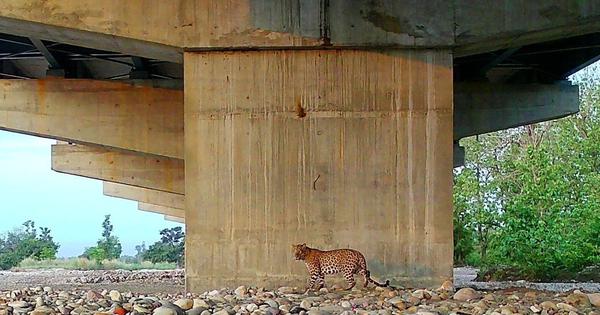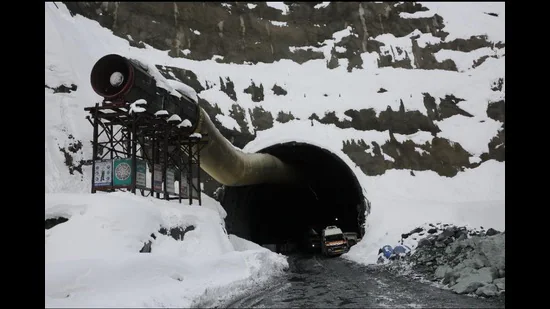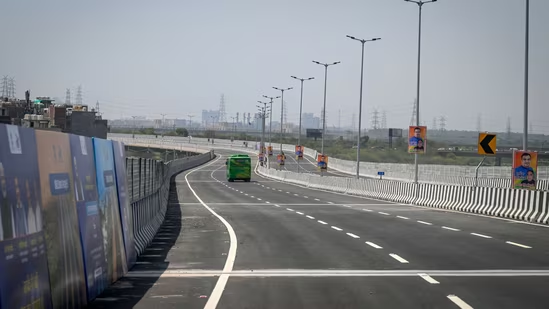
India’s first eight-lane highway tunnel, constructed below a tiger reserve in Rajasthan’s Kota district on the Delhi-Mumbai Expressway, is set to open for all vehicular traffic in August, with safety trials currently underway.The tunnel is expected to substantially reduce travel time on the Delhi-Vadodara stretch of the Delhi-Mumbai Expressway. (Sanchit Khanna/ Hindustan Times)The 4.9-kilometre twin-tube tunnel, located beneath the Mukundra Hills Tiger Reserve (MHTR) in Rajasthan on the Delhi-Vadodara section of the expressway, has already been opened for cars and emergency vehicles following the completion of safety inspections. The authorities will only allow heavy vehicles and all other traffic after completing additional evaluations of safety systems and mobile network connectivity within the tunnel."The eight-lane highway tunnel on the Delhi-Mumbai Expressway beneath MHTR has not yet been officially opened for all vehicle categories. Currently, only trials are underway with light vehicles such as cars," project director Sandeep Agrawal from the National Highways Authority of India (NHAI) in Kota told news agency PTI.While the civil work on the tunnel is nearly complete, other ongoing work inside the tunnel is being conducted alongside regular testing, he added.Agrawal noted that the tunnel is expected to officially open for all vehicle categories in August, following directives from the Union Ministry.The tunnel is expected to substantially reduce travel time on the Delhi-Vadodara stretch of the Delhi-Mumbai Expressway by eliminating nearly 25 km of winding road through the reserve.Officials anticipate that once the entire expressway is fully operational, the overall travel time between Delhi and Vadodara could be reduced from approximately 20-22 hours to about 10-12 hours.What is special about the tunnel?According to NHAI officials quoted by PTI, the tunnel has been constructed entirely beneath the tiger reserve to avoid disturbing wildlife movement and to preserve the forest ecosystem.Its design allows animals to move freely above the tunnel without interference from highway traffic, making it an exemplary case of integrating transport infrastructure with environmental conservation.The tunnel features twin tubes, each carrying four traffic lanes, making it India's first eight-lane tunnel beneath a wildlife sanctuary.Specialised engineering techniques were used in the development to minimise ecological impact while ensuring safe and efficient traffic flow.The project took over four years to complete, during which engineers overcame geological and environmental challenges while adhering to stringent conservation standards. Wildlife corridors in the reserve have been maintained to ensure the uninterrupted movement of tigers and other animals.An NHAI official said the phased opening with trial would continue until all safety features, including communication systems and emergency response mechanisms, are fully validated, after which the tunnel will be opened to all categories of vehicles, most likely after July 31 on any day in August this year.The project is being seen as a landmark achievement in combining high-speed transport infrastructure with wildlife conservation.
India's first 8-lane expressway tunnel under a tiger reserve to open in Rajasthan's Kota. All about it
The tunnel features twin tubes, each carrying four traffic lanes, making it India's first eight-lane tunnel beneath a wildlife sanctuary. | India News
458 words~2 min read