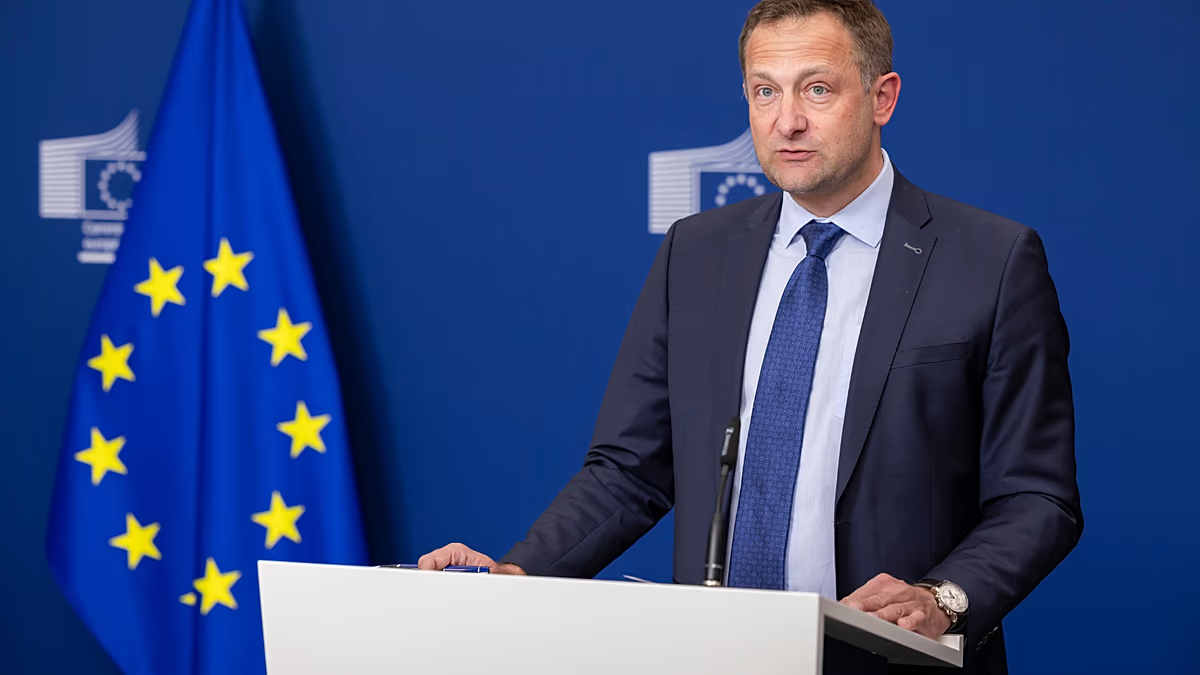
Fertiliser prices in Ireland jumped more than all bar one other country in the European Union at the end of last year, according to data published by Eurostat.A survey comparing the rise in prices of fertiliser the 27 EU member states last year showed price increases in Ireland were 7.3 percentage points above the EU average, and the second highest of the bloc’s member states.Fertiliser prices jumped by 15.3 per cent in Ireland year-on-year in the fourth quarter of last year. Only Romania, with an increase of 16.8 per cent, saw prices rise further, with the Netherlands next after Ireland at 12.1 per cent. Prices actually fell by 6.1 per cent in Bulgaria, and by 0.2 per cent in both Croatia and Lithuania.The survey results come following comments in the annual review of the Irish agricultural land market by the Society of Chartered Surveyors and Teagasc last month forecasting that the cost of buying or renting Irish agricultural land would rise by just 4 per cent this year, citing higher fertiliser and fuel prices as a drag on profit margins in the sector.On average, fertiliser prices increased across EU member states by 8 per cent in the fourth quarter of 2025, compared with the same quarter in 2024. Average fertiliser prices rose in each of the four quarters of 2025.That spike in prices followed two years of declining fertiliser costs across the EU.The results come as the European Commission on Tuesday announced a new Fertiliser Action Plan, under which Brussels will explore stockpiling fertiliser supplies and boosting European production, as the war in the Middle East piles pressure on farmers and risks exposing Europe to higher food prices. [ Irish fertiliser prices rose by 11.6% ahead of energy price spikeOpens in new window ]It also promised short-term “targeted fertiliser support” to farmers through existing Common Agricultural Policy (CAP) crisis tools. In addition to the plan, the commission said there would be a financial package presented before the summer to “provide immediate liquidity relief for farmers ahead of next production cycle”.Presenting the plan, EU agriculture commissioner Christophe Hanse said: “Food security starts with fertiliser security. Europe must produce more and depend less on others for the nutrients that sustain our agriculture.” Before the war, as much as a third of globally traded fertilisers transited through the Strait of Hormuz, leaving food supply chains exposed to disruption from the US-Israeli war against Iran. Nitrogen-based fertiliser prices last month were approximately 70 per cent above their 2024 average. – Additional reporting The Financial Times Limited 2026
Fertiliser prices in Ireland spiked by 15.3% towards end of last year
Irish farmers hit with price rise double the EU average as European Commission proposes package of measures to ensure supplies
423 words~2 min read