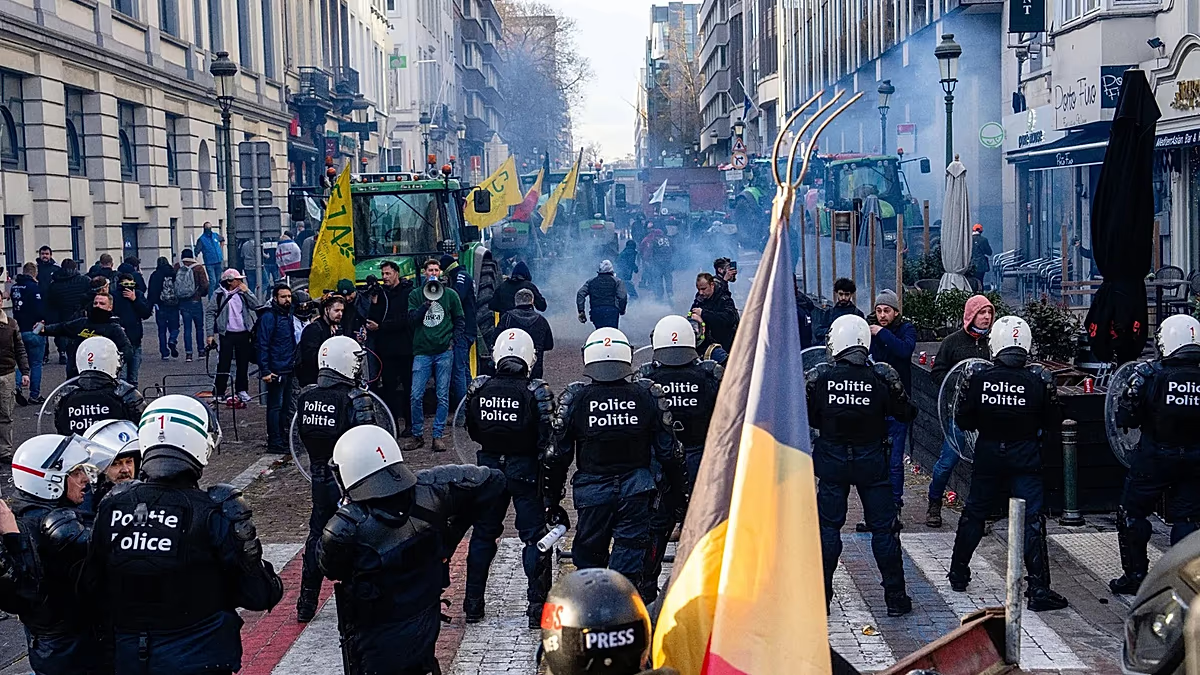
The European Commission's latest sweeping fertiliser plan attempts to shield Europe’s food prices from the fallout of the energy crisis, with leaders in Brussels warning that volatile fertiliser markets are feeding directly into higher grocery bills across the bloc.
At the heart of the plan is an attempt to break the chain reaction linking gas prices, fertiliser shortages and rising grocery bills, triggered by the Middle East conflict and the closure of the Strait of Hormuz, a key trade passage for 30 percent of the world’s fertilisers and 20 percent of its natural gas supplies.
Brussels argues that Europe’s food system has become dangerously exposed to fossil fuel shocks because fertiliser production – especially nitrogen fertiliser – depends overwhelmingly on natural gas. At the same time, fertiliser prices for EU farmers remain far above pre-crisis levels after another sharp rise in early 2026.
Russia’s war in Ukraine, trade restrictions and the Middle East crisis are all cited as drivers of fertiliser volatility.
A senior Commission official insisted on 18 May that food availability is not currently at stake, noting that farmers had already stocked up on fertilisers last year and that planting is going ahead as normal, but the European Central Bank's latest forecast anticipates that food inflation will remain slightly above its 2% target through late 2026.