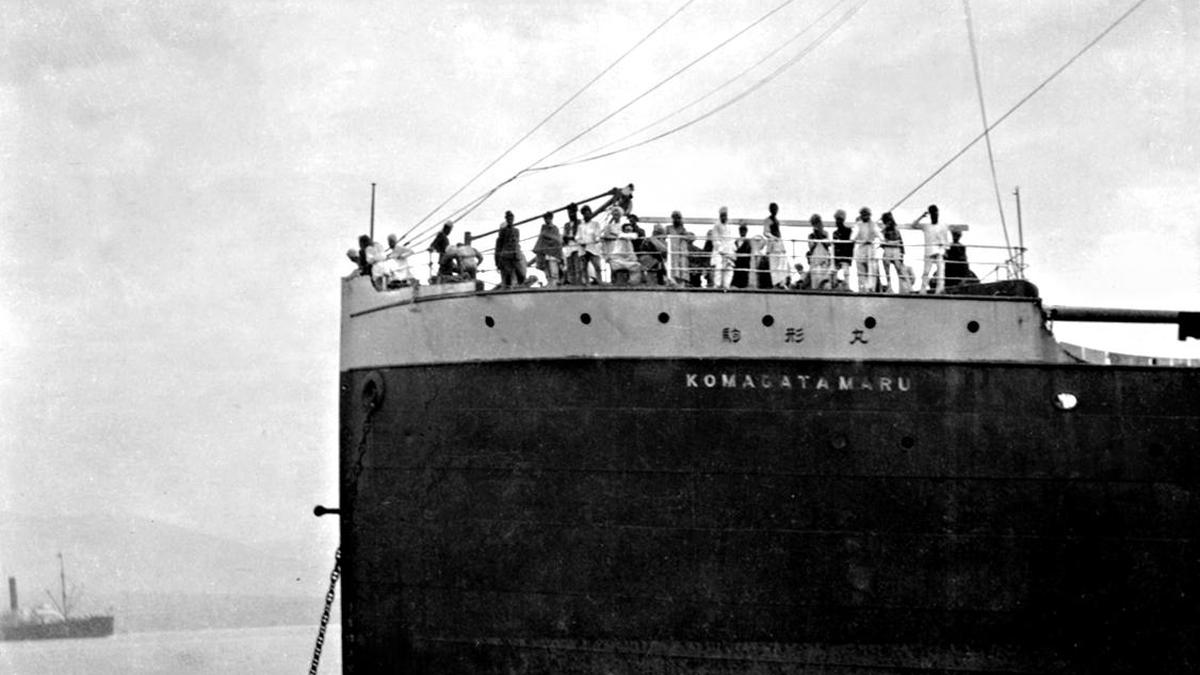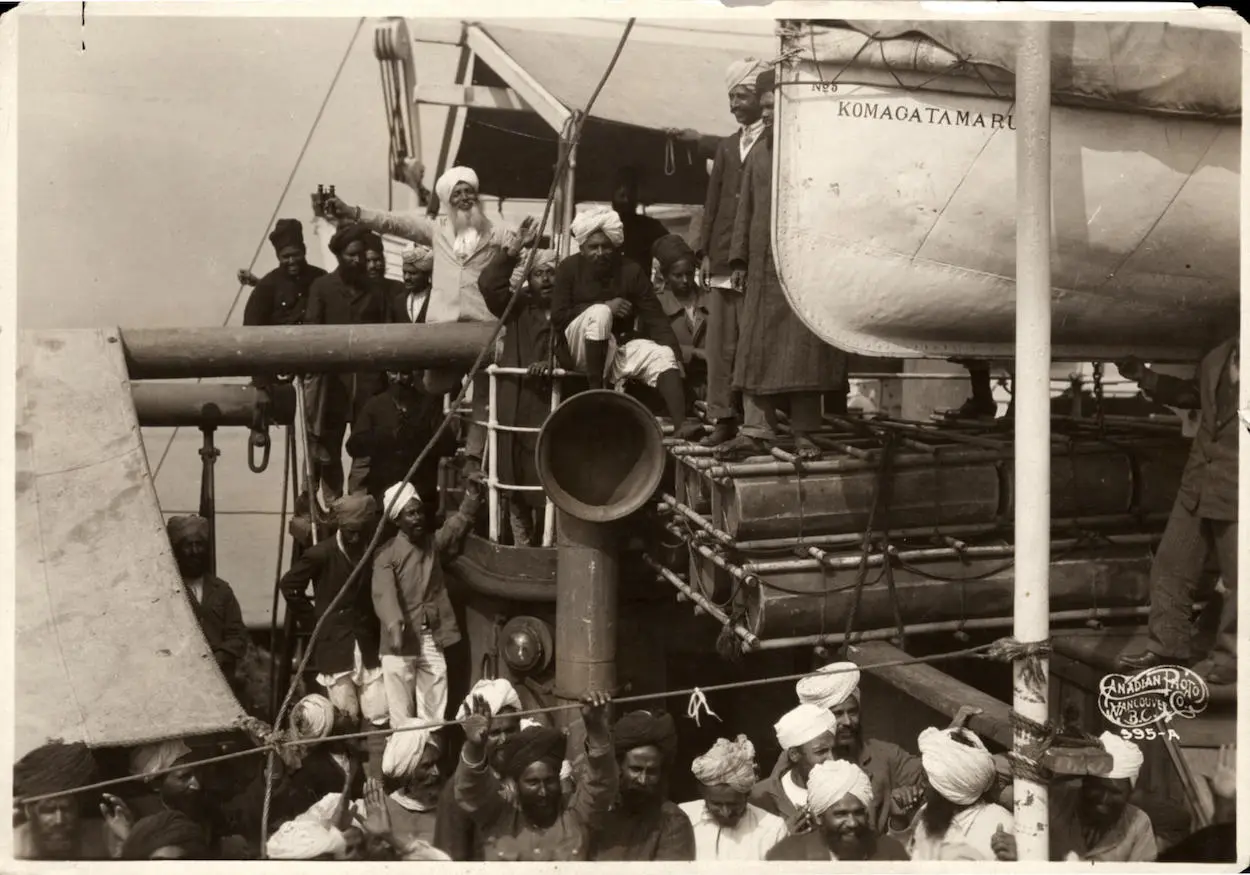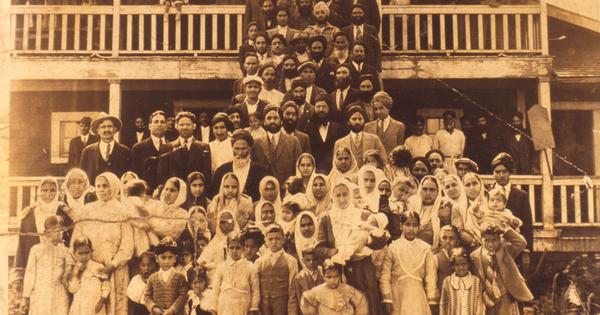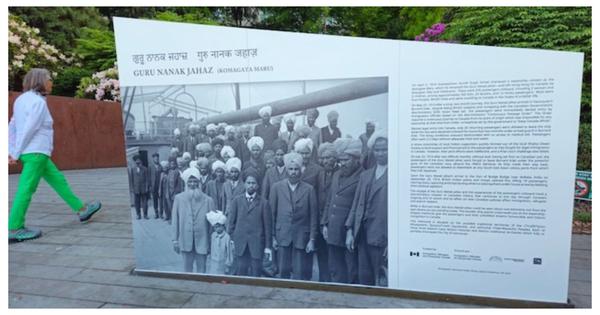
In Vancouver’s Coal Harbour, the city government on Saturday will inaugurate the refurbished memorial to the 376 passengers of the Komagata Maru, the Japanese steamship with South Asian passengers turned away from Canada in 1914.The memorial had been unveiled in 2012.The information panel now carries rewritten text that presents the ship primarily as the Guru Nanak Jahaz, with the name Komagata Maru visually and textually subordinated.This may appear to be an act of historical redress. But it narrows a broader history of racial exclusion and introduces a present-day political claim into the documentary record without fully reckoning with the consequences.The Komagata Maru voyage turned into a landmark case that shone a spotlight on the structural racial discrimination of the British Empire.In 1914, a Sikh businessman in Hong Kong named Gurdit Singh chartered the Japanese steamship SS Komagata Maru to challenge Canada’s exclusionary immigration laws. In his promotional material, aimed at potential Sikh emigrants, he dubbed this Japanese ship the Guru Nanak Jahaz –literally, the Guru Nanak ship. He added a religious layer by ceremonially bringing on board the Sikh holy text, the Guru Granth Sahib.Though Singh drew on his faith to fight injustice, he saw in the voyage an opportunity to challenge the colour bar and fight for the rights of all Indians.Gurdit Singh had commercial control over the voyage but the contract he signed did not transfer ownership of the vessel to him or alter its legal registration. He could name and frame the voyage as the Guru Nanak Jahaz, but the ship remained the Japanese-owned and registered SS Komagata Maru.This distinction is vital. With its renaming initiative, the City of Vancouver is enabling a sleight of hand that aims to change the name of the ship to the name of the voyage.The passengers aboard the Komagata Maru. Credit: Public domain, via Wikimedia CommonsWhen the Komagata Maru arrived in Vancouver harbour on May 23, 2014, its 376 passengers were overwhelmingly Punjabi Sikhs. But it included 24 Punjabi Muslims and 12 Hindus. Only 22 passengers who could prove previous residency were allowed to disembark. The rest were turned away.Canada invoked the 1908 “continuous journey” regulation, which required immigrants to arrive by continuous passage from their country of birth or citizenship. The regulation had been devised to target immigrants from British India without explicitly naming race, as British imperial authorities had advised.Britain accepted the Canadian premise that Canada must remain a white man’s country but did not want to undermine its own imperial claim that British subjects across the empire enjoyed equal status.In practice, the continuous journey regulation was applied to brown immigrants from British India, whom Canadians called “Hindoos”. It was not applied to European immigrants.The ship remained anchored in Burrard Inlet for two months while a court challenge ensued on shore. It was then forced to leave. The Canadian courts upheld the exclusionary regime, confirming that the dominion could discriminate based on race.The continuous journey regulation formed part of the legal scaffolding by which Canada engineered itself as an overwhelmingly white country. Its purpose was not to exclude Sikhs as Sikhs, but to restrict South Asian migration while preserving the fiction that race was not being named.Let us be clear: Guru Nanak Jahaz has a meaningful place in Punjabi and Sikh memory of the voyage, and it is associated with Gurdit Singh’s own framing of the journey. It deserves to be recognised, taught, and explained. But recognition is not the same as replacement.SS Komagata Maru is the name under which the ship appears in Canadian immigration records, legal proceedings, newspapers, government correspondence, imperial files and the major body of scholarship.To suggest that “Komagata Maru” is a colonial misnomer, as some Sikh groups are doing, is historically untenable. The name was not invented by Canadian officials to erase Sikh agency. It was the vessel’s maritime and legal name.The colonial violence lay elsewhere: in Canada’s white settler immigration regime; in the continuous journey regulation; in the denial of rights to racialised British Indian subjects; and in the treatment of the passengers as inadmissible because they were brown men from India. That is the history that must remain visible.The memorial in Vancouver’s Coal Harbour.The Vancouver city government’s current language blurs these distinctions. Its public materials state that the name was updated in 2024 following community desire to use the “historically accurate name of the steamship”, while also acknowledging that the vessel was a Japanese steamship named Komagata Maru.Those two claims sit uneasily together. If Komagata Maru was the ship’s name, then the issue is not a historical correction but a commemorative preference.The problem is now visible at the memorial itself. Above the photograph of the passengers, the title now reads Guru Nanak Jahaz in Gurmukhi and Devanagari. Below it, in English, Guru Nanak Jahaz appears first, while Komagata Maru follows in brackets in a smaller typeface.The opening line of the interpretive text states that on April 2, 1914, businessman Gurdit Singh Sirhali chartered “the steamship known as the Komagata Maru” which he “renamed Guru Nanak Jahaz”. Thereafter, the vessel is referred to as Guru Nanak Jahaz three times, while Komagata Maru effectively vanishes.There is another telling disappearance. The memorial text appears in Punjabi and Hindi. Yet in early twentieth-century colonial Punjab, while Punjabi was central to everyday life and Sikh religious-cultural identity, Urdu was a major language of administration and schooling.Hindi was not the language through which most Punjabi migrants of Gurdit Singh’s generation would have encountered education, law, or administration. The inclusion of Hindi here, while Urdu is absent, feels jarring and anachronistic.The choice seems aimed at a Hindi-speaking audience, but it does not accurately reflect the linguistic world of Punjab in 1914 that included Urdu as part of legal and daily lifeThe danger is not merely semantic. Once civic institutions, archives, museums and encyclopedias begin replacing or visually subordinating the documentary name, they reshape the evidentiary trail itself. Future students and members of the public may come to believe that Komagata Maru was an erroneous colonial label rather than the name under which Canada’s racism was recorded and can still be traced.That does not decolonise the archive. It damages historical clarity.The memorial in Vancouver’s Coal Harbour.There is a second, equally serious danger. The renaming risks recasting the incident as a Sikh-specific history. As noted at the outset, the passengers were overwhelmingly Sikh and Punjabi, and Sikh institutions were central to the voyage and its memory. That must be acknowledged. But the ship also carried Punjabi Muslims and Hindus.The continuous journey regulation was not aimed at Sikhs as a religious group. It was a racial device aimed at the people of British India and other Asians, while protecting the privileges of whiteness within the empire. The continuous journey regulation did not apply to a white British person born or raised in India. The relevant category was not religion. It was race.A more responsible approach for the City of Vancouver would be to use both names – “Komagata Maru/Guru Nanak Jahaz” or as current used “Guru Nanak Jahaz (Komagata Maru)” – only in explicitly commemorative contexts, and with no difference in type size or visual hierarchy.But every public text should clearly explain the distinction: Komagata Maru was the registered vessel, Guru Nanak Jahaz was a name of devotional, political and anti-colonial significance within Punjabi and Sikh memory.The City of Vancouver owes the public more than symbolic redress. It owes historical precision. The Komagata Maru story is not diminished by recognising Guru Nanak Jahaz. But it is distorted when one name is used to displace the other.The Canadian Navy ship HMCS Rainbow (right) and Komagata Maru (left) in Vancouver harbour. Credit: Public domain, via Wikimedia CommonsAli Kazimi is a filmmaker, a professor at York University in Canada and author of Undesirables: White Canada and the Komagata Maru.
Immigration history: Why Vancouver should not rewrite the Komagata Maru record
The new text on the panel at a memorial does not decolonise the archive – it damages historical clarity.
1,304 words~6 min read