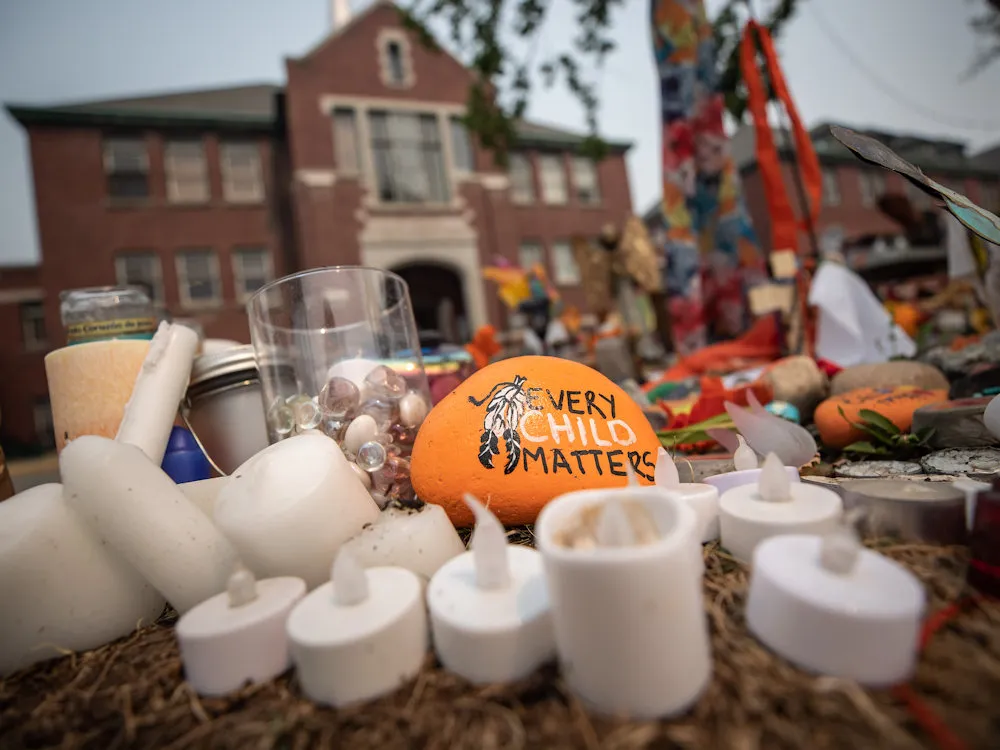
Skip to Content Subscribe Our Offers My Account Manage My Subscriptions FAQ Newsletters Canada Canadian True Crime Canadian Politics Health World Israel & Middle East Financial Post NP Comment Longreads Puzzmo Diversions Comics NP News Quiz New York Times Crossword Horoscopes Life Eating & Drinking Style Sponsored Play for Ontario Travel Travel Canada Travel USA Travel International Cruises Travel Essentials Culture Books Celebrity Movies Music Theatre Television Business Essentials Advice Lives Told Tails Told Shopping Buy Canadian Home Living Outdoor Living Tech Style & Beauty Kitchen & Dining Personal Care Entertainment & Hobbies Gift Guide Travel Guide Deals Savings National Post Store More Sports Hockey Baseball Basketball Football Soccer Golf Tennis Driving Vehicle Research Reviews News Gear Guide Obituaries Place an Obituary Place an In Memoriam Classifieds Place an Ad Celebrations Working Business Ads Archives Healthing Epaper Manage Print Subscription Profile Settings My Subscriptions Saved Articles My Offers Newsletters Customer Service FAQ Newsletters Canada World Financial Post NP Comment Longreads Puzzmo Diversions Life Shopping Epaper Manage Print Subscription HomeNP CommentNP View: The censorship agenda motivated by the Kamloops 'graves' fiascoNothing has been found at the residential school, but pointing that out invites cancellationLast updated 20 minutes ago You can save this article by registering for free here. Or sign-in if you have an account.A rock with the message "Every Child Matters" painted on it sits at a memorial outside the former Kamloops Indian Residential School, in Kamloops, B.C., on Thursday, July 15, 2021. Photo by THE CANADIAN PRESS/Darryl DyckThe discovery of underground anomalies at the site of the former Kamloops Indian Residential School in May 2021 offers a cautionary tale about how an assumed consensus, even one based on half-truths or misrepresentations, can lead to a climate of censorship.Enjoy the latest local, national and international news.Exclusive articles by Conrad Black, Barbara Kay and others. Plus, special edition NP Platformed and First Reading newsletters and virtual events.Unlimited online access to National Post.National Post ePaper, an electronic replica of the print edition to view on any device, share and comment on.Daily puzzles including the New York Times Crossword.Support local journalism.Enjoy the latest local, national and international news.Exclusive articles by Conrad Black, Barbara Kay and others. Plus, special edition NP Platformed and First Reading newsletters and virtual events.Unlimited online access to National Post.National Post ePaper, an electronic replica of the print edition to view on any device, share and comment on.Daily puzzles including the New York Times Crossword.Support local journalism.Create an account or sign in to continue with your reading experience.Access articles from across Canada with one account.Share your thoughts and join the conversation in the comments.Enjoy additional articles per month.Get email updates from your favourite authors.Create an account or sign in to continue with your reading experience.Access articles from across Canada with one accountShare your thoughts and join the conversation in the commentsEnjoy additional articles per monthGet email updates from your favourite authorsSign In or Create an AccountorOn May 27, 2021, the Tk’emlúps te Secwe̓pemc First Nation shocked the world when it issued a press release claiming that the use of ground-penetrating radar had led to the “confirmation of the remains of 215 children who were students of the Kamloops Indian Residential School.”The following day, the New York Times reported that a “mass grave containing the remains of 215 children on the grounds of a former residential school” had been discovered.This newsletter from NP Comment tackles the topics you care about. (Subscriber-exclusive edition on Fridays)By signing up you consent to receive the above newsletter from Postmedia Network Inc.We encountered an issue signing you up. Please try againTwo months later, Sarah Beaulieu, the researcher who performed the survey, clarified that, “With ground-penetrating radar we can never say definitively that they are human remains until you excavate … which is why we need to pull back a little bit and say that they are probable burials.”But it was too late. In the weeks that followed the Kamloops announcement, a succession of other First Nations reported similar discoveries. Many of them were more careful to note that they had not found mass graves. Some were known gravesites where the wooden markings had degraded over time.Nevertheless, the media and federal government continued to push the narrative that hundreds of bodies of dead Indigenous children had been found on the sites of former residential schools. The fallout was swift. Flags flew at half-mast. Canada Day celebrations were called off. And anyone who tried to have a reasoned conversation about residential schools was cancelled.In December 2021, Frances Widdowson, a political science professor at Mount Royal University in Calgary, was fired, at least in part, for daring to suggest that residential schools had some educational benefits.A high school teacher in Abbotsford, B.C., also landed in hot water that year for pointing out in class that most of the deaths at residential schools occurred due to disease, not abuse. It didn’t matter that his statement was true. He was let go two years later.The facts about the graves story were brought to light, most thoroughly by National Post’s Terry Glavin a year after the story first broke, but the truth only seemed to add fuel to the censorship fire. In February 2024, NDP MP Leah Gazan called on Parliament to criminalize what was being termed “residential school denialism.”A few months later, Kimberly Murray, the Trudeau government’s “special interlocutor for missing children and unmarked graves and burial sites associated with Indian residential schools,” released her interim report calling for legal remedies to combat denialism.Gazan and Murray’s calls were both met with openness by Liberal cabinet ministers.At the time, some Indigenous groups were in fact being harassed by graves skeptics. That was ugly and wrong. But in her report, Murray claimed that “violence” was taking place “via email, telephone, social media” and, in a clear reference to Glavin’s very reasoned and thoroughly fact-checked column, “op-eds.”The two private members bills introduced by Gazan, in 2024 and 2025, did not attempt to discourage the harassment of Indigenous people, but to criminalize speech thought to be “condoning, denying, downplaying or justifying the Indian residential school system,” or “misrepresenting facts relating to it.”But the very problem was that Ottawa, and many in the media, refused to acknowledge the basic truth that we do not know what lies beneath the ground, if it is evidence of abuse or if any of the sites contain the graves of the more than 3,000 children who died at residential schools.While many in the media are now more careful about how they frame stories about the graves than they were in 2021, as recently as last year, B.C. Conservative MLA Dallas Brodie was kicked out of the party for pointing out that, “The number of confirmed child burials at the former Kamloops Indian Residential School site is zero.”The crackdown on free speech that followed the graves story was due to more that just mob psychology. It was a confluence of events that were unique to that specific point in history, when a tidal wave of cancel culture was cresting, Americans were outraged over the murder of George Floyd by Minneapolis police officers and the public was frustrated by wave after wave of pandemic lockdowns.Canadian progressives imported narratives espoused by their comrades south of the border, claiming that Canada was a systemically racist country. The Trudeau government immediately adopted the language of its left-wing base, while using the graves story to further its longstanding claim that Canada has a genocidal past.The synergy of a public that had been outraged by a misleading narrative propagated by the media, a fringe activist class that wielded outsized control over our institutions and public discourse, as well as a government that was intent on denigrating Canadian history and erasing the symbols that unite us as a country ignited a firestorm of censorship that prevented Canadians from having an honest discussion about residential schools.It is a stark reminder that free speech is about more than letting people speak their minds, no matter how much others may disagree with them — it is about the quest for truth, which we can only arrive at if we have the ability to hear and debate heterodox opinions and inconvenient facts.National Post Join the Conversation This website uses cookies to personalize your content (including ads), and allows us to analyze our traffic. Read more about cookies here. By continuing to use our site, you agree to our Terms of Use and Privacy Policy.
NP View: The censorship agenda motivated by the Kamloops 'graves' fiasco
Nothing has been found at the residential school, but pointing that out invites cancellation
1,402 words~6 min read