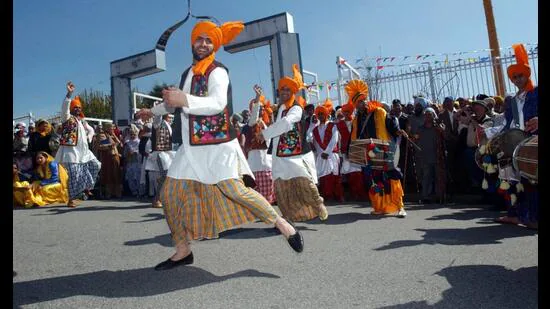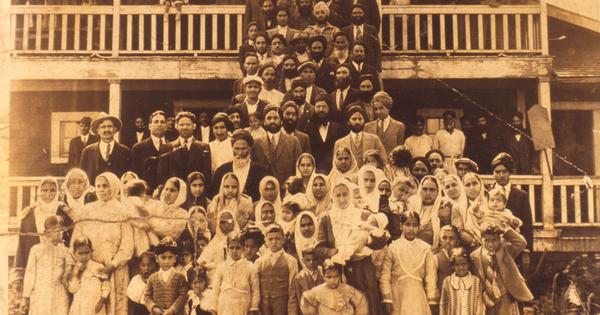
On a summer day in 1942, in the small settlement of Fraser Mills near Vancouver, an Indian family prepared to cremate a young woman. Part of a minuscule community working in a local sawmill, the family stood out in a country that, at the time, highly restricted immigration from non-European nations. As a group of Indians gathered for the rites of Mrs. Assa Singh, they felt intimidated by what a local wire report described as “a crowd of curious white spectators” who had assembled to witness the private ceremony.“The unseemly behaviour of the onlookers so offended the Hindus that they later performed their funeral services in the early hours of the morning with as much secrecy as possible,” the wire report said.Despite the intrusion, the community handled the “simple and impressive” ceremony with dignity, the report noted. The deceased was “dressed in her best clothes and wrapped in an orange pastel silk robe”, the traditional colour for “women whose husbands survive them”. “Her body was laid on a pyre of wood, about four feet high, which was set ablaze by the officiating priest, Kartar Singh, as forty Hindu men and women mourners stood by with hands clasped in silent prayer.”The ceremony was treated as a spectacle because cremations were a rarity in western Canada at the time. Reports remarked on how the community, though “dressed in the manner and mode of the western hemisphere”, remained committed to “old world customs”.Fewer than 2,000 Indians lived in Canada during the first half of the 20th century. They were commonly referred to as “East Indians” or simply “Hindus”, largely to distinguish them from Indigenous peoples, who were then widely called Indians.Public spectaclesSocial milestones were often met with similar fascination. In April 1938, western Canada’s first Indian wedding became a national media event. “Vancouver’s first Hindu wedding began at dawn yesterday to the rhythmic beat of tom-toms and the chant of Far Eastern hymns,” The Hamilton Spectator reported. More than 200 guests, including several white Canadians, “sat in stocking feet” to watch 17-year-old Harbant Kaur marry 25-year-old Hazara Singh.The three-day celebration took place in a garage converted into a makeshift temple. The grand wedding was officiated by Rev Peter Kanshiram, who was assisted by Rev Harnam Singh.The Vancouver Sun featured three photographs of the groom, guests and the main priest. “The shy bride, in absentia, received her wedding gifts symbolically through her mother, who is shown here, as the gifts are turned over to the keeping of the absent bride, Harbant Kaur,” one caption read. “During the wedding ceremony, the gifts are kept hidden in a draped alcove.”The newspaper noted that at the time the photograph was taken, the groom had not yet seen his bride, whom he would later escort to his cabin in Duncan on Vancouver Island. Although reports on the wedding did not specify whether Harbant Kaur had travelled from India specifically for the marriage, there were documented cases of women arriving from Punjab because of arranged marriages.Not all such marriages ended happily. A few years before the widely publicised wedding, a 21-year-old woman named Shan Kaur was arrested and charged with the attempted murder of her husband. Her husband, 45-year-old Mahar Singh, died aboard the SS President Lincoln.The couple had been travelling from Victoria, British Columbia, to India via China when Singh collapsed after drinking soda purchased by Kaur. “The man was buried at sea after the ship’s doctor wrote a certificate showing cause of death as possible cerebral hemorrhage,” The Hamilton Spectator reported. “The bottle was found on the cabin floor but the doctor said there was not sufficient liquid for analysis.”Investigators claimed members of the small Indian community told them Kaur had tried to buy poison and mix it into her husband’s food so she could be with the secretary of a Vancouver gurdwara. “On another occasion one witness said she [Kaur] was ready to give $300 to any out-of-work white man who would shoot her husband,” according to a report in The Halifax Mail.The police accused Kaur’s alleged lover, Puran Singh Dial, of being a co-conspirator. The defence produced two white Canadian witnesses who claimed they had warned Singh about the risk of a haemorrhage if he continued drinking heavily. Newspapers reported that both accused were granted bail on a $2,500 bond, though the final verdict in the case remains difficult to trace.Darker headlinesThe Canadian press also extensively covered the 1929 suicide of Mary Singh, an 18-year-old schoolteacher married to a much older man. Her husband, Terlocha Singh, had contacted Vancouver police after she ran away from home, leaving behind a suicide note.The Royal Canadian Mounted Police arrested her after she was found in a car driven into a ditch by an Indian man named Lal Singh. “The woman had been masquerading as a boy garbed in a close-fitting brown suit, brown shoes and cap over hair cut in a boyish bob,” the Vancouver Sun reported.While in custody, Mary Singh tore a blanket into strips, fashioned an improvised rope and hanged herself. She had reportedly spent the night before the accident and arrest in a hotel with Lal Singh. The Vancouver Sun described her as a “pretty Hindu woman, highly intelligent,” who had taught English to children in Marpole.The era was also marked by darker headlines involving the so-called “Hindu Killings”. In 1931, the Royal Canadian Mounted Police arrested Basant Singh in Vancouver, alleging he was the mastermind behind 14 unsolved murders of Indians in Sacramento, California, between 1928 and 1931.The investigation was sparked by a University of California student, Ram Pande, who had provided information to the police about the killings and submitted his fingerprints for identification. He was kidnapped and beheaded a few days later.California investigators identified Basant Singh through entries in Pande’s diary and alerted Canadian authorities. But as Canadian officials prepared to extradite him to California, Basant Singh took his own life.“Suspended by a strip of blanket around his throat and attached to a ventilator in the ceiling, the body of Basant Singh, local Hindu held in the city jail for police in Sacramento, California, where he was wanted on a murder charge, was discovered by the jailer at 5:55 o’clock this morning,” the Vancouver Sun reported on September 2, 1931.The newspaper added that the suspect had given “no hint of his intention to take his own life, having talked and joked with police officers and jailers earlier in the evening”.Famous visitorsWhile Rabindranath Tagore, as a Nobel laureate, received considerable attention during his 1929 visit to Canada, the national press also covered several lesser-known visitors from India.In January 1932, Nancy Ann Miller, who was married to the abdicated Maharaja of Indore, Tukojirao III Holkar, made headlines while travelling from New York to her hometown of Seattle via Montreal and Vancouver.Newspapers referred to her as Maharanee Sharmishta Holkar. Her friends from the University of Washington were reportedly “coached” to address her as “Your Highness”. Miller, whose husband was believed to be worth $300 million at the time, travelled with her mother, younger sister, a French companion and Indian attendants. Several friends journeyed from Seattle to Vancouver to accompany her home.Another visitor who drew media attention was Dr Mahanam Brahmachari, a monk and philosopher undertaking a coast-to-coast North American lecture tour.Describing him as a “fatalist”, one wire report noted that Brahmachari was “swathed in long, flowing praying shawls, with prayers in Sanskrit on his turban”. It added that the Vaishnava order, to which he belonged, resembled Christianity in its emphasis on the “fatherhood of God and the brotherhood of man”.Daula Singh, a wrestler popularly known as “Tiger Daula”, became something of a celebrity in Canada during the 1930s. He first arrived in British Columbia in 1931 alongside another Indian wrestler amid considerable fanfare.“Among the arrivals here today aboard the liner Empress of Russia were Daula and Fazal, famous Hindu wrestlers,” the Times Colonist wrote in September 1931. “Two giants, the pair created a flurry of excitement when they disembarked.” Tiger weighed 260 pounds, while his compatriot weighed 250.Wrestlers like Tiger found it easier to enter Canada and the United States because local promoters often handled immigration and legal formalities. “If all the belts won by the Tiger were placed edge to edge, they would cover him from his heels to his head and probably smother him,” Sardar Mohammed Yunus Khan, a former Afghan ambassador to Britain, told the North American press.At one stage, Tiger Daula reportedly won 97 bouts in succession. “When the Mighty Son of India Tiger Daula returns to his native land, he will need a trunk to carry back all the medals and belts his countrymen are bestowing upon him, judging by the receptions he has been receiving in Canada and California and other states of the Union,” the Napa Journal wrote in November 1932.Yet, while Tiger enjoyed celebrity status, many Indian wrestlers encountered hostility and racism in North America. Ed “Strangler” Lewis, the four-time world heavyweight champion, once claimed he contracted trachoma, a bacterial eye infection, from an Indian wrestler. “Lewis contends that the eye trouble started with a germ brought from India by Jatindra Gobar, heavyweight wrestler, who invaded this country some five or six years ago,” The Winnipeg Tribune reported in January 1932. Such language was widely accepted in sections of the press at the time.Canada began easing its immigration restrictions in the early 1950s. In 2026, the country is home to nearly 2 million people of Indian origin, making the community far more visible, and far less exoticized, than it was during the first half of the 20th century.Ajay Kamalakaran is a writer, primarily based in Mumbai. His latest book, Colombo: Port of Call, has been published by Penguin Random House.
How Canada exoticised its early Indian migrants
In the first half of the 20th century, Indian lives in Canada were chronicled with suspicion and racial curiosity.
1,621 words~7 min read