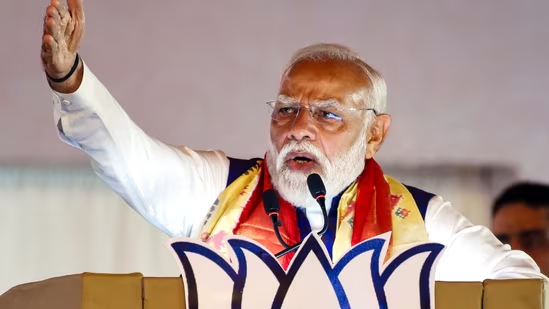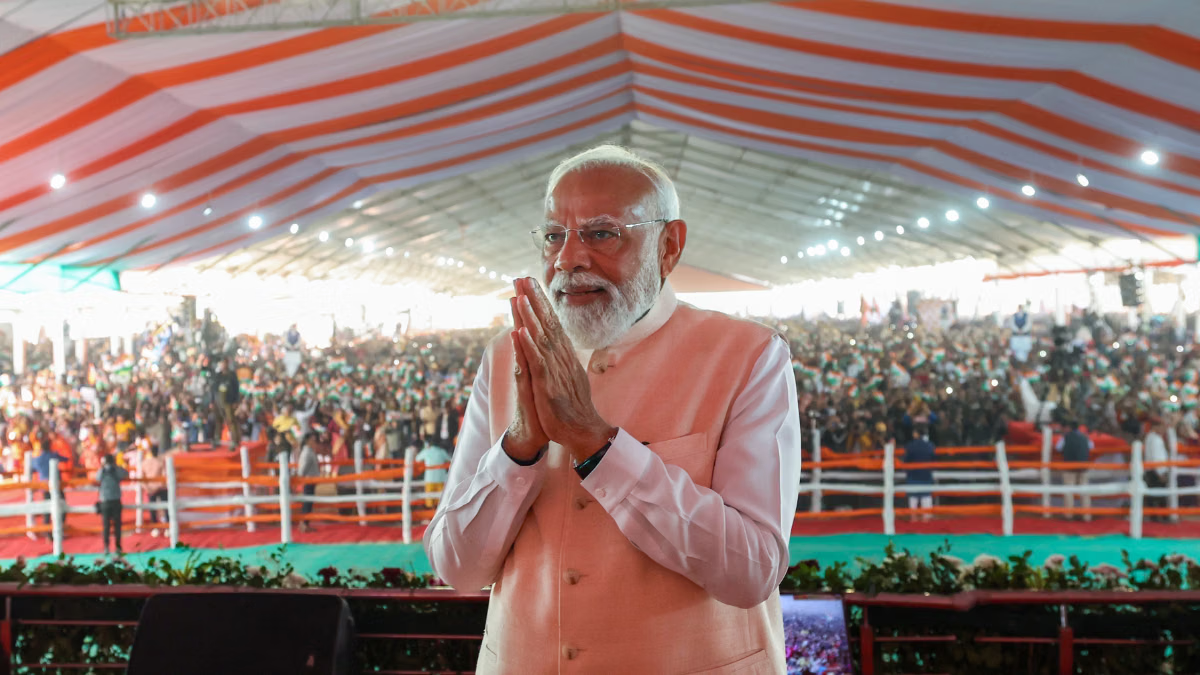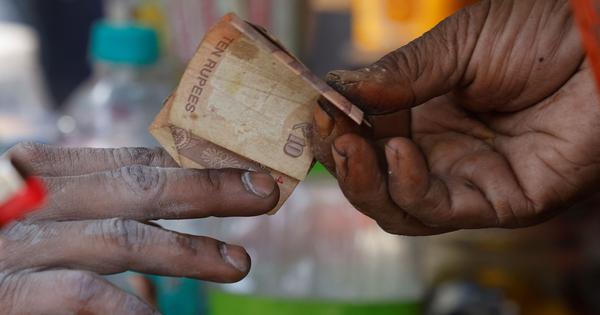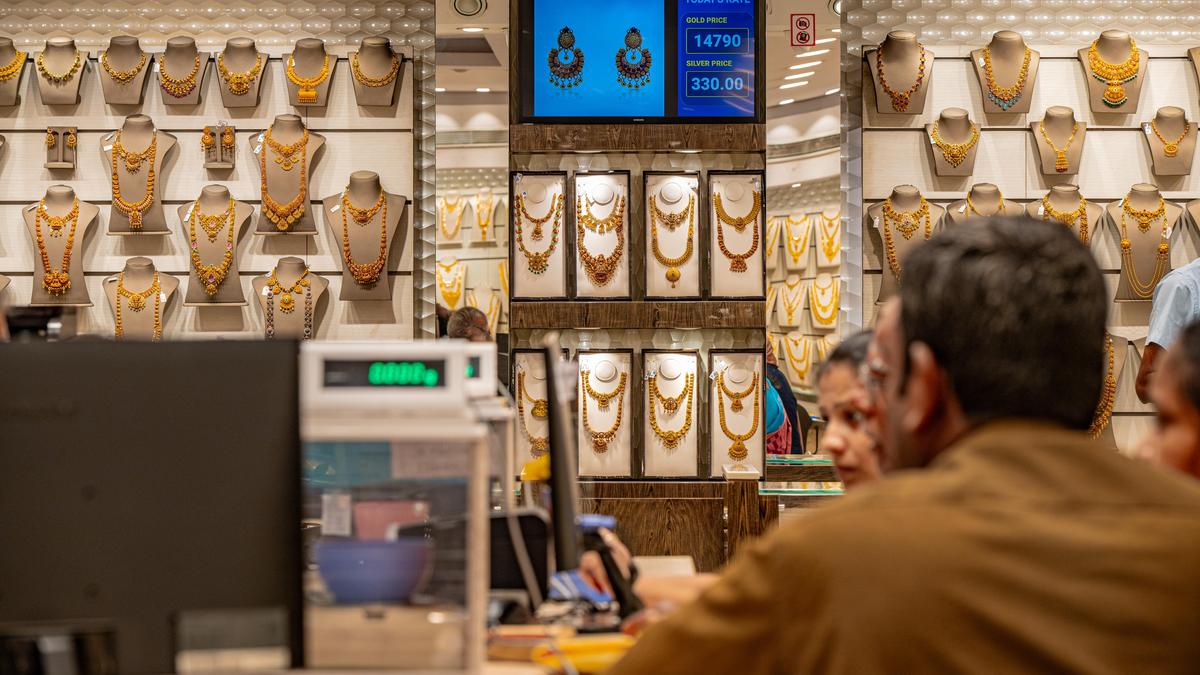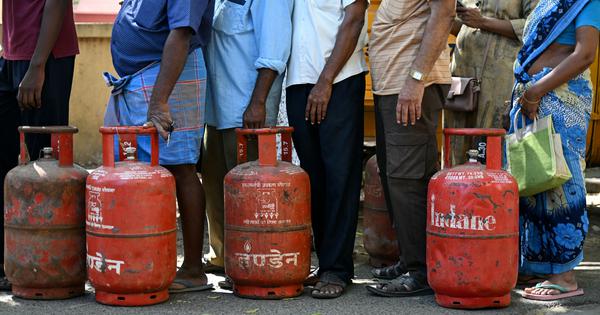
On the evening of November 8, 2016, Prime Minister Narendra Modi appeared on national television to announce one of the most dramatic economic interventions in modern democratic history. With four hours’ notice, 86% of India’s currency in circulation was declared worthless.The declared objectives – eliminating black money, curtailing terrorism and ushering in a cashless economy – were ambitious. The results were catastrophic. The rhetorical manoeuvre that followed that catastrophe has since become, across successive policy crises, one of the defining political techniques of the Modi era: the conversion of government-induced suffering into a narrative of voluntary national sacrifice.The demonetisation speech contained the template in its most naked form. Acknowledging that “there may be temporary hardships to be faced by honest citizens”, Modi immediately pivoted to inspiration. “Experience tells us that ordinary citizens are always ready to make sacrifices and face difficulties for the benefit of the nation,” he said.He invoked the poor widow surrendering her LPG subsidy, the school teacher giving his pension, the Adivasi mother selling her goats – and then posed the rhetorical question: “In this fight against corruption, black money, fake notes and terrorism, will our people not put up with difficulties for some days?”The nation was asked to absorb the consequences of an unplanned policy shock as an act of patriotic devotion.Labourers at a market intersection wait to be hired for work in Kanpur on May 14. Credit: Reuters.Those consequences were severe. The Reserve Bank of India’s own data confirmed that 99.3% of the demonetised notes were returned to the banking system – meaning the “black money stashed in bags”, as Modi dismissively characterised it, had largely re-entered formal channels or been converted through informal networks.The academic consensus was that demonetisation did not meaningfully address black money, primarily because most illicit wealth in India is held in real estate, gold and foreign accounts, not cash.What demonetisation did achieve was the contraction of the informal economy, which employs the overwhelming majority of India’s workforce. Dozens died in ATM queues and in the chaos that followed. Farmers were unable to buy seeds for the rabi crop. Daily wage labourers lost work as cash-dependent supply chains collapsed. Small powerloom units in textile hubs like Bhiwandi shuttered in droves. The GDP growth rate, which had been 8.2%, fell measurably.People wait in queue at a petrol pump in Ahmedabad on March 23. Credit: AFP.On New Year’s Eve that year, Modi returned to the airwaves to describe the exercise as “a historic rite of purification”, praising the nation for bearing inconveniences with “infinite patience” and “re-defining the concept of sacrifice”. The suffering of the poor had been semantically turned into civic virtue.Seven months later came the Goods and Services Tax, rushed into implementation on the midnight of July 1, 2017, before the technological and administrative infrastructure was remotely ready. A system that had taken decades to negotiate and which experts said would require years of a careful rollout was pushed live under political pressure.The GST rulebook ran to hundreds of pages. Last-minute revisions were still being made the night before launch. Four tax slabs, a complex input-tax-credit mechanism requiring monthly online filings, and centralised software that crashed repeatedly combined to impose crippling compliance costs on the small and medium enterprises that form the backbone of Indian employment.A survey by the All India Manufacturers Organisation found that in the quarter following GST’s rollout, jobs fell by 25% and revenues dipped sharply among small and medium enterprises. Small weavers, traders and manufacturers – many of them illiterate or semi-literate – simply could not navigate a regime that had been amended hundreds of times in its first year alone.Against those material realities, Modi offered the nation a slogan: “One Nation, One Tax”. When the GST marked its fifth anniversary in 2022, he tweeted that it had “furthered Ease of Doing Business and fulfilled the vision of One Nation, One Tax”.The bureaucratic nightmare endured by small traders was absorbed within the grand rhetoric of national integration. Modi recast their suffering as the necessary friction of building a unified India.Homeless people wait to collect free food during a complete lockdown in Kolkata in July 2020. Credit: AFP.The Covid crisis brought this rhetorical pattern to its most consequential expression. On March 24, 2020, with four hours’ notice – echoing demonetisation – Modi announced a 21-day national lockdown to contain the virus, the most stringent such measure in the world.The humanitarian consequences for India’s tens of millions of internal migrant workers were devastating. Over 10 million workers, stranded in cities without wages, shelter or public transport, began walking home along highways, some covering hundreds of kilometres. Over 240 died on the road. India’s urban economy, built on a vast informal labour force that received no formal protection, was effectively switched off overnight.Modi’s address to the nation on May 12, 2020, announcing the so-called Atmanirbhar Bharat stimulus package, framed the catastrophe as an opportunity. “The country has…seen the resolve and restraint of our poor brothers and sisters…they have done a lot of penance during this time”, he said. “I am confident that our country can do this. Your efforts have increased my reverence for you every time.”The language throughout his pandemic addresses was consistently one of shared national resolve and citizen service – transforming a citizen from a victim of abrupt policy to a soldier in a war.The second Covid wave of 2021 revealed the costs of that framing with brutal clarity. The government had been warned that an oxygen shortage was looming. Those warnings were not acted upon. Between May and September 2021, there were hundreds of thousands of excess deaths. Hospitals issued desperate public distress calls for oxygen, patients died in hospital car parks and crematoriums operated around the clock.A family member carries a patient with breathing difficulties, to a free oxygen support centre being run by a Gurudwara on the outskirts of New Delhi in May 2021. Credit: AFP.All of this unfolded against the backdrop of a government that had permitted mass religious gatherings at the Kumbh Mela and allowed Modi himself to hold enormous election rallies in West Bengal, drawing lakhs of people to superspreader events, as the second wave gathered momentumWhen the scale of the crisis became undeniable, Modi disappeared from public view for 20 days. His government subsequently told Parliament that no deaths due to oxygen shortage had been “specifically reported” by states, a claim that defied credible documentation from hospitals, courts and journalists across the country.Demonetisation, a hastily implemented GST and the COVID crisis share a common pattern: a preference for dramatic, symbolically resonant interventions over patient, well-administered reform, followed by rhetoric that valorises the fallout.Similar rhetoric now follows India’s energy crisis, the roots of which run deeper than the conflict in West Asia.The Make in India programme promised to raise manufacturing’s share of GDP to 25% and create 100 million industrial jobs. A decade later, manufacturing’s share remained at 17.3% – the same as it was in 2013-’14.India therefore lacks the industrial base that would reduce its import dependency and provide meaningful insulation from geopolitical shocks. The current energy crisis is the most acute expression of that vulnerability.India imports nearly 90% of its crude oil, over half of it from West Asia. When the conflict in West Asia triggered a sharp rise in crude prices in early 2026 – Brent moving from $70 to over $120 per barrel within a month – India’s import bill exploded. This put pressure on the current account deficit, draining foreign exchange reserves and pushing the rupee sharply lower.The rupee has crossed Rs 96 against the dollar. Foreign institutional investors withdrew Rs. 1.98 lakh crore between January and May. Gold imports – another symptom of a population seeking hard-asset protection against a depreciating currency – rose to nearly $72 billion in 2025-26.In response, Modi told the nation that India’s energy challenge would be overcome “just as it had done during the COVID pandemic” – a chilling erasure of what that pandemic actually entailed for ordinary Indians. He also emphasised “that the country needs to become more self-sufficient, especially in energy” – a call to national purpose that implicitly presents as a future aspiration what is, in fact, a decade-long failure of industrial policy.Running through all these failures is a consistent, deliberate political logic. Each episode has been accompanied by a call to citizens to serve the nation, endure temporarily and trust the leadership. Crucially, each failure has been protected from accountability by a political environment in which criticism of government policy has been increasingly conflated with being “anti-national”.Within this political ecosystem, popular anger at economic hardship is sometimes directed at Finance Minister Nirmala Sitharaman and other ministers, but does not reach Prime Minister Modi.In a democracy, accountability requires a direct line between policy failure and political consequence. That line, in contemporary India, has been severed. It has been cut by weaponising nationalism, by diverting blame onto circumstances and the Opposition, by subordinating economic discourse to Hindutva politics – and by the relentless rhetorical alchemy that transforms governmental incompetence into opportunities for citizen sacrifice.The widow giving up her LPG subsidy, the migrant worker walking home on the highway, the small weaver watching his workshop close and the household struggling under an inflated gas bill – they have been asked, in speech after speech, to treat their own dispossession as an act of devotion.That the demand continues to find takers is less a testament to Modi’s rhetorical gift than to the thoroughness with which the political space for holding him accountable has been closed.Vishal R Choradiya is an assistant professor with the Department of Professional Studies, Christ University, Bengaluru.
How Modi has recast a decade of policy failures as an opportunity for citizens to make sacrifices
The template has been the same from demonetisation, the GST roll out, the abrupt Covid-19 lockdown to today’s energy and gas crisis.
1,614 words~7 min read