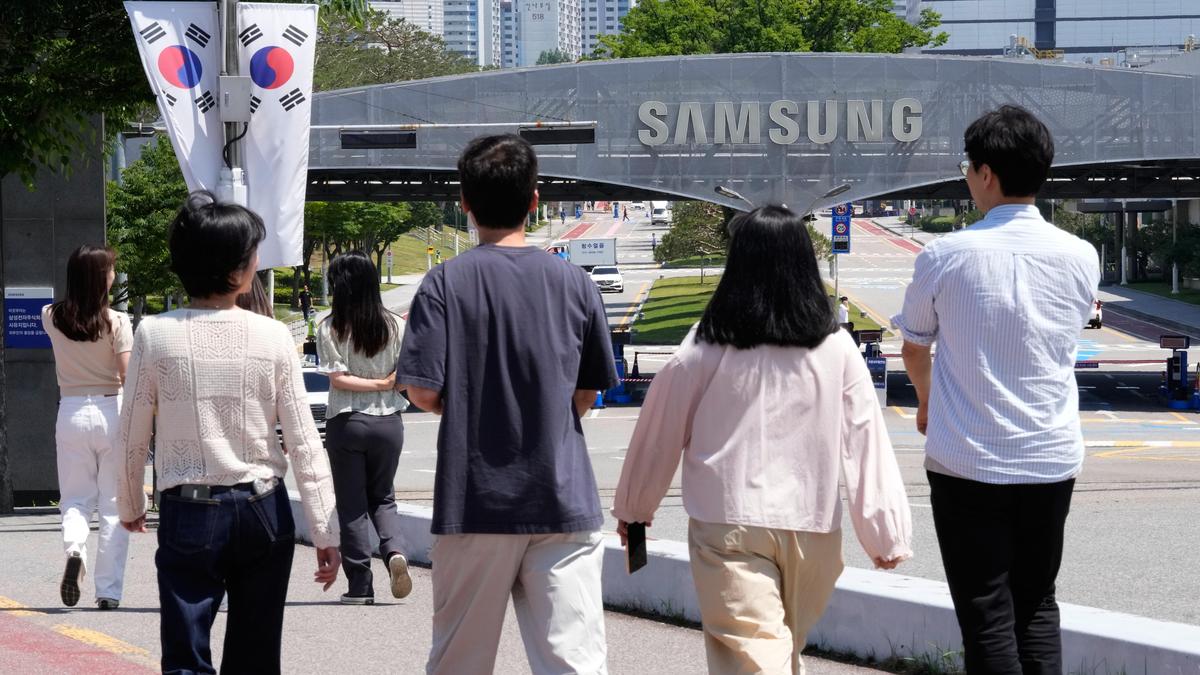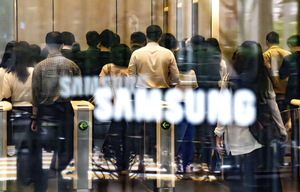
Chip bonus plan fuels backlash as payouts for memory staff could be as much as 100 times those for smartphone and home appliance workers Employees arrive for work at Samsung Electronics’ Seocho office in southern Seoul. (Im Se-jun/ The Korea Herald) Unionized workers at Samsung Electronics will begin voting Friday on a proposed wage agreement that includes a new chip performance bonus scheme and a 6.2 percent average pay raise, as a widening bonus gap fuels discontent among employees outside the company’s core memory business.The electronic vote will run from 2 p.m. Friday through 10 a.m. on May 27. Eligible voters are union members registered as of 2 p.m. Thursday.The agreement will become binding if more than half of the eligible members take part and a majority of those voting approve it. If rejected, Samsung and the union will have to resume negotiations.Samsung and its unions reached the proposed agreement on Wednesday after months of talks. The package includes a special management performance bonus for the Device Solutions division, Samsung’s semiconductor business, with a funding pool equivalent to 10.5 percent of operating profit.It also includes a new housing loan program of up to 500 million won ($330,300). The average wage increase of 6.2 percent consists of a 4.1 percent base raise and a 2.1 percent performance-based increase.Brokerage houses expect Samsung Electronics to post around 300 trillion won in operating profit this year. Based on that estimate, 31.5 trillion won would be used to fund the new chip bonus.Employees in the memory division, which has been leading Samsung’s earnings recovery, could receive up to around 600 million won in total bonuses this year when the new special bonus is combined with the company’s existing overall performance incentive.Nonmemory employees in Samsung's System LSI and foundry units are also expected to receive around 210 million won in performance bonuses, including the special chip bonus and the existing OPI, despite projected losses in those businesses. The figure reflects a DS-wide allocation formula that sets aside 40 percent of the semiconductor division’s bonus pool for broader distribution across the chip business.By contrast, employees in the Device eXperience division, which oversees smartphones, home appliances and TVs, may receive only around 6 million won worth of company shares as a performance bonus. They are also widely expected to miss out on the existing OPI due to weaker earnings prospects for the division.The gap, which could be as wide as tenfold between divisions, has triggered frustration among DX employees and some nonmemory chip workers.The discontent has also prompted a last-minute surge in union membership. The Samsung Electronics Donghaeng Labor Union, which is mainly composed of DX employees, saw its membership jump from around 2,600 to more than 12,000 as of Thursday afternoon, while some workers urged colleagues to secure voting rights and oppose the agreement.But the rush has been complicated by a dispute over whether Donghaeng members are entitled to vote.Choi Seung-ho, head of Samsung Electronics Labor Union, which has represented workers in wage talks as part of a joint bargaining group with two other unions, told Donghaeng that it was understood to have no voting rights after leaving the group.The tentative agreement was signed between management and the joint bargaining group, making Donghaeng’s withdrawal the basis of the voting rights dispute.Donghaeng had previously joined the Samsung Electronics Labor Union in a joint struggle committee for wage talks, but later pulled out, saying the views of DX employees were not being properly reflected.In a notice posted on its website, Donghaeng said the largest union had sent shared emails on Wednesday and Thursday asking each union to conduct a vote on the tentative agreement and align their membership lists as of 2 p.m. on Thursday. It said the emails also stated that the voting rights of all unions would be respected.“Our union has completed all preparations to hear the voices of DX division members,” Donghaeng said. “The Samsung Electronics Labor Union is once again putting the voice of the DX division at risk of being erased through a unilateral notice.”The statement suggests Donghaeng plans to proceed with its vote, though the joint committee may choose not to include its results in the final tally.Samsung’s three major unions had a combined membership of 101,075 as of Friday, including overlapping memberships: 70,850 at Samsung Electronics Labor Union, 19,053 at the National Samsung Electronics Union and 11,172 at Donghaeng.Even if around 10,000 Donghaeng members vote against the agreement, the proposal may still pass if members of the two larger unions, which are dominated by semiconductor employees, vote largely in favor.The Suwon branch leadership of the National Samsung Electronics Union and Donghaeng had scheduled a press conference for 11:50 a.m. Friday, in front of Samsung Electronics’ Suwon campus in Gyeonggi Province, to explain the DX division’s position on the tentative agreement.Choi told members that the agreement reflected the efforts of the union and its joint struggle committee.“This agreement is the outcome that the union and the joint struggle headquarters worked to achieve with all their strength,” Choi said. “We will take the result of the vote on the tentative agreement as the scorecard given to us by our members.”
Samsung wage vote begins amid chip bonus divide
Unionized workers at Samsung Electronics will begin voting Friday on a proposed wage agreement that includes a new chip performance bonus scheme and a 6.2 perce
857 words~4 min read