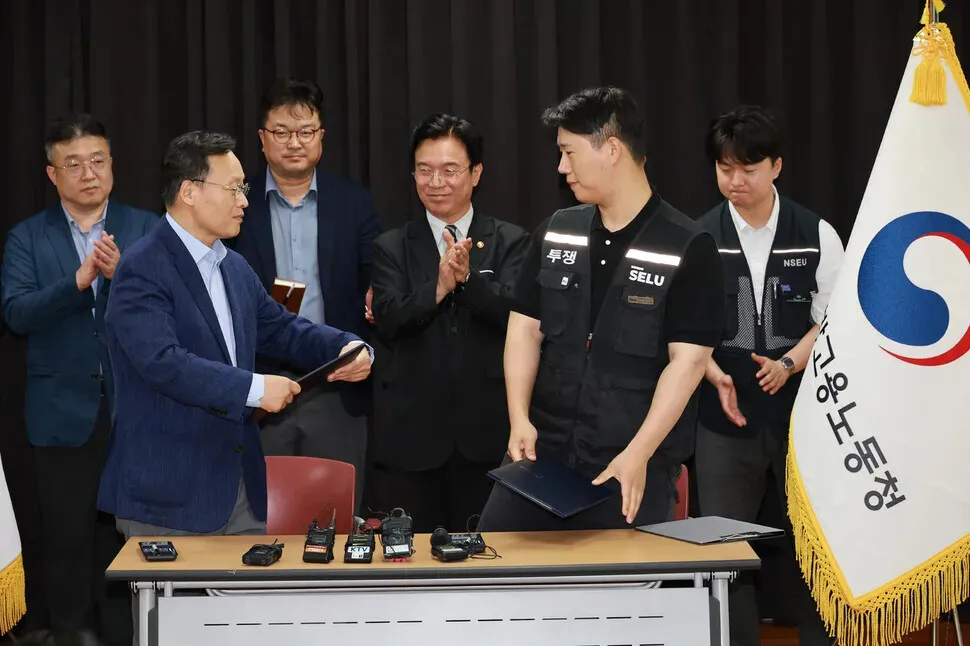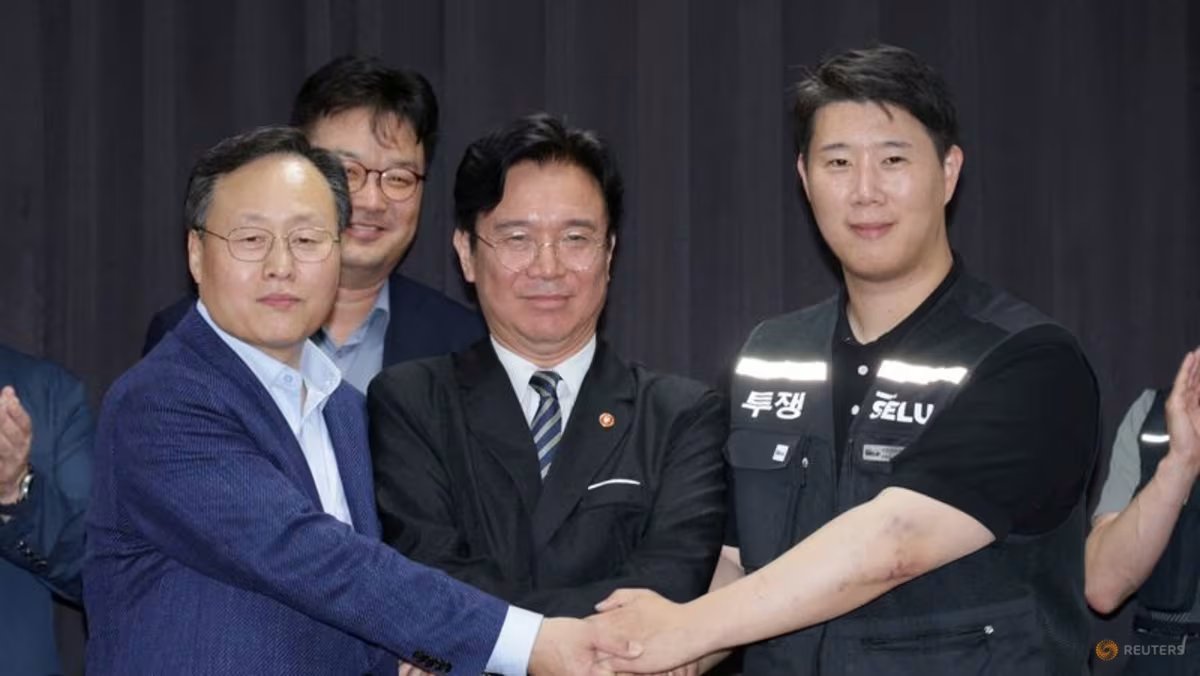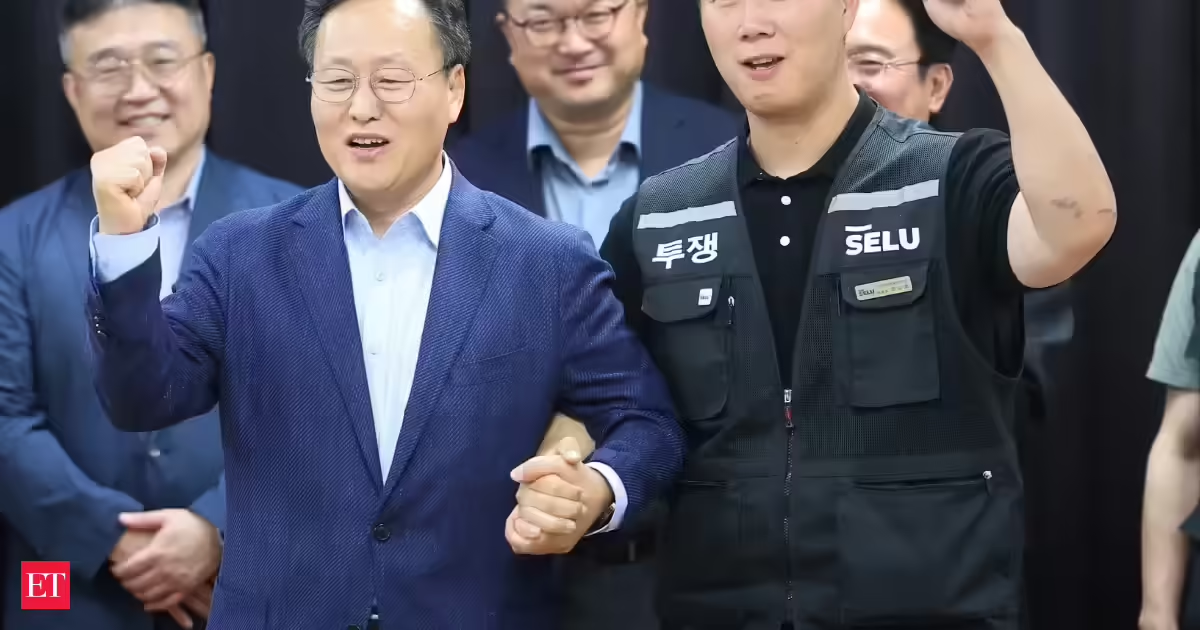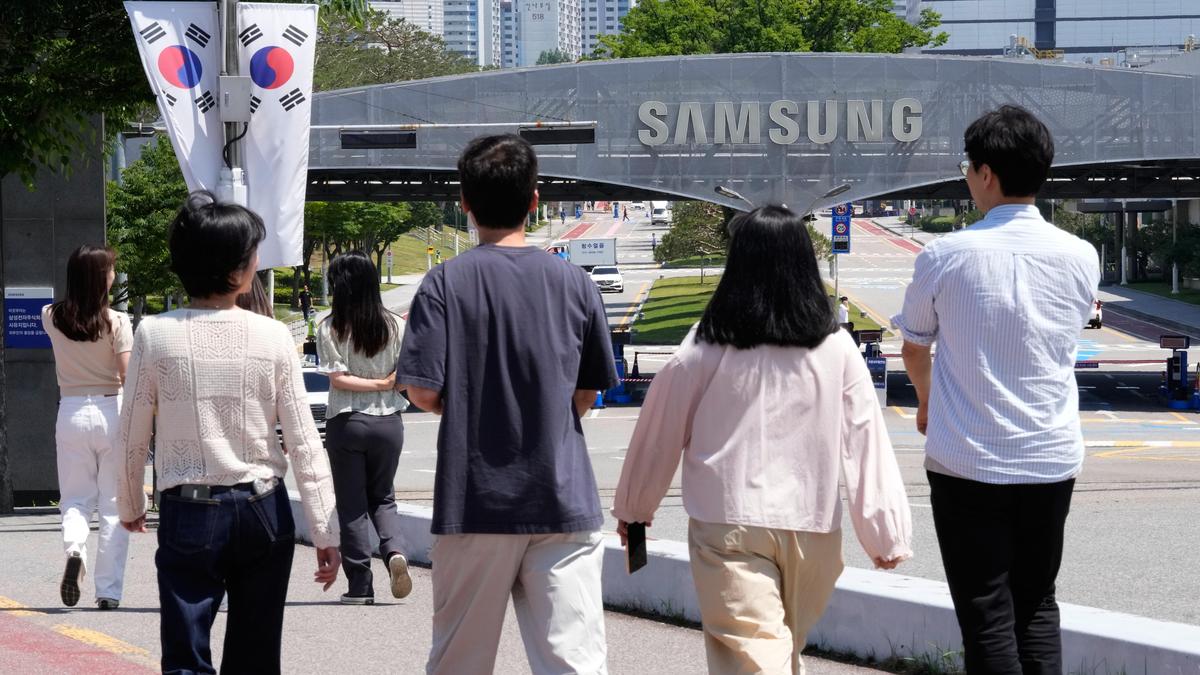
The company and its union reached the provisional agreement late Wednesday after government-mediated talks, avoiding a planned 18-day strike due to start Thursday.The dispute unfolded against the backdrop of a global artificial intelligence boom that has turbocharged Samsung's memory chip business while lifting South Korea's economic growth and stock market.The company and the union's lawyer both told AFP the vote -- initially scheduled to begin on Saturday -- will instead start on Friday afternoon.A separate union document seen by AFP said the vote will run through May 27 and be conducted online.Around 70,000 members are expected to be eligible, with the agreement "automatically ratified" if more than half cast ballots and a majority of those voting approve it, according to the union's lawyer.Local reports say the agreement is likely to pass, as most union members come from the chip division.The tentative deal creates a new bonus pool for semiconductor employees worth 10.5 percent of operating profit, to be paid in stock.Semiconductor employees are expected to get around 509 million won ($337,000), a company official confirmed to AFP on Thursday.The figure is a rough calculation based on an estimated 331 trillion won in operating profit -- in line with market consensus reported by Yonhap News Agency -- and roughly 78,000 chip employees.Samsung's union had argued workers lagged behind rivals such as SK hynix, where bonuses last year were more than three times higher.The union's lawyer said Samsung has seen a talent drain to its rival and a rise in union membership due to what workers describe as a "lack of transparency" in the bonus system.Both Samsung and its rival SK hynix posted record profits in the first quarter, driven by global demand for AI chips.Analysts say hefty bonuses could help retain South Korea's talent, as overseas firms including Tesla push deeper into semiconductors."South Korea accounts for around 80 percent of the global memory chip market," Kim Dae-jong, a business professor at Sejong University, told AFP."But rising bonus demands could come at the expense of future investment, as money that might otherwise go into research and development or shareholder returns is redirected toward compensation," he added.The development has also fuelled similar demands across industries including biotech, IT and shipbuilding, with unions at firms such as Samsung Biologics and Hyundai Motor Group reportedly seeking a greater share of profits.Legal actionWhile workers are expected to benefit from the deal, some shareholders voiced opposition, vowing to pursue legal action against the tentative agreement.On Thursday, a shareholders' group staged a rally near the residence of Samsung chairman Lee Jae-yong, arguing that operating profit-linked bonuses had not been approved through a shareholder resolution and therefore lacked legal validity under the current commercial law.Workers outside the core chip divisions are expected to receive lower payouts, with local reports suggesting around 6 million won for those in smartphone and home appliance units.Loss-making non-memory chip operations could also see reduced bonuses.Samsung memory chips are used in products ranging from consumer electronics to computer processors, while its next-generation high-bandwidth memory chips are key components for scaling up AI data centres.The tech giant said in April that its first-quarter operating profit jumped roughly 750 percent from a year earlier, while its market capitalisation topped $1 trillion for the first time this month.The prospect of a strike had raised concerns over the potential impact on South Korea's economy, with semiconductors accounting for around 35 percent of the country's exports.
Samsung union to start vote on tentative wage deal
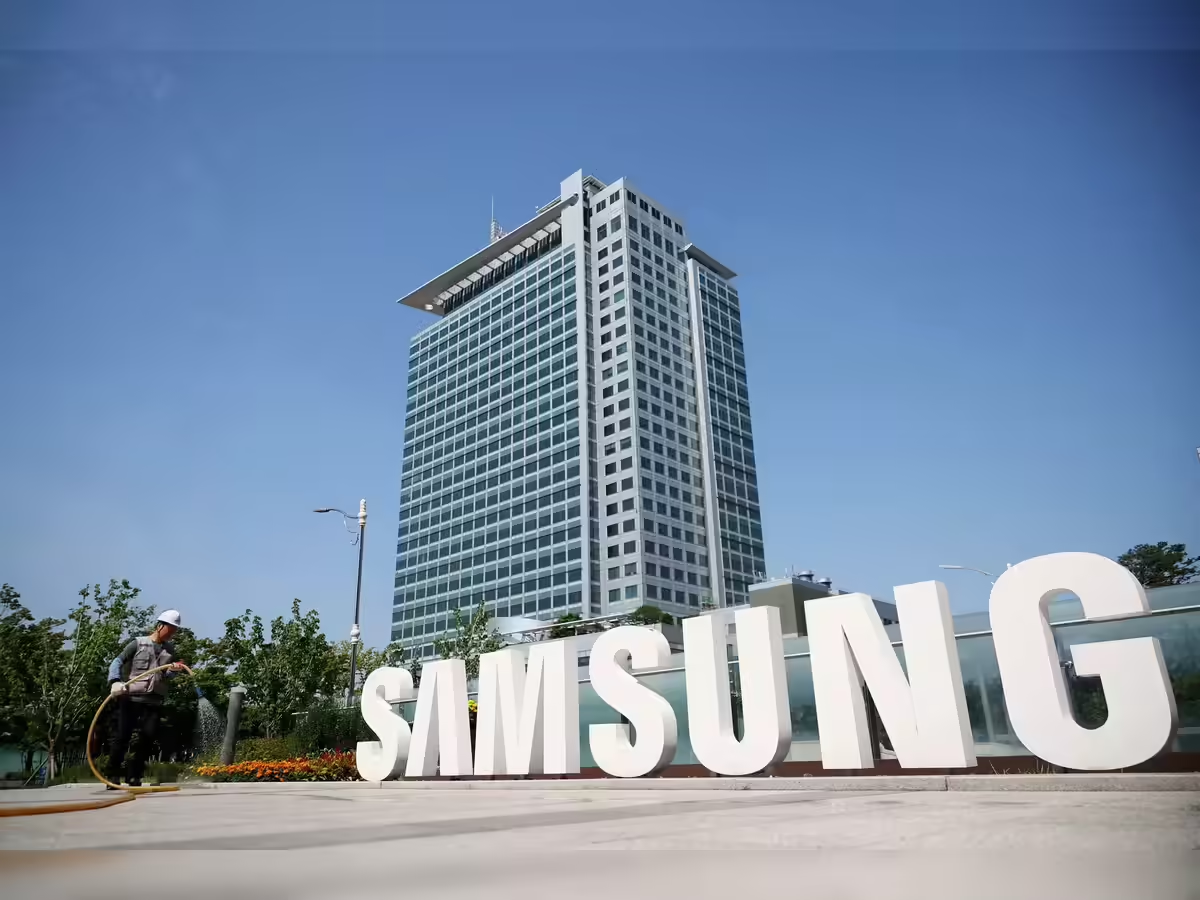
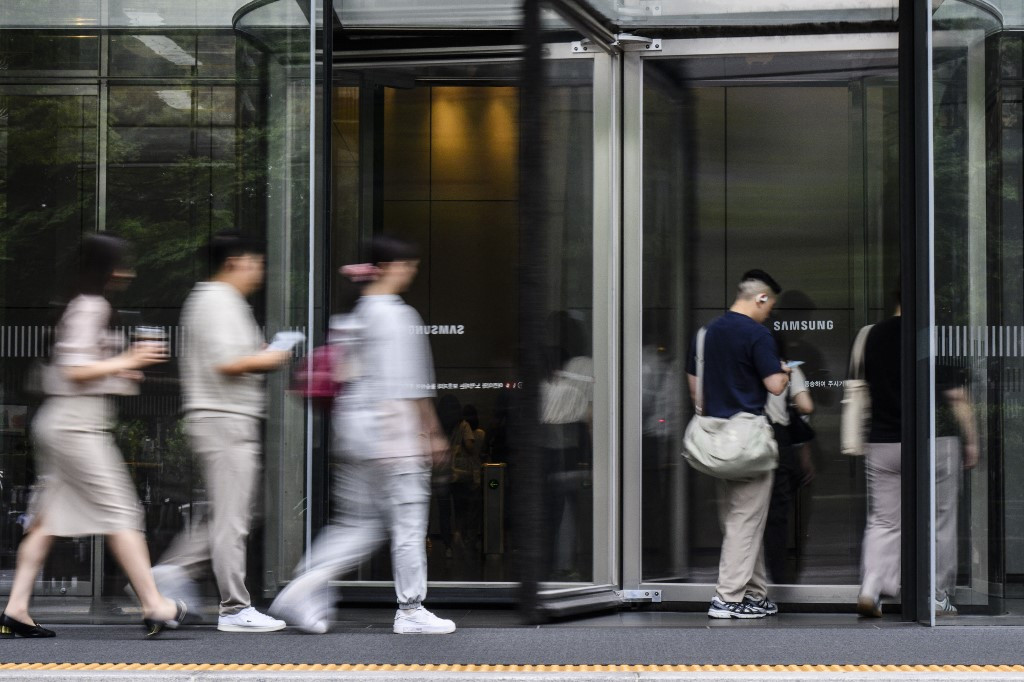
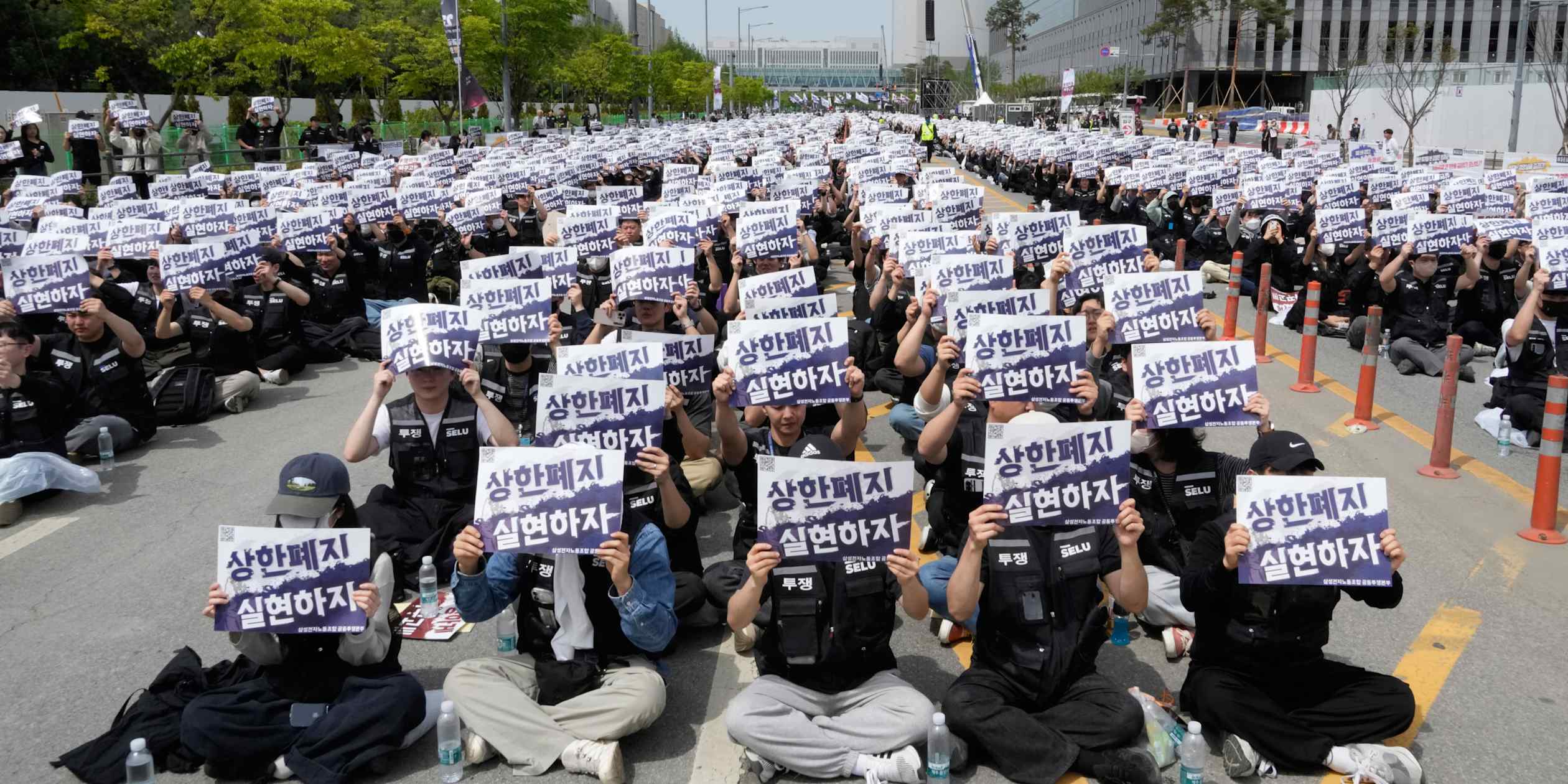
Samsung labour union members will begin voting Friday on a tentative wage deal that could deliver hefty bonuses to chip workers and helped avert a major strike at the South Korean tech giant this week.
566 words~3 min read