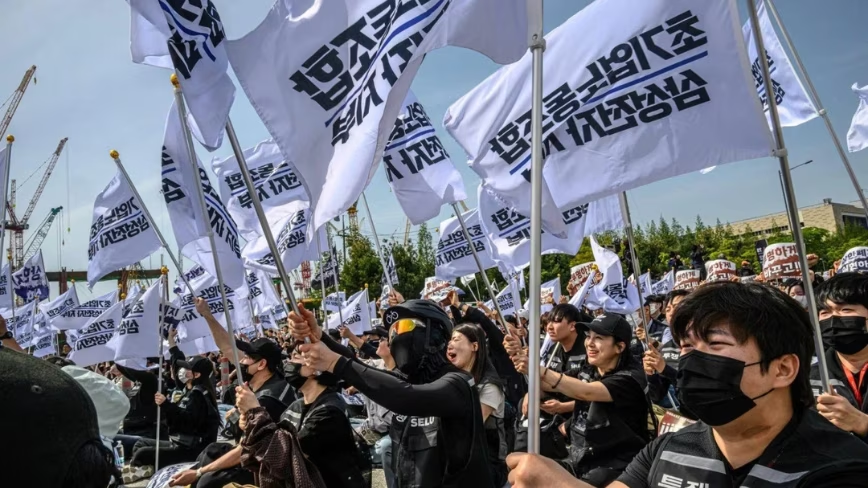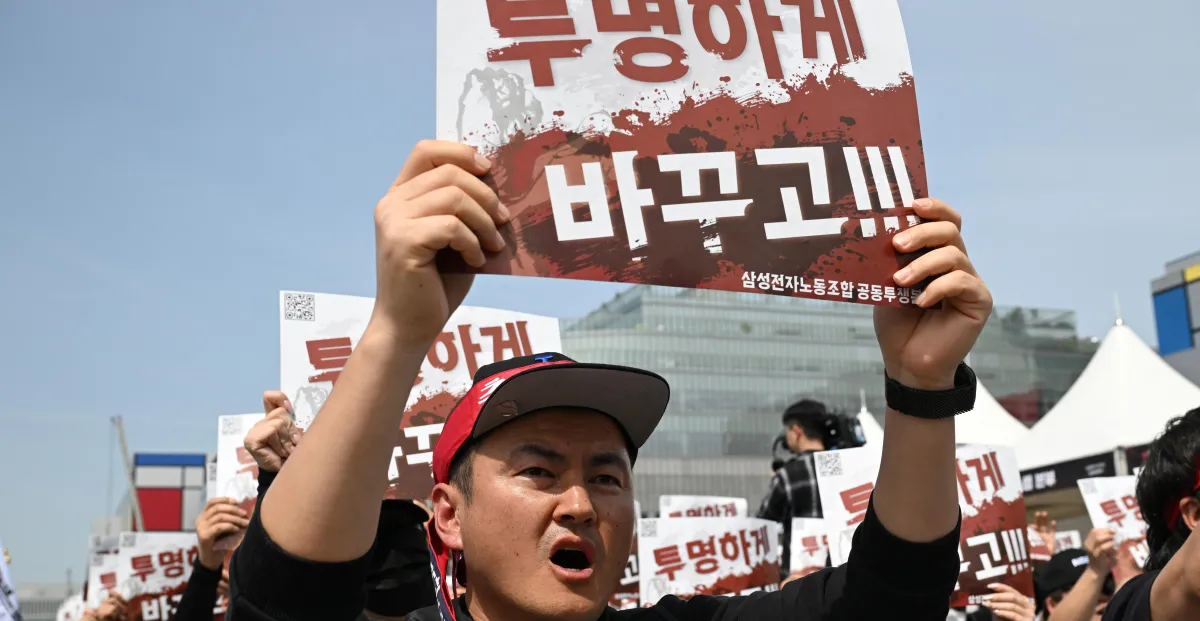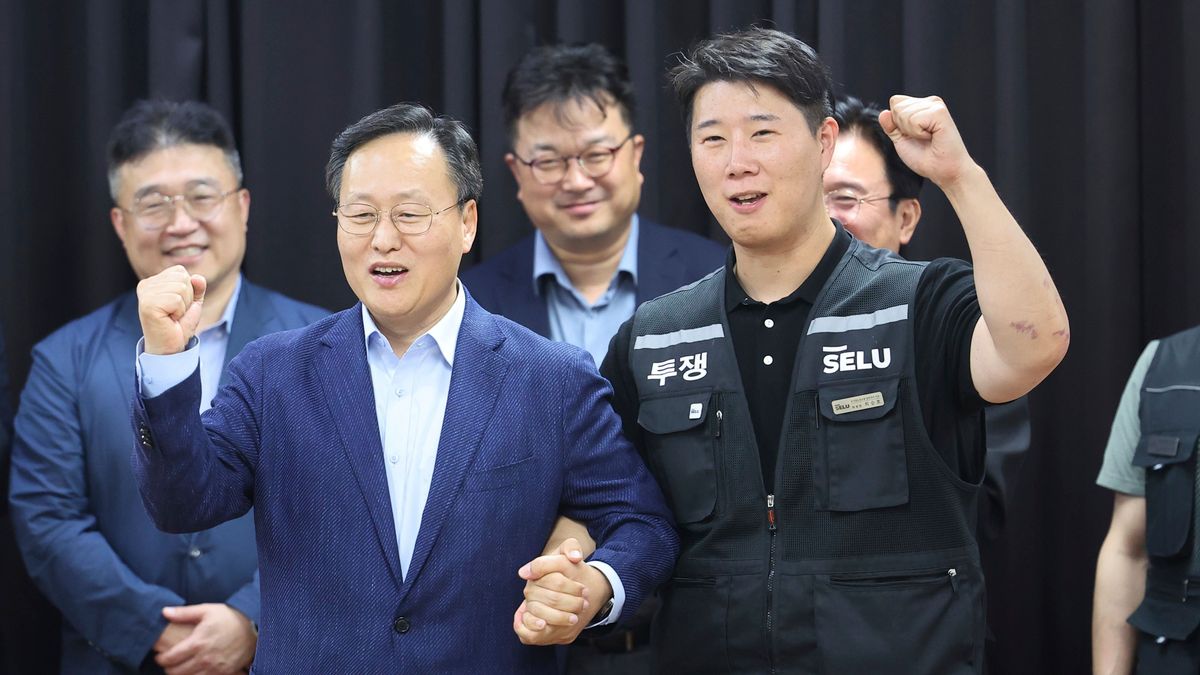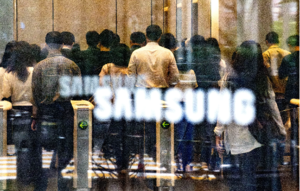
New compensation structure could hand memory sector employees nearly W600m while loss-making units lag behind Samsung Electronics employees arrive at the company’s Seocho office in Seoul on Thursday morning after labor and management reached a tentative wage deal overnight, potentially ending a more-than-five-month labor dispute if approved by union members. (The Korea Herald/Im Se-jun) Samsung Electronics’ memory-chip employees could receive close to 600 million won ($398,900) each in combined incentives this year, while colleagues in loss-making chip units may receive less than a third of that amount.The gap is built into the bonus formula at the center of Samsung’s tentative labor deal, which creates a floor for all semiconductor employees but lets memory business staff earn far more because the biggest portion of a workers' bonus is tied to the performance of the business unit they work for.The figures are scenario-based, not guaranteed paychecks. The new incentive is not paid as cash. Samsung’s newly created semiconductor special bonus will be paid entirely in Samsung Electronics shares after tax. One-third of those shares can be sold immediately, while the remaining shares are locked up in equal portions for one year and two years.Everyone gets a floorThe agreement creates a special management performance bonus for Samsung’s Device Solutions division, the company’s semiconductor arm. DS includes memory chips, foundry manufacturing, System LSI logic-chip design and division-wide common organizations.The bonus pool is set at 10.5 percent of an agreed measure of business performance, with no cap for individual workers. Local calculations have used operating profit as the benchmark, though the final metric could differ.The pool is then split in two. The first 40 percent is distributed across the DS division, regardless of which business unit an employee belongs to.If industry estimates of 300 trillion won in operating profit are met this year, the total special bonus pool would reach 31.5 trillion won. The 40 percent division-wide portion would amount to 12.6 trillion won, or about 160 million won per person when spread across roughly 78,000 DS employees.Why memory pulls aheadThe remaining 18.9 trillion won is to be distributed based on business-unit performance. Under current assumptions, it would mainly benefit the memory business, which is driving Samsung’s chip profits on strong demand for AI-related memory products. Foundry and System LSI, treated as loss-making units in the reported calculations, would receive far less from this performance-weighted portion.Local estimates put memory employees’ additional share at around 380 million won each.On top of that, Samsung’s existing OPI system remains in place. OPI, or overall performance incentive, is Samsung’s annual profit-based bonus program, which can pay up to 50 percent of an employee’s annual salary depending on business-unit results. For a memory employee earning 100 million won a year, OPI could reach 50 million won.That is how the figure for workers in the memory division approaches 600 million won: about 160 million won from the division-wide floor, about 380 million won from the performance-weighted share and up to 50 million won from OPI. Samsung Electronics DS People Team chief Yeo Myung-gu (left), Labor Minister Kim Young-hoon and union leader Choi Seung-ho clasp hands after signing a tentative wage deal in Suwon, Gyeonggi Province, Wednesday. (Joint Press Corps-Yonhap) Common organizations sit between memory and loss-making non-memory units. These are DS-wide research, manufacturing infrastructure and support functions not tied to a single product business. The agreement sets their payout rate at 70 percent of the memory business rate, putting their estimated special bonus at roughly 430 million won under the same 300 trillion won operating-profit scenario.Foundry and System LSI employees would mainly receive the division-wide floor this year, estimated at 160 million won, as the loss-making-unit penalty is deferred for one year. From 2027, units in the red will receive only 60 percent of the common payout rate calculated from the division-wide pool.The catchThe framework is designed to run for 10 years, but only if Samsung’s semiconductor division clears steep profit hurdles. The special bonus is paid when DS posts annual operating profit of 200 trillion won from 2026 to 2028, and 100 trillion won from 2029 to 2035.That caveat matters in a cyclical business. Samsung’s chip division posted a 14.9 trillion won operating loss in 2023 during the last memory downturn.The deal puts Samsung closer to a profit-linked compensation model already adopted by rival SK hynix, which removed the cap on its profit-sharing system and tied payouts to 10 percent of operating profit last September.
Samsung chip bonus breakdown: How new payout formula works
Samsung Electronics’ memory-chip employees could receive close to 600 million won ($398,900) each in combined incentives this year, while colleagues in loss-mak
736 words~3 min read