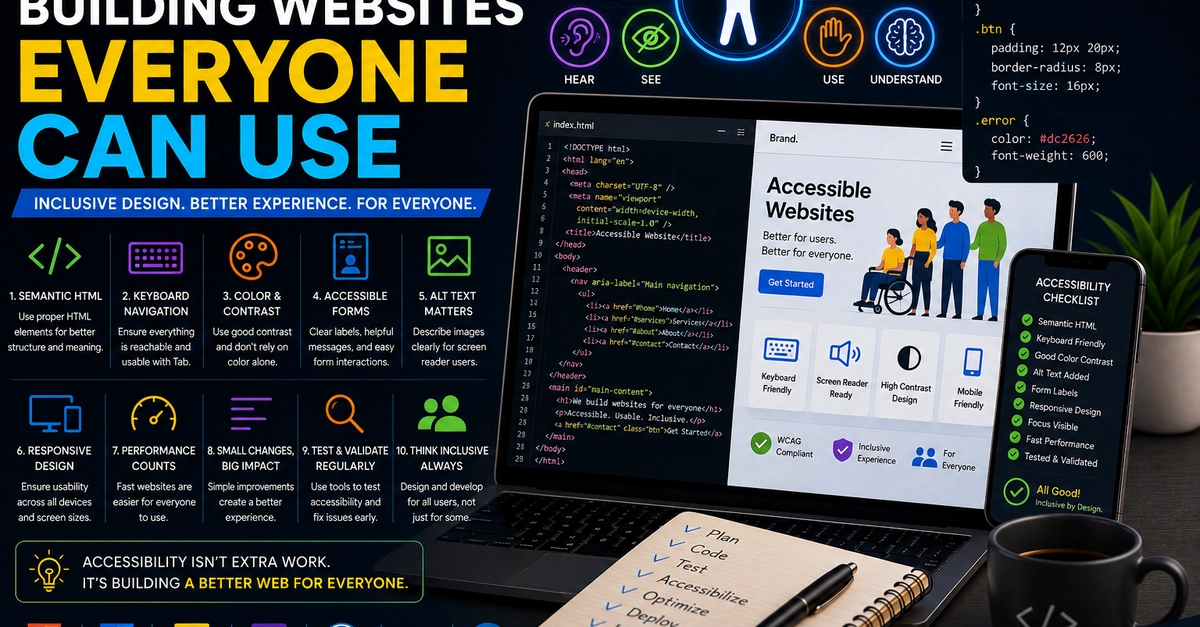
Accessibility is a moral imperative, but it’s also a clear business accelerator. Globally, 1.3 billion people live with disabilities, and the World Economic Forum estimates the global spending power of people with disabilities and their families at $13 trillion. Furthermore, companies that prioritize accessibility are four times more likely to outperform their competitors in total shareholder returns. For businesses like Salesforce, the most effective strategy for building better products for humanity is efficiency — embracing what a software developer would call a shift-left mentality to move tasks to earlier stages in the development process rather than tacking them on later. In other words, build things right the first time, turning accessibility into a trust differentiator that accelerates growth.
However, the shift-left approach remains a persistent challenge. Shifting left isn’t just a technical adjustment; it’s a behavioral one. It demands significant resourcing, executive support, and a rewrite of established workflows. Most teams don’t overlook accessibility out of lack of care; they simply lack the framework to truly prioritize it. Now, we face a new AI frontier: the era of hyper-accelerated app development. As code generation hits warp speed, the window for manual intervention is closing. It’s more critical than ever to redefine how we intercept the development train before it leaves the station.



 aws.amazon.com