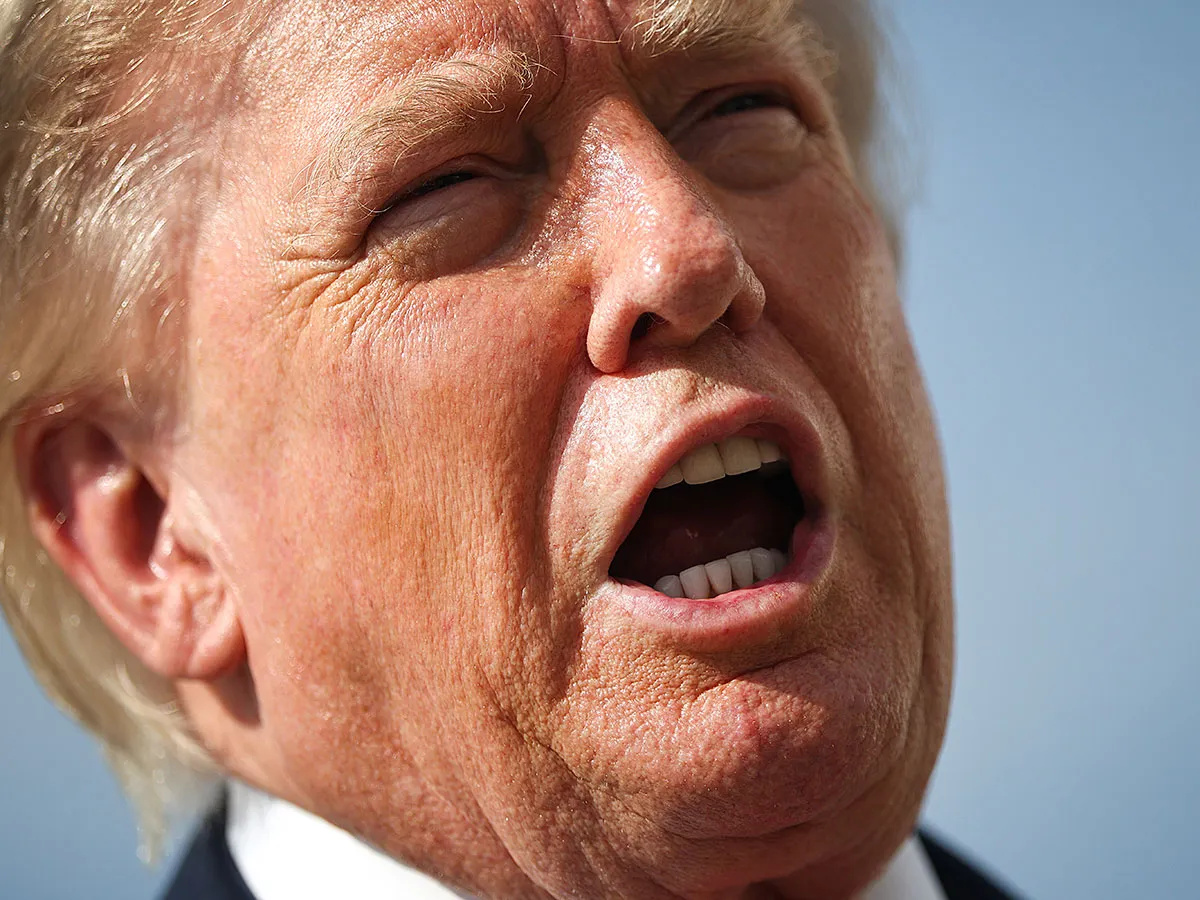
Skip to Content News Archives Economy Energy Oil & Gas Renewables Electric Vehicles Mining Commodities Agriculture Real Estate Mortgages Mortgage Rates Finance Banking Insurance Fintech Cryptocurrency Work Wealth Smart Money Wealth Management Investor Personal Finance Family Finance Retirement Taxes High Net Worth FP Comment Executive Women Puzzmo Newsletters Financial Times Business Essentials More Innovation Information Technology FP500 Podcasts Small Business Lives Told Tails Told Shopping Financial Post Store Obituaries Place a Notice Advertising Advertising With Us Advertising Solutions Postmedia Ad Manager Sponsorship Requests Classifieds Place a Classifieds ad Working Profile Settings My Subscriptions Saved Articles My Offers Newsletters Customer Service FAQ News Economy Energy Mining Real Estate Finance Work Wealth Investor FP Comment Executive Women Puzzmo Newsletters Financial Times Business Essentials HomeFP CommentOpinion: Trump wants higher drug prices in Canada. That might not be badOur insistence on low prices for patented drugs may result in both less and slower access to life-saving new medicines for CanadiansLast updated 2 days ago You can save this article by registering for free here. Or sign-in if you have an account.U.S. President Donald Trump listens during an event about prescription drug prices in the South Court Auditorium in the Eisenhower Executive Office Building on the White House campus, Monday, May 18, 2026, in Washington. Photo by AP Photo/Julia Demaree NikhinsonLast year, Donald Trump introduced “most-favoured-nation” (MFN) drug pricing for the United States. Its goal is lower drug prices for Americans and higher prices in Canada and elsewhere. That wouldn’t necessarily be a bad thing.Subscribe now to read the latest news in your city and across Canada.Exclusive articles from Barbara Shecter, Joe O'Connor, Gabriel Friedman, and others.Daily content from Financial Times, the world's leading global business publication.Unlimited online access to read articles from Financial Post, National Post and 15 news sites across Canada with one account.National Post ePaper, an electronic replica of the print edition to view on any device, share and comment on.Daily puzzles, including the New York Times Crossword.Subscribe now to read the latest news in your city and across Canada.Exclusive articles from Barbara Shecter, Joe O'Connor, Gabriel Friedman and others.Daily content from Financial Times, the world's leading global business publication.Unlimited online access to read articles from Financial Post, National Post and 15 news sites across Canada with one account.National Post ePaper, an electronic replica of the print edition to view on any device, share and comment on.Daily puzzles, including the New York Times Crossword.Create an account or sign in to continue with your reading experience.Access articles from across Canada with one account.Share your thoughts and join the conversation in the comments.Enjoy additional articles per month.Get email updates from your favourite authors.Create an account or sign in to continue with your reading experience.Access articles from across Canada with one accountShare your thoughts and join the conversation in the commentsEnjoy additional articles per monthGet email updates from your favourite authorsSign In or Create an AccountorUnder Trump’s plan, U.S. prices of brand-name medicines will be based on prices in Canada, Denmark, France, Germany, Italy, Japan, Switzerland and the U.K. Drug manufacturers will be asked to report confidential discounted prices in these countries and the U.S. price will be set equal to the second lowest, adjusting for differences in GDP per capita. The goal is to slash prescription drug costs to Americans and raise them in other countries so as to end freeloading on American pharmaceutical innovation.Trump is also using his favourite weapon, tariffs, to pressure drug companies to reinvest in R&D in the U.S. Beginning in August, the tariff on pharmaceuticals and their ingredients imported into the U.S. will be 100 per cent. But companies that commit to reshoring will only pay 20 per cent while their new U.S. facilities are under construction (though the rate reverts to 100 per cent in April 2030, by which time they presumably won’t need to import any more). Companies that also agree to MFN pricing will pay no tariff at all during construction. So far, 17 major companies have committed to both reshoring and MFN pricing.Get the latest headlines, breaking news and columns.By signing up you consent to receive the above newsletter from Postmedia Network Inc.A welcome email is on its way. If you don't see it, please check your junk folder.The next issue of Top Stories will soon be in your inbox.We encountered an issue signing you up. Please try againIn light of Trump’s policies, drug developers are reassessing how they market medicines in Europe and other countries, including Canada, where drug prices are much lower than in the U.S. Some companies are deciding to delay or not launch new drugs at all in some countries, preferring to lose entire markets rather than agree to low prices that, when used in the MFN price test, will severely damage their U.S. revenue. Others warn they will cut R&D in Europe unless governments increase what they are willing to pay.All eight MFN reference countries judge the-value-for-money that new medicines provide. In this country, Canada’s Drug Agency, a quasi-governmental organization, evaluates new medicines for all provincial drug plans except Quebec’s. Recent CDA reimbursement recommendations have almost all been conditional on clinical criteria and/or a price cut commonly expressed as a specific percentage reduction required to reach an arbitrary and almost certainly outdated value-for-money benchmark. In the past five years, more than half of CDA’s recommended price reductions were 73 per cent or higher. Another quasi-governmental agency uses CDA’s recommendations in its drug price negotiations with manufacturers to keep prices low.Because negotiated prices remain confidential, we don’t actually know how Canadian prices compare with those in the other seven MFN reference countries. On the other hand, given the steep reductions CDA usually recommends, it’s reasonable to assume they’re at the lower end. If so, that could force a reduction in companies’ U.S. prices, which means a logical business strategy for them would be to delay bringing drugs to Canada or not launching them here at all.Even before Trump introduced his MFN policy, Canada ranked well down manufacturers’ priority lists for launching new medicines. MFN gives our governments a choice: hope to outlast Trump, continue to undervalue pharmaceutical innovation and endure increased criticism when even fewer medicines are launched in Canada, or acknowledge the benefits innovative medicines bring to both patients and health-care systems and accept higher prices.Canadians already worry about delays and denials of access to innovative medicines that result in patients dying or declining while waiting for new drugs. They need governments to remove complexities in the system that delay or deny access to medicines so that Canadians receive the best appropriate therapies for their health problems as soon as possible, even if that means governments pay more for medicines.Nigel Rawson, affiliate scholar with the Canadian Health Policy Institute, is a senior fellow with the Macdonald-Laurier Institute. Andrew Darke, a retired pharmaceutical company executive living with ALS, consults on clinical research and pharmaceutical regulatory affairs. Join the Conversation This website uses cookies to personalize your content (including ads), and allows us to analyze our traffic. Read more about cookies here. By continuing to use our site, you agree to our Terms of Use and Privacy Policy.
Opinion: Trump wants higher drug prices in Canada. That might not be bad
Canada's insistence on low prices for patented drugs may result in both less and slower access to life-saving new medicines. Read more.
1,186 words~5 min read