Supported by Gujarat government schemes, natural farming practices and better market linkages, farmers are shifting from traditional crops to strawberries, earning significantly higher incomes per hectare
| Photo Credit:
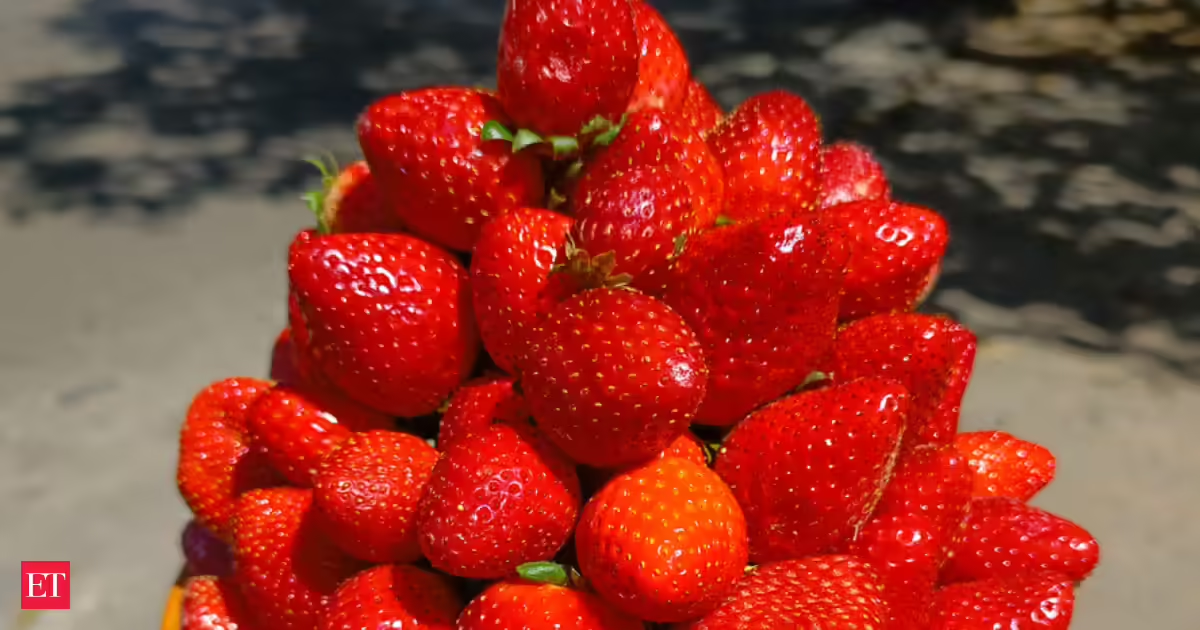
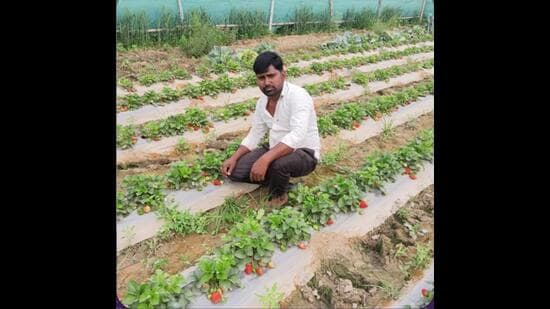
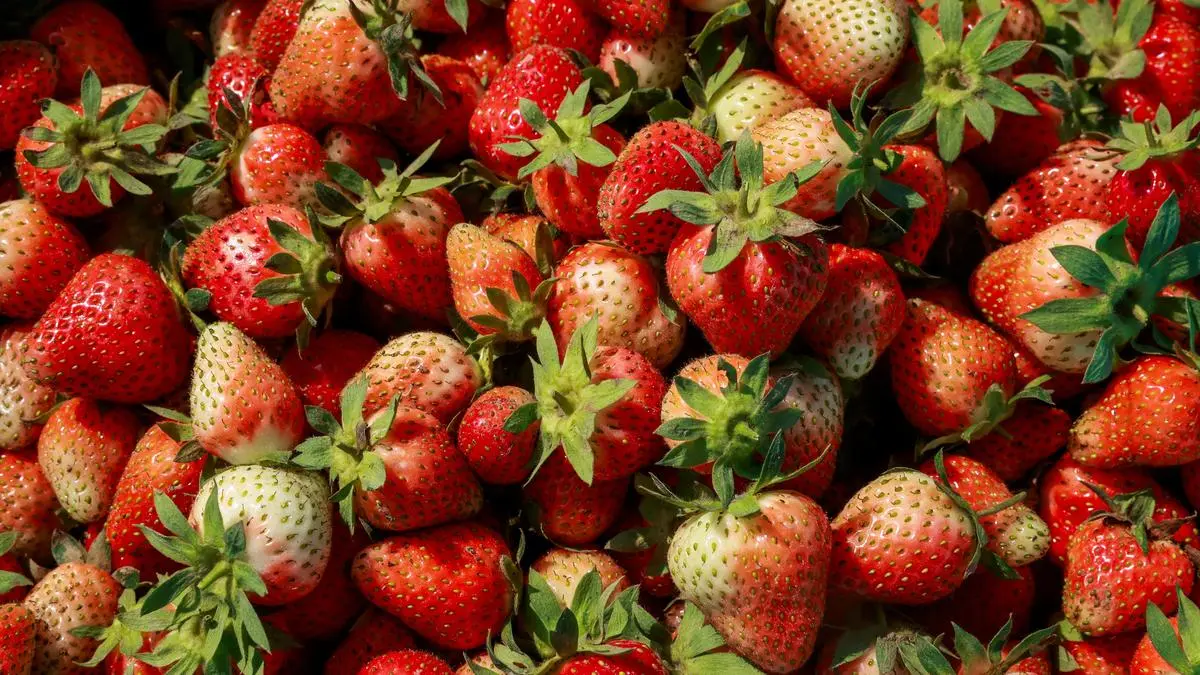
Winter Dawn, Sweet Charlie, Camaroza and Selva are names of strawberry varieties that are quietly reshaping the agricultural landscape of Dang — a tribal district in Gujarat — where the fruit has emerged as one of the fastest-growing high-value horticulture crops, with production rising nearly 65% in three years between FY23 and FY26.What was once a limited, experimental cultivation activity in a few pockets of this remote, predominantly tribal district has now evolved into a structured farming ecosystem supported by natural farming practices, government-backed horticulture schemes, and improved market access to major urban centres. According to official estimates shared by the Gujarat government on Wednesday, the strawberry cultivation in Dang has expanded steadily over the past three years. The area under cultivation has increased from 20 hectares in FY23 to about 33 hectares in FY26, a 65% increase. In tandem, production has grown from 140 metric tonnes in FY23 to an estimated 233 metric tonnes in FY26, also reflecting an increase of nearly 65–66% over the period.Rising incomes drive farmer transitionThis consistent upward trend underscores a broader structural shift in the district’s agricultural profile, as farmers move away from traditional, low-yield, rain-dependent crops towards high-value horticulture that offers stronger, more predictable income streams. For decades, many farmers in Dang relied on traditional crops such as paddy, nagli, urad and varai, along with wage labour in nearby industrial areas or farms outside Gujarat to supplement their incomes. However, water scarcity, erratic rainfall and limited market realisation often left agricultural earnings uncertain and fragmented.The introduction and gradual scaling of strawberry cultivation has begun to alter this equation. Farmers are increasingly engaging in structured, market-linked cultivation cycles for crops that offer significantly higher per-hectare returns than conventional staples. Officials and field-level data shared by the government suggests that farmers engaged in strawberry cultivation are now earning around ₹7–₹8 lakh per hectare annually, depending on yield quality, variety selection and market timing. This has made strawberries one of the most remunerative crops in the region, particularly for small and marginal farmers.Cluster farming boosts efficiency and market accessStrawberry cultivation in Dang is no longer scattered but has developed into identifiable cluster-based farming pockets. In Ahwa taluka, cultivation is concentrated in villages such as Bhurapani, Borigavtha, Galkund, Kotamdar, Malegaon, Dabhas, Sonuniya and Vanar. In Waghai taluka, villages such as Kanchanpada, Ghodwahal, Murambi and surrounding areas have emerged as key production centres.This clustering has helped improve knowledge sharing among farmers, better coordination in input procurement, and more efficient aggregation of produce for transport to larger markets. Initially, most strawberry production from Dang was sold in local markets such as Saputara and Ahwa, with limited price discovery and scale. However, improved logistics and rising demand for fresh fruit in urban centres have significantly expanded the market footprint.Today, strawberries from Dang are increasingly reaching wholesale and retail markets in Ahmedabad, Surat, and Bharuch, enabling farmers to realise better prices and access more stable demand channels. At the same time, improved cold-chain awareness and packaging practices have helped reduce post-harvest losses, a historically significant challenge in perishable horticulture crops.Agro-climatic advantage supports strawberry growthAgronomically, Dang offers favourable conditions for strawberry cultivation, including well-drained, sandy loam soils rich in organic matter, a pH range of 5.5-7.0, and a temperate winter microclimate.The crop thrives at daytime temperatures of 22°C to 25°C and cooler nighttime temperatures of 7°C to 13°C, with adequate sunlight exposure critical for flowering and fruit development.Farmers in the region are cultivating a diverse set of varieties, including Winter Dawn, Early Winter, Camaroza, Sweet Charlie, Nabhila, Nabady, Selva, Bellruby and Pajero. Among these, Winter Dawn remains the most widely preferred due to its extended harvesting window, typically spanning December through February and into March, allowing for staggered supply and improved market access.Employment generation and rural economic impactBeyond income enhancement, the expansion of strawberry cultivation has also contributed to local employment generation, particularly during peak harvesting and post-harvest handling periods. This has reduced seasonal migration pressures while enabling more localised economic activity within villages.Published on May 21, 2026