Quantum computing today is firmly in the NISQ (Noisy Intermediate-Scale Quantum) era. In theory, everything sounds brilliant: quantum advantage, exponential speedup, and the ability to solve problems far beyond the reach of classical computers. However, in practice, anyone diving into algorithms like QAOA (Quantum Approximate Optimization Algorithm) eventually hits a "wall"—usually around 20–30 qubits.
But what if your task involves analyzing a social graph with tens of thousands of nodes? Take the Epinions dataset, for example, which contains over 75,000 users linked by thousands of trust relationships. Classical simulators simply "choke" on memory when attempting to process such a state vector.
In this article, I will show you how I turned this limitation into an engineering challenge. Instead of trying to "stuff the unstuffable" into a quantum processor, I developed a hybrid orchestrator that decomposes massive networks into quantum-accessible fragments. We’ll walk through the entire pipeline: from loading a GZIP archive to generating an optimized CSV report.
Architecture: Divide and Optimize
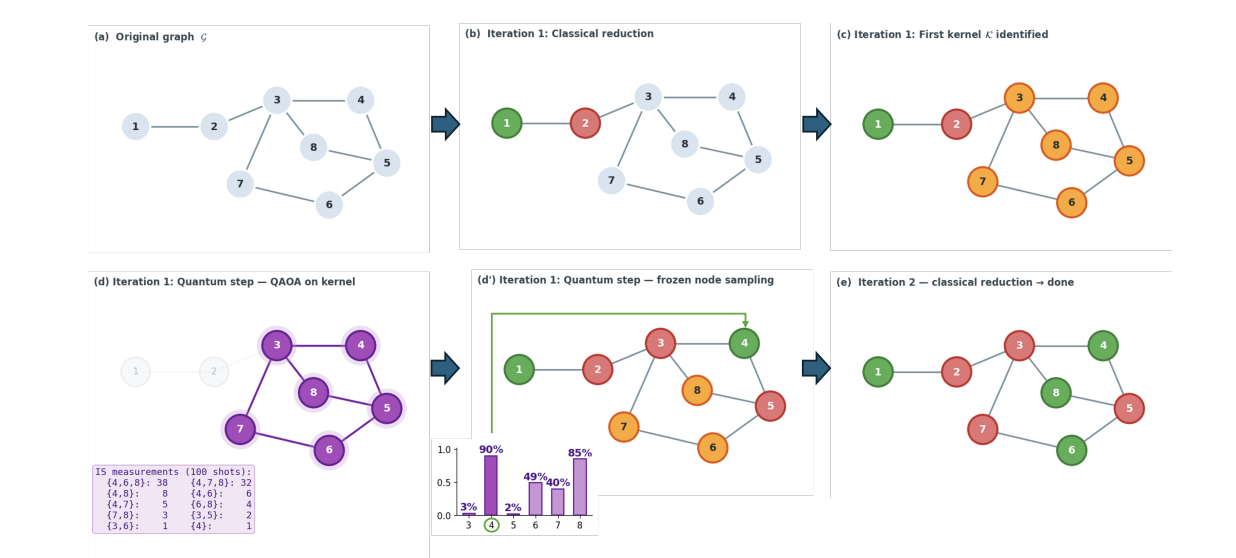
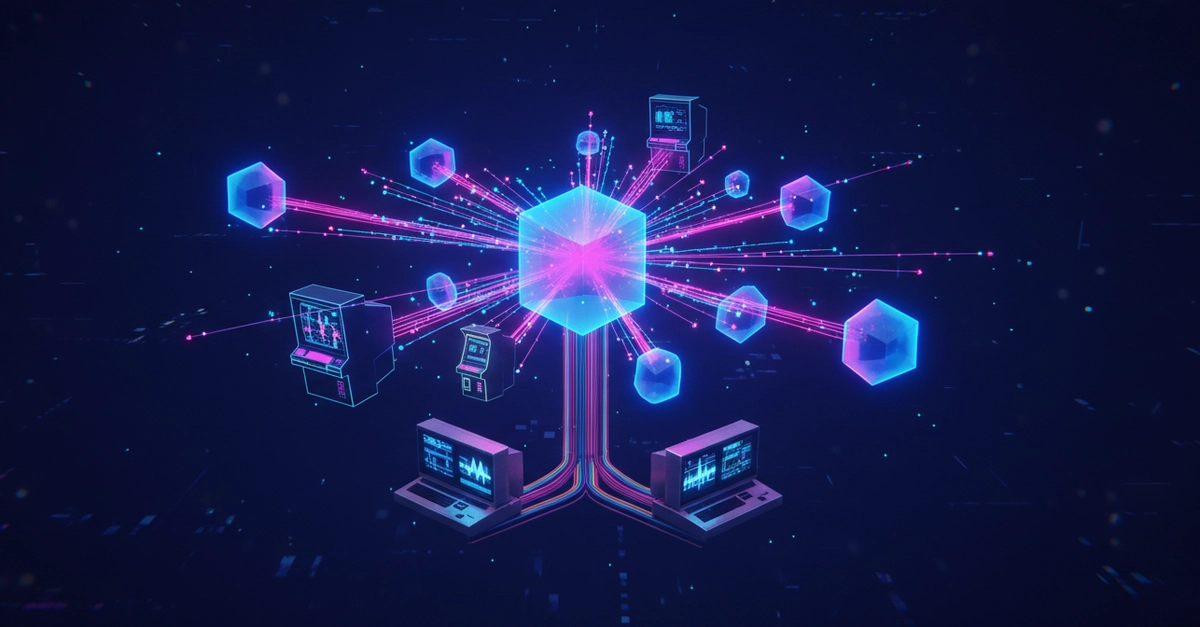
The main problem with large graphs is their connectivity. My approach relies on three stages, the logic of which is illustrated in the diagram above: