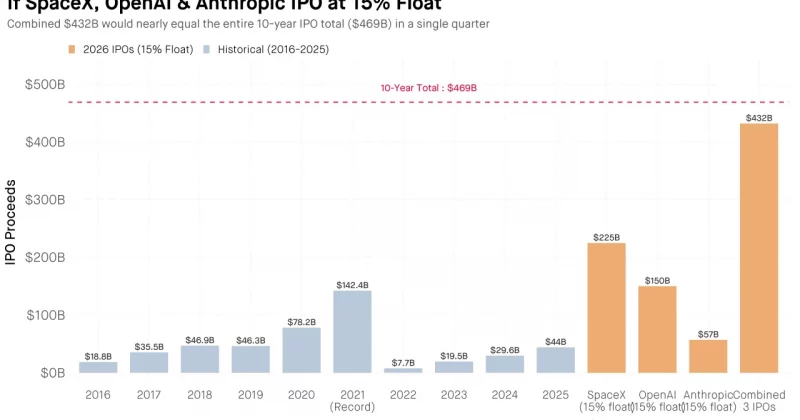
OpenAI is reportedly preparing for a potential IPO in late 2026. The target valuation of roughly $1 trillion would place it alongside the most valuable companies on Earth.
Anthropic was valued at around $380 billion in February 2026. The company is now seeking its next round at between $600 billion and $900 billion, nearly tripling its valuation in a matter of months.
Both figures assume that these companies can sustain premium pricing for their AI models while dramatically scaling revenue. A growing wave of cheaper AI models from Chinese developers and Western competitors is quietly eroding the pricing power that those valuations depend on.
The cost structure at both companies makes this especially painful. Training frontier models requires enormous capital expenditure on compute. Serving those models to users, what the industry calls inference, is also expensive. Investor focus is now shifting from pure growth metrics to profitability, and towering computation costs make the path to sustainable margins unclear.
OpenAI recently restructured its deal with Microsoft, loosening exclusivity and revenue-sharing arrangements while ensuring Microsoft retains primary-cloud status through at least 2032. That deal gives OpenAI more commercial flexibility, but it also means sharing economics with a partner that has its own AI ambitions.