Show Caption
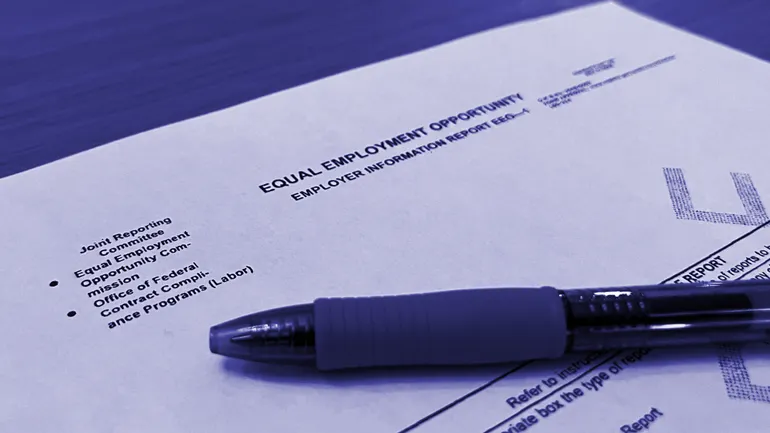
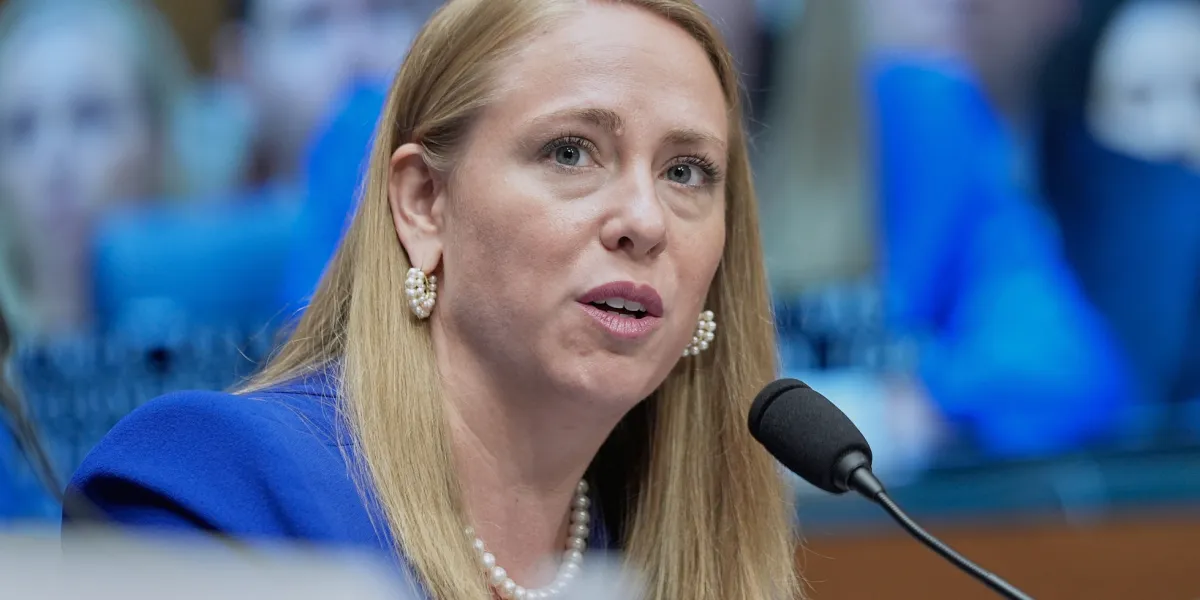
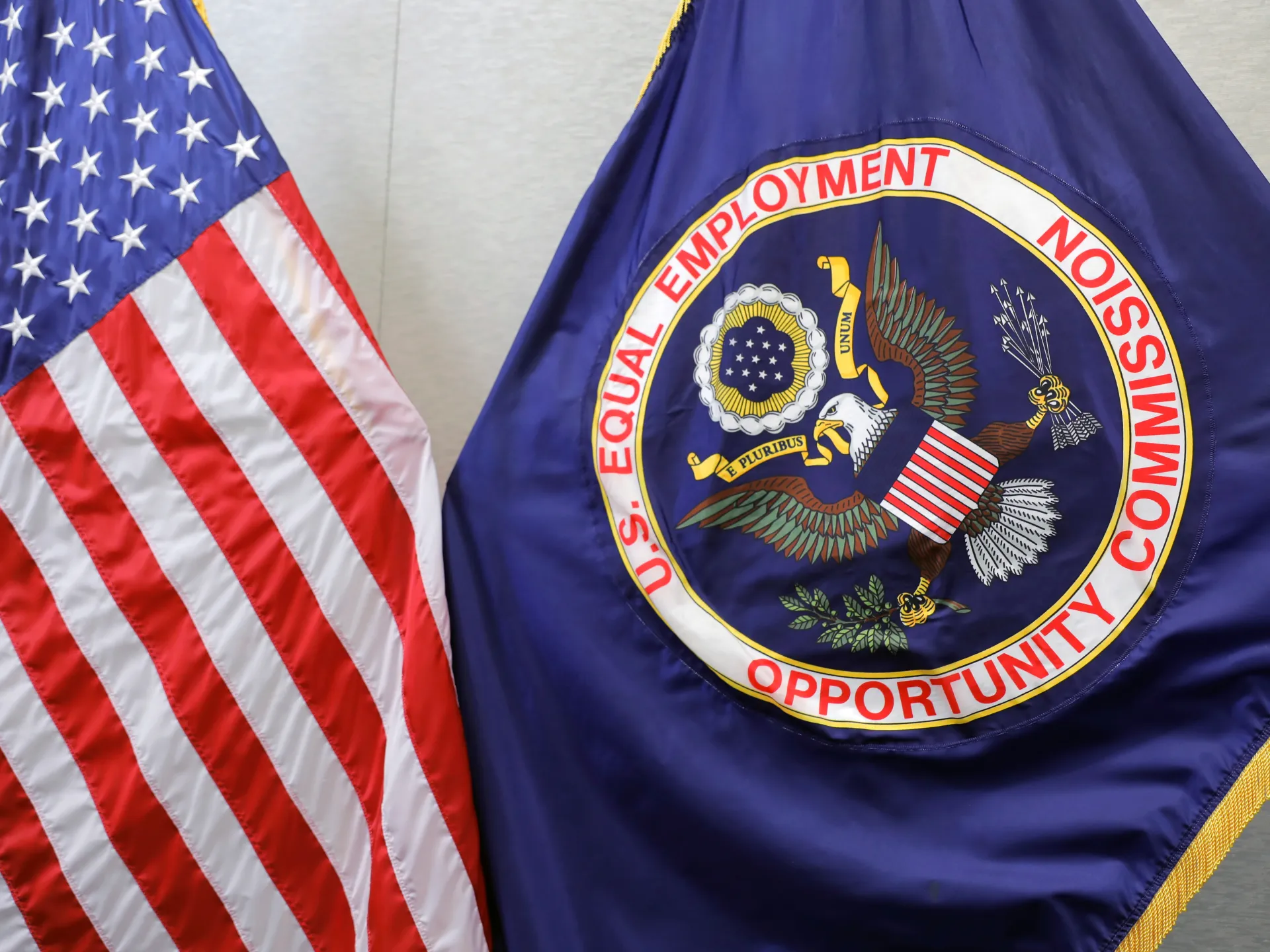
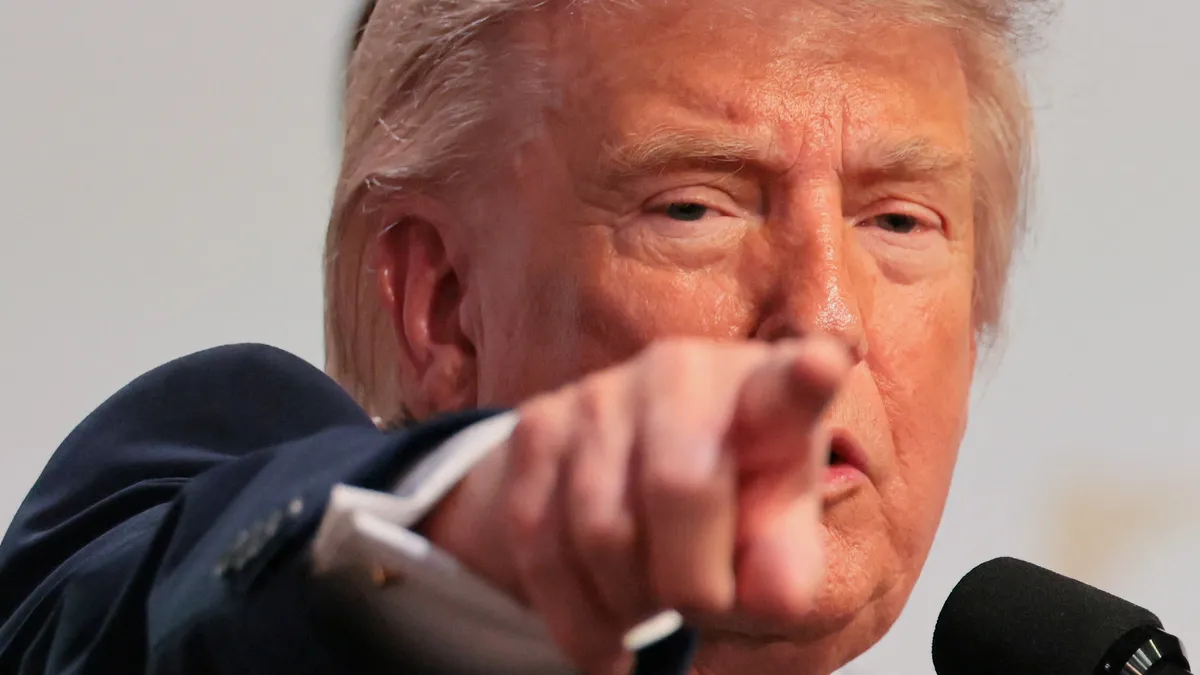
Just how diverse is corporate America? For decades, it has been the federal government’s job to keep track.Each year, major companies submit a breakdown of employees by race and gender to the federal government in a form popularly known as an EEO-1 report. Since the 1960s, this trove of demographic data has been instrumental in spotting patterns of discrimination and supporting civil rights investigations in the workplace.Not for much longer. The Trump administration has signaled it’s putting a stop to it as part of its diversity, equity and inclusion reforms.The Equal Employment Opportunity Commission notified the White House last week that it plans to eliminate the reporting requirement for corporations as well as labor unions, state and local governments, apprenticeship programs and schools, marking a significant escalation in the fight over corporate diversity.In recent years, EEO-1 data gave Americans greater visibility into how level the playing field is in their workplace, and critics warn cutting off this information flow will make it harder for corporations and regulators to gauge that. The Trump White House argues this is just the latest in a series of necessary steps to unwind Biden-era policies that unfairly promoted favored groups over others.Rep. Lauren Underwood, D-Illinois, attempted to amend an appropriations bill to require that EEOC fund the collection of employee demographic information, but the effort was rebuffed without Republican support. Information tracking the state of diversity in the American workplace won't go away entirely. States like California and Illinois still require employers to submit workforce demographics reports. If the federal government stops collecting EEO-1 data, more states may enact similar reporting requirements. But little else stands in the EEOC’s way, legal observers say.“After 60 years, EEO-1 reporting seems likely to come to an end sometime over the next few years,” the Littler law firm said in a blog post. 'One of the most consequential civil rights reversals'Title VII of the Civil Rights Act of 1964 outlawed employment discrimination based on race, color, religion, sex, and national origin and established the EEOC to enforce these new laws. But the new federal agency lacked concrete data to identify patterns of job discrimination and segregation based on race, ethnicity and sex. So the EEOC used its power under the Civil Rights Act to mandate that companies with 100 or more employees and federal contractors with 50 or more employees fill out standardized reports with concrete demographic data.The public had scant access to these reports until the 2020 police killing of George Floyd when corporations began voluntarily releasing more information in the face of growing pressure from investors and customers and inquiries from news organizations like USA TODAY. Three-quarters of S&P 500 companies disclosed EEO-1 data for 2022 and 2023, according to Josh Ramer, founder of PeopleReturn, which provides data and research on workforce trends in public companies. But corporations retreated as the DEI backlash accelerated when President Donald Trump took office for his second term. In 2024, the latest year for which EEO-1 data is available, that figure dropped to about 57%, Ramer said. The widely anticipated announcement that the EEOC would cease collecting the data drew a swift rebuke from the Joint Center for Political and Economic Studies. The research organization focused on issues affecting Black Americans said the loss of data could be “one of the most consequential civil-rights reversals of this era.”“For generations, America’s civil-rights framework has operated on a simple premise: inequality can be measured. Mortgage lending disparities. Redlining. Employment discrimination. Unequal access to capital. None of these were exposed because institutions voluntarily admitted wrongdoing. They were uncovered because data was collected, analyzed and tested in courts,” it wrote. “Data does not predetermine outcomes. It does not guarantee discrimination claims succeed. It just allows society to see. And increasingly, that visibility itself appears to be what is under attack.”Proponents say enforcement agencies like the EEOC rely on EEO-1 data to know where to focus their limited resources. Employers use it to identify major gaps in their workforce and barriers to equal opportunity. "Without this data, the EEOC loses its most basic tool needed to do its job," said fairness, access, inclusion and representation strategist Lily Zheng, author of "Reconstructing DEI."Chai Feldblum, a former EEOC commissioner, argued the absence of EEO-1 data will weaken the federal government’s ability to enforce antidiscrimination laws.The EEOC did not respond to a request for comment."The EEOC's data collection has been crucial for understanding what works and what fails to produce equal employment opportunity in both employers' and regulators' efforts,” Donald Tomaskovic-Devey, a sociology professor who runs the Center for Employment Equity at the University of Massachusetts, Amherst, told USA TODAY. “In the absence of these data, employers and the EEOC will be flying blindly.”Why DEI critics want to scrap EEO-1 dataEliminating EEO-1 data collection has been on the Republican wish list going back decades. The Heritage Foundation made it a priority in Project 2025, a sweeping blueprint it drew up in anticipation of Trump’s return to power.Jonathan Berry, a veteran of the first Trump administration and lead author of a chapter on the Labor Department and related agencies, told USA TODAY in 2024 that the EEO-1 report is a “reductive document" that requires employers to classify their employees into racial categories even without suspected discrimination, encouraging employers and the government alike to evaluate employees in racial terms.“The goal here is to move toward colorblindness and to recognize that we need to have laws and policies that treat people like full human beings not reducible to categories, especially when it comes to race,” Berry, now solicitor for the Department of Labor, said at the time. Central to Trump’s presidential campaign and his second term in office is eliminating DEI programs that he says focus on race and gender at the expense of individual achievement.Even though men – and White men in particular – dominate corporate America, his view is that “unlawful” and “woke” DEI policies have harmed White Americans – and White men specifically. Republican EEOC Chair Andrea Lucas is emerging as one of the most aggressive regulators in carrying out Trump’s DEI rollback.Under Lucas, the EEOC has upended decades of civil rights policy that once focused on the rights of women and people of color to match the president’s agenda, soliciting complaints from White men while dismissing cases on behalf of transgender employees.She has warned employers the Trump administration will not tolerate "discrimination against certain races or groups."Among her agency’s recent priorities: investigating Nike’s diversity policies for allegedly discriminating against White employees and suing a Coca-Cola Co. distributor for allegedly excluding male employees from a women's retreat.“Your job as a business executive is not to solve the world’s ills,” she said during a recent podcast with the advocacy organization America First Legal. “The way you serve our country is to actually make the goods and services that you’re supposed to do and you should try to find the very best people for that and that should be related to the goods or services you’re providing, not what they look like, who they are, those things are irrelevant and they’re corrosive and they’re contrary to our nation’s founding and they’re just straight up illegal.”Some legal observers questioned the Trump administration's reasoning for no longer tracking workforce demographics.Historically White workers make up a small fraction of bias allegations to the EEOC. White workers account for about 10% of all race discrimination claims despite making up about two-thirds of the U.S. workforce, according to data USA TODAY obtained from the EEOC in 2023. A study from the Center for Employment Equity at the University of Massachusetts found that White men filed about 9% of race discrimination claims from 2012 to 2016. “Wouldn't the EEOC want this data if there is rampant DEI-driven discrimination against White men?” Josh Roffman with the Roffman Horwitz law firm asked on LinkedIn. “This is what poker players call a tell,” Roffman said. “The data won't support their narrative and political talking points. It will show that female and Black and Hispanic employees are ‘underemployed’ compared to their peers, as it always has.”