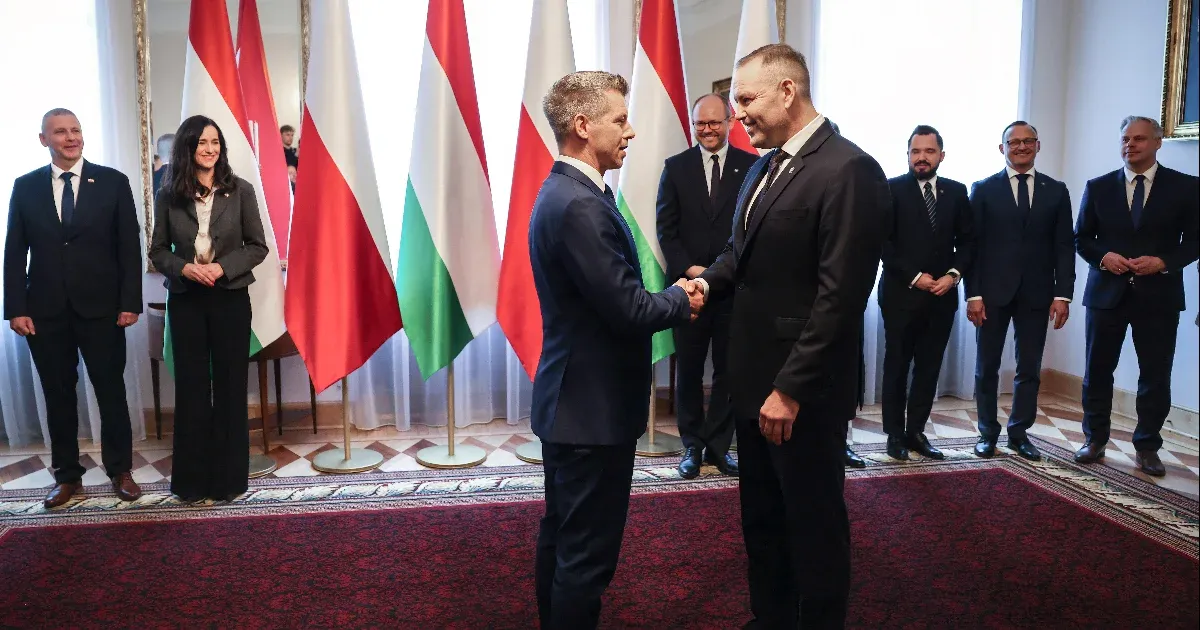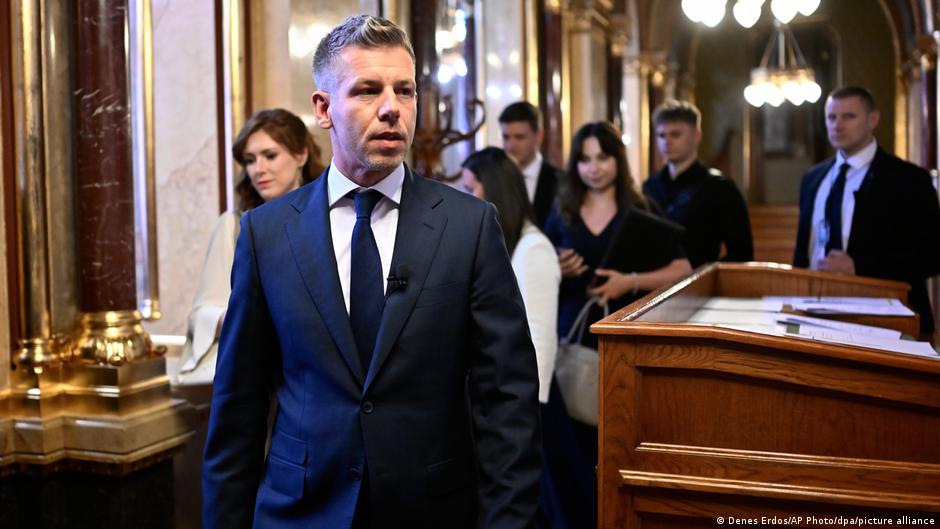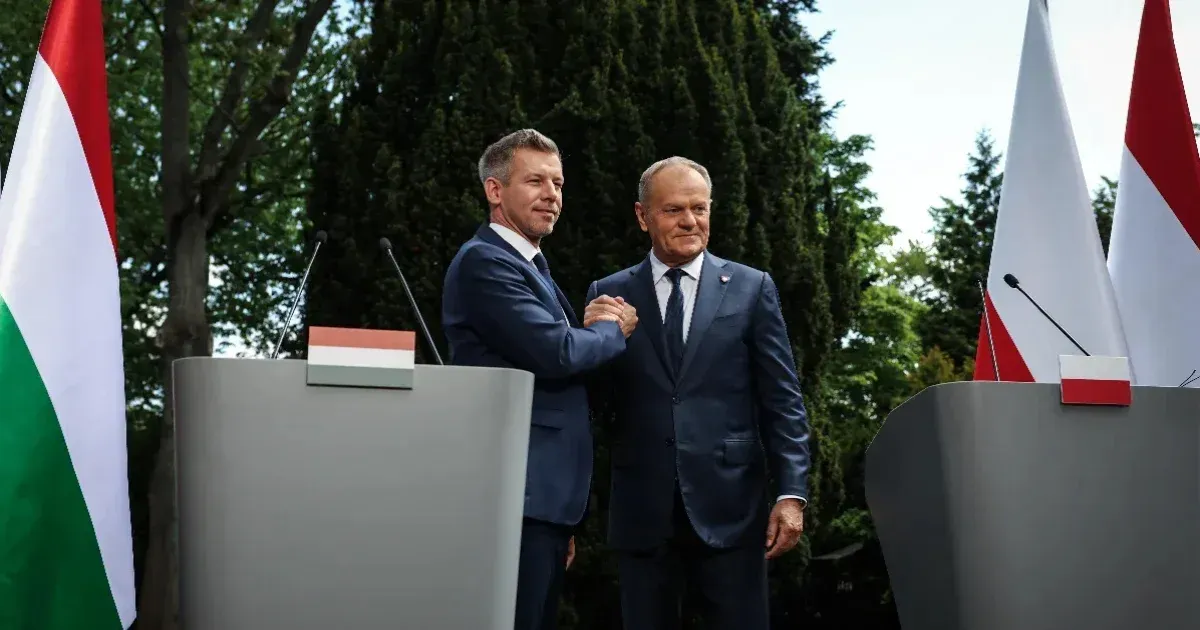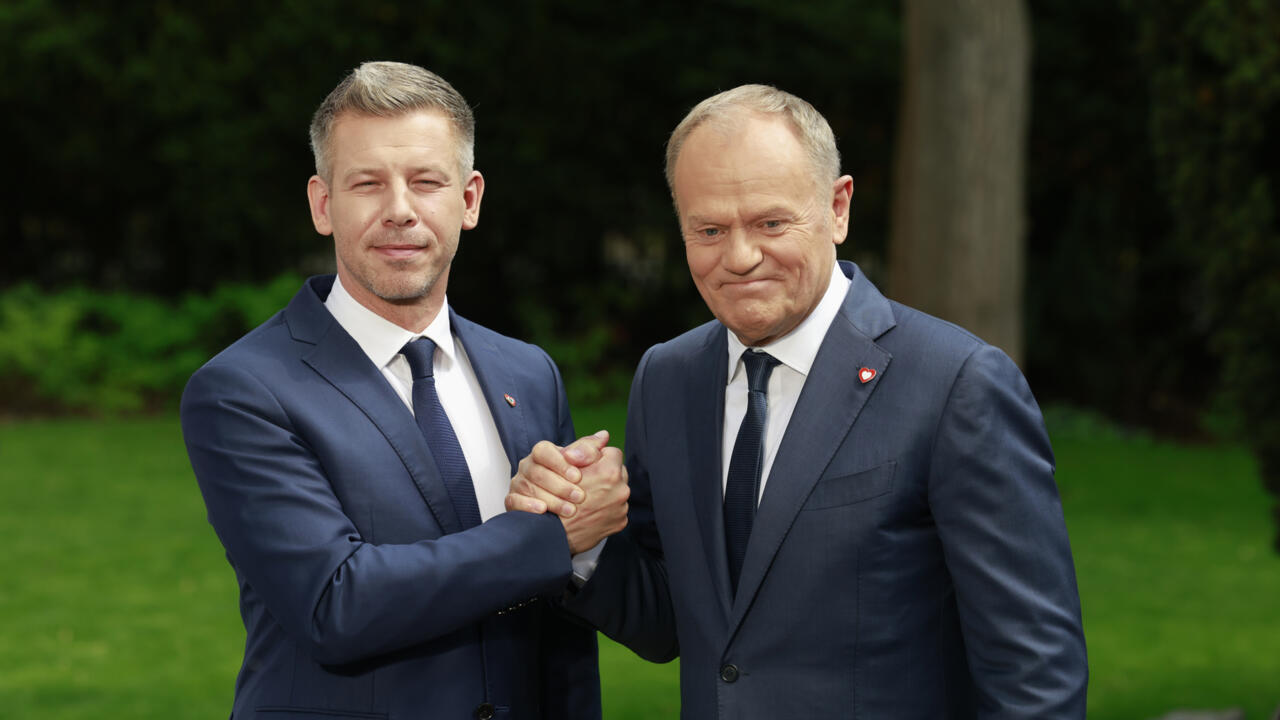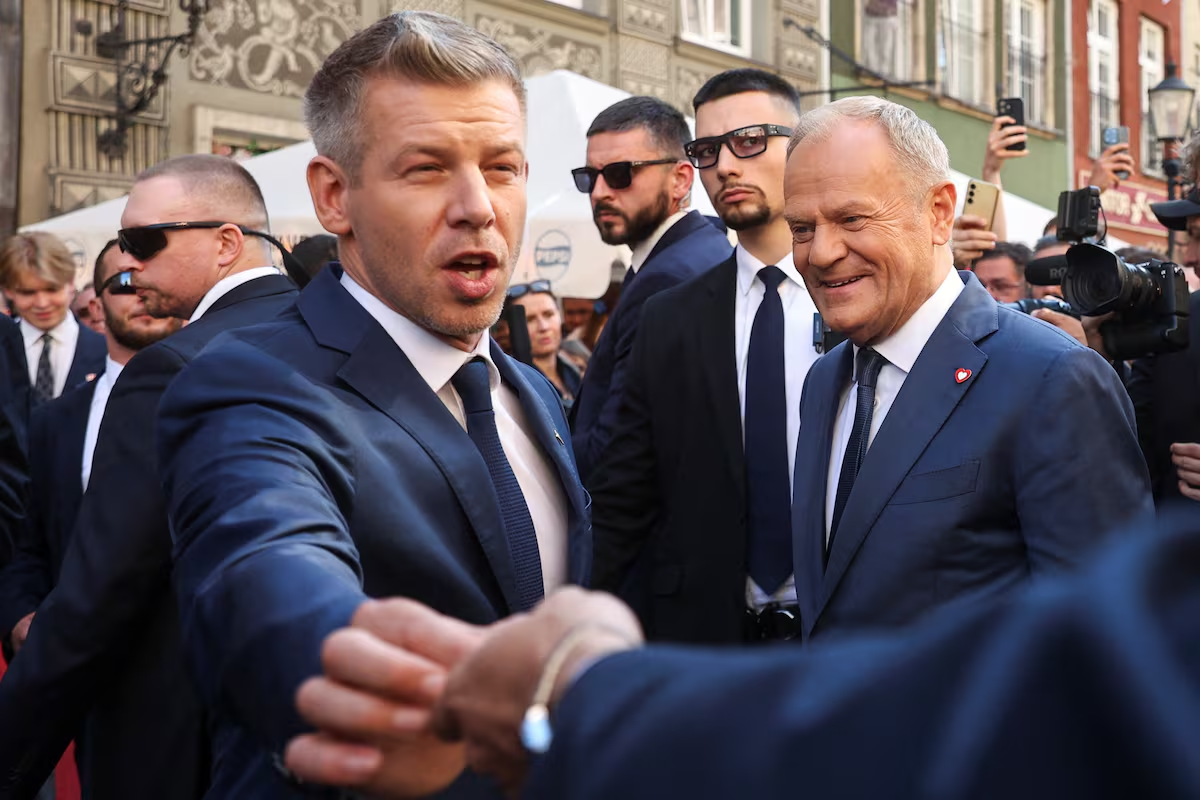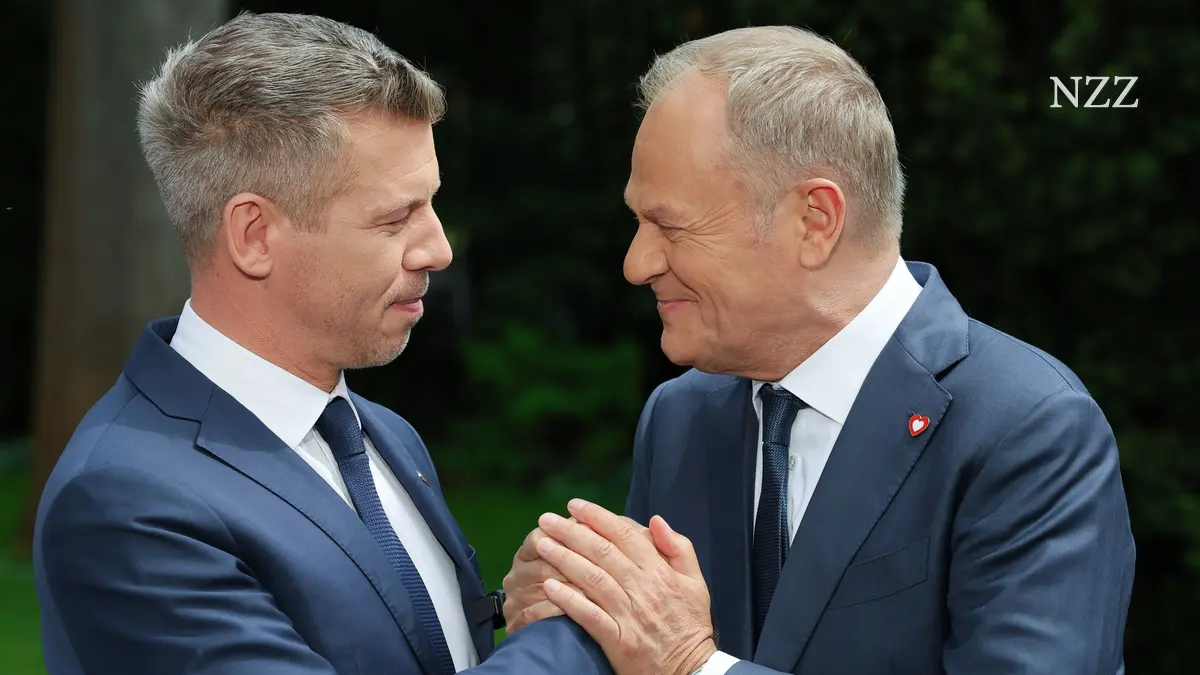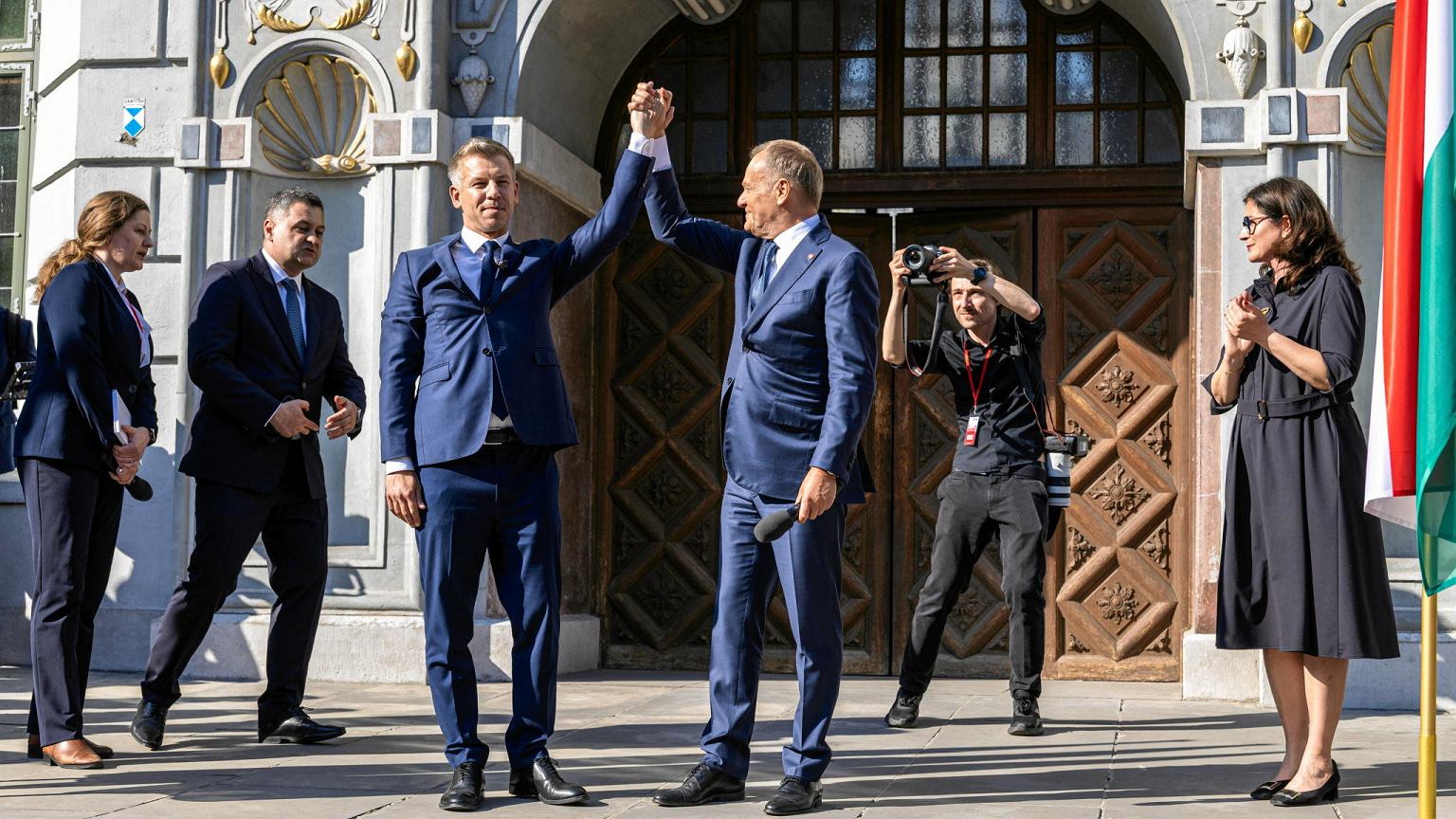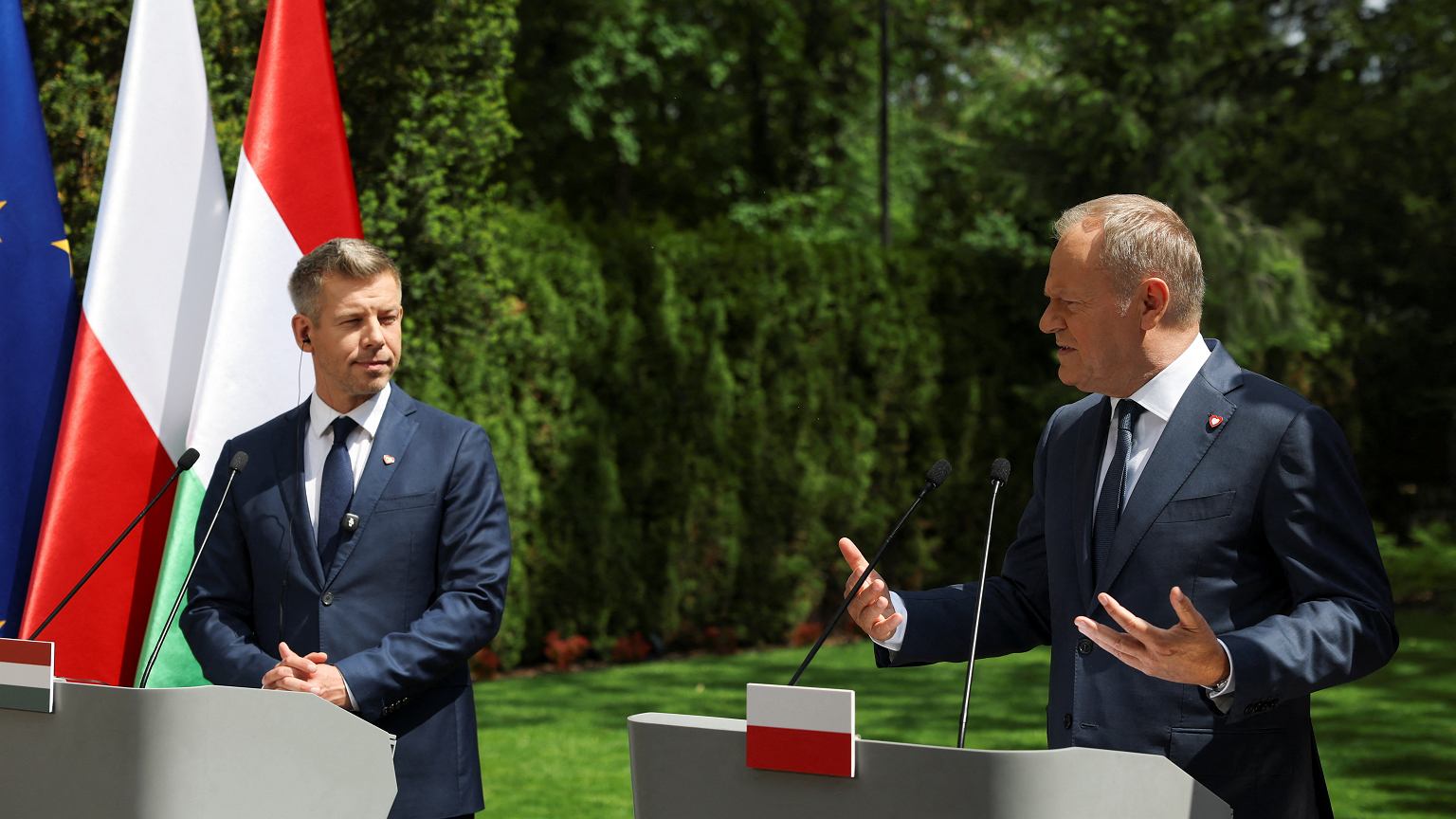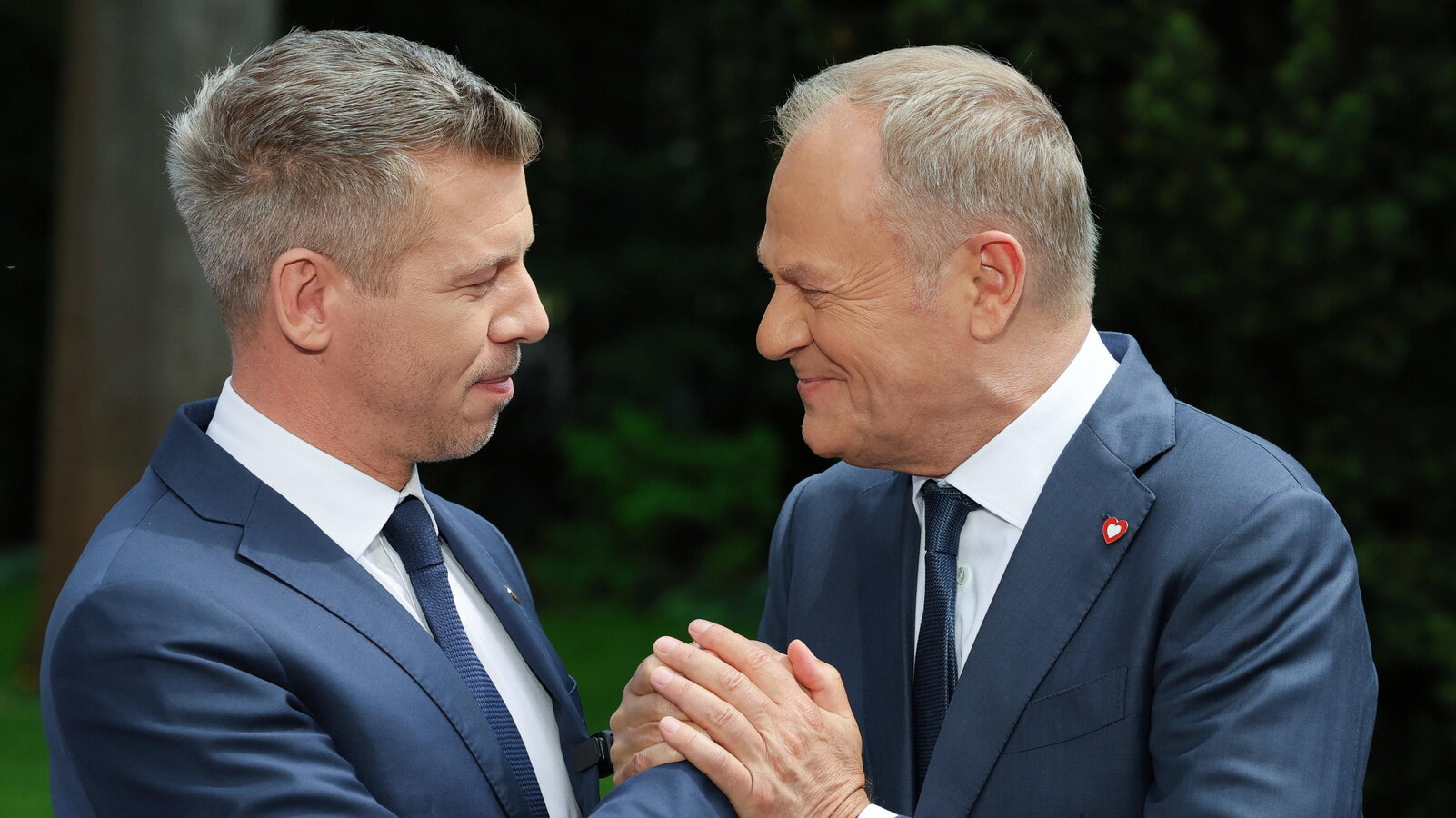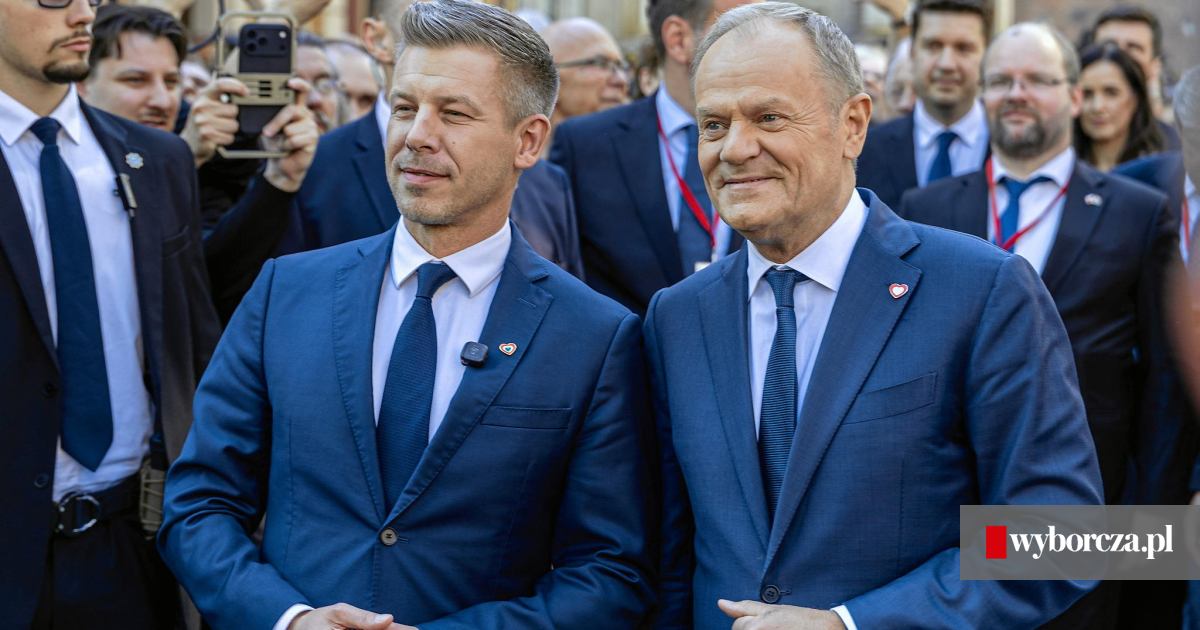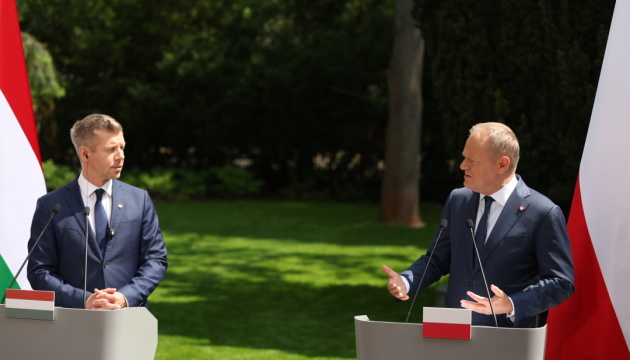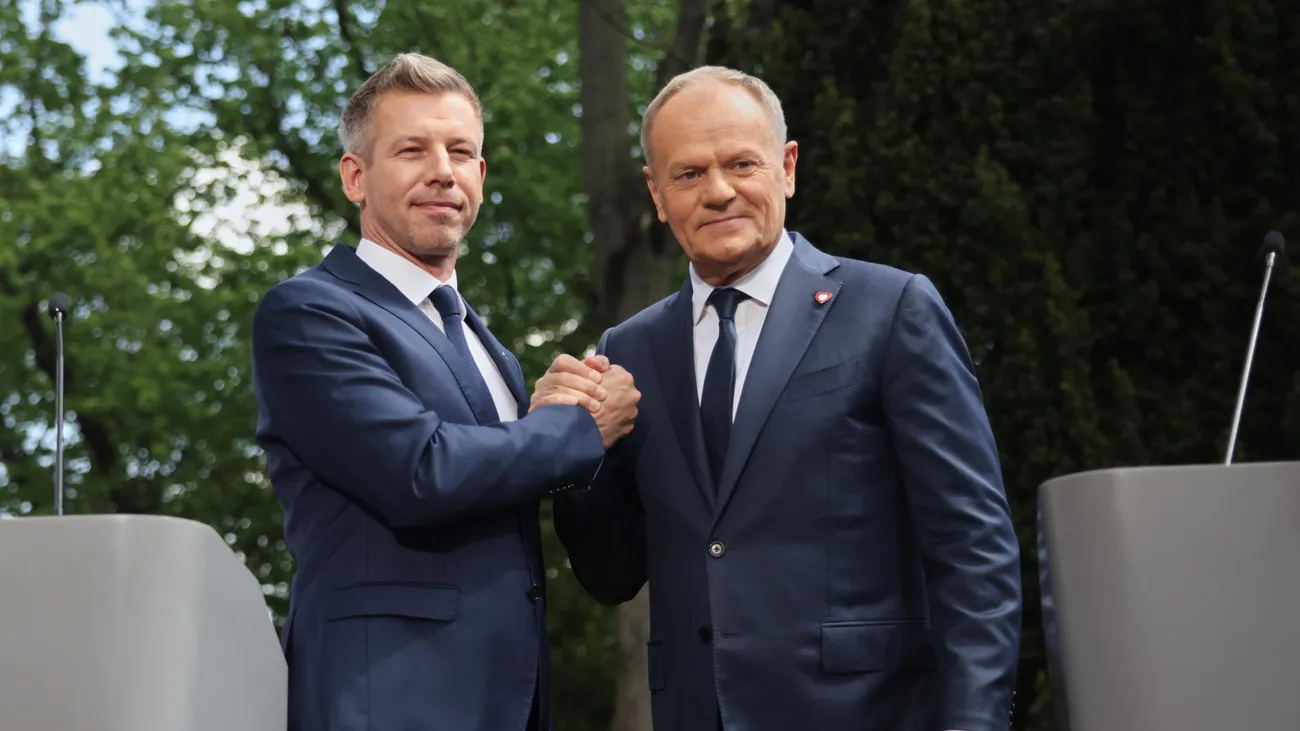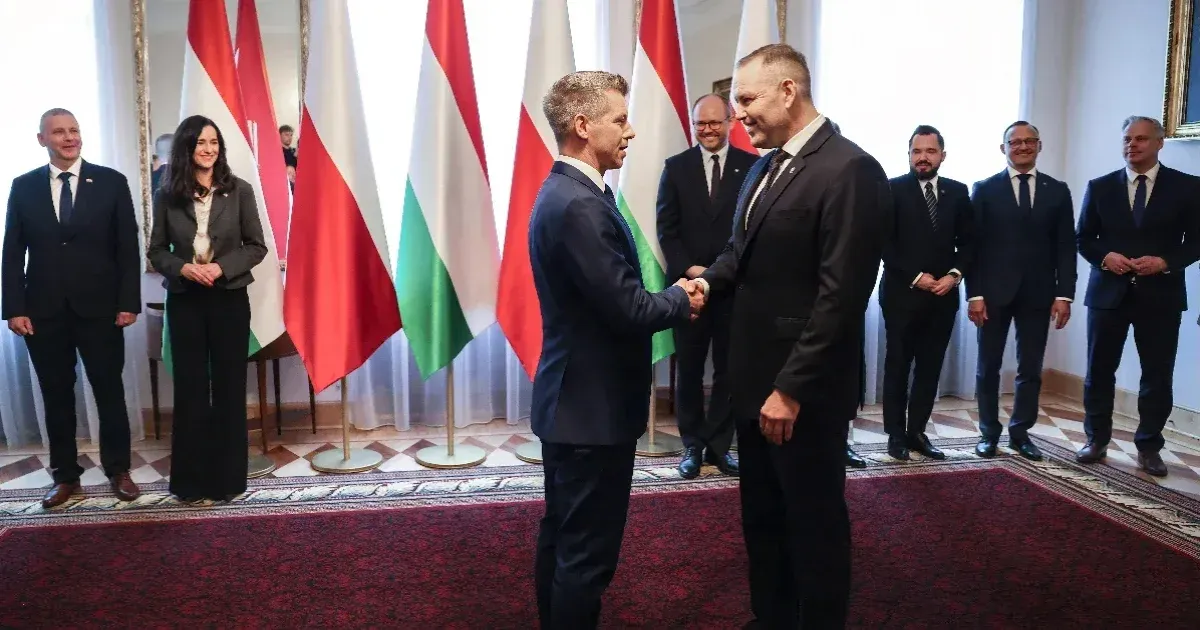
Péter Magyar and Karol Nawrocki meet in Warsaw on May 20, 2026 – Photo: István Huszti / TelexFollowing his meeting and press conference with Prime Minister Donald Tusk, Péter Magyar, along with several of his ministers, visited the Polish Presidential Palace, where they held a brief closed-door meeting with President Karol Nawrocki. There was no separate press conference here, but the meeting itself serves as yet another refutation of what Viktor Orbán repeatedly emphasized in the run-up to the April elections: namely, that only his personal good relations could guarantee that Hungary would have good intergovernmental relations with countries led by political forces that are, in theory, politically closer to him.“The main topics of the first meeting between the President of the Republic of Poland and the Prime Minister of Hungary were Polish-Hungarian relations, including economic cooperation, as well as support for Hungary's efforts to become independent from Russian gas.” Nawrocki’s office reported on X about the meeting between the Polish president and the Hungarian Prime Minister.According to the Polish President's office, the two sides also discussed “issues of regional security, along with deepening cooperation between the two countries within regional formats: the Visegrád Group, the Bucharest Nine, and the Three Seas Initiative.”Magyar’s meetings in Warsaw spanned the entire Polish political spectrum: first, he held talks with Tusk, who can be considered his political ally as his party, Civic Platform (Koalicja Obywatelska-KO) is a member of the European People’s Party, just like the Tisza Party. Nawrocki, who ran as the candidate backed by Law and Justice (Prawo i Sprawiedliwość -PiS) which has been in opposition since 2023, defeated the KO's candidate in a close race for the presidency last summer.At a joint press conference with Tusk, the Hungarian Prime Minister noted that it was no coincidence that he had chosen to go to Poland on his first official visit, adding that the heart of Europe beats in Central Europe today. He expressed hope that the V4 countries could hold a meeting in Budapest at the end of June. Tusk remarked, among other things, that in Poland, Magyar was among friends. “Thank you for having a heart the color of the Hungarian flag, while mine is the color of the Polish flag.” He also spoke about how it is the new Hungarian government’s sovereign decision which energy sources to choose, adding, “I can only help by offering options.”The PiS, which had been in power for eight years leading up to the 2023 parliamentary elections and was building an illiberal system, was a close ally of Fidesz, which was in constant conflict with Brussels. However, this friendship gradually cooled after Russia launched its war against Ukraine, as Viktor Orbán’s government maintained an embarrassingly close relationship with Moscow.It was precisely for this reason that, although Nawrocki did attend the meeting of the V4 heads of state in Esztergom last year, he ended up canceling bilateral talks with Orbán, citing the fact that the then Hungarian head of government had visited Moscow again shortly before. Although with this, Nawrocki distanced himself somewhat from Orbán, this year, a few weeks ahead of the Hungarian elections, on March 23, he visited Budapest, where he was not only received by President László Sulyok but Viktor Orbán as well. “Thank you for honoring us with your visit on the day of Polish-Hungarian Friendship!” the former prime minister wrote at the time.This is why it is significant that now, after the Hungarian parliamentary elections, Nawrocki also welcomed Péter Magyar during his first foreign visit as Prime Minister, thus signaling that the new Hungarian government doesn't only enjoy the trust of its closest political ally in Poland, but also that of another center of power within the Polish political system, which also carries substantial weight.Last fall, Fidesz celebrated the victory of illiberal forces when the PiS candidate won the presidential election in Poland, since there, the head of state can use his veto to block laws which have already been passed by parliament, thereby influencing how much of the government’s program can be implemented. Like his predecessor Duda, Nawrocki has indeed exercised his right of veto on several occasions. Only a 60 percent parliamentary majority could override this, but Tusk’s government does not have such a majority. Thus, while the change of direction in the country has been clear in recent years, efforts to hold those from the previous government to account swiftly and to fully reverse their controversial decisions have been slow.For more quick, accurate and impartial news from and about Hungary, subscribe to the Telex English newsletter!
Péter Magyar holds talks with Polish head of state on economic cooperation and regional security
President Karol Nawrocki welcomed the new Hungarian prime minister following his meeting with PM Donald Tusk.
759 words~3 min read