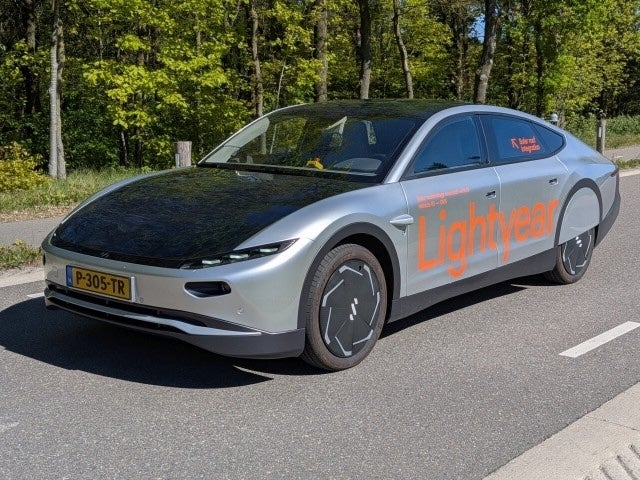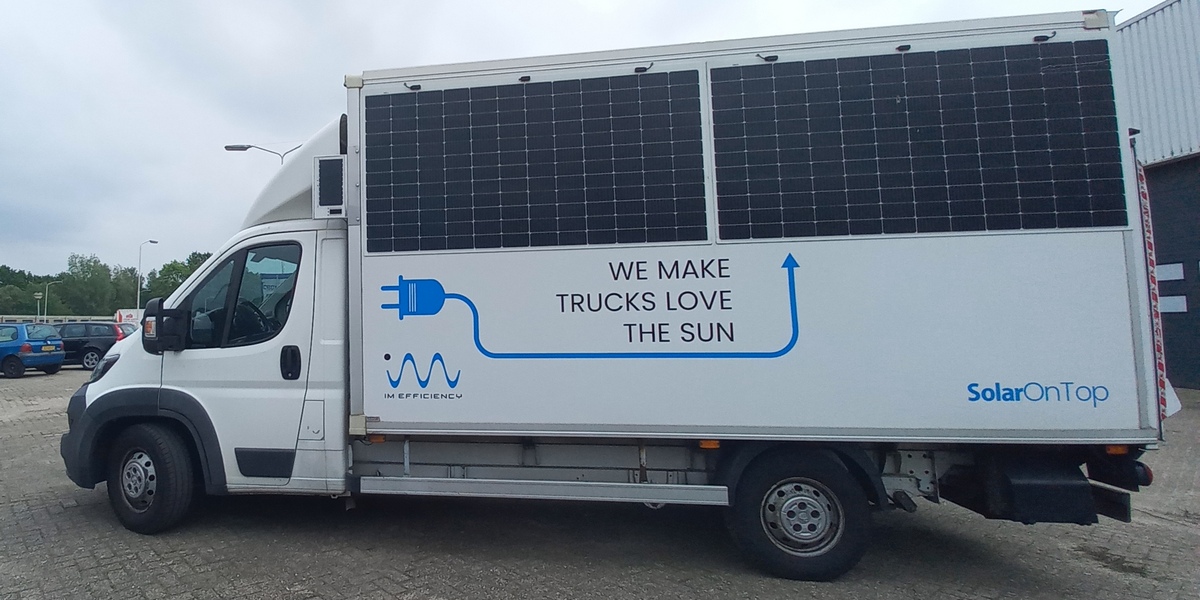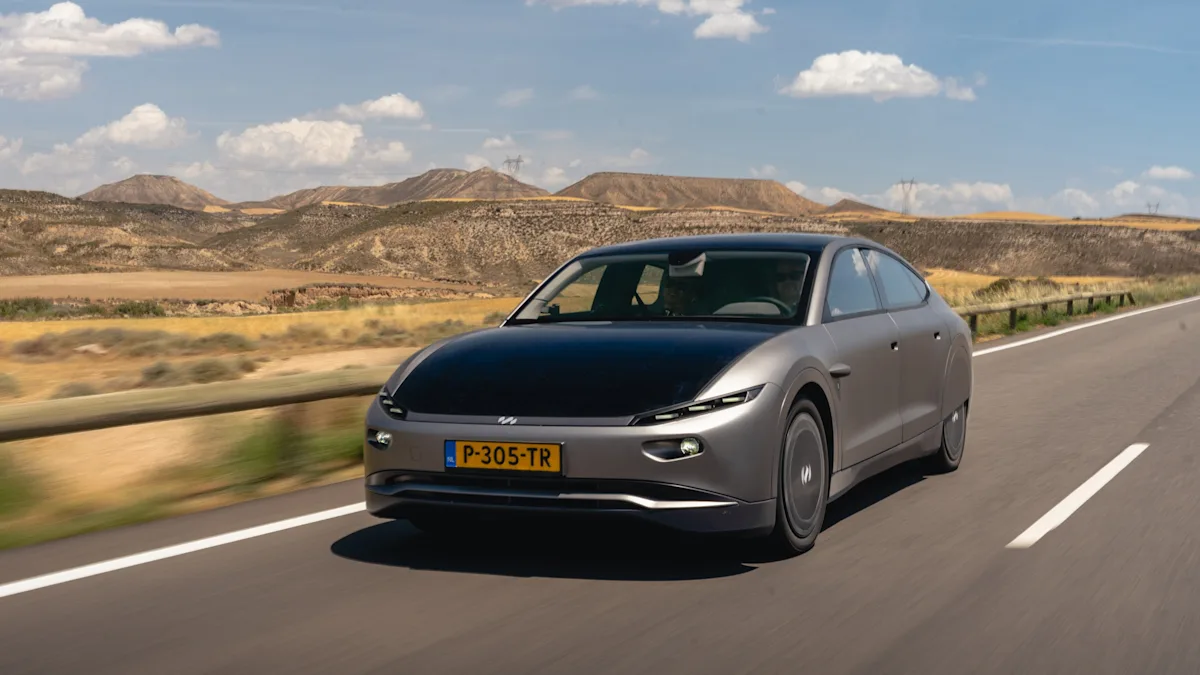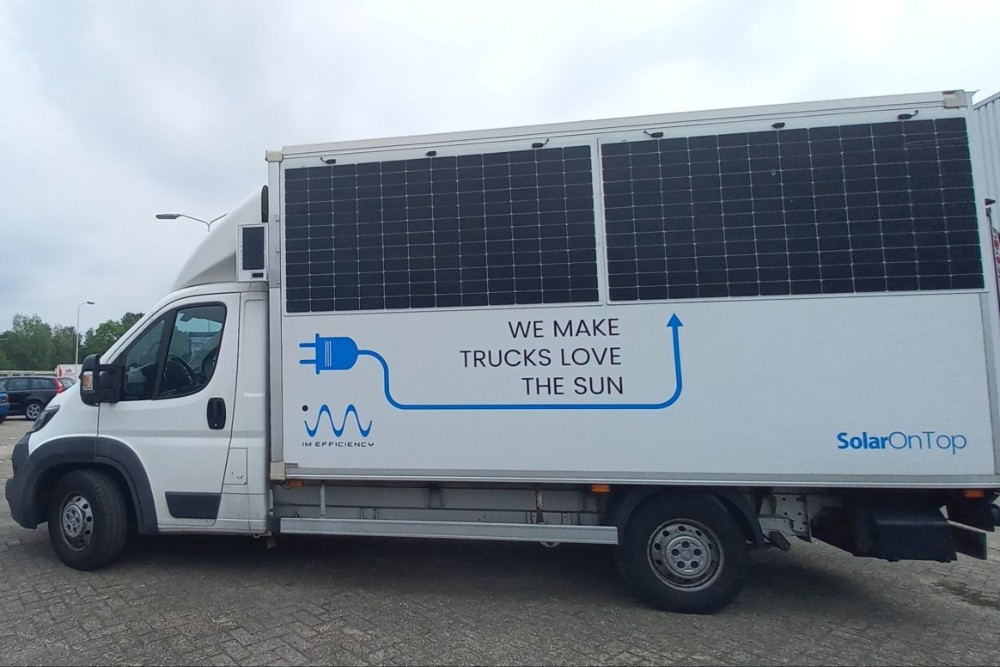
In the SolarMoves pilot project, five partners concluded that a passenger car with a large roof area in Central Europe can cover up to 55% of its energy demand independently. In Southern Europe, the potential rises to as much as 80%. The research team believes the technology could offer particularly strong benefits for the logistics sector.IM EfficiencySince the beginning of 2024, Dutch organisation TNO, Fraunhofer ISE and the companies Sono Motors, IM Efficiency and Lightyear have worked together in the EU-funded SolarMoves project to examine the technical and practical potential of vehicles with integrated solar modules. The modules are fitted to different parts of the vehicle, including the roof, bonnet and side panels.The consortium has now published its key finding: according to the team’s calculations, a passenger car in Central Europe with short annual usage cycles and large roof areas, such as SUVs, can cover up to 55% of its energy demand independently. In Southern Europe, the figure could rise to as much as 80%. “This not only makes the vehicle more convenient to use by reducing the number of external charging sessions, but also significantly lowers the amount of external electricity consumed per kilometer,” Fraunhofer ISE stated.By integrating solar modules into vehicles (technically referred to as Vehicle Integrated Photovoltaics, or VIPV), electricity is generated where it is consumed. The project team’s study analysed data from 23 different vehicle types—ranging from compact city cars to heavy-duty trucks.“To do this, the vehicles were equipped with sensors, and measurement data from 1.3 million kilometres driven was analysed,” explained Christian Braun, a project team member and scientist at Fraunhofer ISE. The study’s authors combined detailed vehicle and driving profiles with Meteosat satellite data, as well as meteorological data from Amsterdam and Madrid.The analysts highlight that solar modules in vehicles offer significant benefits for individual users while also having a noticeable impact at the system level. “IIn a simulation, the research team calculated that if all new vehicles were equipped with VIPV between 2024 and 2030, electricity demand from the European grid could decrease by 15.6 terawatt-hours in 2030—equivalent to the annual output of approximately 2,200 onshore wind turbines with a capacity of 3 megawatts,” the team noted.The research team estimates particularly significant benefits for the logistics sector. Delivery vans, trucks, and trailers have large roof areas and simultaneously consume substantial energy for cooling, heating, and auxiliary systems. “For electric trucks, VIPV extends the daily range by up to 15 percent. For truck trailers, the electricity yield can reach up to 55 kilowatt-hours per day in the summer and 90 to 110 kilowatt-hours if the side walls are also equipped with solar panels—enough to power cooling or hydraulic systems completely and emission-free,” the project leaders stated.VIPV also offers advantages for diesel trucks. “Since air conditioning, heating, and other systems require less diesel, fuel consumption would be significantly reduced,” Fraunhofer Institute noted. The research team calculated that the investment costs for VIPV could be recouped in less than two years. However, the Fraunhofer Institute did not specify the exact costs of VIPV in its statement.Based on their findings, the research consortium recommends incorporating the rapid amortisation of VIPV into policy frameworks, such as ‘the Worldwide Harmonised Light Vehicle Test Procedure (WLTP) so that CO₂ reductions and electricity savings can be utilised at the national level to secure tax incentives and develop guidelines for solar-capable parking areas.’ Additionally, the scientists recommend establishing a clear European framework to recognise VIPV under the Renewable Energy Directive.ise.fraunhofer.de
Study highlights potential of solar modules on vehicle roofs - electrive.com
In the SolarMoves pilot project, five partners concluded that a passenger car with a large roof area in Central Europe can cover up to 55% of its energy
578 words~3 min read