TU Wien researchers say binding EU policy targets are essential to make solar module recycling economically viable, with exports to third countries remaining the cheapest option for member states in their absence.
May 19, 2026
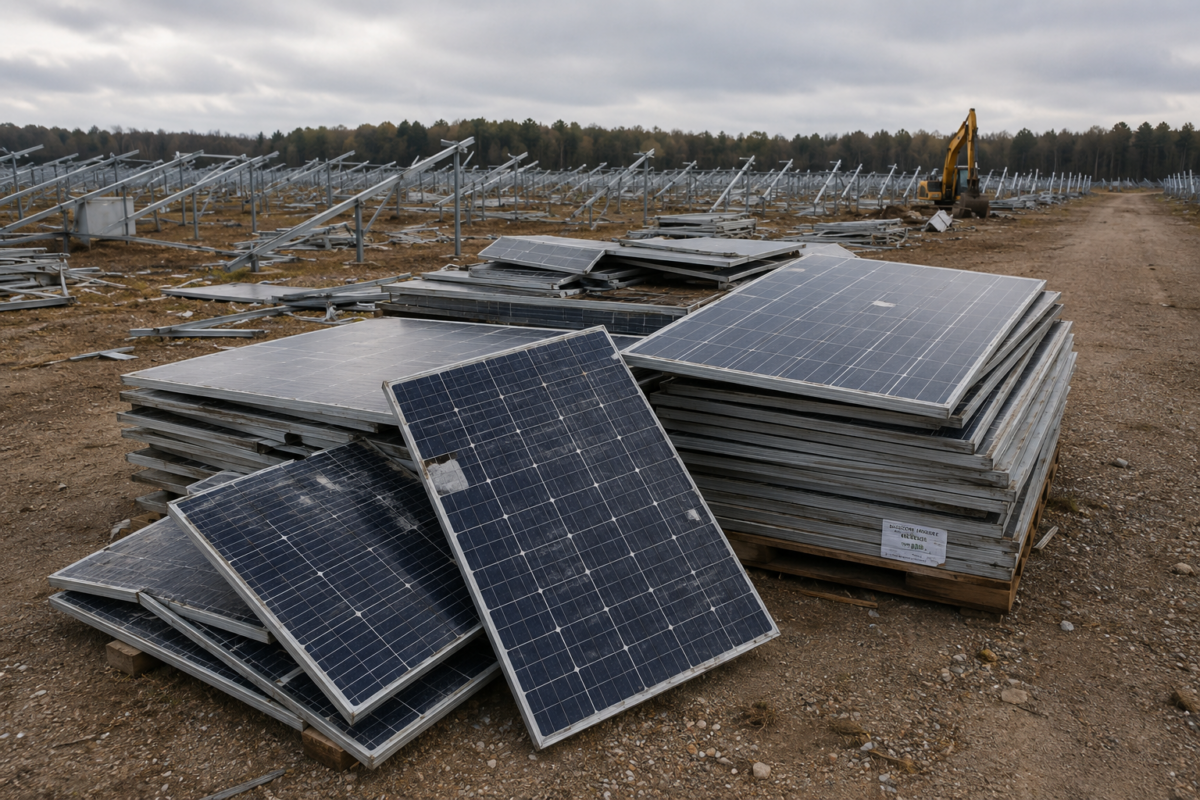
Exporting end-of-life solar modules to third countries will remain the cheapest option for EU member states unless binding recycled content and domestic production targets are enforced, according to new TU Wien research.
“Our study identifies the recycling capacity required to meet legally binding targets at minimum cost, which is a relevant and policy-relevant finding,” researcher Sebastian Zwickl-Bernhard told pv magazine. “However, it does not imply that recycling is economically competitive under market conditions.”
“Capacity planning for solar module recycling in the EU: Optimal country-specific strategies and raw material price sensitivities,” published in Solar Energy Materials and Solar Cells, models cost-optimal recycling strategies for crystalline silicon modules across the European Union under three scenarios: a baseline with no policy constraints, an export restrictions scenario based on the EU's WEEE Directive, and a full EU policies scenario incorporating the Net-Zero Industry Act (NZIA) and the Critical Raw Materials Act (CRMA).