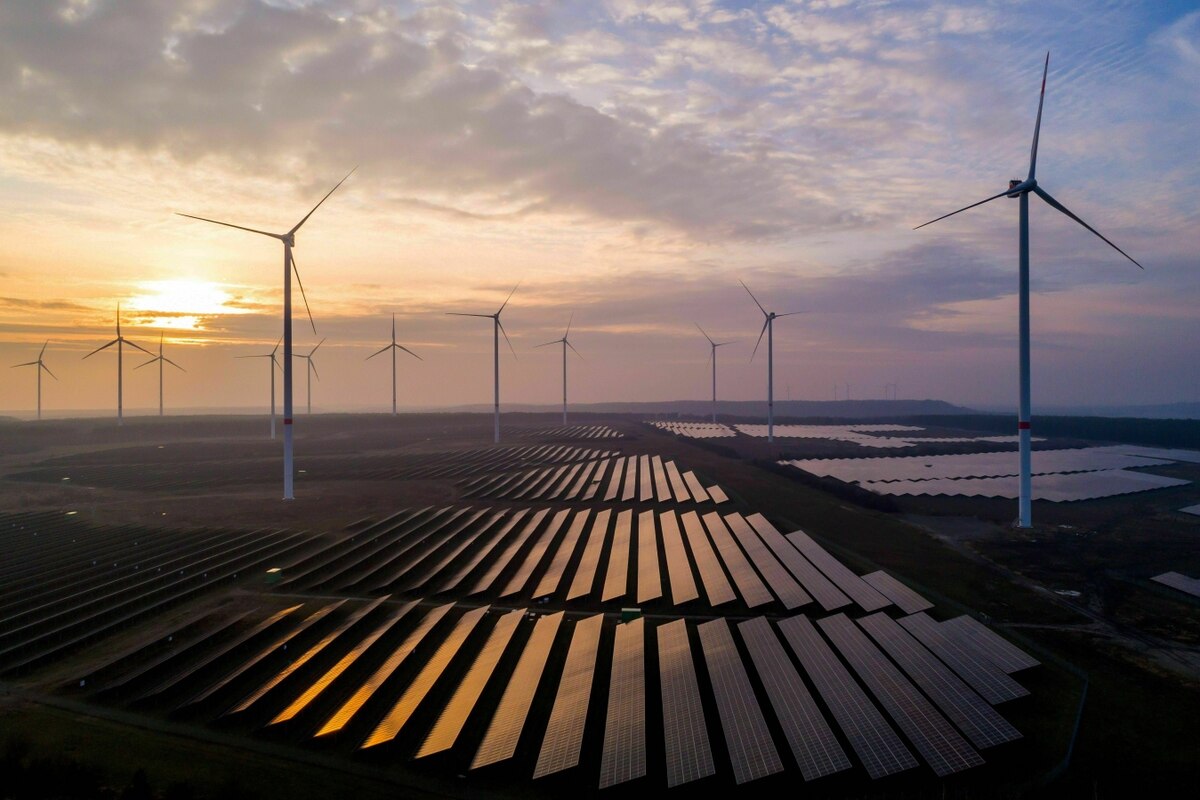
Cities and municipalities in Germany can significantly increase their revenues from renewable energy if they meet existing rollout targets for wind and solar power, a report commissioned by the economy and energy ministry has found. Revenue from energy generation could increase from about 5.5 billion euros today to up to 12.4 billion euros by 2033, according to the analysis conducted by research institute IÖW and consultancy IW Consult. The authors said the federal government and the states should ensure that cities and municipalities have adequate legal frameworks to fully exploit the renewable energy potential on their territory. The analysis modelled all of Germany's roughly 400 cities and municipalities and found they benefit from higher tax earnings, local job creation and higher revenues from local companies as a result of renewable energy expansion. About half of operating profits currently flow to outside investors, leading the authors to recommended that local authorities receive support in developing citizen energy projects and other local programmes to retain a higher share of revenues in the host regions. The scale of financial benefits depends on the available land for new installations and specific local conditions for wind and solar energy, the report said. However, benefits are available throughout the country, it added. “Rural regions with corresponding land potential stand to benefit particularly from local energy production,” the authors said. Wind and solar power generation produced about 10 billion euros in direct value creation across Germany in 2023, while creating around 51,000 full-time jobs, according to the analysis. Reaching wind and solar expansion targets by 2033 could double both value creation employment to 21 billion euros and over 100,000 jobs, respectively. “With adequate incentives for skilled workers, this can also be achieved in sparsely populated rural areas.” Pioneering regions across the country have generated up to ten percent of their total GDP over the past decade through expanding clean energy infrastructure. This has created incentives for companies seeking clean energy supply to locate there, especially where a high share of renewables brings greater supply security and lower prices.
Municipality revenue from wind and solar power could double across Germany – analysis
Cities and municipalities in Germany can significantly increase their revenues from renewable energy if they meet existing rollout targets for wind and solar power, a report commissioned by the economy and energy ministry has found. Revenue from energy generation could increase from about 5.5 billion euros today to up to 12.4 billion euros by 2033, according to the analysis conducted by research institute IÖW and consultancy IW Consult. The authors said the federal government and the states should ensure that cities and municipalities have adequate legal frameworks to fully exploit the renewable energy potential on their territory. The analysis modelled all of Germany's roughly 400 cities and municipalities and found they benefit from higher tax earnings, local job creation and higher revenues from local companies as a result of renewable energy expansion. About half of operating profits currently flow to outside investors, leading the authors to recommended that local authorities receive support in developing citizen energy projects and other local programmes to retain a higher share of revenues in the host regions. The scale of financial benefits depends on the available land for new installations and specific local conditions for wind and solar energy, the report said. However, benefits are available throughout the country, it added. “Rural regions with corresponding land potential stand to benefit particularly from local energy production,” the authors said. Wind and solar power generation produced about 10 billion euros in direct value creation across Germany in 2023, while creating around 51,000 full-time jobs, according to the analysis. Reaching wind and solar expansion targets by 2033 could double both value creation employment to 21 billion euros and over 100,000 jobs, respectively. “With adequate incentives for skilled workers, this can also be achieved in sparsely populated rural areas.” Pioneering regions across the country have generated up to ten percent of their total GDP over the past decade through expanding clean energy infrastructure. This has created incentives for companies seeking clean energy supply to locate there, especially where a high share of renewables brings greater supply security and lower prices.