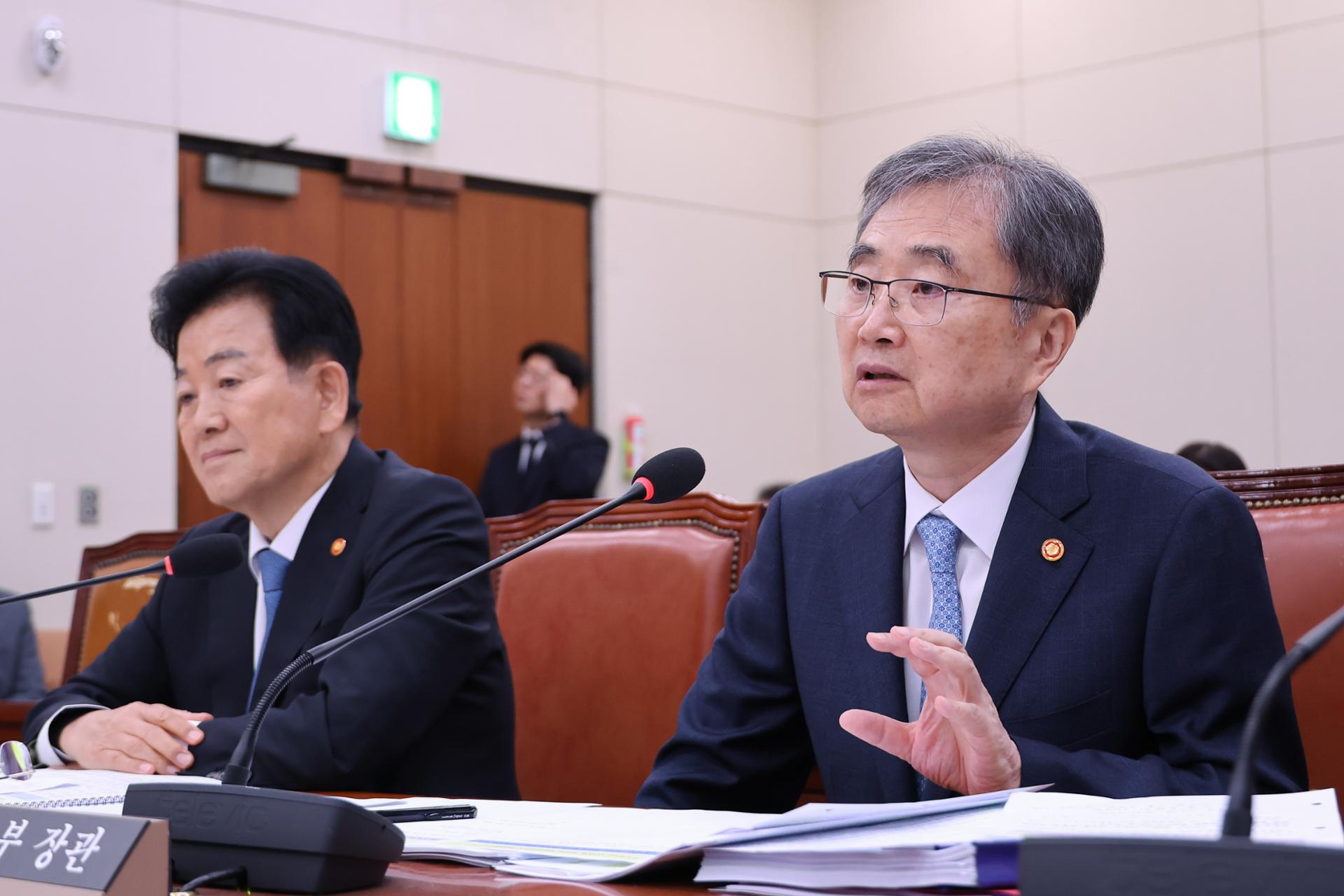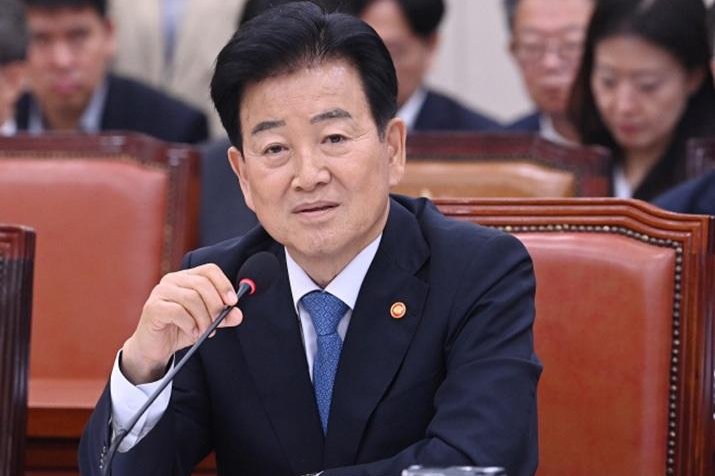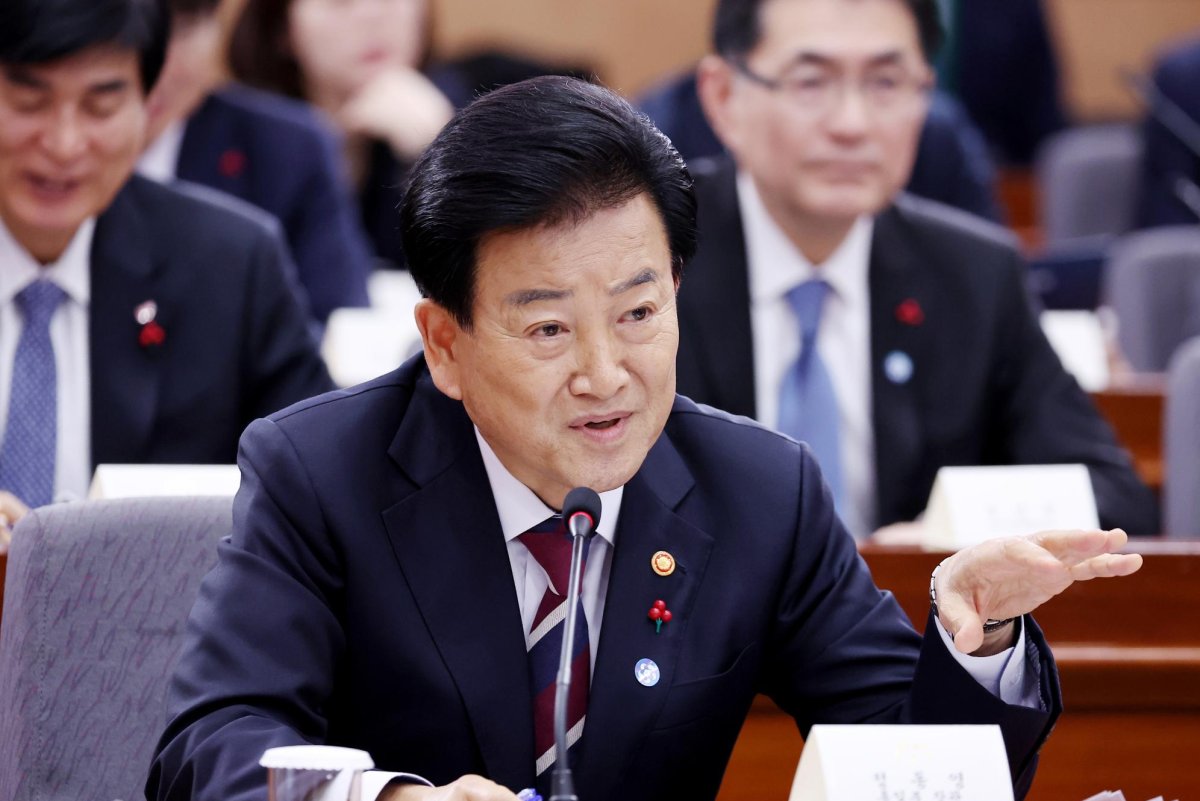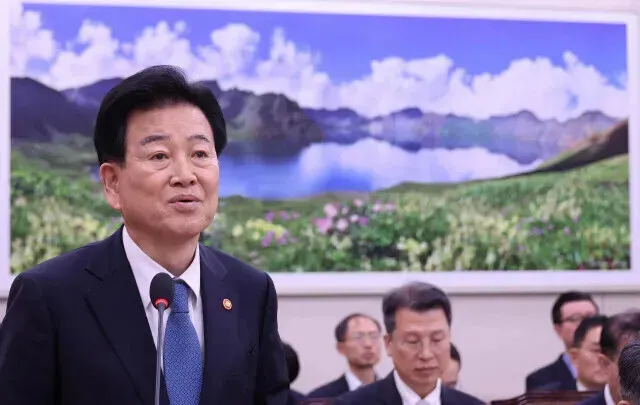
Unification Minister Chung Dong-young speaks before the National Assembly Foreign Affairs and Unification Committee on April 15, 2026. (Kim Jung-hyo/Hankyoreh)
Korea’s Unification Ministry said on Tuesday that the phrase about “two peaceful states” in the first unification white paper to be released under President Lee Jae Myung represents a strategy for achieving the Lee administration’s goal of peaceful coexistence on the Korean Peninsula.After the phrase provoked controversy about running afoul of South Korea’s Constitution, the ministry said that “‘two peaceful states’ signifies the two states under international law that were simultaneously admitted to the UN, but does not legally recognize North Korea as a state.”The ministry released a statement about the disputed phrase on Tuesday afternoon.“The Lee administration’s official North Korean policy is the policy of peaceful coexistence on the Korean Peninsula. ‘Two peaceful states’ is part of a strategic roadmap for institutionalizing peaceful coexistence between South and North Korea. As the responsible ministry, we are exercising our authority to develop and execute that roadmap,” the ministry said in its statement.The ministry offered the following additional commentary about the white paper’s language about “two peaceful states.”“Unlike North Korea’s phrase about ‘two hostile states,’ which rejects unification, ‘two peaceful states’ is fundamentally different in being oriented on unification and not abandoning the special inter-Korean relationship. That upholds the position of previous administrations.”“This is not legal recognition of North Korea but an acknowledgment of North Korea’s de facto statehood, signifying our respect for North Korea’s system and sovereignty,” the ministry added.The unification white paper that the ministry released on the previous day states that “in regard to North Korea’s claim about ‘two hostile states,’ we have continued to emphasize the need to transition to ‘a relationship of two peaceful states oriented on unification.’”The ministry’s statement came six hours after a ministry official said that morning that “two peaceful states” did not represent the administration’s position.“‘Two peaceful states’ is the vision of Unification Minister [Chung Dong-young], not the position of the entire government,” the official said. That raised questions about whether the ministry’s position was inconsistent with that of the administration. In response, the ministry released a statement that afternoon clarifying that its position was in line with that of the administration and that “two peaceful states” was a strategy for achieving the Lee administration’s ultimate North Korean policy goal of peaceful coexistence on the Korean Peninsula.The ministry added that because the idea of “two peaceful states” is predicated on a special inter-Korean relationship oriented on unification, it does not conflict with Article 3 of the Constitution, which states that “the territory of the Republic of Korea shall consist of the Korean peninsula and its adjacent islands.”By Jang Ye-ji, staff reporterPlease direct questions or comments to [english@hani.co.kr]