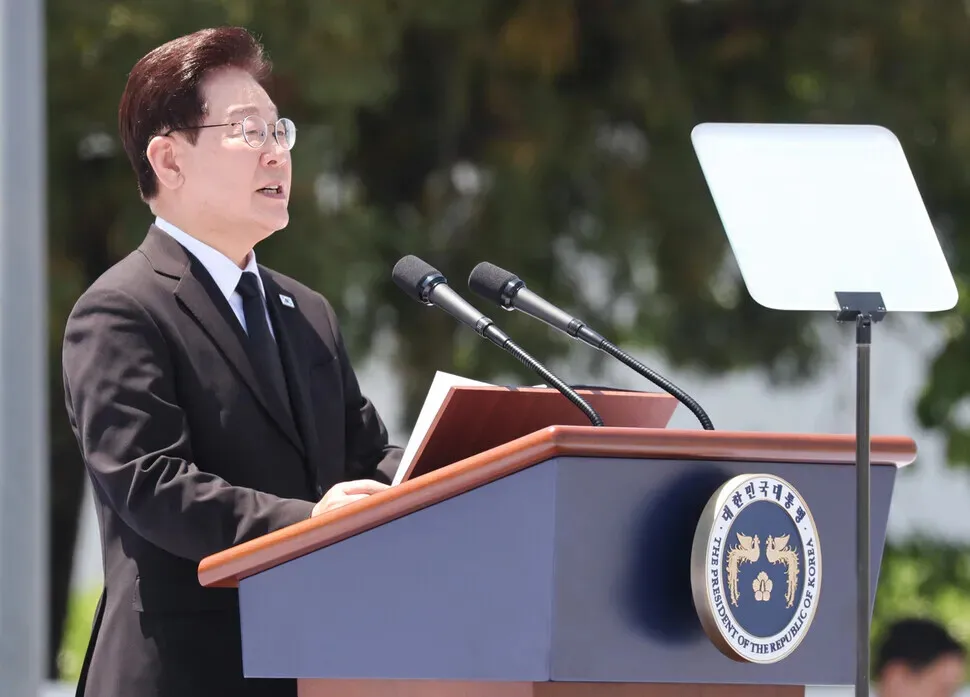
: President Lee Jae Myung of South Korea speaks at a memorial event commemorating the 46th anniversary of the May 18 Democratization Movement in Gwangju on May 18, 2026. (Yonhap)
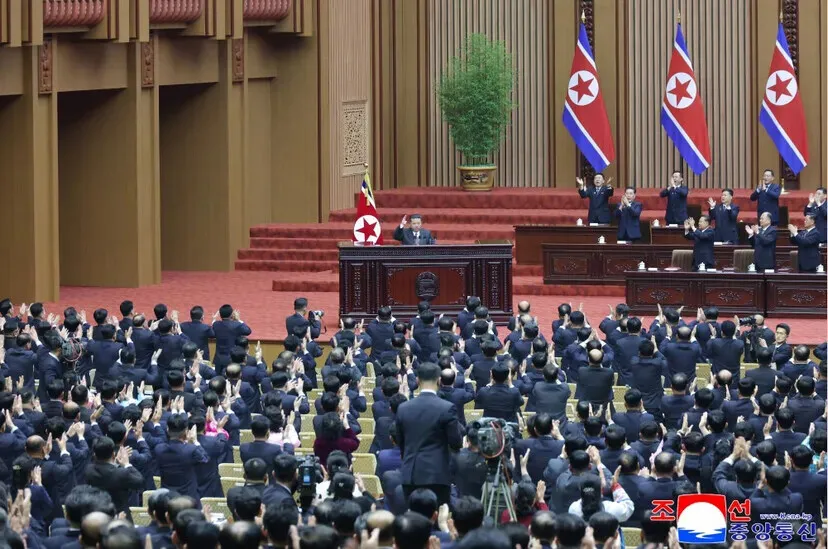
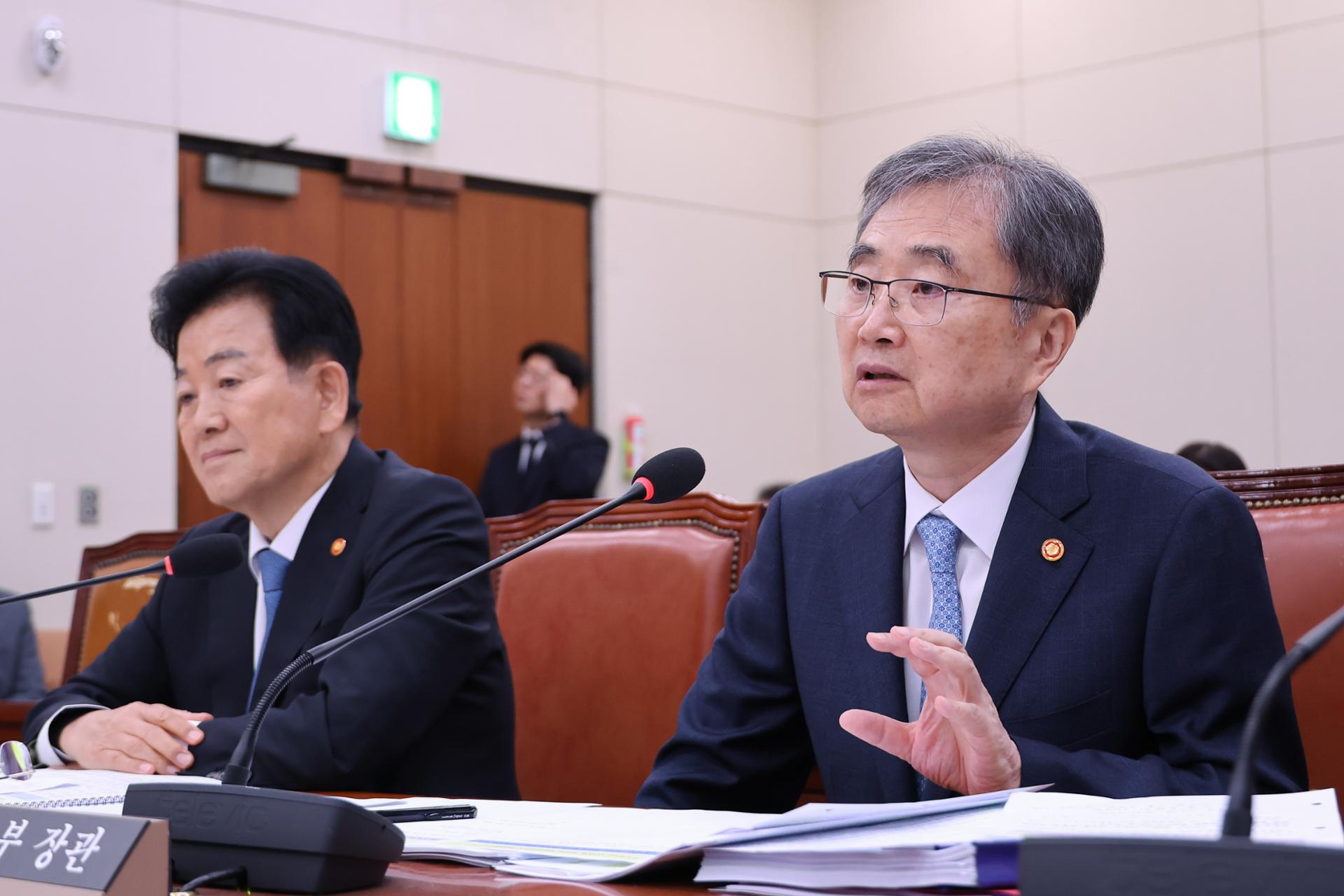
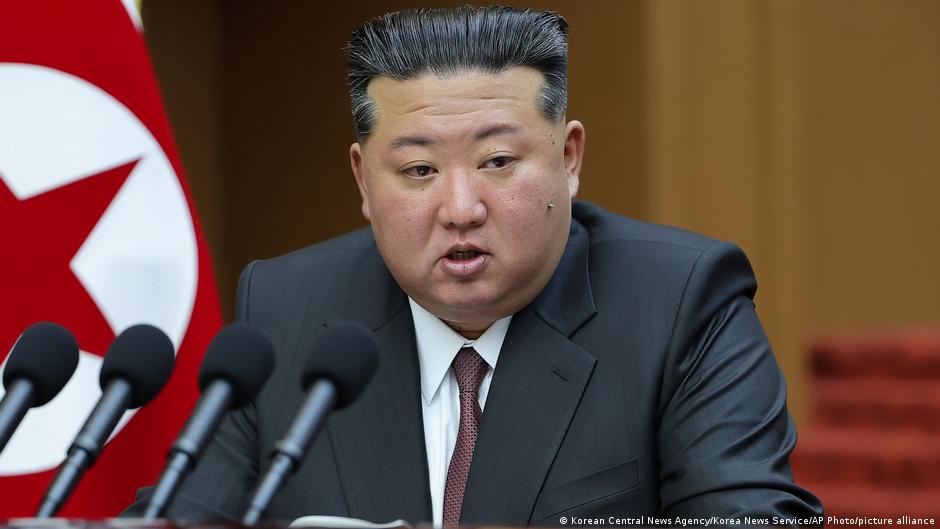
In its first unification white paper, the Lee Jae Myung administration defines North and South Korea as two separate states and explicitly commits to pursuing a policy of peaceful coexistence rather than one of hostility. The move appears to be the administration’s way of acknowledging North Korea’s recent reframing of inter-Korean relations as those between two separate and hostile states, using that reality as the basis for mutual respect and dialogue. The white paper also identified the restoration of the Sept. 19 comprehensive military agreement — a 2018 pact aimed at creating buffers and easing hostilities — as a major priority. In its publication announcement Monday for the 2026 unification white paper, subtitled “Records of peaceful coexistence on the Korean Peninsula, 2025,” the Unification Ministry explained that the document highlights the Lee administration’s efforts to overcome the complete severance of inter-Korean relations upon taking office in June 2025 and efforts to move from a relationship of hostility and confrontation to peaceful coexistence, as well as underscoring the significance of this shift in policy approach. The document asserts that North Korea’s claim that inter-Korean relations have become fixed into the “relations between two states hostile to each other” needs to be reworked into the “relations between two peaceful states aspiring to unification.” While taking into account the reality of how the two Koreas exist as two de facto separate states, the ministry aims to establish a relationship in which the two Koreas coexist peacefully while working toward unification. In March, North Korea amended its constitution to include a territorial clause and formally defined enshrined inter-Korean relations as those between separate states, referring to South Korea by its official name, the Republic of Korea. However, the constitution did not include any hostile language toward South Korea. Keeping these circumstances in mind, the South Korean government stated the goal of pursuing a “peaceful relationship between the two states,” viewing this as consistent with the existing definition of inter-Korean relations as specified in the 1991 South-North Basic Agreement: “a special interim relationship stemming from the process towards reunification.”The white paper states that this “continues the policy of peaceful coexistence pursued by successive governments over the past 35 years since the adoption of the South-North Basic Agreement.” The document presented three principles for establishing peaceful relations between the two states: Seoul respects North Korea’s system, will not pursue unification by absorption, and will not engage in hostilities. This is a complete departure from the preceding Yoon Suk-yeol administration’s “ambitious initiative” for North Korea, which prioritized freedom and unification to pressure the North Korean regime and emphasized nuclear deterrence. The Yoon administration’s 2025 unification white paper, published in May 2025 after his impeachment, criticized North Korea’s characterization of the relationship between the two countries as hostile and placed emphasis on a South Korea-led vision for unification. It also outlined a plan for North Korea’s denuclearization that consisted of the administration “deterring” the North Korean nuclear threat, “dissuading” Pyongyang’s pursuit of nuclear development, and engaging in “dialogue” to resolve the North Korea nuclear issue. In contrast, the first white paper from the Lee administration proposed a three-phase denuclearization plan that took into consideration the reality of North Korea’s nuclear program: stop, reduce and dismantle. It also set the goal of achieving a Korean Peninsula free of war and nuclear weapons, adopting a strategic framework to adopt a comprehensive approach that gradually approaches the objective of denuclearization through exchange and the normalization of relations. The Unification Ministry characterized the Lee administration’s efforts to halt the distribution of propaganda flyers and loudspeaker broadcasts across the border — all measures carried out by the Yoon administration — as “preemptive measures to ease tensions by pursuing peace,” and stated that this led to “changes such as the restoration of peace in the border regions.” The white paper called the restoration of the Sept. 19 inter-Korean military agreement a top priority. The pact, formally known as the “Agreement on the Implementation of the Historic Panmunjom Declaration in the Military Domain,” was signed during the inter-Korean summit in Pyongyang in September 2018 during the Moon Jae-in administration, only to then be suspended in June 2024 by the Yoon administration. The agreement was aimed at mitigating military clashes through measures such as easing tensions in the demilitarized zone and establishing no-fly zones around the military demarcation line. Following its launch, the Lee administration pledged to restore the agreement in a preemptive, gradual manner. Compared to the previous white paper, this year’s document included fewer mentions of “North Korean human rights” (288 to 47) and of “freedom” (118 to 16). Instead, the terms such as “peace” or “peaceful coexistence” were mentioned more (108 to 627), as well as “talks” or “dialogue” (50 to 114). The document also swapped the term “North Korean defectors” to “North Korean-born citizens.”