Though the revised constitution makes explicit North Korea’s approach to inter-Korean relations as those between two separate and distinct states, it does not outright define South Korea as a “hostile” state
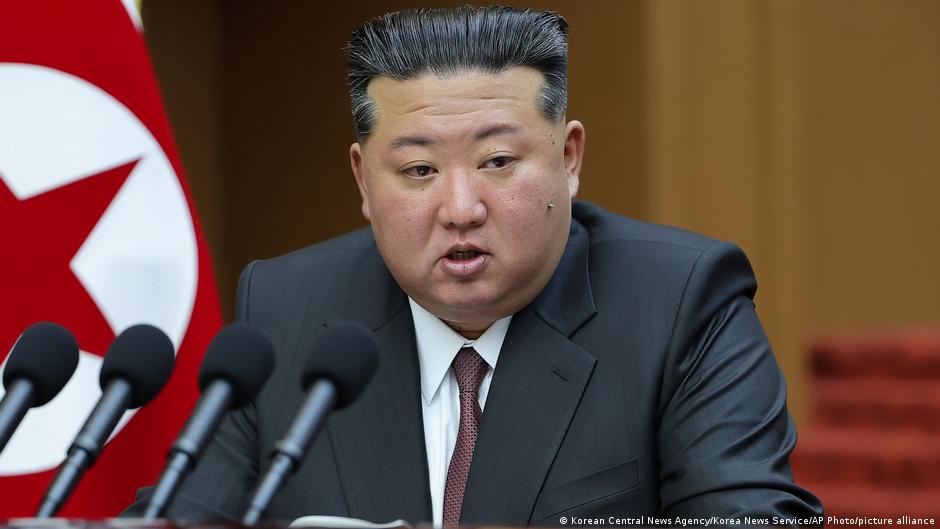
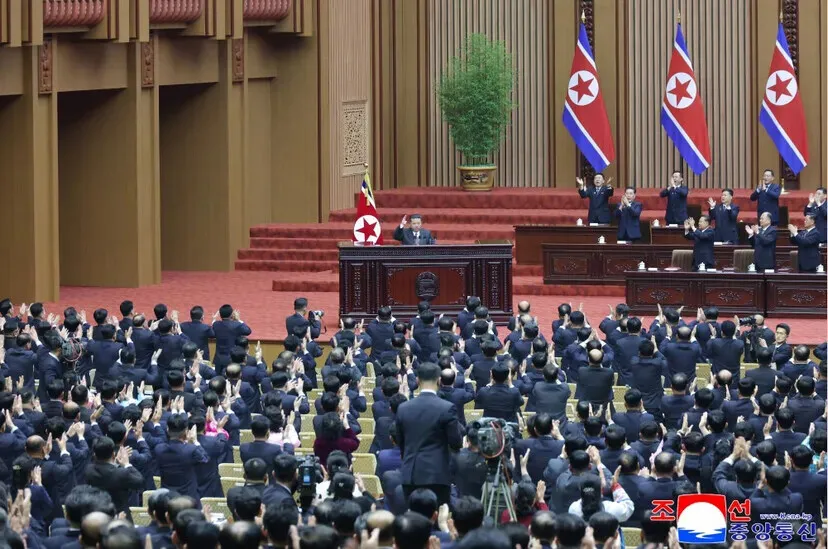
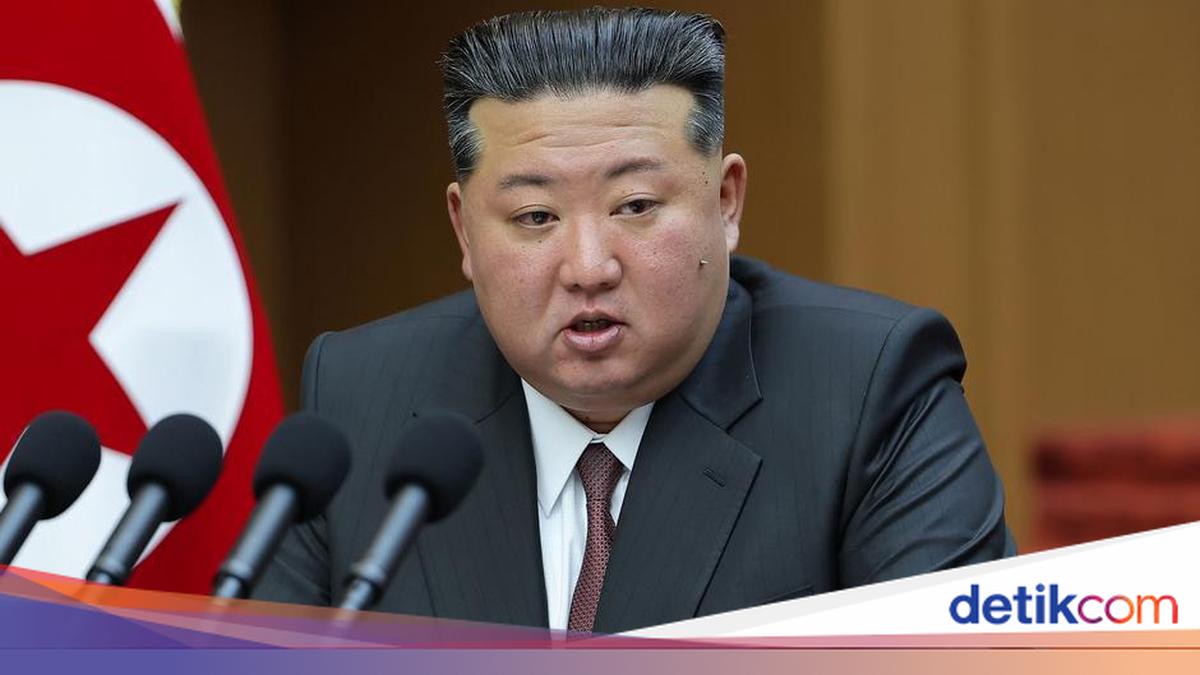
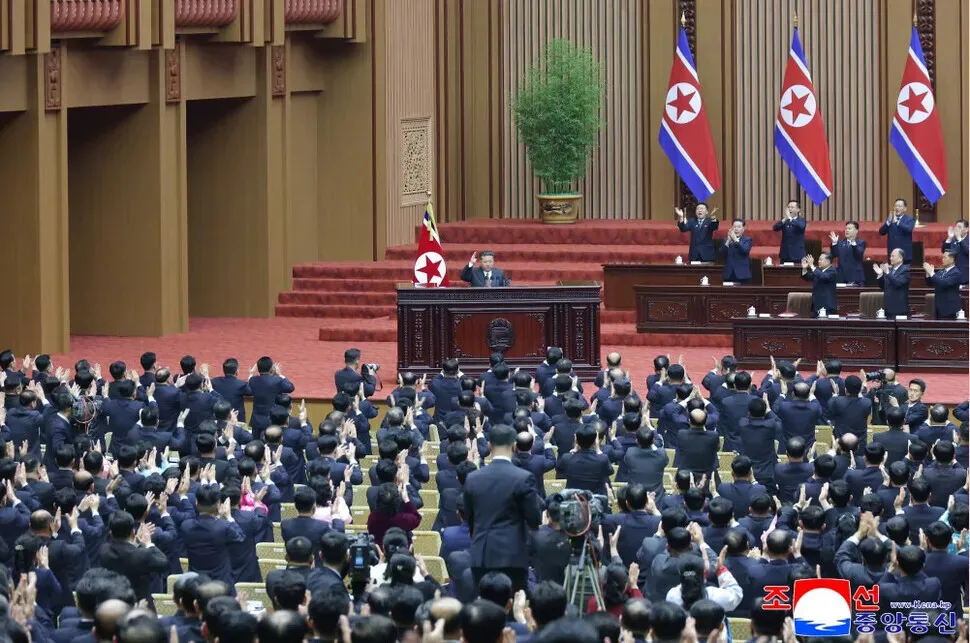
North Korean leader Kim Jong-un speaks at a gathering of the Supreme People’s Assembly on March 23, 2026. (KCNA/Yonhap)
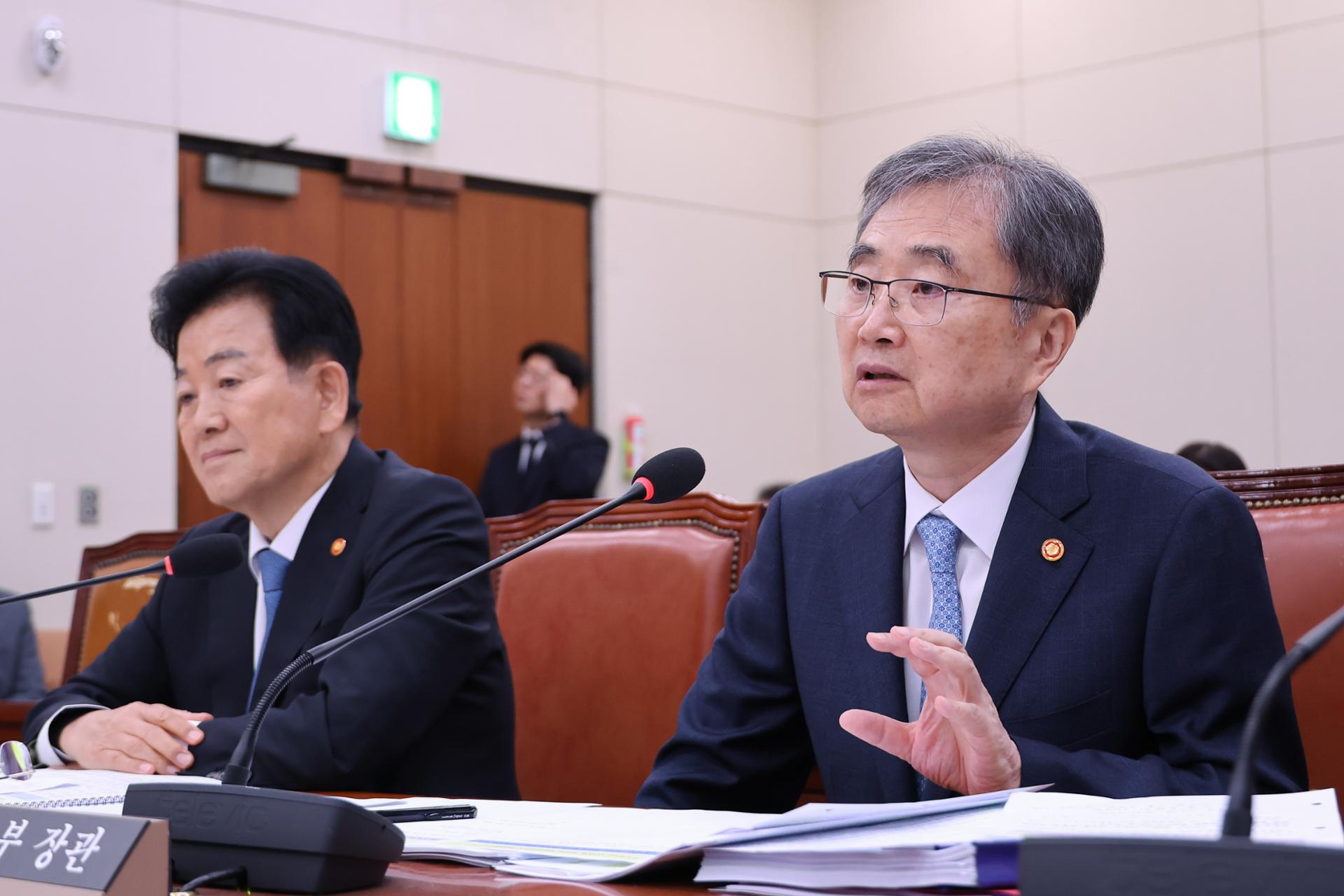
North Korea removed language related to Korean unification while formally revising its constitution in March and inserted a clause defining its territory as the northern half of the peninsula. While the word “hostile” was not used to describe inter-Korean relations, the revisions included North Korean leader Kim Jong-un’s long-avowed promise to redefine North Korea’s relationship with the South as one between two separate and distinct states. The full text of the newly amended constitution, as revealed during a press briefing at the Unification Ministry in Seoul on Wednesday, shows that the new Article 2 includes a territorial clause. The article stipulates that North Korea’s territory includes land “bordering the People’s Republic of China and the Russian Federation to the North and the Republic of Korea to the South,” including the territorial waters and airspace based on those boundaries. However, the constitution did not specify the location of land or maritime boundaries, possibly reflecting North Korea’s desire to avoid heightened tensions in regions such as the Northern Limit Line, the maritime demarcation line between the two Koreas. Language that had appeared in preamble and main text describing inter-Korean relations as those of a people divided or referencing reunification — such as the “northern half,” “national reunification,” and the “complete victory of socialism” — has also been removed. By whittling down references to the achievements of Kim Jong-un’s predecessors — his grandfather, Kim Il-sung, and his father, Kim Jong-il — the amended constitution omitted all mention of the legacy of reunification previously included in the preamble. The word “hostile,” used frequently by Kim after he in 2023 declared that inter-Korean relations “have been completely fixed into the relations between two states hostile to each other and the relations between two belligerent states,” was notably not included in the amended constitution. “The inclusion of a territorial clause emphasizes its sovereignty, but the document lacked expressions referring to South Korea as a ‘hostile’ or ‘belligerent’ country,” said Lee Jung-chul, a professor of political science at Seoul National University who analyzed the entirety of the revised constitution. The new document further consolidated Kim Jong-un’s power and authority, identifying the North Korean leader as the country’s “head of state.” The revised constitution also stipulated, for the first time, authority over the use of nuclear weapons, stating, “The Chairperson of the State Affairs Commission of the Democratic People’s Republic of Korea commands the nuclear forces of the DPRK.” North Korea amended its constitution during the first session of the 15th Supreme People’s Assembly held in March.By Jang Ye-ji, staff reporter; Park Min-hee, senior staff writerPlease direct questions or comments to [english@hani.co.kr]