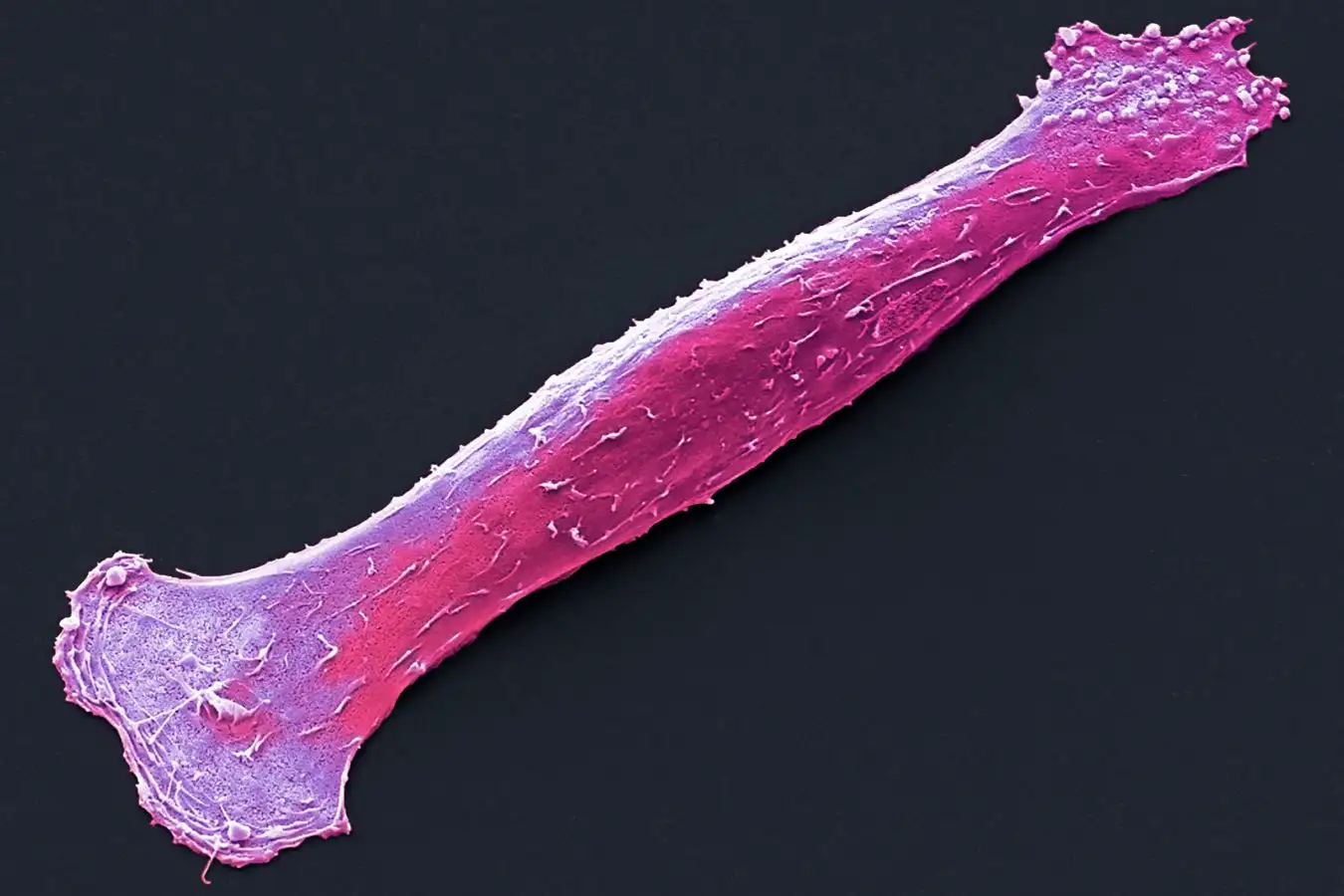
A scanning electron micrograph of an embryonic muscle cell differentiating in to a skeletal muscle cellSTEVE GSCHMEISSNER/SCIENCE PHOTO LIBRARY
Old mice grow bigger muscles and recover from injuries better when stem cells are taken out of their aged muscles, given a reboot, then put back in. A similar approach may allow rejuvenation of ageing muscles in people too.
“In theory, if you took an elderly person’s muscle stem cells out, charged them up and put them back in, they would probably be more functional,” says James White at Duke University in North Carolina.
Muscle stem cells generally lie dormant in muscle tissue, but when a muscle is injured, they grow into new muscle cells to patch up the damage. “Muscles rely very much on regeneration because they’re so susceptible to mechanical strain,” says White. “When you work out and feel sore, that’s muscle damage. The immune system talks to the stem cells and they repair the damage by making new muscle from scratch.”
With age, however, muscle stem cells decline in number and become worse at regenerating injured tissue. In experiments in mice, White and his colleagues found that this is because aged muscle stem cells contain less of an enzyme called glutaminase. This affects their ability to produce fatty molecules like palmitate and oleate, known as lipids, which are fundamental building blocks of cells. “Stem cells have to get multiple times larger to turn into muscle cells, so they need lipids to build cell membranes and also to use for energy,” says White.