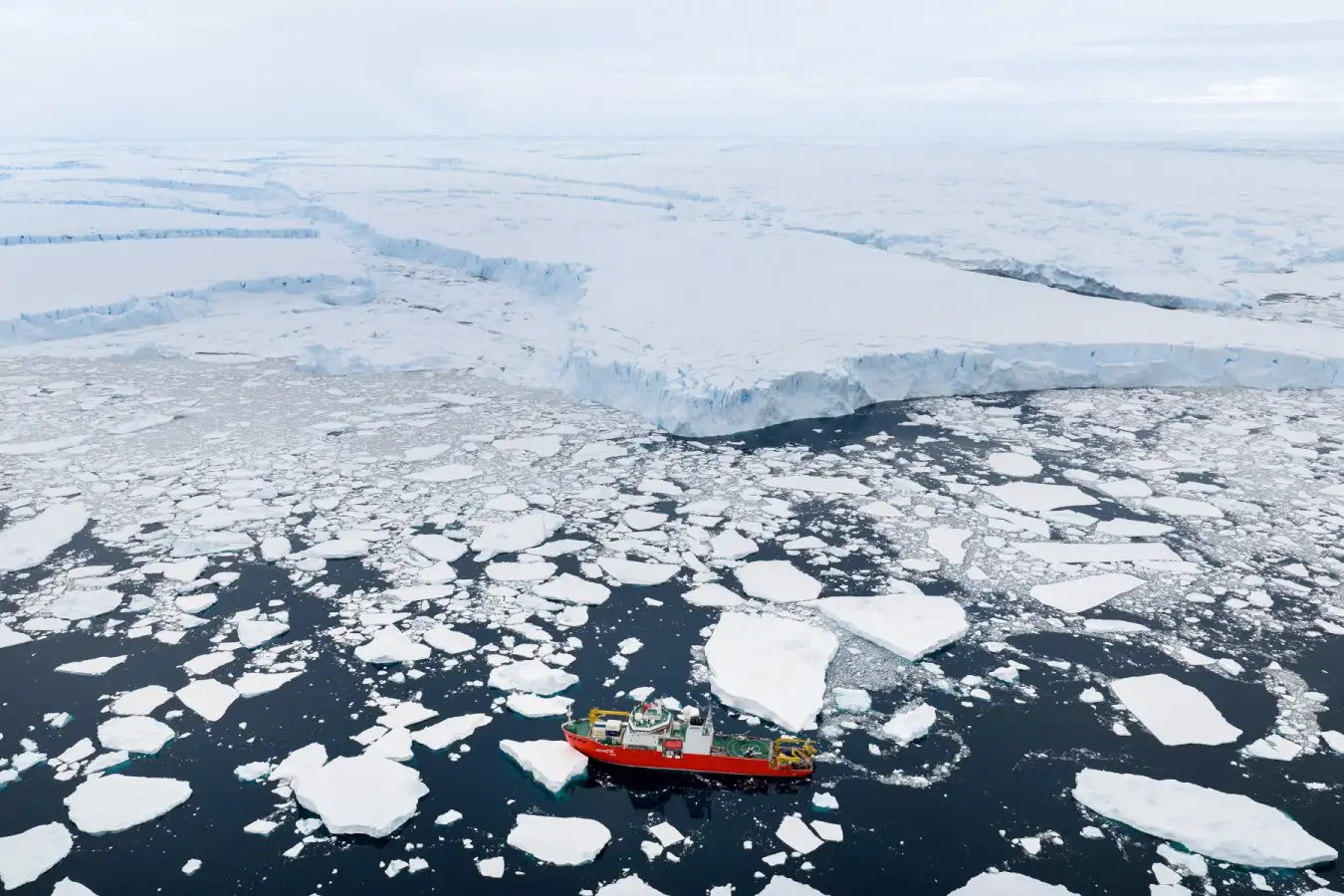
The Araon, a South Korean ice-breaker vessel, navigates a bed of sea ice near the Thwaites glacier in January 2026Chang W. Lee/New York Times/ Redux/eyevine
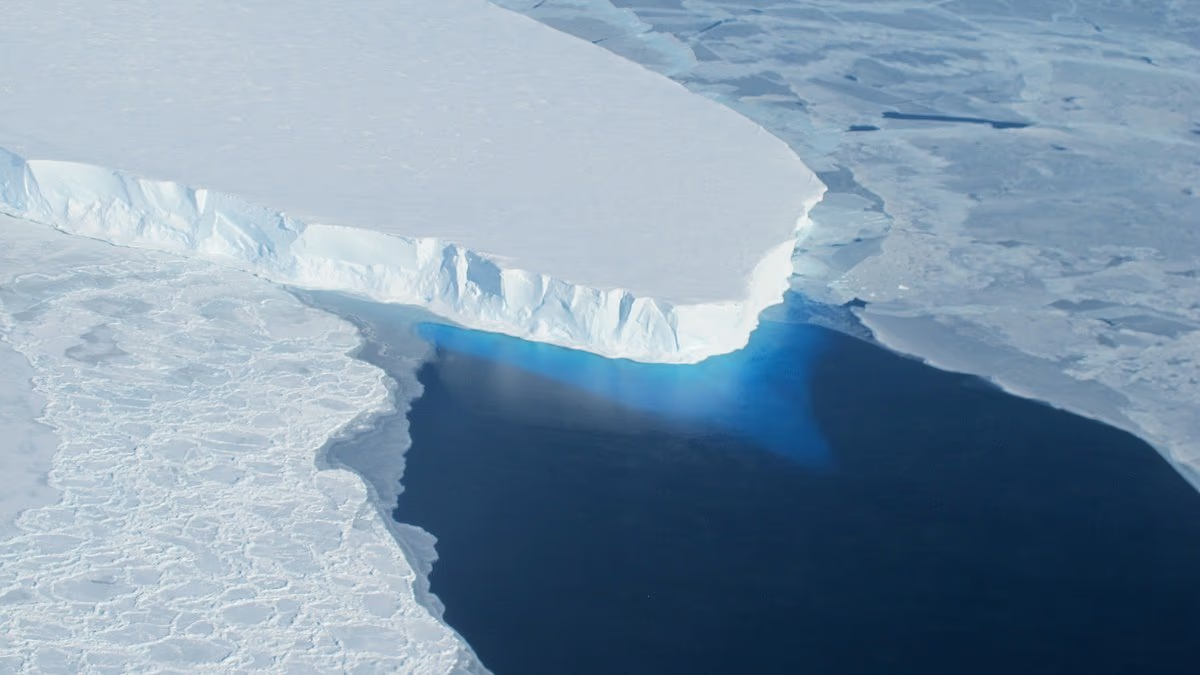
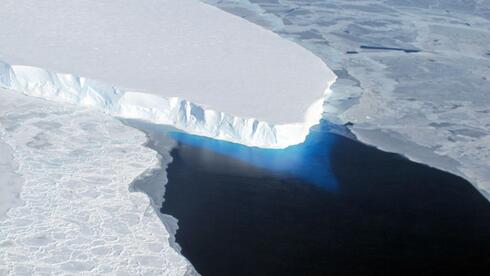
Antarctica’s most threatened glacier is about be further destabilised, as the floating ice shelf in front of Thwaites glacier is set to break away.
“Its final demise could happen suddenly, and to avoid being caught on the hop, we have already prepared an ‘obituary’ press release,” says Rob Larter at the British Antarctic Survey.
Dubbed the “doomsday glacier”, Thwaites is about the size of Britain, but it is shrinking rapidly and is already responsible for 4 per cent of all global sea-level rise. Worse still, its collapse is expected to set off a domino effect in the entire West Antarctic ice sheet, ultimately resulting in a calamitous sea-level rise of 3.3 metres and changing the coastline of the entire planet.
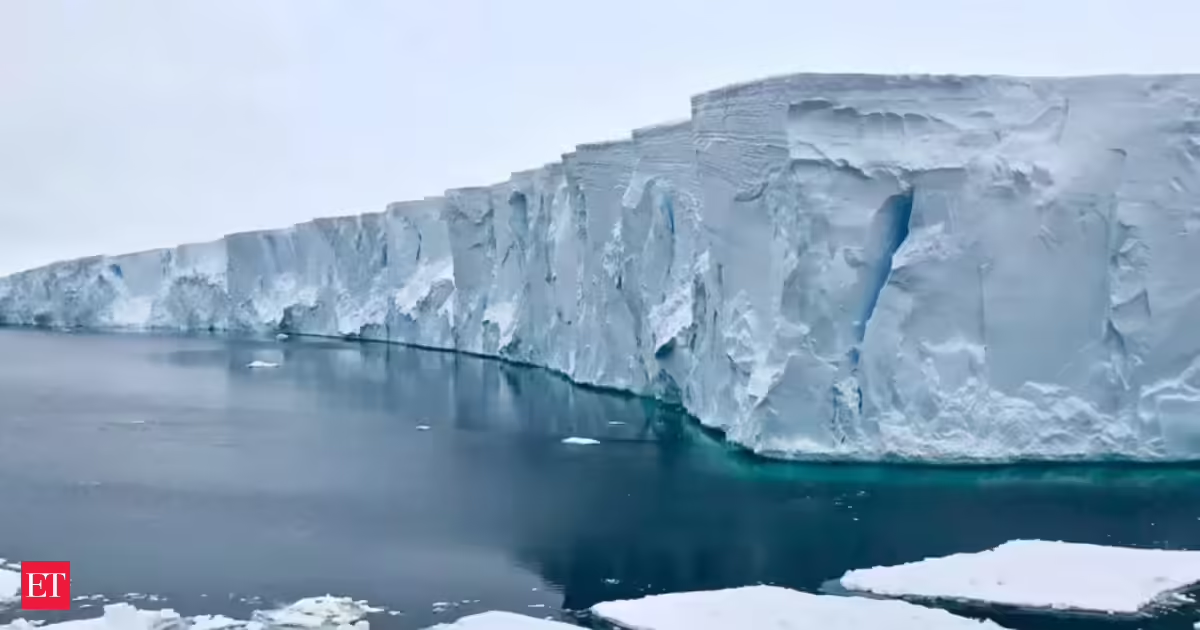
Many Antarctic glaciers form ice shelves that float out onto the ocean and buttress against the flow of ice from the continent. Thwaites glacier has one on its eastern front, known as Thwaites Eastern Ice Shelf (TEIS), that is about the size of Greater London – 1500 square kilometres – and 350 metres thick. But satellite images show alarming signs that this will imminently detach. In fact, by some measures, this break-up is already under way.