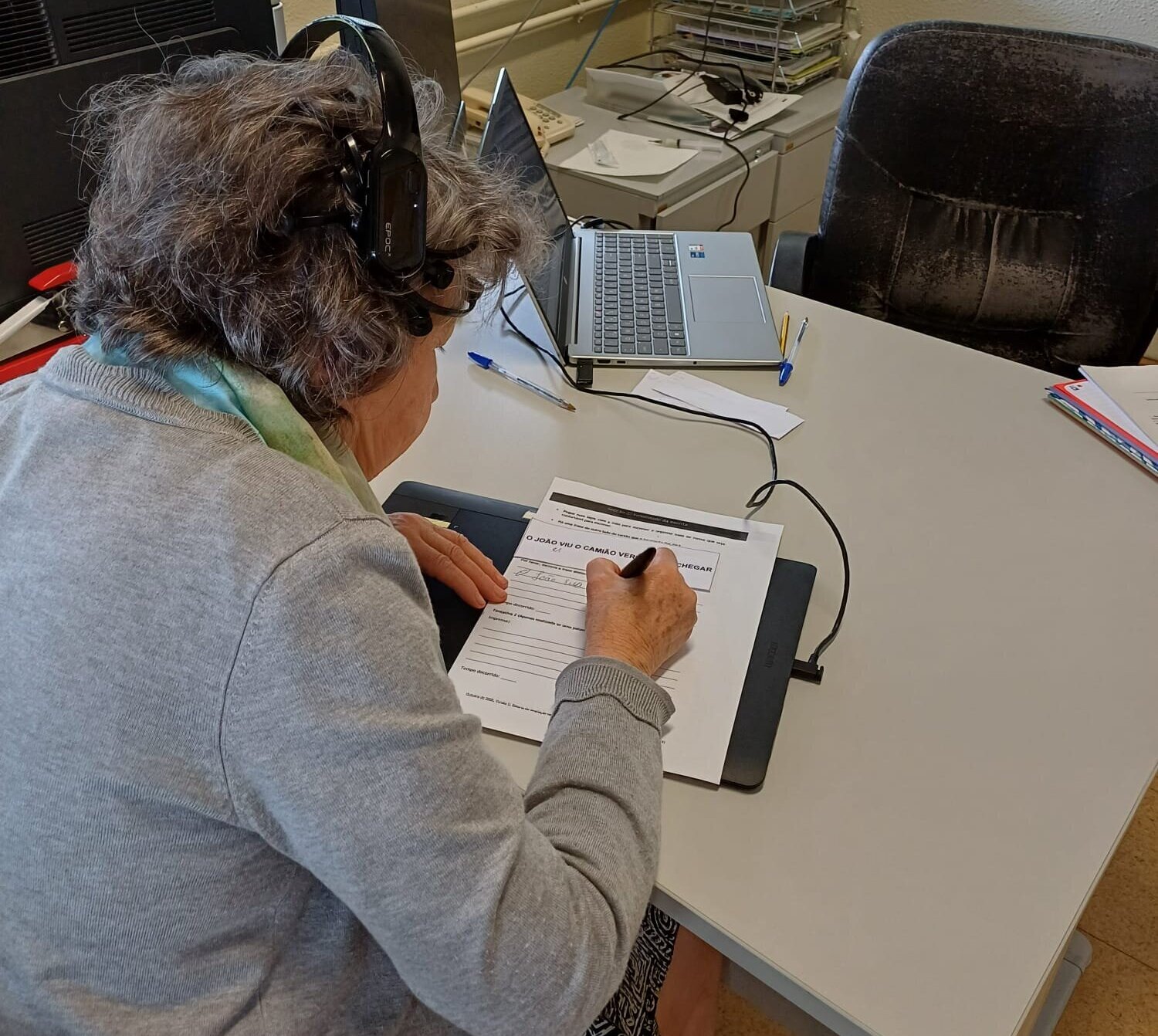
Simple, reliable tests to identify cognitive decline earlier in life and track it over time can make a real difference to treatment and support. New research shows the potential for handwriting exercises to form the basis of future tests.Writing down characters on a page may be a less practiced skill in the modern, digital age, but what makes it suitable for assessing cognitive decline is that it tests both physical motor skills and mental processing ability. It's a demanding workout for the brain.Past studies have found that handwriting capabilities decline with conditions such as Alzheimer's disease, highlighting the link to cognition.Here, researchers led by a team at the University of Évora in Portugal wanted to take a closer look at differences in handwriting that may appear in people diagnosed with cognitive issues."Writing is not just a motor activity, it's a window into the brain," says kinesiologist Ana Rita Matias, from the University of Évora."We found that older adults with cognitive impairment displayed distinct patterns in the timing and organization of their handwriting movements."Tasks involving higher cognitive demands showed that cognitive decline is reflected in how efficiently and coherently handwriting movements are organized over time."The study was based on 58 elderly people living in care homes, all aged between 62 and 99. Of these, 38 had been diagnosed with some form of cognitive impairment, while the remaining 20 hadn't and were considered cognitively healthy.Participants were tasked with a variety of handwriting tests. (Ana Rita Silva)Using a pen and digital tablet, each volunteer was asked to complete several tasks, including drawing dots and lines, copying written sentences, and writing down sentences from voice dictation.It was in that latter test, the voice dictation – which requires a combination of listening, remembering, converting sounds to text, and physical writing – where differences between the two groups really showed up.Those diagnosed with cognitive impairment tended to take longer with each stroke of the pen, and use more strokes and smaller strokes to complete the task.These findings support the view that cognitive decline reduces the brain's ability to compensate during difficult tasks, meaning its core motor-execution networks become overwhelmed. If that's true, then tasks that tap into these brain pathways may reveal signs of cognitive decline.However, the researchers suggest that a variety of handwriting tests will ultimately be needed to assess cognitive capabilities, in order to properly test different brain functions."Timing and stroke organization are closely linked to how the brain plans and executes actions, which depends on working memory and executive control," says Matias."As these cognitive systems decline, writing becomes slower, more fragmented, and less coordinated. In contrast, other features can remain relatively preserved, especially in the early stages of cognitive decline, making them less sensitive indicators."These are encouraging initial results: Handwriting tests could eventually be used for cognitive assessments without, potentially, expensive scans or hospital visits. They'd be suitable for care homes, which was the setting for this study.There's plenty of work still to do, however. This study involved a relatively small group of people, and it didn't track the participants over time to see how their handwriting prowess changed with cognitive decline and age.The researchers also note they didn't account for medication use, which could affect handwriting skills.With larger, more comprehensive studies, some of those limitations could be reduced. There might even be opportunities to detect cognitive decline earlier through handwriting – before noticeable symptoms like memory loss set in.Scientists are busy looking at everything from blood biomarkers to voice cues to find ways of getting advanced warning of cognitive decline and neurodegenerative diseases, and handwriting could well have a place here.Related: This Gene Is Linked to Lower Alzheimer's Risk – And We May Finally Know WhyNot only do these approaches help in supporting patients and measuring how well treatments are working, but spotting brain issues as soon as possible also means these conditions can be analyzed from an earlier starting point."The long-term goal is to develop a tool that is easy to administer, time-efficient, and affordable, allowing integration into everyday healthcare contexts without requiring specialized or expensive equipment," says Matias.The research has been published in Frontiers in Human Neuroscience.
A Signal of Cognitive Decline May Be Hidden in The Way You Write
Simple, reliable tests to identify cognitive decline earlier in life and track it over time can make a real difference to treatment and support.
687 words~3 min read