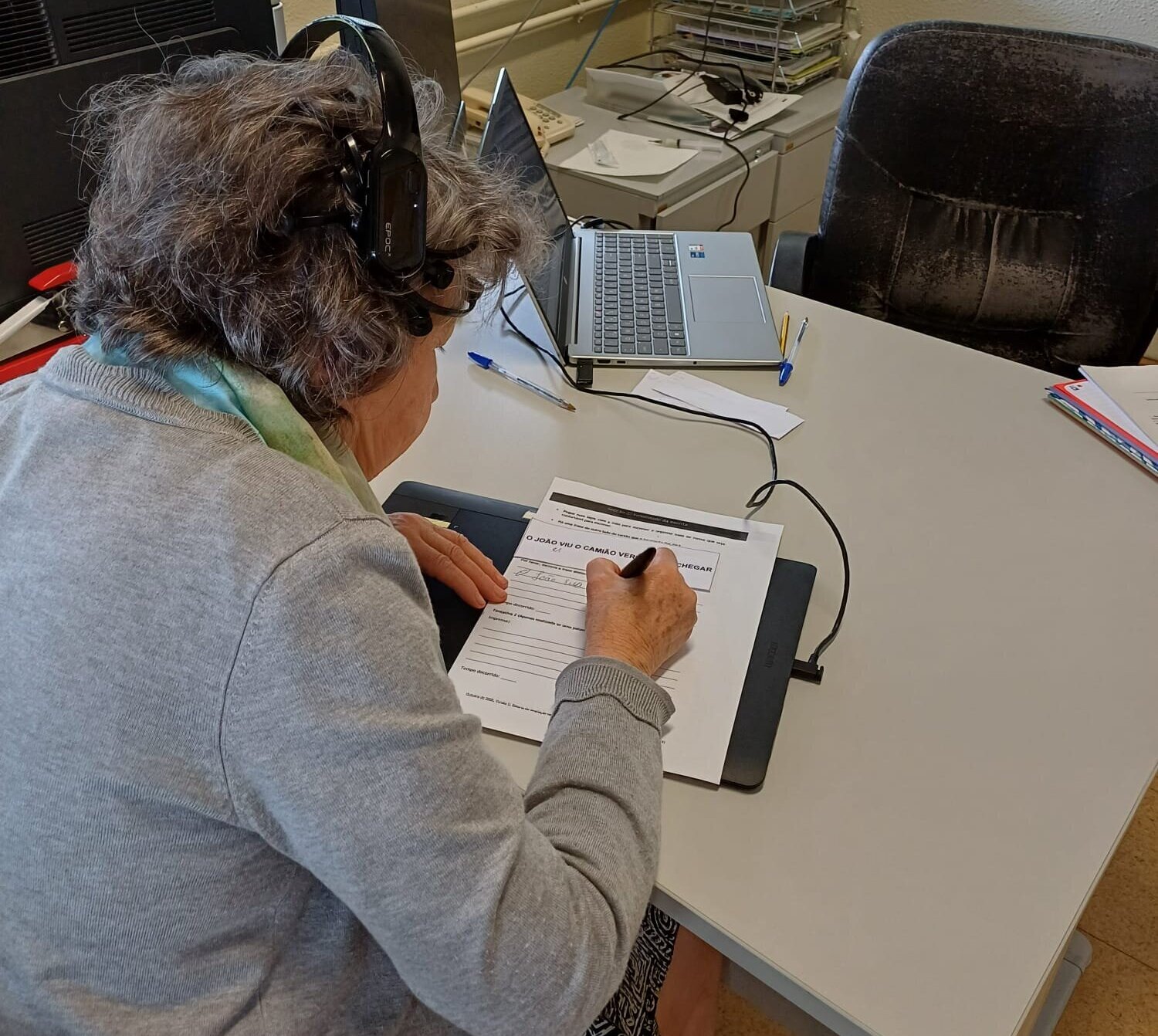
Participants performed two types of tasks using an inking pen on a digitizing tablet. Credit: Ana Rita Silva
Handwriting requires a combination of fine motor control and a complex set of mental skills, such as selecting, organizing, and interpreting sensory information, making it a cognitively challenging task. Because of its high demand on the brain, it is a potential marker of cognitive decline, especially as we age. Then, our handwriting often becomes slower or choppier.
Now, in a new Frontiers in Human Neuroscience study, a team of researchers in Portugal has examined whether different handwriting features, including speed and stroke organization, differ between older people who show signs of cognitive decline and those who don't, and whether handwriting features could therefore serve as a diagnostic tool.
"Writing is not just a motor activity, it's a window into the brain," said senior author Dr. Ana Rita Matias, an assistant professor at the Department of Sport and Health at the University of Évora. "We found that older adults with cognitive impairment displayed distinct patterns in the timing and organization of their handwriting movements. Tasks involving higher cognitive demands showed that cognitive decline is reflected in how efficiently and coherently handwriting movements are organized over time."