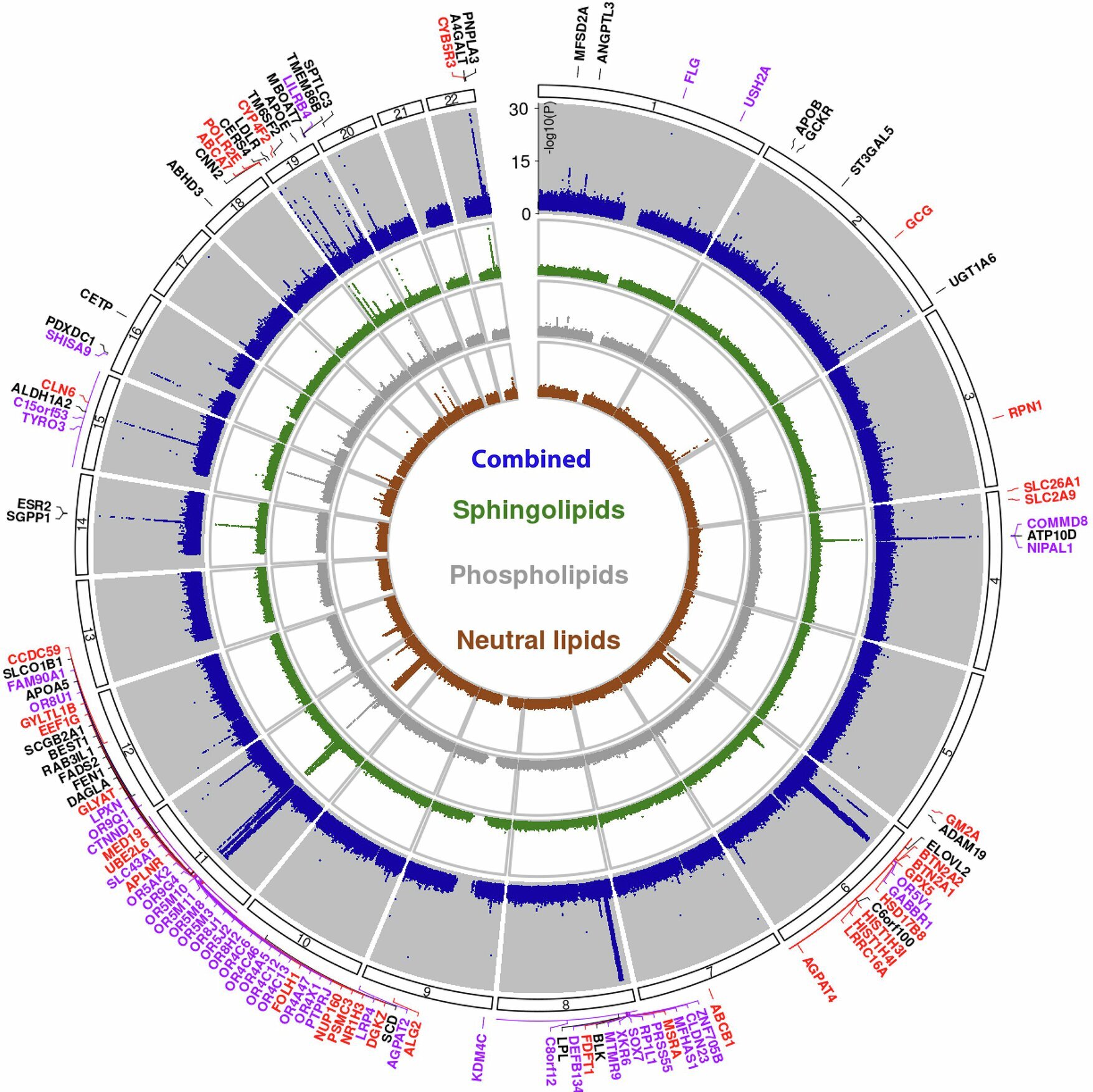
Genomic loci associated with lipid species. Credit: Nature Communications (2026). DOI: 10.1038/s41467-026-72542-1
DZNE researchers have generated new insights into how the human genome shapes the chemical composition and concentration of blood lipids. Across the genome, they identified more than 50 regions whose relevance to lipid metabolism has not been known before. The findings are based on blood samples from more than 8,000 individuals and may provide a better understanding of aging processes and pathological conditions like Alzheimer's disease, diabetes, and cardiovascular dysfunctions.
The results are published in Nature Communications. They are based on samples from the Rhineland Study, a population-based study in Bonn, Germany, and additional study data.
Fatty molecules, also called "lipids," occur in the human body in a vast number of forms. They serve not only as structural components, for instance in cell membranes, but also participate in metabolism, and—in particular—in signaling pathways.
"Lipids are much more than the 'good' and 'bad' cholesterol we often hear about. In fact, thousands of different lipids circulate in our bodies. Some of them are presumed to play an important role in aging and in the development of diseases. This is a complex molecular world. Yet the genetic basis of many lipids remains poorly understood," says Dr. Mohammed Aslam Imtiaz, a postdoctoral fellow at DZNE who investigates how genetic factors affect human health.