PV systems and distributed energy assets require stronger cybersecurity and controllability, but measures to protect critical infrastructure should be based on careful, expert assessment rather than rushed policy decisions.
May 19, 2026
It has long been clear that photovoltaic systems and other distributed energy producers should not be monitored or controlled openly via the internet without appropriate security measures. At the same time, these assets – like large consumers – are increasingly required to be controllable and, where necessary, disconnectable within the grid infrastructure to ensure system stability. This is broadly accepted. However, decisions on cybersecurity measures and the protection of critical infrastructure should not be taken hastily, but rather based on careful consideration and objective expert assessment.
First, however, it is worth looking at price developments for components in photovoltaic systems that are not yet the focus of data protection advocates or cybercriminals, at least as long as no switchable module optimizers are involved via an unsecured gateway.
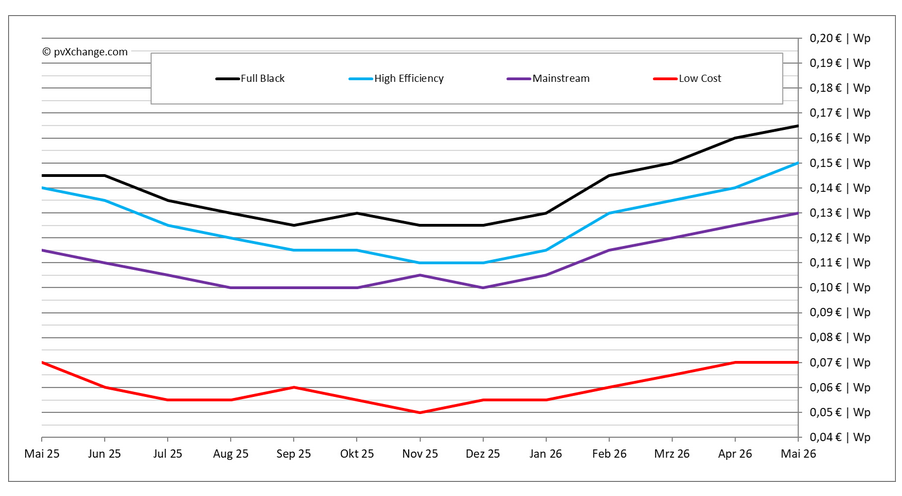
Prices for solar modules continue to rise by a few percentage points each month across most segments, including again in May. High-performance modules, in particular, are affected, as production capacity appears to be limited. Expectations for efficiency gains from new cell formats and technologies may have been overly optimistic. Customers are increasingly expecting outputs approaching 500 W in the rooftop segment, but supply remains constrained. As a result, supply and demand continue to drive pricing, with high-efficiency modules seeing further price increases. Prices have now exceeded the level forecast in January, albeit about a month later than expected.