As the US renewable fleet enters a period of unprecedented demand, the industry is hitting a critical inflection point where operational nuance is as vital as hardware procurement. Data center electricity use is on track to quintuple by 2040, and global cooling demand is projected to triple by 2060, placing a massive burden on a grid that now counts on solar, wind, and storage. Meeting the demand ahead requires collaboration between asset owners, operators, financiers, insurers, brokers, and manufacturers to ensure infrastructure remains durable and reliable.
The 2026 Solar Risk Assessment consists of 19 articles written by global industry partners to provide an objective analysis of resilience and reliability. Data from the report reveals that while extreme weather remains a major driver of financial loss, the next frontier of risk is domestic, originating from within the plant itself.
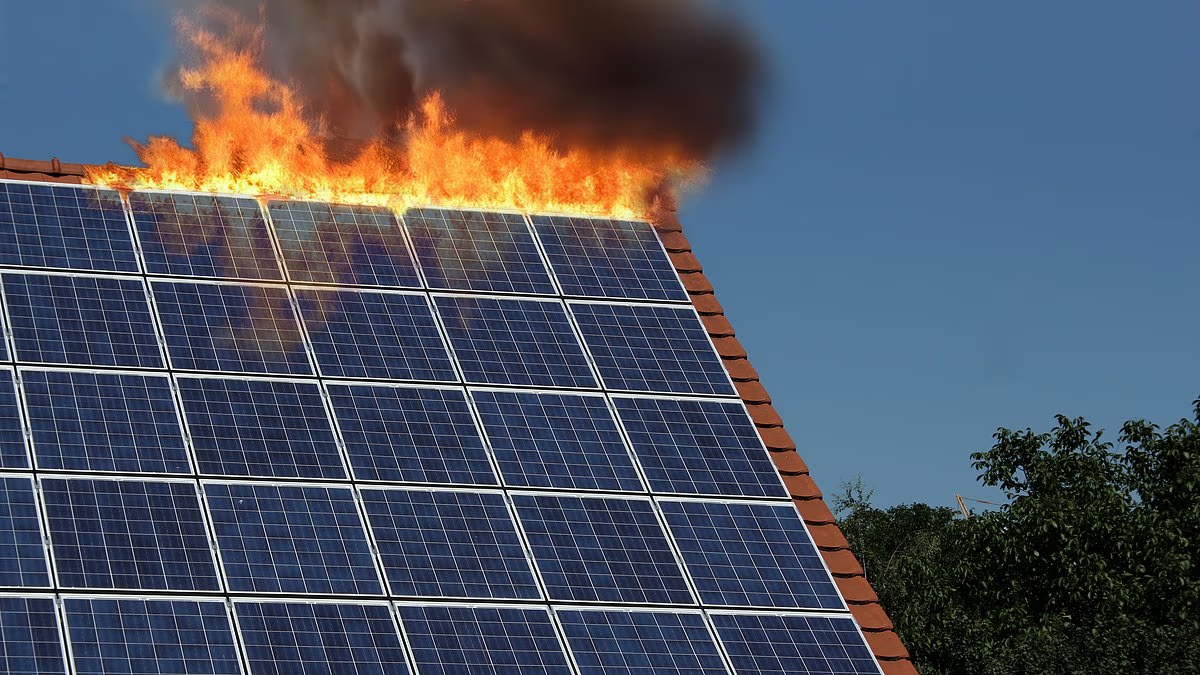
Equipment-driven brushfires
Historically, the industry has focused on wildfire defensibility, but data from kWh Analytics shows that only 4% of photovoltaic fire loss events occur in high wildfire risk areas. In contrast, 84% of fire events are equipment-driven brushfires, meaning the source of ignition is the solar equipment.