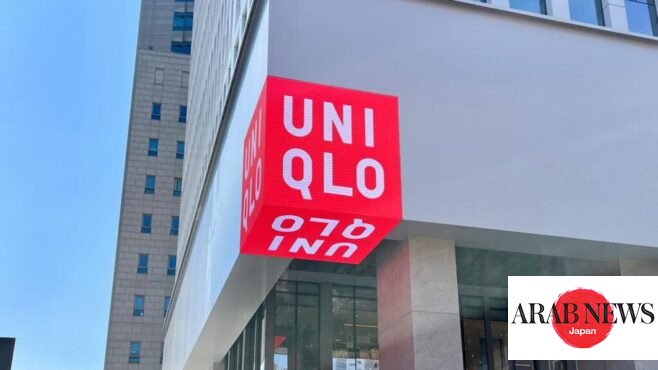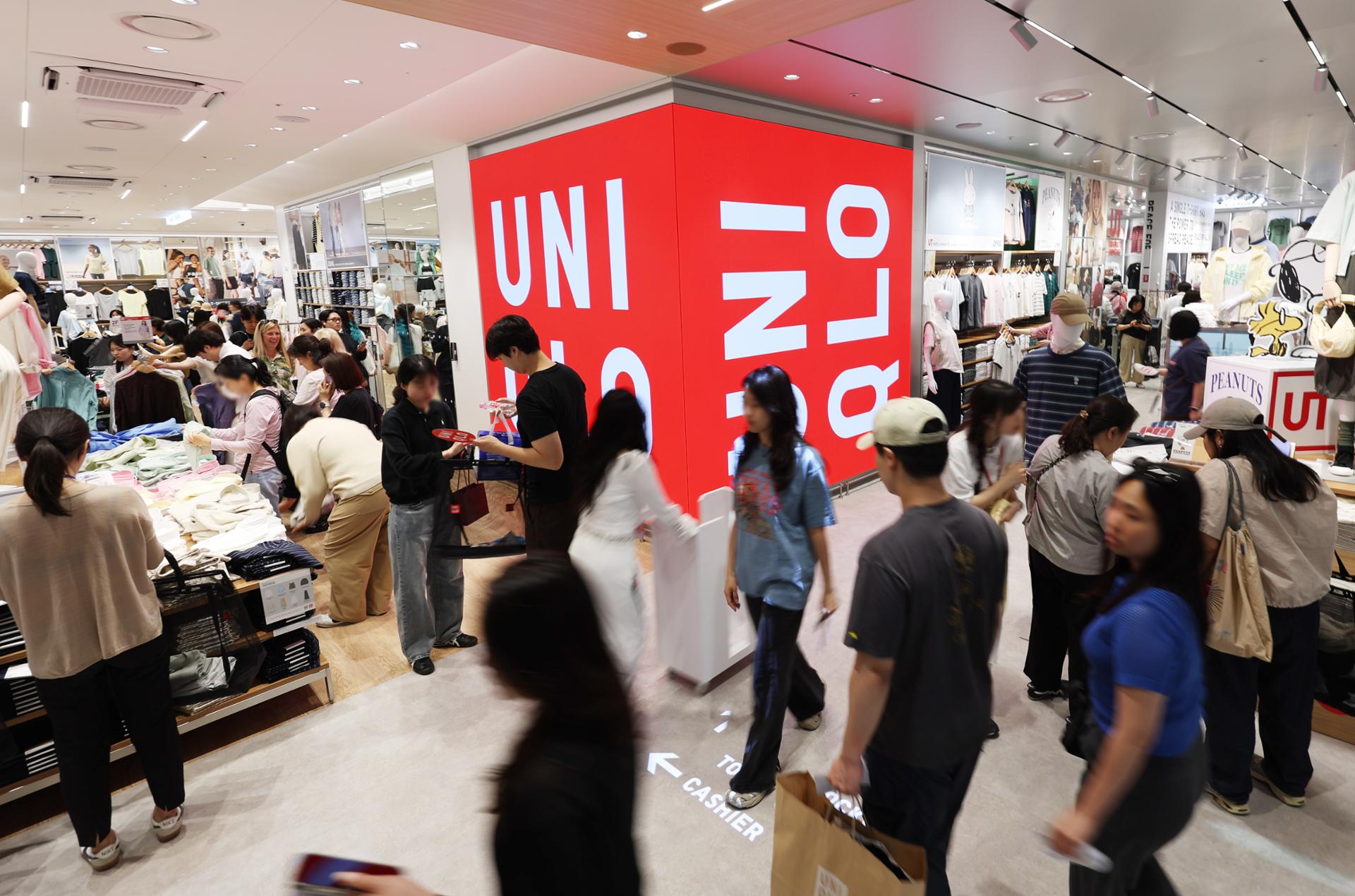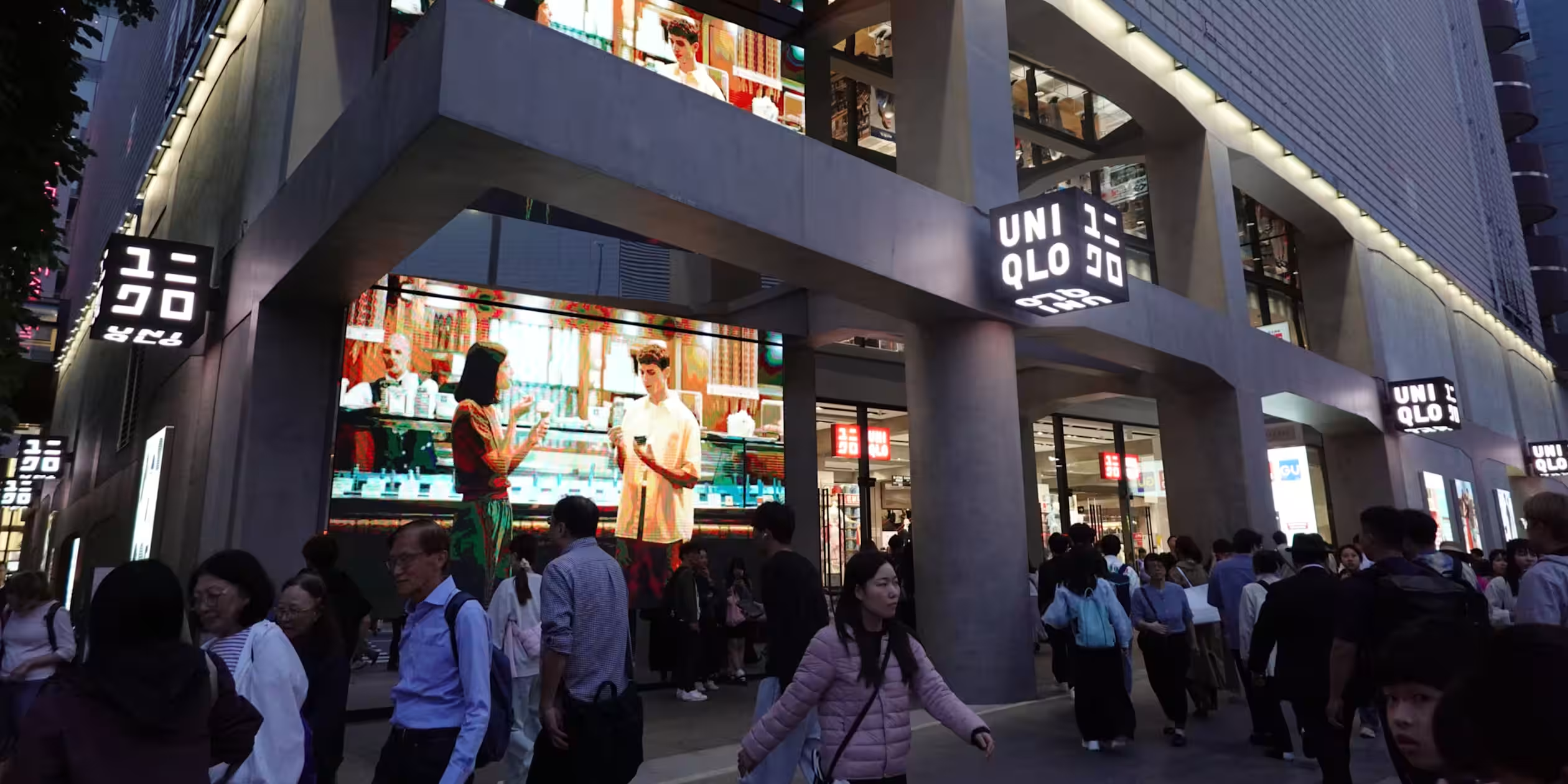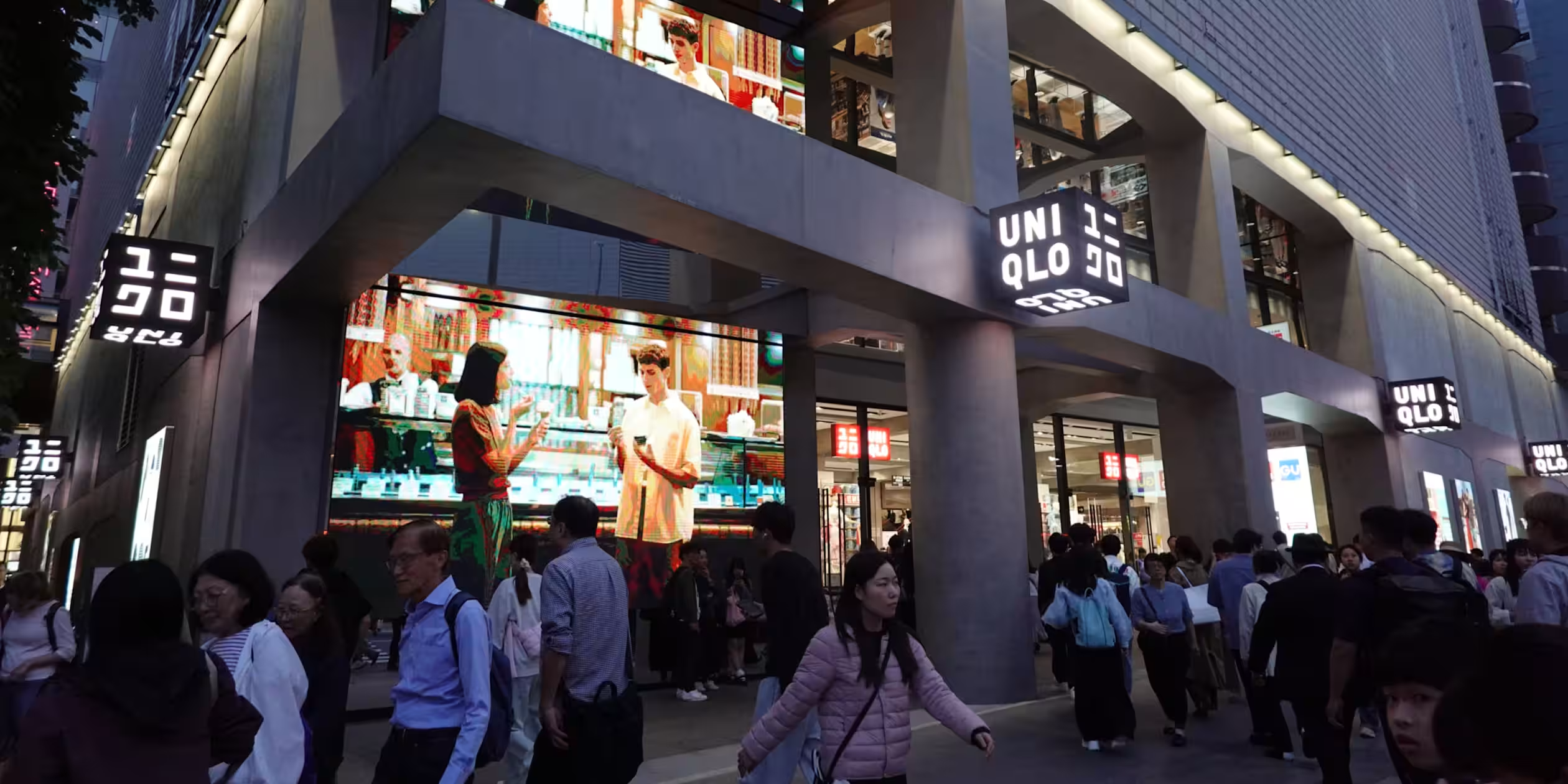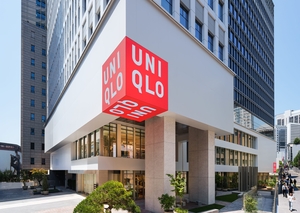
Five-year return brings fiercer fashion competition to Seoul's retail heart Uniqlo’s new flagship store in Myeong-dong, Seoul (Uniqlo Korea) Five years after Uniqlo vanished from Myeong-dong amid the “No Japan” boycott and the COVID-19 pandemic, the Japanese retailer is coming back to Seoul’s most storied shopping district with its largest store in Korea to date.Opening Friday, the sheer scale of the new flagship signals confidence: three floors, roughly 3,200 square meters, 42 checkout counters and 54 fitting rooms. More revealing, though, is its dual mandate to function as a global retail destination and an homage to a neighborhood with a rich retail history."We are pleased to introduce the global flagship store, which reflects the value and concept of Uniqlo's brand philosophy," said Takao Kuwahara, co-CEO of FRL Korea, who hoped the store would become "a new landmark of Myeong-dong" for Korean and international shoppers alike.That dual identity runs through nearly every corner.Alongside collaborations with global brand ambassador Roger Federer, Cecilie Bahnsen-linked apparel and Monchhichi-themed T-shirts, the store makes a pointed effort to connect with the local community.T-shirt graphics were developed with Myeong-dong partners — neighborhood coffee shops, cultural spaces and restaurants. Customers can personalize shirts and tote bags with district-specific imagery. Books and magazines about the area line the shelves, and a photo exhibition traces the neighborhood across different eras. A dedicated T-shirt section showcases collaborations inspired by Myeong-dong and its local culture. (No Kyung-min/The Korea Herald) Before global fast fashion planted its flag in Myeong-dong, the district served as one of Seoul's primary stages for youth culture and style. It later became a tourism-heavy retail and tourism corridor, before the COVID-19 pandemic emptied its streets.Uniqlo's first departure from the neighborhood came in early 2021, a closure shaped by both the pandemic and the aftershocks of Korea's boycott of Japanese goods. The nationwide consumer boycott emerged in 2019 after Japan imposed trade restrictions on Korea.The fallout was severe for the Japanese retailer. Revenue in Korea plunged from 1.37 trillion won ($910 million) in 2019 to 629.8 billion won in 2020, while its store count fell from around 190 locations to roughly 127 by 2022.Its focus on profitability and operational efficiency paid off over the following years. Annual sales surpassed 1 trillion won again in 2024 and climbed to 1.35 trillion won in 2025.By positioning its largest Korean store in Myeong-dong, Uniqlo steps into direct competition not only with global rivals like Zara but with fast-rising domestic contender Musinsa Standard, at a time when Korea is drawing a record number of visitors from abroad."With foreign interest in K-fashion running high, Uniqlo's return, backed by its strong global brand recognition, is likely to intensify competition in the region," one industry official said. A dedicated bookshelf stocked with books and magazines about Seoul and Myeong-dong (Uniqlo Korea)
Uniqlo returns to Myeong-dong — bigger and more localized
Five years after Uniqlo vanished from Myeong-dong amid the “No Japan” boycott and the COVID-19 pandemic, the Japanese retailer is coming back to Seoul’s most st
465 words~2 min read