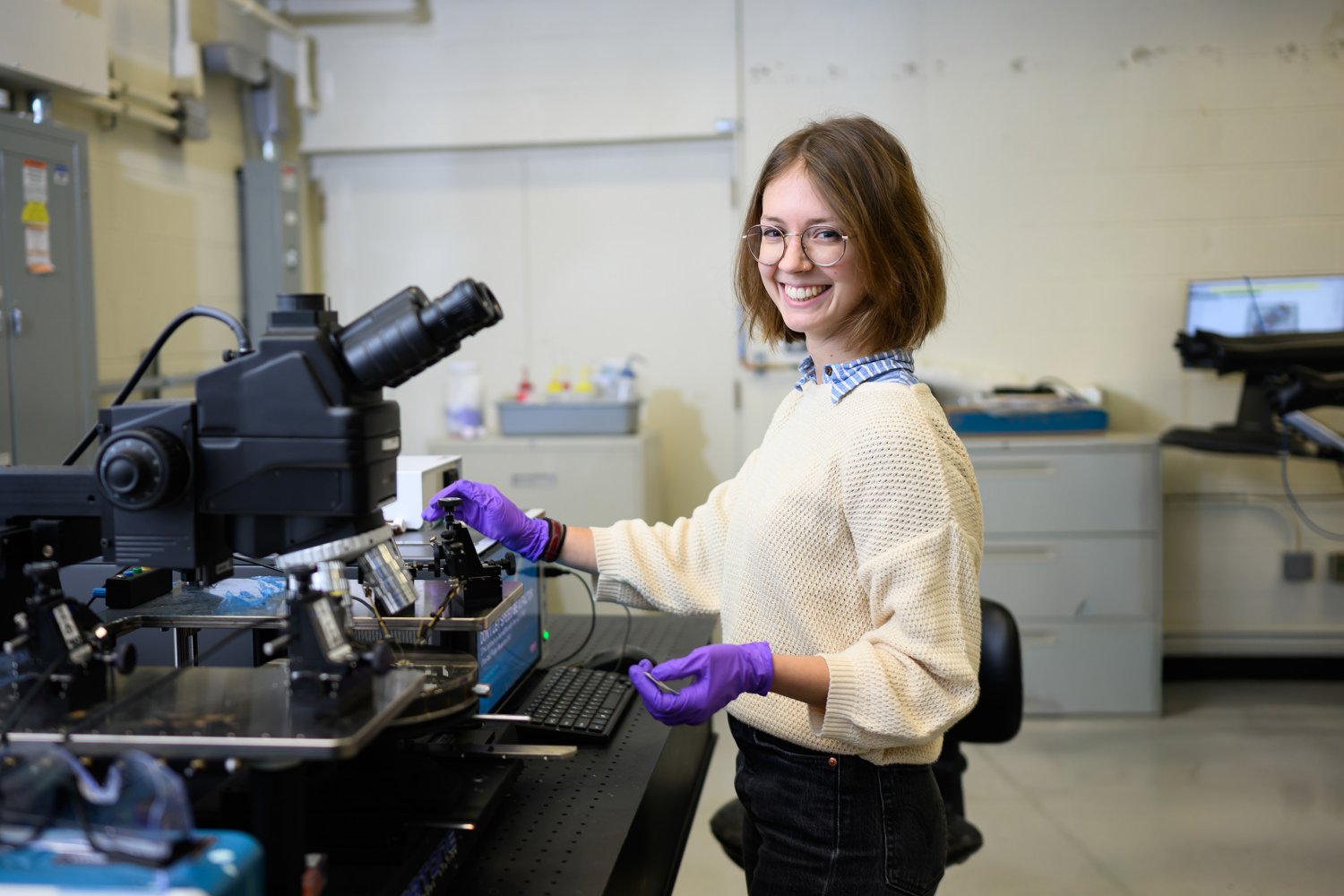
A crepe cake.
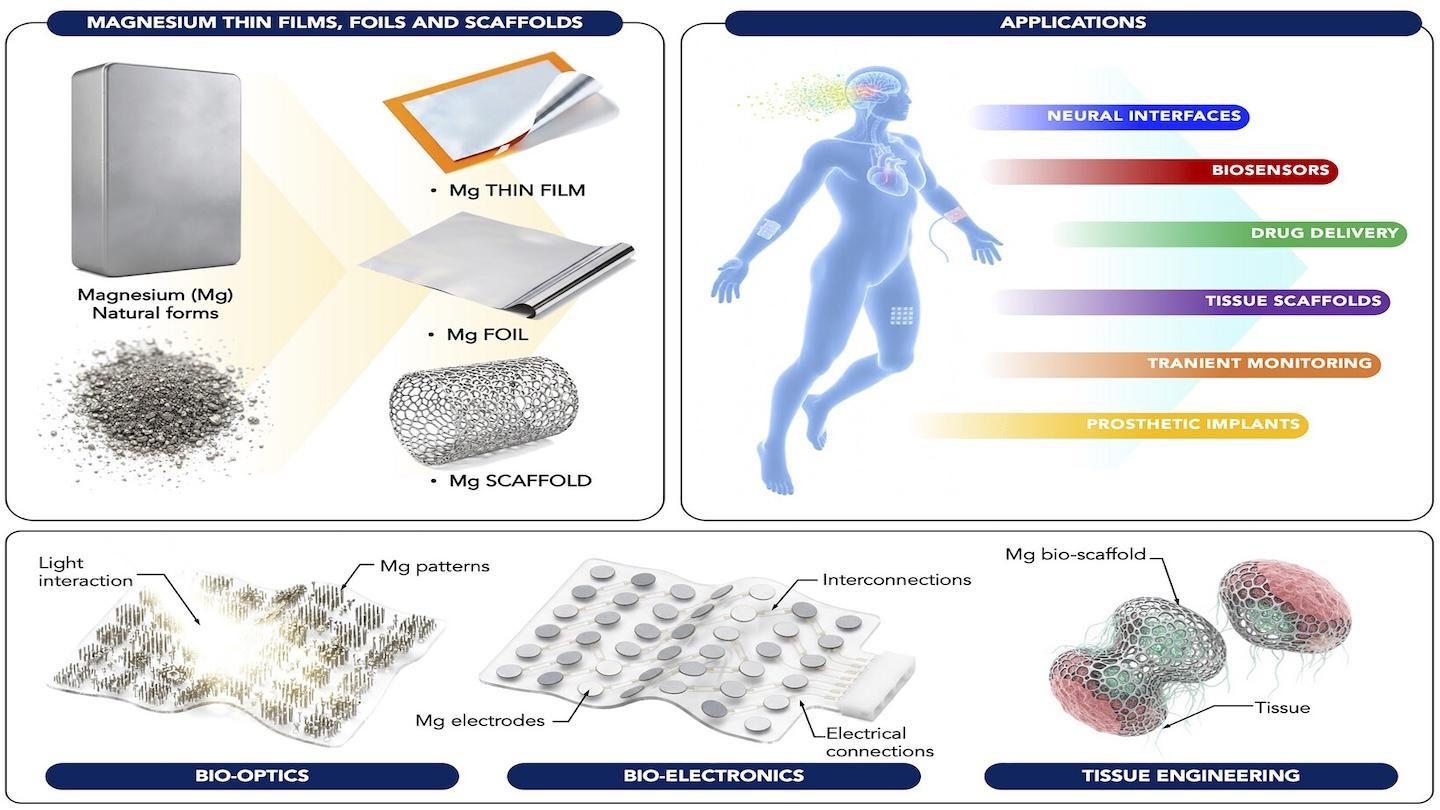
That’s how Camille Cunin describes the polymer-metal “sandwiches” that became a highlight of her doctoral thesis at MIT’s Department of Materials Science and Engineering (DMSE). Over close to five years, these composites were a key component of her research on bioelectronics — devices designed to interface with the human body.
Cunin completed her PhD in February — she’ll attend Commencement later this month — but traces her interest in bioelectronics to a formative summer internship at Massachusetts General Hospital (MGH) in Boston in 2019. There, she saw a patient with Parkinson’s disease struggle to swallow a tethered “capsule” intended to function as an exploratory gut probe. The device failed, and the gap between lab-based design and real life became all too apparent.
The incident validated the career path Cunin had already begun to pursue: to make usable products that have a positive impact on people’s lives. It’s a purpose that hasn’t gone unnoticed. “Some might be happy with a sketch of a concept and no actual demonstration, but Camille has a remarkable ability in that she wants to do materials science that can translate to real-world applications,” says her advisor, Aristide Gumyusenge.