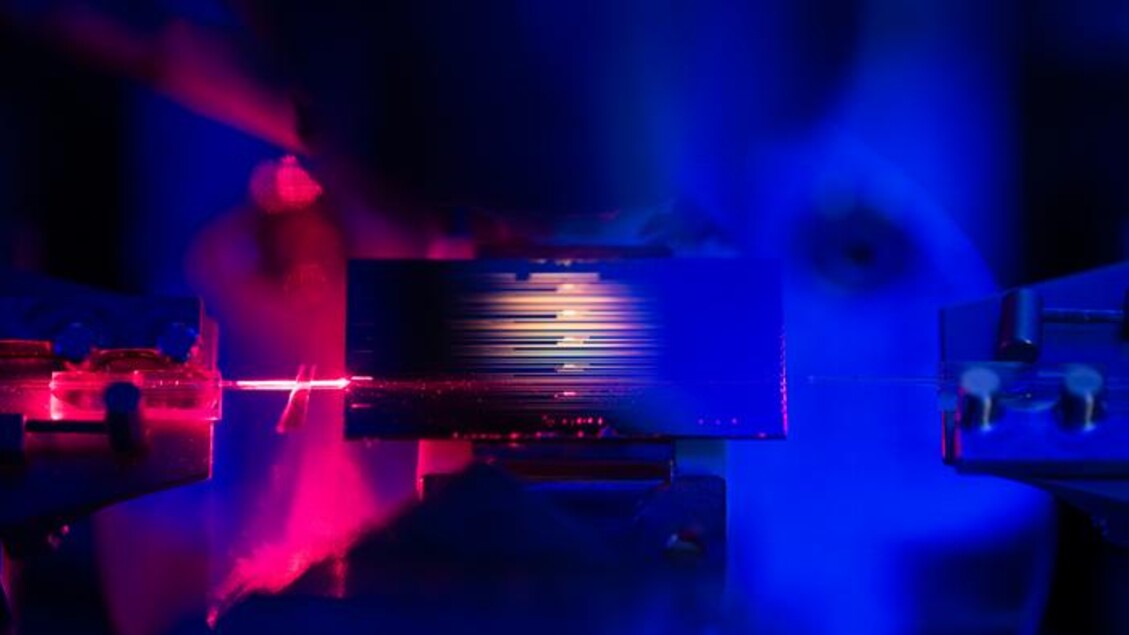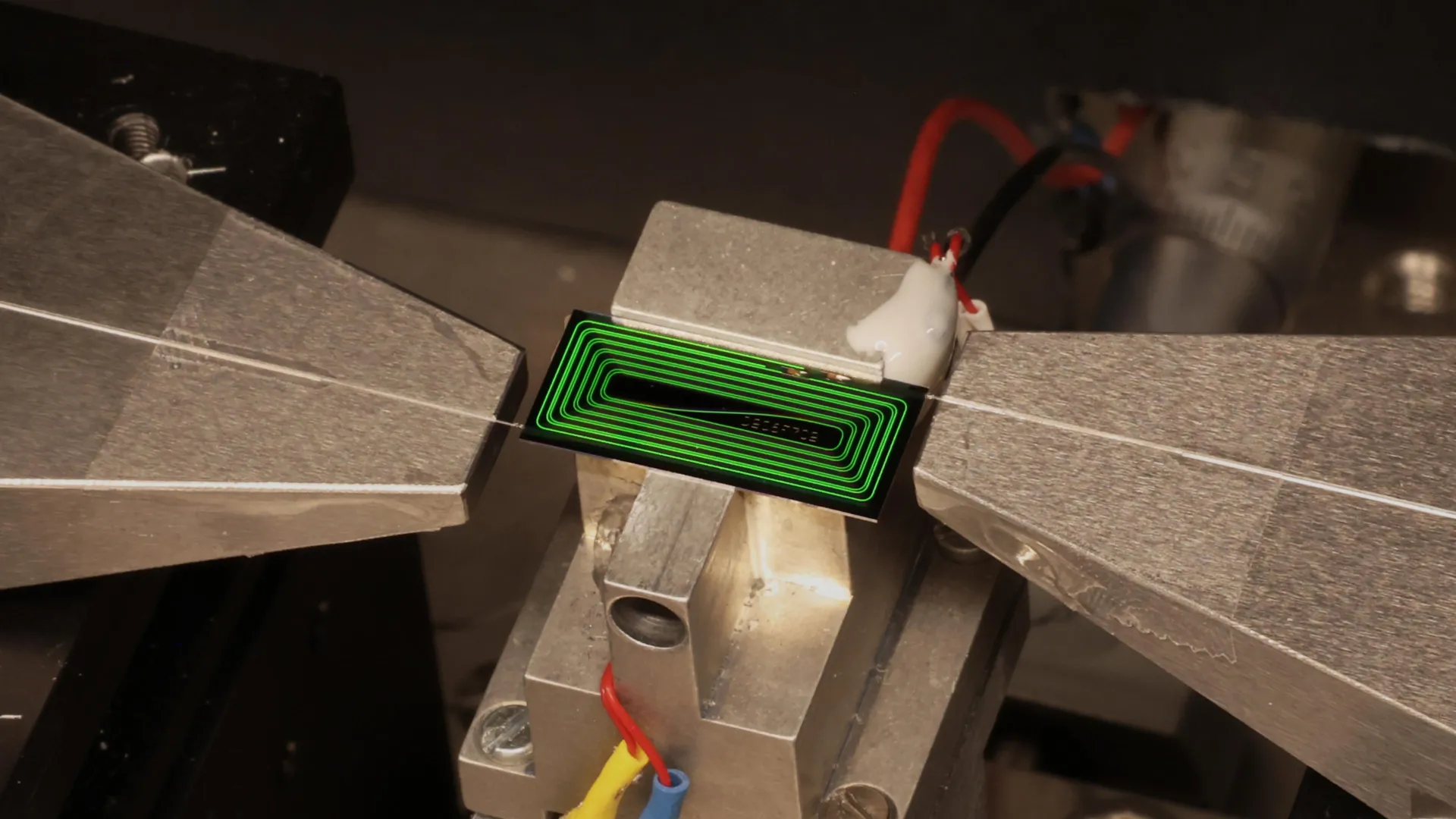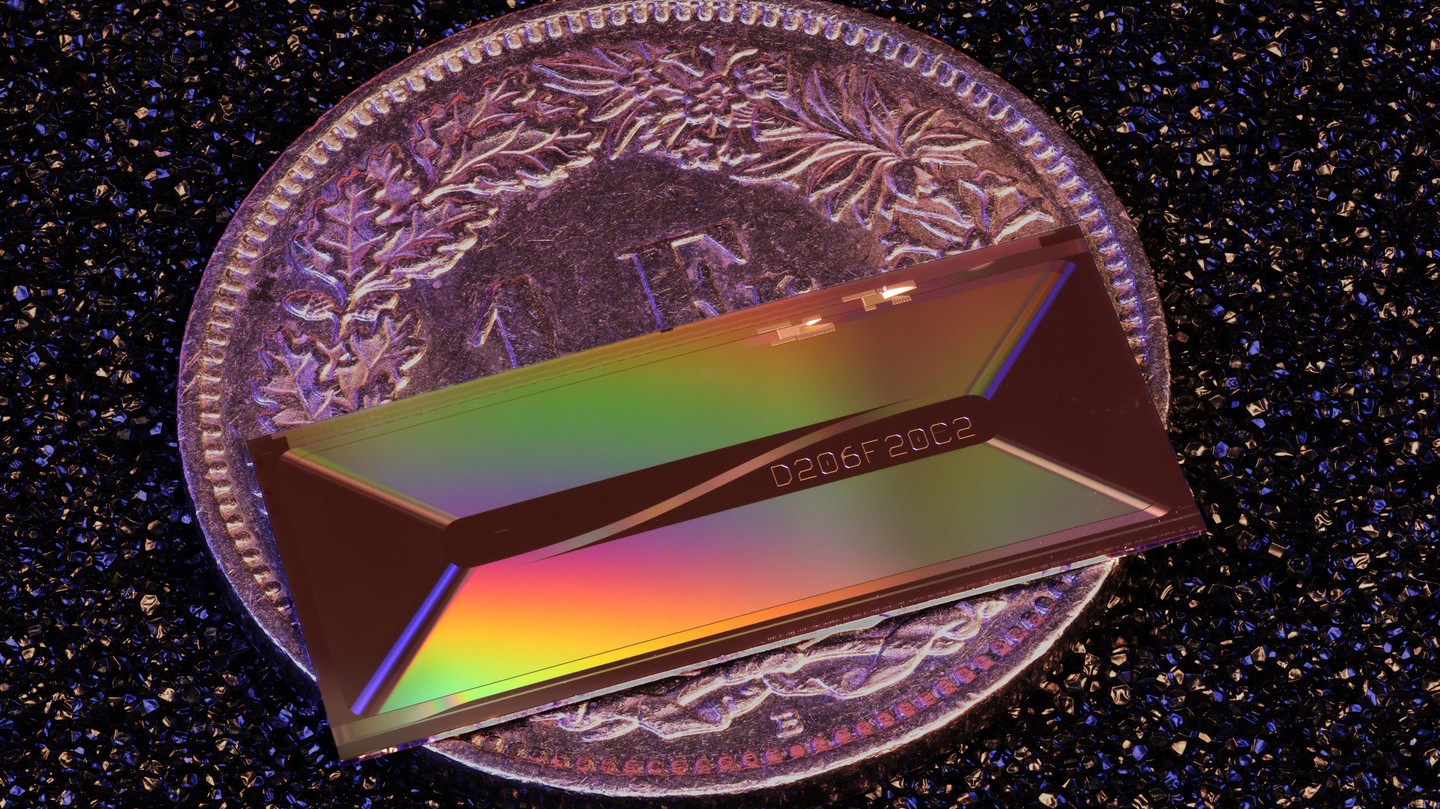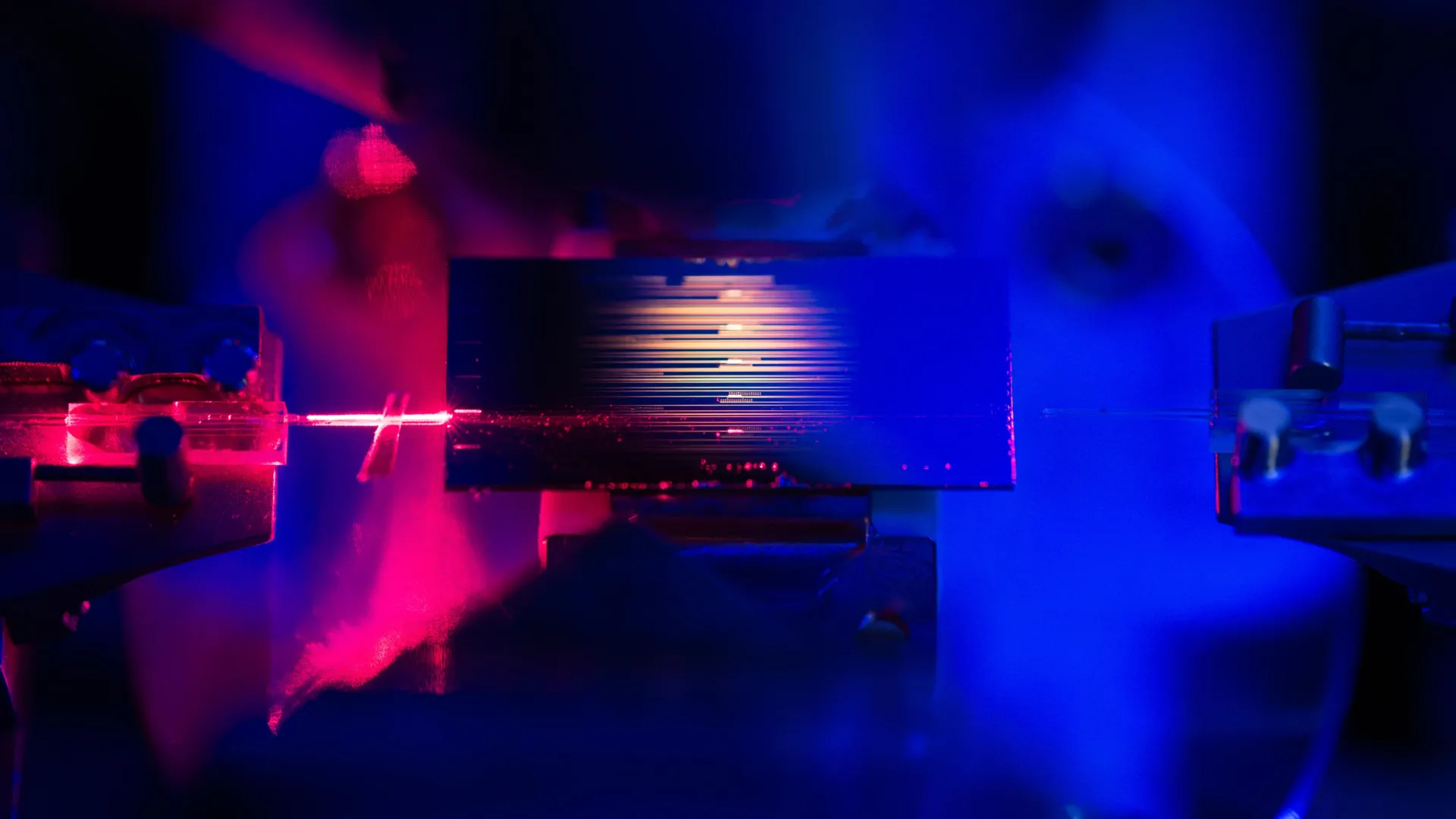
Light plays a central role in modern technology, powering everything from televisions and satellites to the fiber optic cables that carry internet data across the globe. Now, physicists at Stanford have developed a way to push light even further. They created a compact optical amplifier, about the size of a fingertip, that can strengthen light signals while using very little energy and maintaining full bandwidth.
Optical amplifiers work much like audio amplifiers, except they boost light instead of sound. Traditional compact versions require significant power to operate, which limits their efficiency. The new device, described in the journal Nature, overcomes this challenge by reusing much of the energy needed to run it.
"We've demonstrated, for the first time, a truly versatile, low-power optical amplifier, one that can operate across the optical spectrum and is efficient enough that it can be integrated on a chip," said Amir Safavi-Naeini, the study's senior author and associate professor of physics in Stanford's School of Humanities and Sciences. "That means we can now build much more complex optical systems than were possible before."
The amplifier developed at Stanford can increase the intensity of a light signal by about 100 times while using only a few hundred milliwatts of power. That is far less energy than similar devices typically require. Because it is both efficient and small, it could run on a battery and be built into devices such as laptops or smartphones.