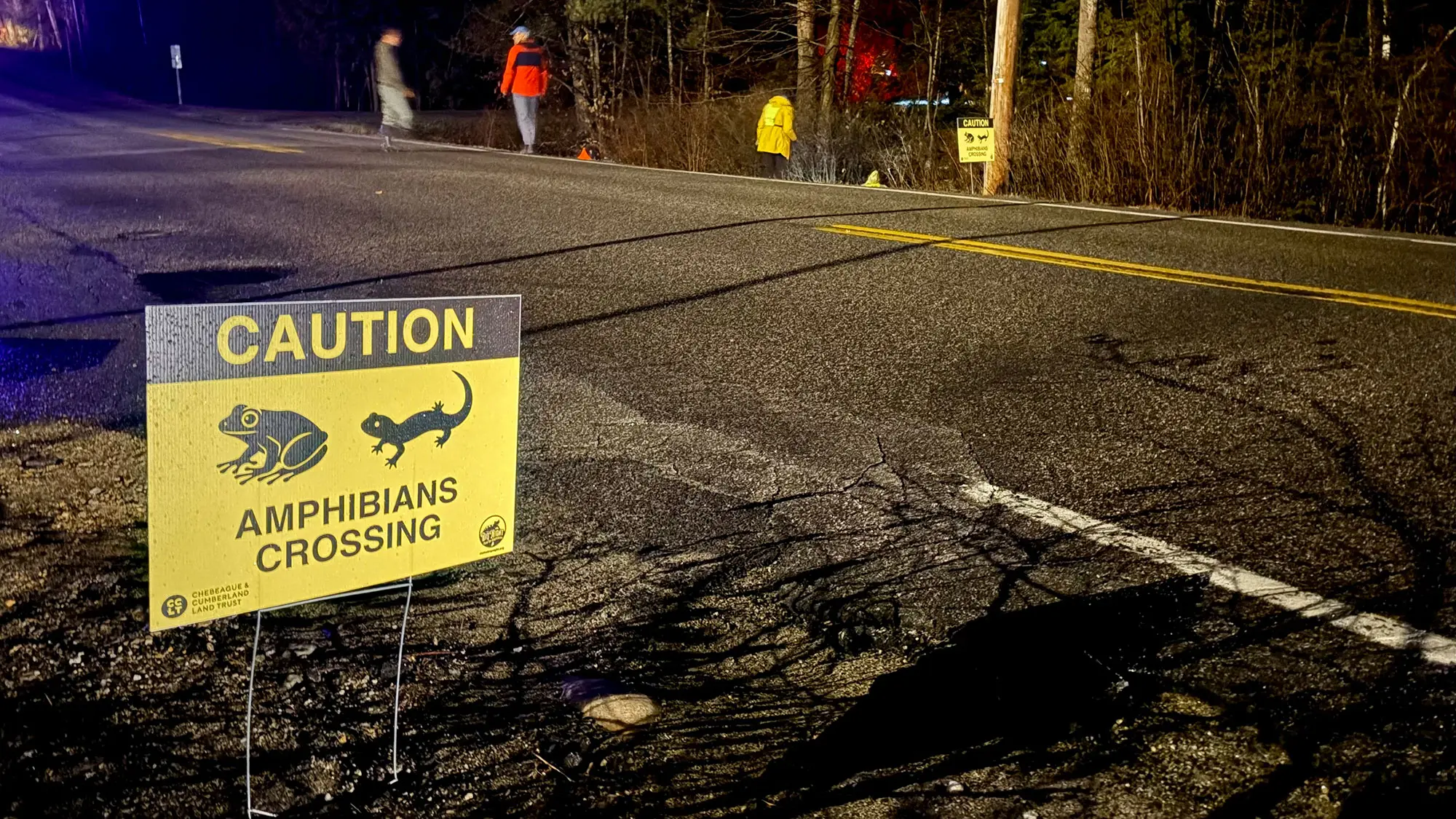
On a Tuesday night in April, beneath a sky mottled with clouds, a slick stretch of road in Cumberland, Maine, erupted in sound. It started with a few high-pitched chirps, like the coos of chicks. Within minutes, dozens, then hundreds more joined a chorus punctuated by low clucks. By the time the sun dipped below the horizon and rain began to splatter the pavement, the sound had risen to a din. Cars stopped on the shoulder and people spilled onto the road wearing neon vests and waving bright flashlights. They fanned out, and raised their voices as they spoke, like guests at a bustling cocktail party.
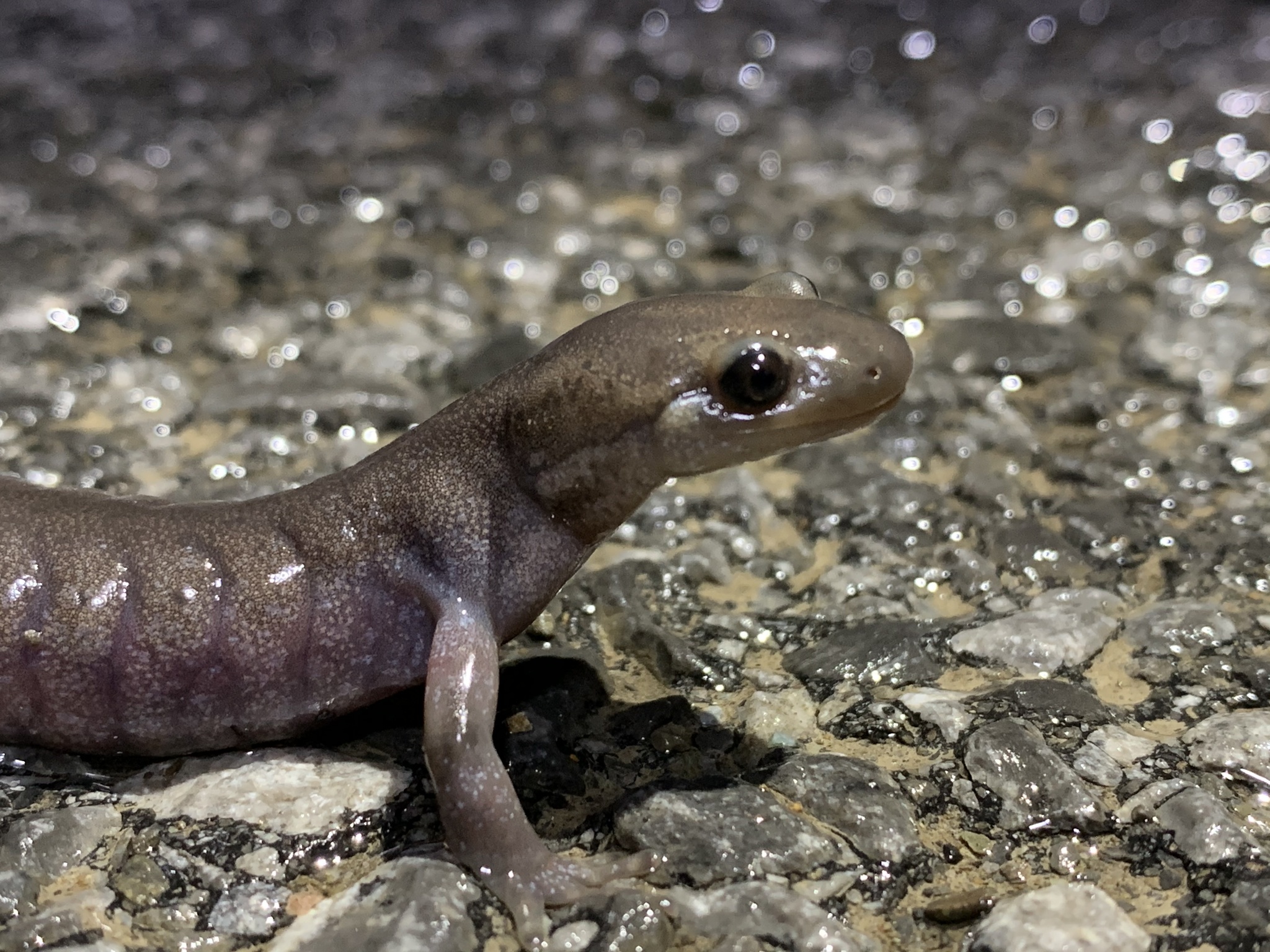
“I got a big one!” called a youngster in a yellow raincoat. She held out her hand for other volunteers who crowded around her. A yellow-spotted salamander about 9 inches long stretched across her gloved palm, its slick tail draped between her fingers.
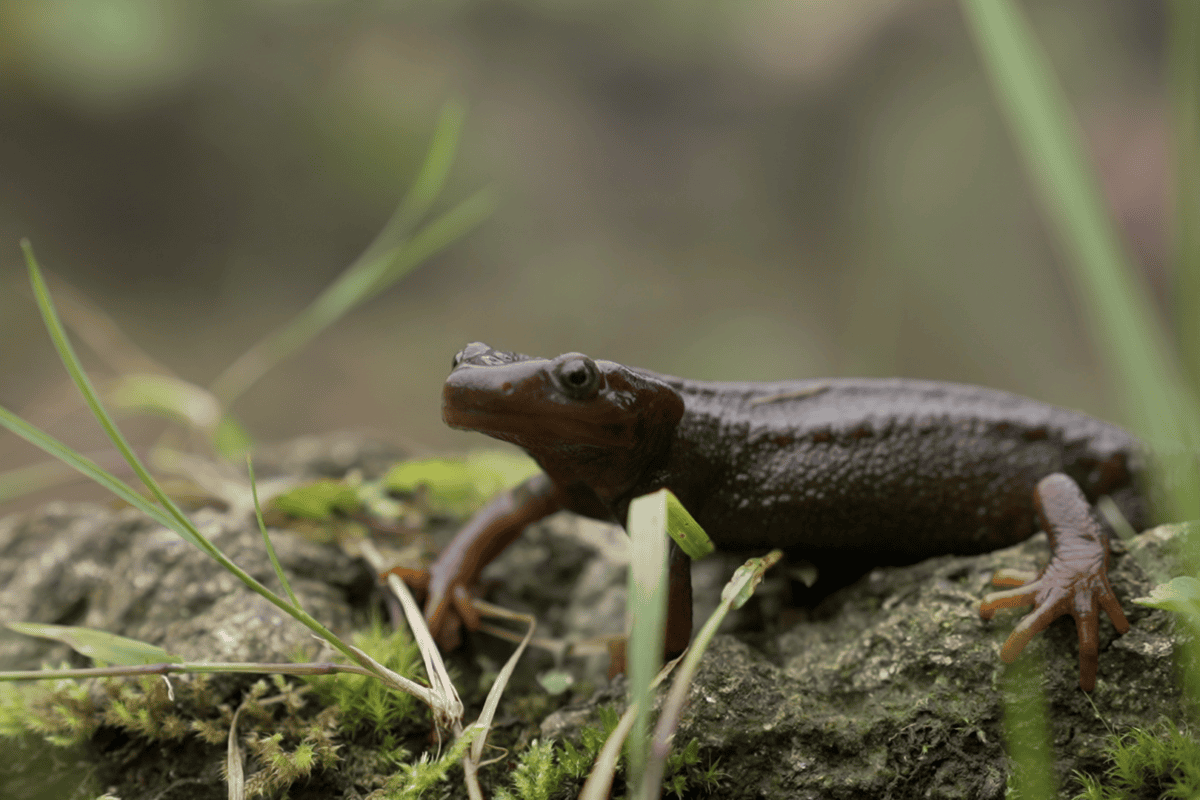
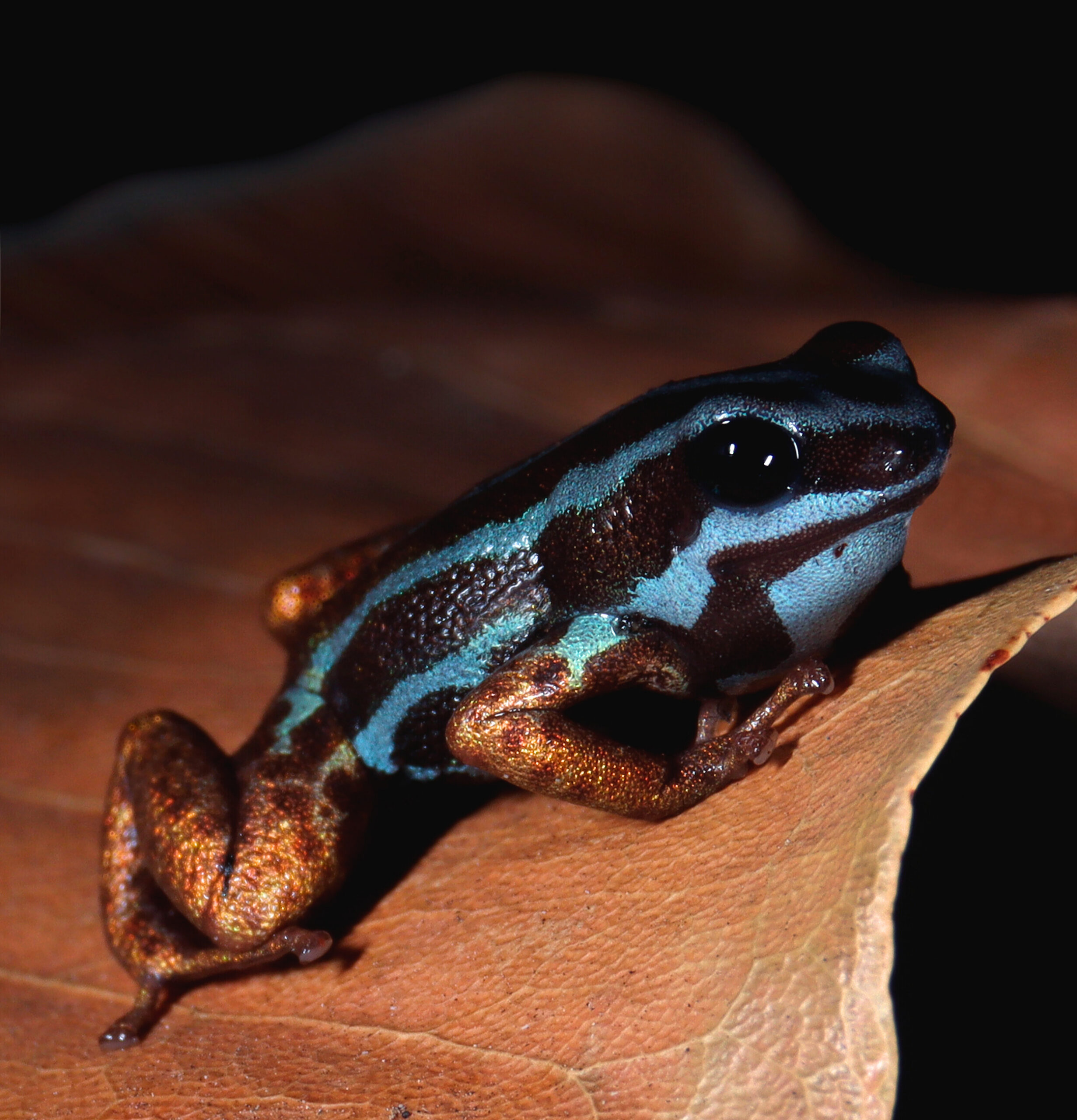
Each year in New England, on the first warm, wet night of spring, when the ground has thawed, and the temperature is just right, armies of frogs and maelstroms of salamanders emerge from the woods. They hop and undulate through the night, following the same routes their ancestors traveled to the vernal pools of their birth, where they lay their eggs, chirping and clucking all the while.