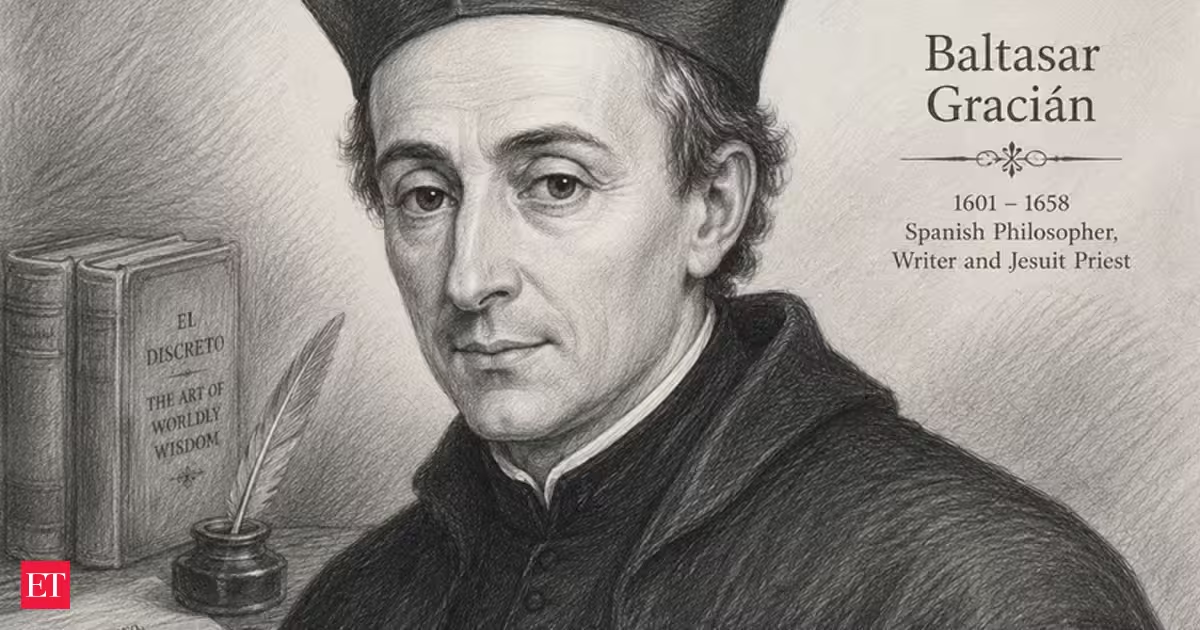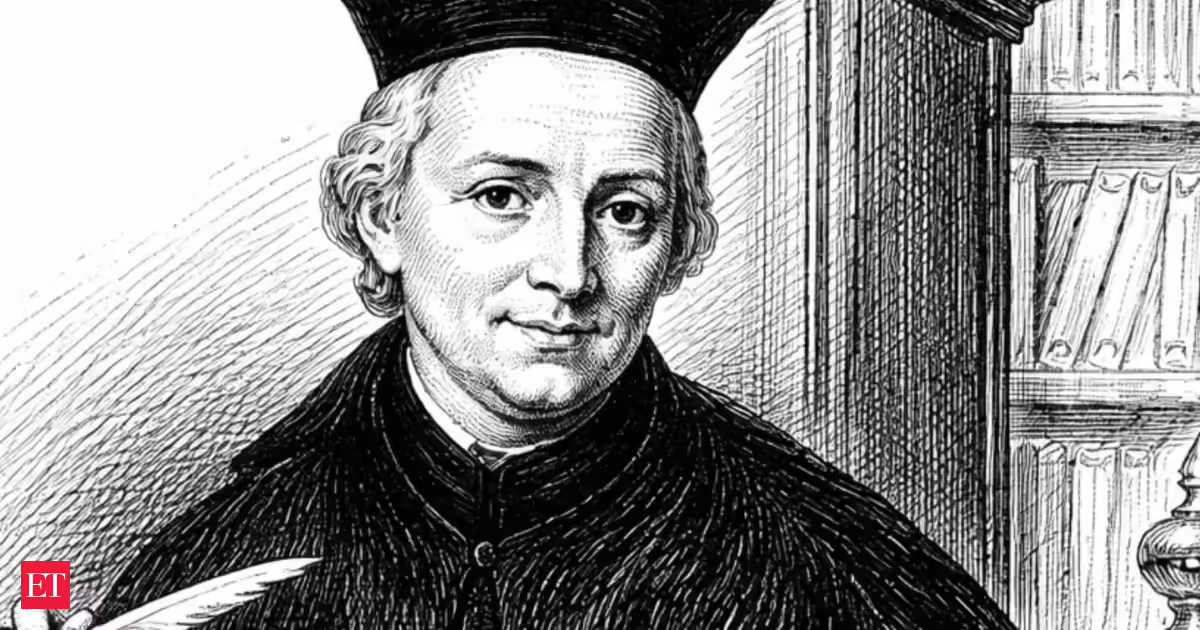
Quote of the Day: Some quotes survive for centuries not because they are emotional or inspirational, but because they expose human behaviour with sharp humour and uncomfortable accuracy. Long before social media jokes and modern sarcasm became part of everyday culture, Spanish philosopher and writer Baltasar Gracián built an entire literary reputation around wit, intelligence and the art of saying profound things in very few words.One of his funniest and most widely repeated observations still resonates today because almost everyone has experienced the awkward fear hidden inside it. Iconic quote by the Spanish Philosopher Baltasar Gracián“A synonym is a word you use when you can't spell the other one.”You Might Also Like:At first glance, the line sounds like a simple joke about vocabulary. But beneath the humour lies a surprisingly relatable truth about insecurity, communication and the way people try to avoid embarrassment.Most people have had moments while writing a message, email or essay when they suddenly avoid a difficult word simply because they are unsure how to spell it. Instead of admitting uncertainty, they quickly replace it with an easier synonym and move on, hoping nobody notices.That small human instinct is exactly what makes Gracián’s quote feel timeless. It turns an ordinary everyday habit into a clever observation about pride and intelligence. The humour works because it feels true.But the quote also reflects the style of writing that made Gracián famous during Spain’s literary Golden Age. He became known as one of the leading figures of conceptismo, a literary movement built around concise language, layered meanings and sharp intellectual wit. Instead of long emotional explanations, conceptist writers preferred compressed thoughts, irony and subtle wordplay that forced readers to think carefully.You Might Also Like:In many ways, this single sentence perfectly captures Gracián’s entire philosophy of communication: say something brief, intelligent and memorable enough that people continue repeating it centuries later.What does the quote reveal about human nature and insecurity?The quote remains popular because it exposes something people rarely admit openly: even intelligent individuals constantly try to hide uncertainty.You Might Also Like:Language is closely tied to confidence. People often feel pressure to sound educated, polished and articulate, especially in public settings. When they fear making mistakes, they instinctively look for safer alternatives. Sometimes that means replacing difficult words. Sometimes it means avoiding conversations altogether.Gracián transforms that insecurity into comedy, but the deeper lesson is about human pride. Many people are more afraid of appearing ignorant than they are interested in learning openly. Rather than risk embarrassment, they adapt quietly and hope nobody notices.That observation feels especially modern today, in a world shaped by online communication, autocorrect and social media culture. People constantly edit themselves before posting thoughts publicly. A simple spelling mistake can suddenly become a source of anxiety or ridicule. Gracián’s centuries-old quote still works because human behaviour has not changed nearly as much as technology has.Why does Baltasar Gracián still matter centuries later?Born in Belmonte de Calatayud in 1601, Gracián lived during Spain’s literary Golden Age, a period that produced some of the most influential writers in European history, including Miguel de Cervantes and Lope de Vega.After studying in Calatayud and Zaragoza, Gracián joined the Jesuit order at a young age and later became rector of the Jesuit college at Tarragona. Although deeply religious, he often challenged intellectual conformity through his writing. His works explored ambition, wisdom, deception, survival and the harsh realities of human society.Books such as The Art of Worldly Wisdom and The Critick focused on how individuals navigate a complicated world filled with pride, illusion and struggle. His philosophical novel The Critick later impressed German philosopher Arthur Schopenhauer so deeply that he considered it one of the greatest books ever written.Gracián’s writing style depended on precision. Every sentence carried multiple meanings, often hidden beneath irony or metaphor. That is why many of his observations still feel surprisingly modern. He understood that human beings are complicated, proud and often unintentionally funny.Today, his quote about synonyms continues spreading online not simply because it is clever, but because it captures a universal experience in one perfectly crafted sentence. It reminds people that behind sophistication and intelligence, there is often a very human fear of getting something wrong.
Quote of the Day by Baltasar Gracián: 'A synonym is a word you use when...'- The renowned Spanish writer and philosopher's witty take on language, intelligence and the fear of being wrong
Spanish philosopher Baltasar Gracián's witty observation about synonyms reveals a timeless human fear of appearing ignorant. The quote highlights how people often use simpler words to avoid admitting uncertainty, a behavior that remains relevant despite technological advancements. Gracián's concise style and sharp wit continue to resonate centuries later.
698 words~3 min read