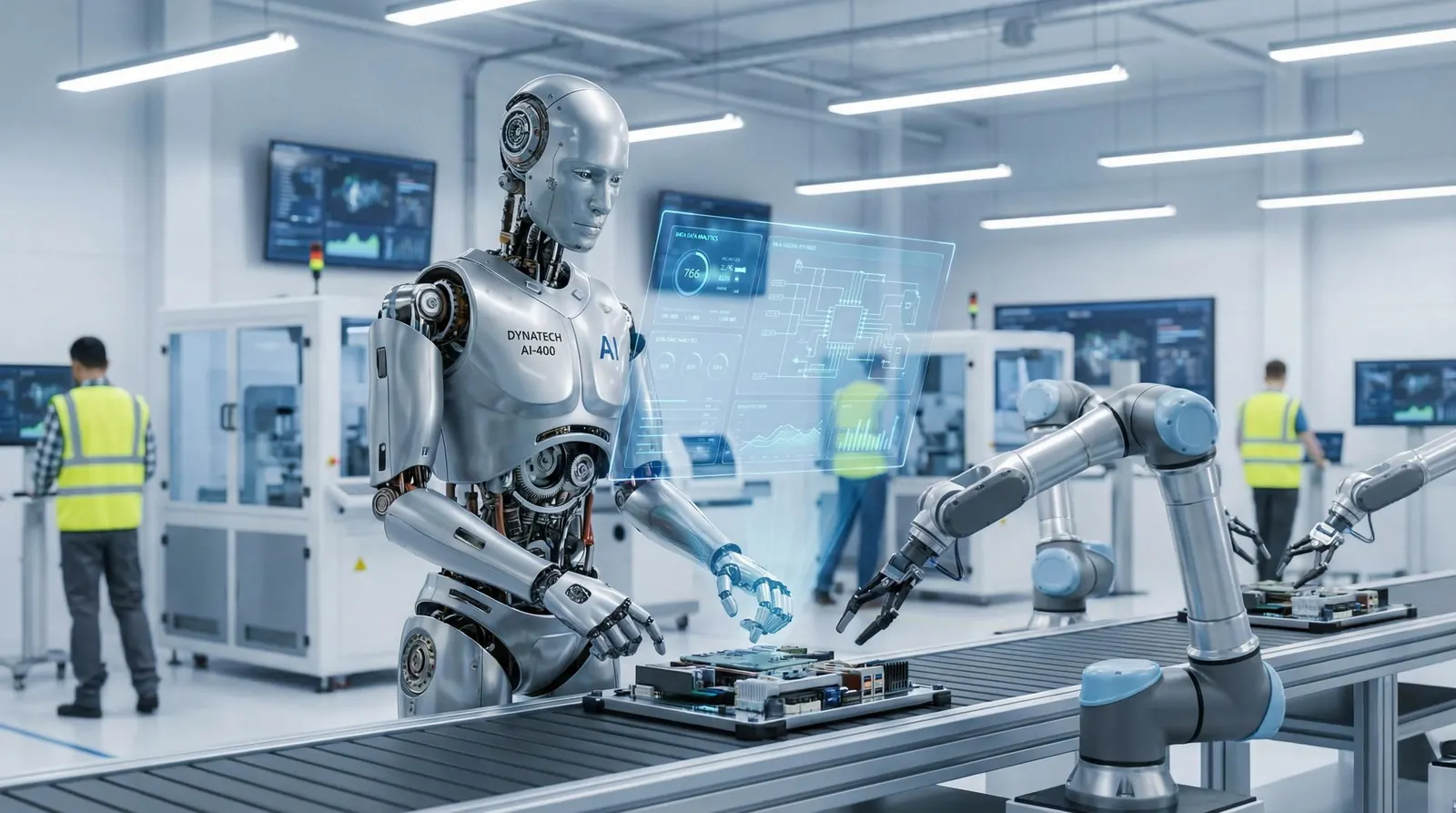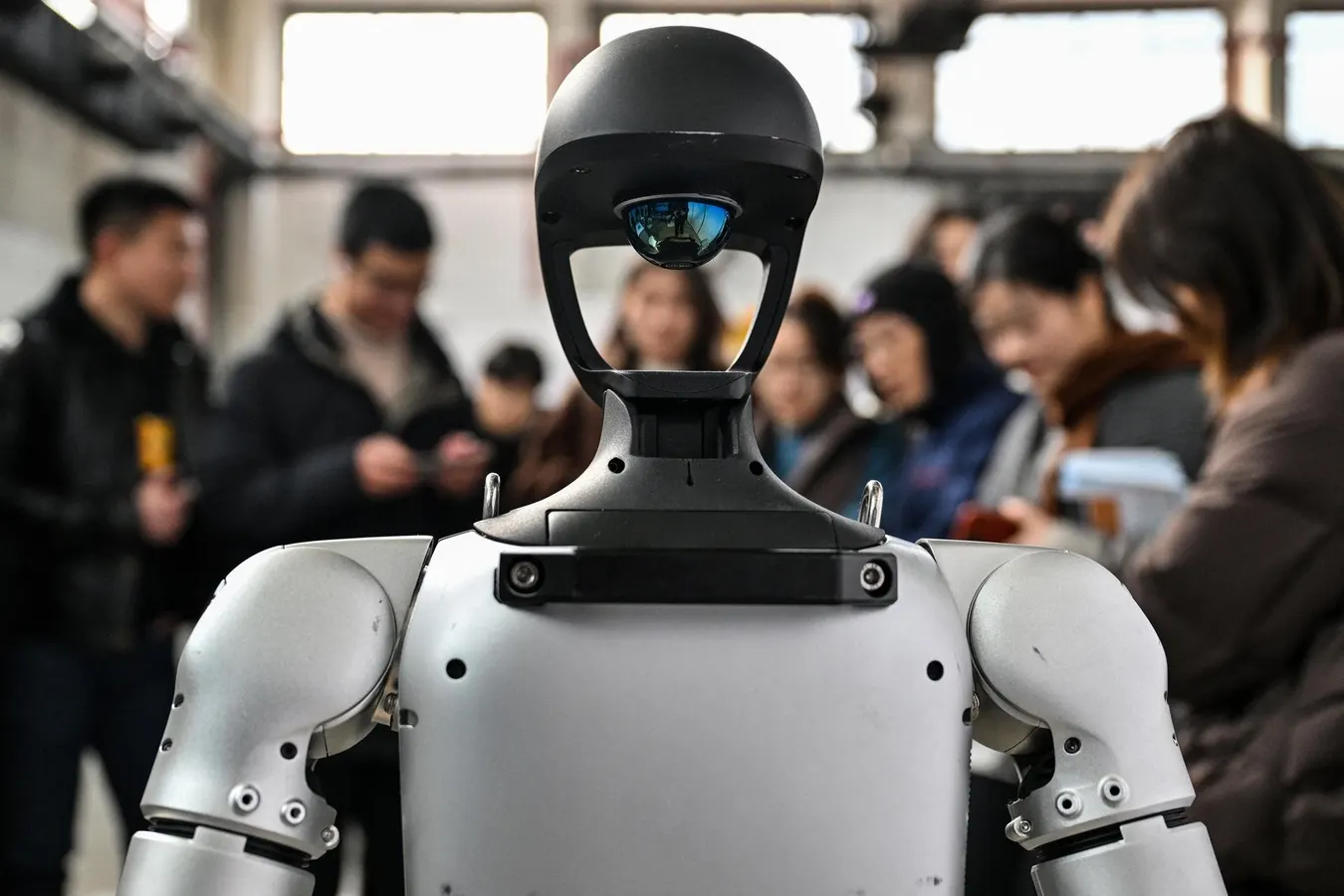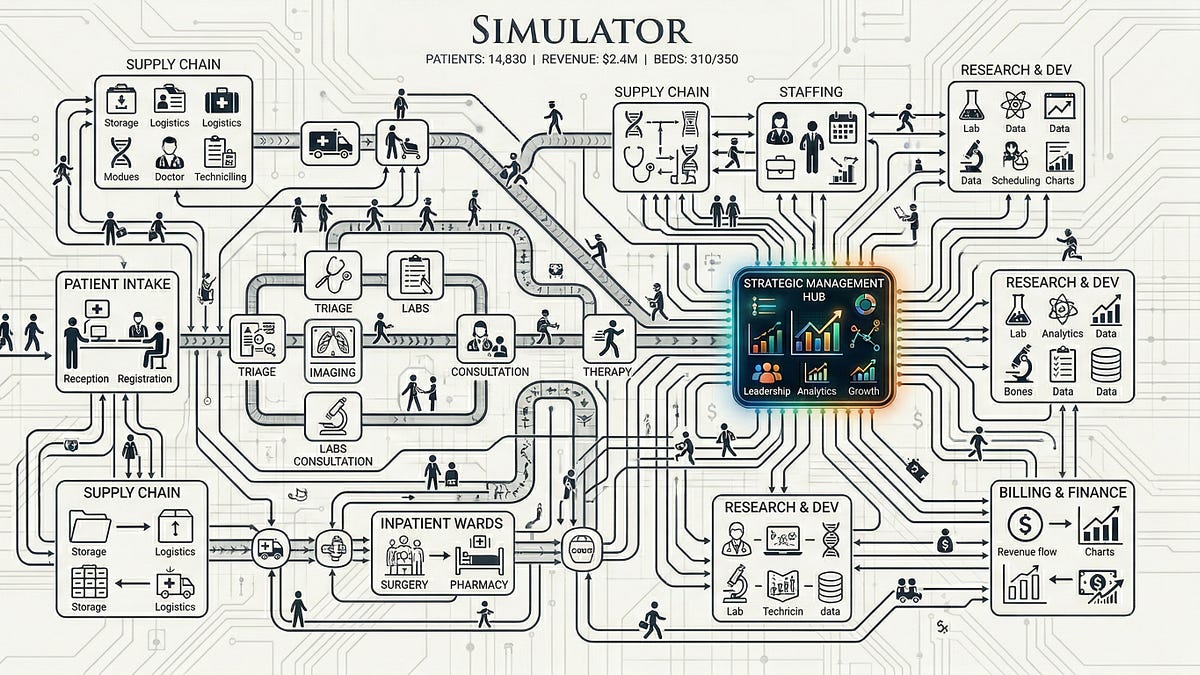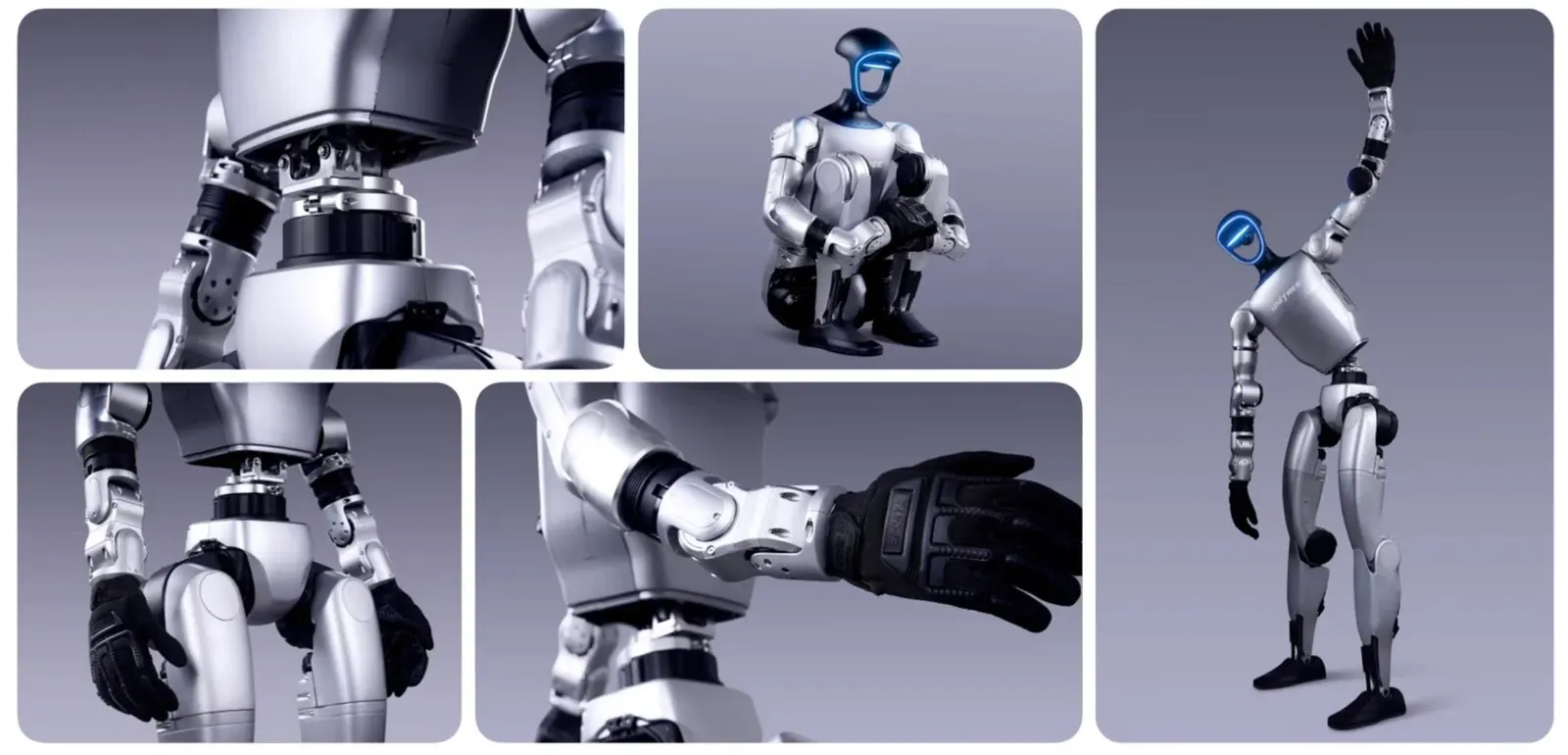
Virtuals is creating EastWorld Labs, a WestWorld-inspired accelerator for AI agents, robots, and (maybe) a few people too.UnitreeHalfway through my interview with Jansen Teng on a new accelerator that is intended to allow entrepreneurs to spin up new businesses with AI and robots by clicking a few buttons, I told him that this sounded like a hydrogen bomb for the labor market.“Okay. This is very interesting, right?" he answered. "Because, yes, it is true, but …”Teng runs Virtuals Protocol, a “society of AI agents” that is building an agent-to-agent marketplace with a current claimed “agentic gross domestic product” of $478 million. Now he’s launching Eastworld Labs, an AI accelerator that aims to “create the world’s first hybrid society of robots, virtual agents, and humans.” He’s kicking off the startup incubator this quarter with a fleet of 30+ humanoid robots that startups and research teams can work with, control, and deploy autonomously or via teleoperation.Eastworld’s end goal is a future something like this: making real-world businesses as easy, quick, and cheap to start up and run as virtual businesses are becoming in the age of prompt-an-app vibe coding and on-demand software-as-a-service offerings.Think of it this way: you buy credits or tokens on Virtuals, and you use them to start up a new restaurant in Tokyo. Or Shanghai. Or Addis Ababa, take your pick. Agents become your chef, your brand advisor, your marketer, designing a menu, a logo, a website. Humanoid robots might actually operate the ovens, seat customers, take orders and do the dishes. And maybe, just maybe, you’ll employ some humans as teleoperators for your robots until the AI driving them gets up to speed. Spinning up a real, physical business is as easy as making a generative AI image. Or movie. Or book. Click, fund, feed.Of course all of that is wildly optimistic right now. Humanoid or not, robots aren’t good enough, cheap enough, nor reliable enough at the moment to make it happen. Starting up a physical (or virtual for that matter) business typically also requires some form filling, red tape navigation, permitting, real estate transactions, renovating, stocking and more.Hence the accelerator. Eastworld Labs is trying to be part of the solution to birthing this brave new world. And the good news, for would-be virtual tycoons, is that all of these problems are rapidly being solved: the knowledge tasks with AI and AI agents and the physical tasks with robots. It’s late-stage AI-infused capitalism heaven, potentially: huge profit potential, low overhead costs.But we’re not there yet.“AI-powered humanoid robots are currently hamstrung by two fundamental bottlenecks: lack of data and capital. As a result, they don’t produce enough economic value,” Teng said in a statement. “Eastworld Labs solves this problem. We’re giving builders direct access to humanoid robots, rich datasets, cloud and hardware infrastructure, and capital to deploy and scale AI robot systems in the wild with superior efficiency.”Eastworld is an interesting choice of names. In our conversation, Teng referenced Westworld, the HBO drama where AI-powered humanoid robots provide a real-world no-consequence playground for human vacationers which turns horribly bad.I reminded Teng that Westworld is a dystopian vision of the future.“It is a dystopia,” he answered. “But I think it’s directionally where we are heading, right?”Maybe. That’s also, directionally, the point of a thought experiment from Citrini Research that went viral this past weekend. Called “The 2028 Global Intelligence Crisis,” the essay essentially suggested the possibility of an AI-driven global depression, written from the perspective of 2028:“AI got better and cheaper," Citrini says. "Companies laid off workers, then used the savings to buy more AI capability, which let them lay off more workers. Displaced workers spent less. Companies that sell things to consumers sold fewer of them, weakened, and invested more in AI to protect margins. AI got better and cheaper.”The researchers are careful to position this as a scenario, not a prediction, but it’s not hard to see how this is at least possible.If it becomes true, as the piece says, that “a Claude agent can do the work of a $180,000 product manager for $200/month," the economy potentially implodes. In the Citrini scenario, white collar workers flee to blue collar work and the gig economy to make ends (almost) meet. But in a future where Eastworld becomes a big success could be a world that doesn’t just destroy white collar work but pretty much all work, including blue collar jobs.Currently, Virtuals Protocol says it has the world’s largest AI agent economy with more than 18,000 deployed agents. Eastworld Labs would extend its digital agent infrastructure into warehouses, farms, factories and facilities. In the process, Virtuals Protocol would grow what it calls Agentic GDP, or aGDP, the aggregate economic output generated by autonomous AI systems. That aGDP could potentially grow, over years or decades, to larger than the human GDP, or hGDP.“We believe that aGDP will soon become the primary engine of global economic activity,” Teng said. “And aGDP will surpass human GDP only when AI agents exist in the physical world.”Of course, there’s a lot of science fiction in this today.Humanoid robots or non-humanoid are not good enough or fast enough to do most jobs. AI systems don’t truly understand the world they exist in given that they’re largely LLM-based, meaning they are (very good) text prediction engines. But it’d be foolish to look at the current state of technology and form opinions about what might or might not happen in future years or decades based solely on that.Teng understands that, and it’s part of what’s behind his “but” in the quote at the top of this story.That “but” includes labor shortages in certain sectors. “In the U.S. today, there are jobs like mechanics where you don’t have enough mechanics and their pay is spiking,” Teng told me.Part of his solution for that is using robots and labor arbitrage: teleoperation from low-wage countries to operate humanoid robots to do jobs where we don’t have enough workers. That might make some segments of society happy: jobs done without immigration, but part of the reality is that it’s also a net economic negative: money out of the local economy.And it’s a stopgap until the AI and robots get good enough to not need teleoperation anymore.Eastworld Labs is both a big, risky bet, and a harbinger of a big, risky future. The biggest problem is that almost no politicians are aware of the coming tsunami of change and actively preparing for it.If robots and AI keep increasing in capability the way they have been, and there’s little reason to presume they won’t, they will hit our economy like a bomb. And we will have to figure out a new economic system in an era of exceedingly cheap labor: both knowledge work and physical work.See a full transcript of our conversation here.
Human-Free Businesses? AI + Agents + Robots = Eastworld Labs
AI is coming for white collar knowledge work. Robots are coming for blue collar physical work. Eastworld Labs is planning to accelerate both ...
1,131 words~5 min read