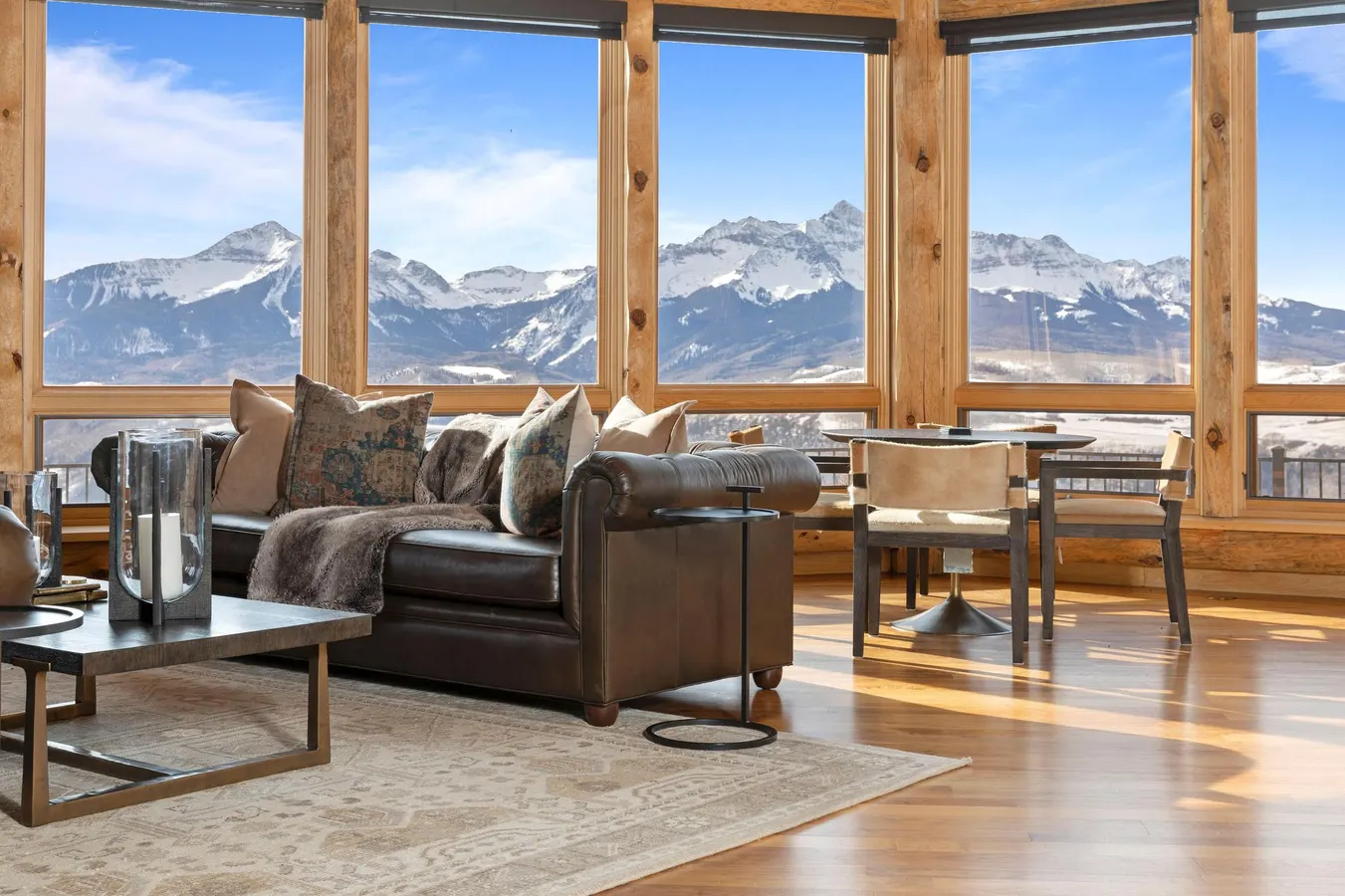
At their best, mountain homes frame the old wildness of the peaks while making room indoors for clarity and repose.Telluride PropertiesHave you ever gazed across a seemingly endless flat expanse—prairie, salt flat, desert basin—and felt not liberated but… unsettled? You’re not alone. In the 19th century, many American settlers on the Great Plains were said to suffer from what became known as Prairie Madness, a psychological strain brought on by isolation, monotony and the unnerving absence of interruption. The mind, it seems, wants contour. The eye wants somewhere to land. Nothing, extended far enough, can be rather hard to look at. And so to the mountains. To borrow a much-abused line from one of the great nature poets, John Muir: “The mountains are calling.” Exactly right, for what else could one name that upward pull? The allure to ascend feels less like preference than inheritance, some ancient recognition buried in the body, as if the human spirit has always understood that mountains hold meaning beyond geology. “The mountains are calling.”
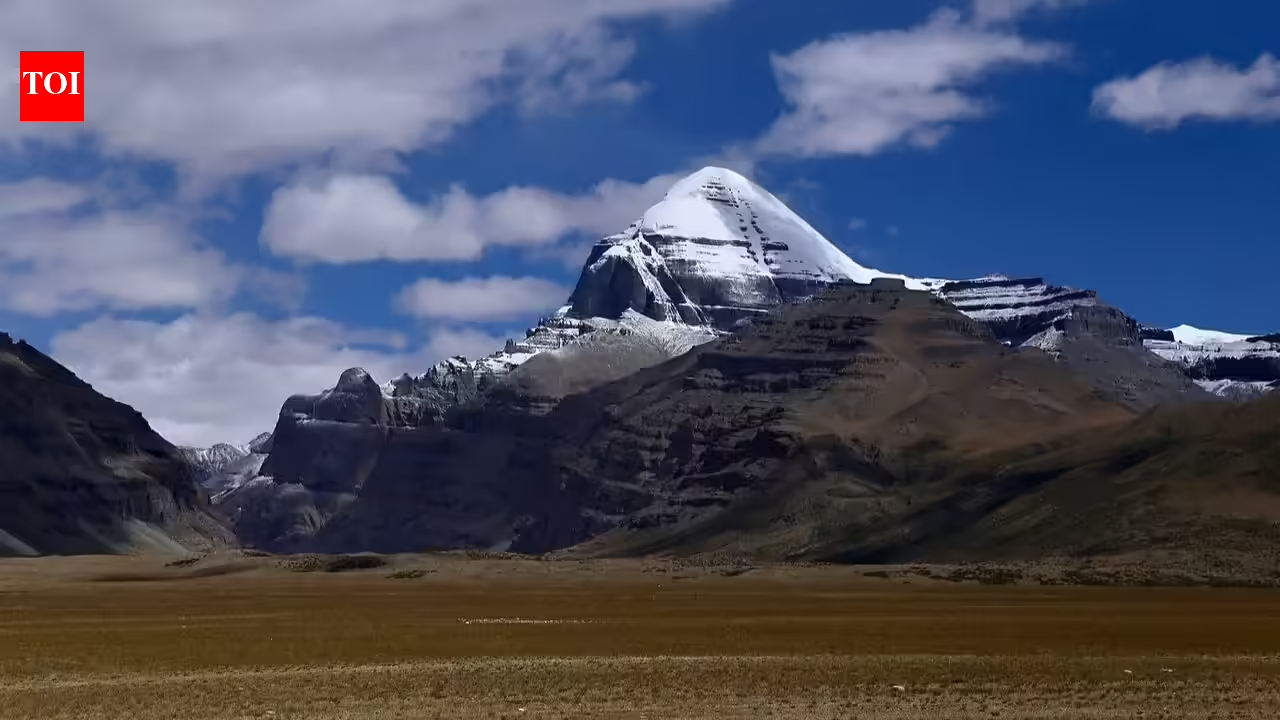
Grandeur amongst the graniteWhy else would civilizations have built upon towering rock faces, these extreme landscapes so often hostile to ordinary life? Machu Picchu, built high in the Andes around the 15th century, was not just a feat of Incan engineering but a statement of cosmic order, its terraces, temples and sightlines binding empire to mountain, agriculture to astronomy. In ancient Greece, the Acropolis of Athens rose from a rocky outcrop above the city, turning elevation into both fortress and symbol, a place where stone, worship and civic identity could look down over daily life. Mountains made life harder, certainly. But they also made meaning easier. To build upon them was to claim refuge, perspective and nearness to the heavens, as if survival itself gained grandeur when staged against the impossible. To live beneath mountains is to live with a constant source of renewal, the landscape urging the day upward.National Parks RealtyIt’s only natural, then, that if we once placed our gods upon summits, mountain homes would eventually become one of luxury’s highest expressions. The old spiritual premium has simply learned the language of square footage and view corridors. In Aspen, ultra-prime asking prices have reached roughly $80,000 per square meter, while Gstaad averages around $60,000 (roughly €51,500) per square meter. If we once placed our gods upon summits, mountain homes would eventually become one of luxury’s highest expressions.